+91 9910402252
admin@chalbanjare.com


| Entry Fee (INR) | 300 |
| Timings | 09:00 - 17:00 |
| Altitude (m) | 3500 |
| Ideal Visit Duration (hrs) | 1 |
| Best Time of Day | Morning |
| Crowd Level | Moderate |
| Distance from Leh (km) | 2 |
| Walking Difficulty | Moderate |
| Parking Available | No |
| Last Mile Access | Walk |
| Suitable for Kids | Yes |
| Suitable for Seniors | No |
| Wheelchair Friendly | No |
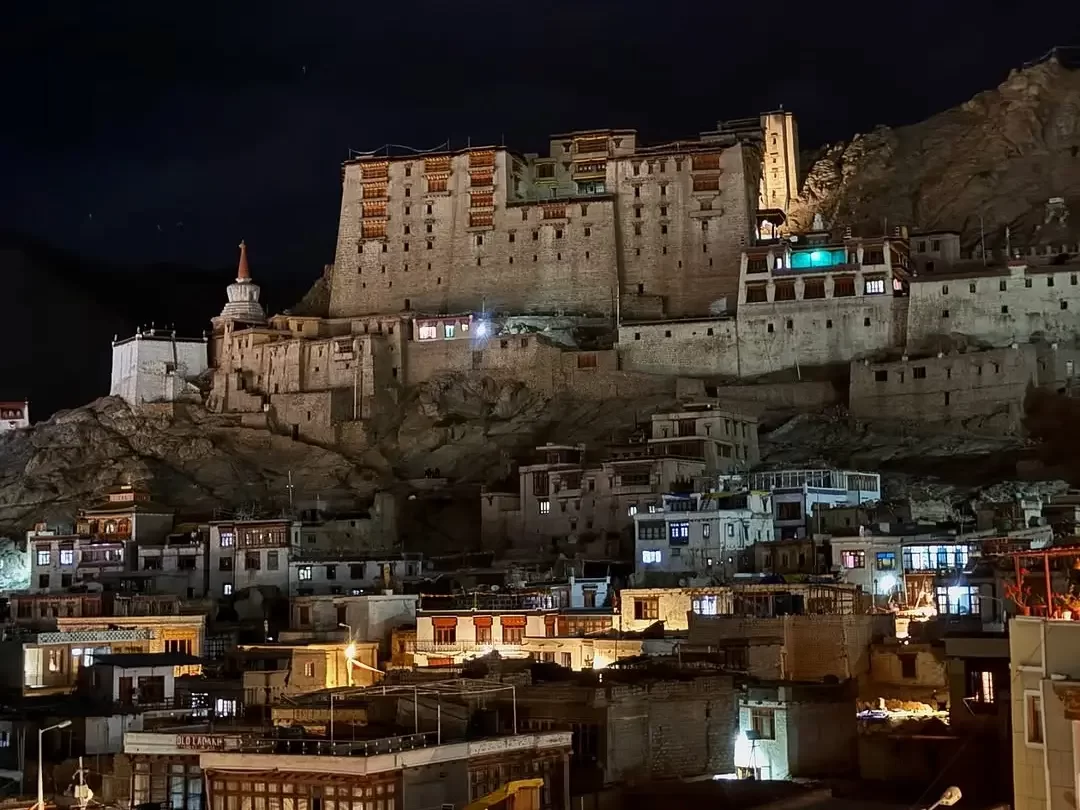
Leh Palace is worth visiting if you want to understand Ladakh beyond monasteries and mountain views. It offers a direct connection to the region’s royal past and shows how Ladakhi kings lived and governed in an extreme high-altitude environment. The palace is not about restored grandeur, but about context, perspective, and history, making it especially meaningful for travelers interested in culture and heritage.
The atmosphere at Leh Palace is quiet, raw, and reflective. Thick stone walls, narrow corridors, and largely empty rooms create a sense of austerity that mirrors Ladakh’s harsh climate. As you climb higher, the noise fades and expansive views over Leh town and the Indus Valley dominate the experience.
Leh Palace was built in the early 17th century by King Sengge Namgyal of the Namgyal dynasty, during a period when Ladakh controlled important Himalayan trade routes connecting Central Asia, Tibet, and the Indian plains. Positioned strategically above Leh town, the palace served as the royal residence and administrative center, allowing oversight of the Indus Valley and surrounding region.
In the 19th century, after the Dogra invasion led by General Zorawar Singh, the royal family abandoned Leh Palace and relocated to Stok Palace. Exposed to harsh weather and neglect, the structure gradually deteriorated. Today, the palace is protected by the Archaeological Survey of India and preserved as a historical monument, offering visitors an authentic view of Ladakh’s royal and political past rather than a restored palace experience.
Leh Palace holds strong cultural significance due to its close association with Ladakhi royal traditions and Tibetan Buddhism. The palace once contained chapels with Buddhist murals, thangkas, and ritual objects, reflecting the historical bond between the Ladakhi monarchy and monastic institutions across the region.
Architecturally inspired by Tibet’s Potala Palace, Leh Palace symbolizes Ladakh’s deep cultural and spiritual connections with Tibet. Today, it stands as a cultural landmark that helps visitors understand how governance, religion, and daily life were closely interconnected in traditional Ladakhi society.
The best time to visit Leh Palace is between **May and September**, when Leh is fully accessible, weather conditions are stable, and the palace remains open for visitors. During these months, clear skies provide excellent views of Leh town and the Indus Valley, and walking inside the palace is more comfortable despite the altitude. July and August are the warmest months but can see moderate tourist crowds, while May, June, and September offer a quieter and more relaxed experience.
Leh Palace is located just above Leh town and is easily accessible from the city center. The palace sits on a hill overlooking the main market area, making it a short and convenient visit during local sightseeing. Most travelers combine it with nearby attractions like Shanti Stupa and Leh Market on the same day.
Visiting Leh Palace is a grounded, no-frills heritage experience focused on history, architecture, and views rather than restoration or luxury. The palace is partially preserved, with empty rooms, narrow corridors, and open terraces that reflect its age and past rather than a museum-style setup. Most visitors come here to understand Ladakh’s royal history, enjoy panoramic views of Leh town, and explore at a slow, unhurried pace.
Leh Palace generally remains less crowded than many other attractions in Leh, but visitor numbers do rise during peak tourist months. Weather plays an important role in the experience, as the palace is exposed on a hilltop with open terraces and stone interiors that reflect outside temperatures. Planning your visit with crowd flow and weather conditions in mind helps ensure a comfortable and unrushed experience.
Peak / Quiet HoursThere is no strict dress code at Leh Palace, but practical and respectful clothing is recommended. Comfortable walking shoes with good grip are essential due to uneven floors and stairs. Layered clothing works best, as temperatures can vary between the lower levels and upper terraces, even during summer.
Safety NotesLeh Palace is a rewarding location for photography, especially for travelers interested in heritage structures, cityscapes, and mountain backdrops. The palace’s elevated position offers wide-angle views of Leh town, the Indus Valley, and distant Himalayan ranges, while its raw interiors provide strong textures and contrasts rather than decorative detail. Photography here is more about atmosphere and perspective than ornate interiors.
 Tourist Attraction
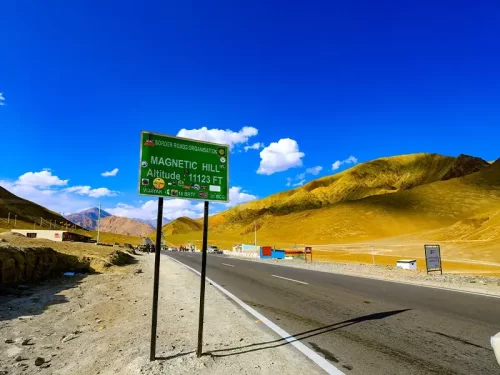
Magnetic Hill is a gravity hill located at an elevation of approximately 3,350 meters (10,991 feet) on the Leh-Srinagar National Highway.
 Monastery
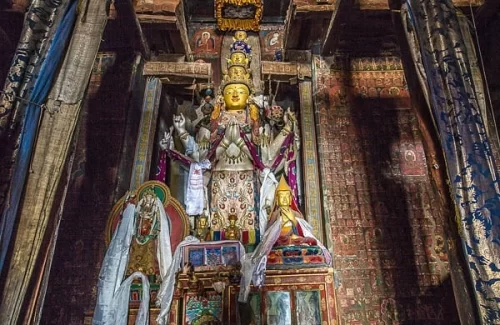
Alchi Monastery is a historic Buddhist temple complex situated at an elevation of approximately 3,100 meters (10,170 feet) on the southern bank of the Indus River.
 Mountain Pass
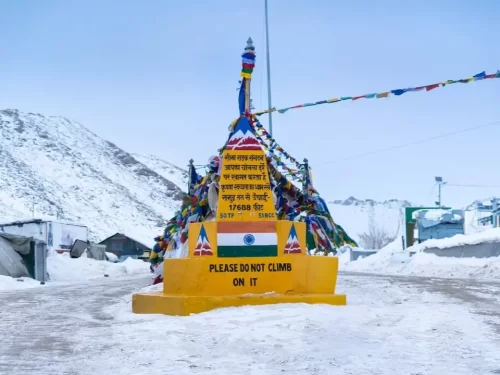
Chang La is a high-altitude mountain pass situated at an elevation of approximately 5,360 meters (17,585 feet) on the road between Leh and Pangong Tso.
Get customized Ladakh tour planning designed around altitude comfort, acclimatization time, weather windows, and real Himalayan road conditions. Whether you are visiting for high mountain passes, monasteries, lakes, or remote valley experiences, our exper
⚡ Quick Response | 💰 Free consultation | 🕒 24×7 expert support

