Leh Market – Central Shopping & Cultural Hub of Leh

Leh Market , Leh
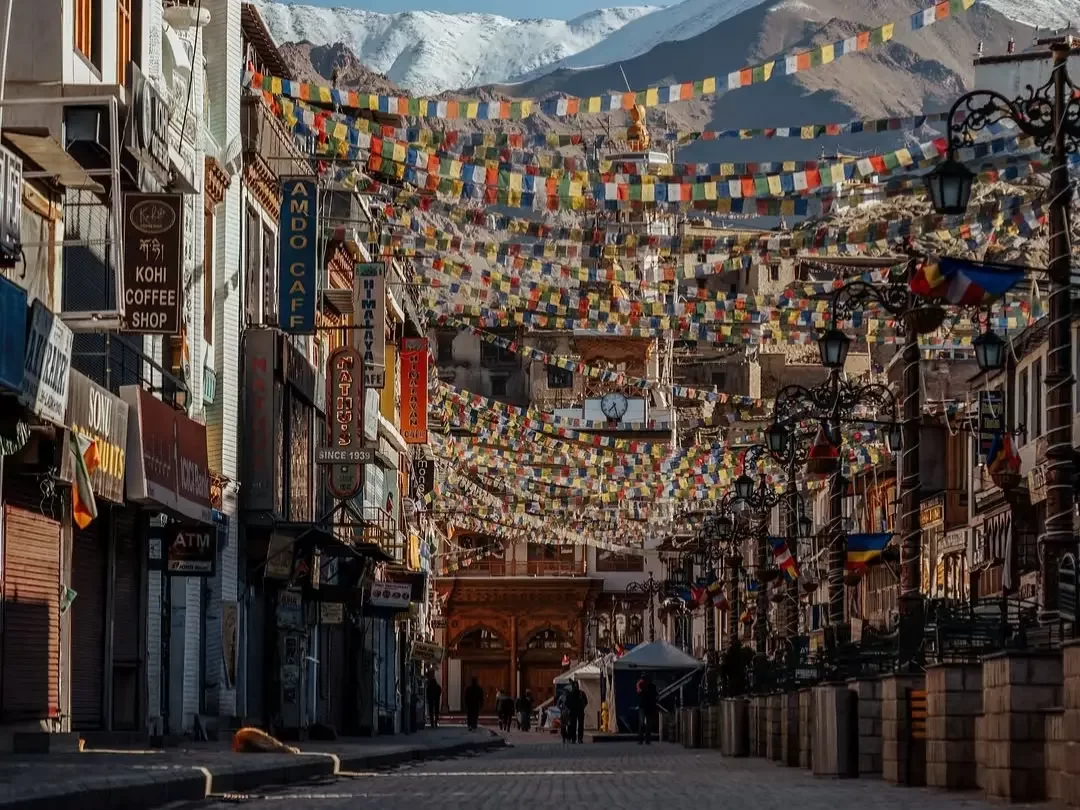
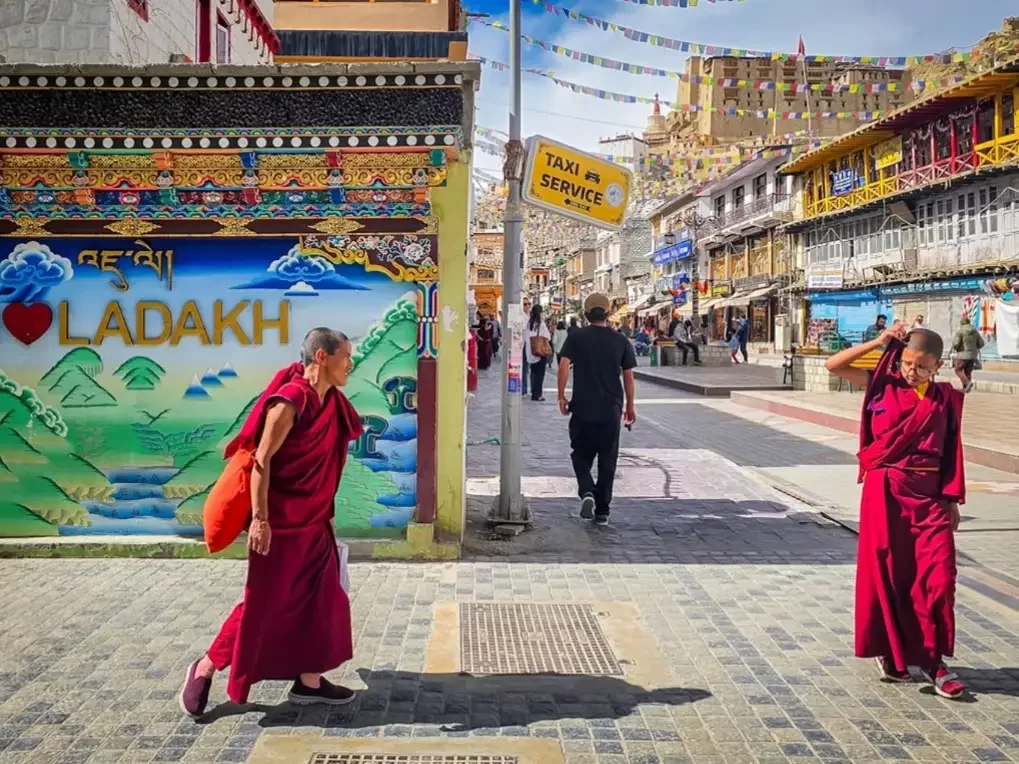
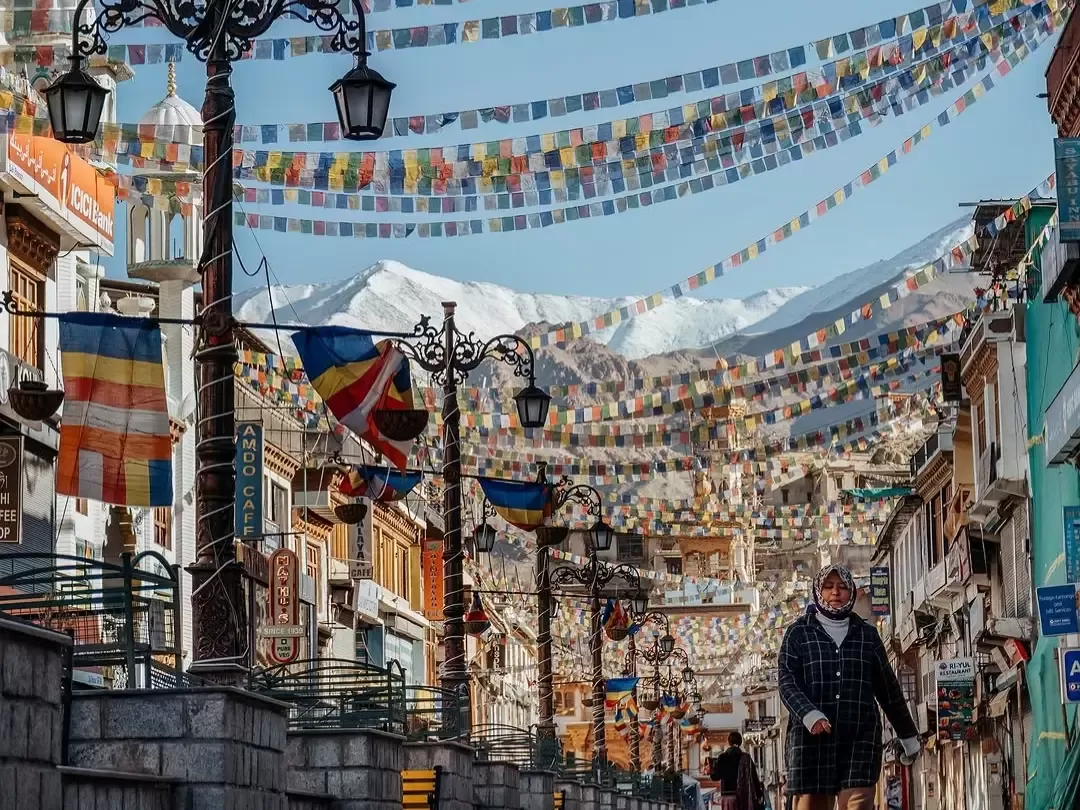
Leh Market is the lively heart of Leh town, where local life, tourism, and Ladakhi culture come together. Lined with shops, cafés, handicraft stores, and small eateries, the market is the most popular place for evening walks, souvenir shopping, and casual exploration. It’s less about monuments and more about experiencing the everyday rhythm of Leh, making it a must-visit stop for first-time visitors

Quick Facts About Leh Market

Entry Fee Free
Timings 09:00 - 20:00
Altitude (m) 3500
Ideal Visit Duration (hrs) 2
Best Time of Day Evening
Crowd Level High
Distance from Leh (km) 0
Walking Difficulty Easy
Parking Available No
Last Mile Access Road
Suitable for Kids Yes
Suitable for Seniors Yes
Wheelchair Friendly No

Why Visit Leh Market

Leh Market is the best place to experience the everyday life of Leh up close. More than a shopping area, it is where locals, travelers, café culture, and Ladakhi traditions naturally intersect. Visiting the market helps travelers slow down, acclimatize gently, and understand the social rhythm of the town while picking up essentials, souvenirs, and local flavors.

Atmosphere

The atmosphere in Leh Market is relaxed, friendly, and lively without feeling overwhelming. Prayer flags flutter above pedestrian streets, cafés buzz softly in the evenings, and shopkeepers engage in unhurried conversations. Compared to busy city markets elsewhere in India, Leh Market feels calm and walkable, with fresh mountain air and a strong sense of community.

What Makes It Special

  • A central meeting point where locals and travelers naturally interact.
  • Wide variety of shops selling Ladakhi handicrafts, woolens, jewelry, and travel essentials.
  • Numerous cafés and bakeries ideal for relaxing, acclimatizing, and people-watching.
  • Pedestrian-friendly layout that makes evening strolls comfortable and enjoyable.
  • Acts as the cultural and social heartbeat of Leh rather than just a shopping destination.

History of Leh Market

Leh Market has historically functioned as the commercial and social center of Leh town, evolving alongside Ladakh’s role as a key trading hub on ancient trans-Himalayan trade routes. Merchants from Central Asia, Tibet, Kashmir, and the Indian plains once exchanged goods such as wool, pashmina, salt, and spices in this area. Over time, the market developed into a permanent town center, adapting to modern tourism while still retaining its role as a daily meeting place for local communities.

Cultural and Religious Significance

While Leh Market is not a religious site itself, it holds strong cultural importance as a shared space where Ladakhi traditions, language, and daily customs are visible in everyday life. The market area is closely connected to nearby monasteries, mosques, and temples, and it reflects Ladakh’s multi-cultural character shaped by Buddhist, Muslim, and Himalayan influences. Seasonal festivals, local dress, and traditional foods commonly seen in the market make it an important window into Ladakhi culture.

Best Time to Visit Leh Market

The best time to visit Leh Market is between May and September, when Leh town is fully active and the market reflects real local life rather than seasonal shutdowns. During this period, roads are open, most shops and cafés operate daily, and the weather allows comfortable walking at high altitude. This is also when travelers get the most authentic experience, interacting with local residents, shopkeepers, and guides who are present in full strength.

  • May and June are ideal for first-time visitors, with pleasant weather, fewer crowds, and fully functional markets.
  • July and August are the busiest months, offering the widest choice of cafés, handicrafts, and evening activity, but with higher crowd levels.
  • September is quieter and calmer, making it suitable for relaxed shopping and cultural exploration.
  • Evenings are the best time of day, when the market comes alive and temperatures are comfortable.
  • Winter months from October to April are not recommended, as extreme cold leads to limited shop operations and reduced activity.

How to Reach Leh Market

Leh Market is located at the very center of Leh town and is the easiest attraction to reach once you are in the city. Most hotels, guesthouses, cafés, and travel offices are within walking distance, making the market a natural starting and ending point for daily sightseeing. Access is straightforward and does not require any special transport planning.

  • By Foot: If you are staying in or around Leh town, walking is the most practical option. The market is flat and pedestrian-friendly, ideal for acclimatization walks.
  • By Taxi: Local taxis can drop you directly at the market entrance. This is useful if you are coming from outskirts or nearby attractions.
  • By Private Vehicle: You can drive close to the market, but parking is limited and often congested during evenings.
  • Last Mile Access: No climb or stairs involved. Entry is direct from the main road.
  • From Leh Airport: Leh Market is approximately 4 km from Kushok Bakula Rimpochee Airport and takes about 15 to 20 minutes by taxi.

What to Expect When You Visit Leh Market

A visit to Leh Market is about everyday life rather than sightseeing in the traditional sense. Expect a walkable, open-air commercial area where locals shop, travelers relax, and cafés serve as social hubs. The experience is casual and flexible, with no fixed route or time pressure. Most visitors come here to stroll, shop for essentials or souvenirs, enjoy local food, and slowly acclimatize to the altitude while observing Ladakhi town life.

  • Visitors typically spend 1 to 2 hours walking, shopping, and sitting at cafés without following a strict plan.
  • Facilities such as cafés, bakeries, pharmacies, ATMs, and small convenience stores are easily available.
  • Public washrooms are limited; clean restrooms are usually accessible inside cafés or restaurants.
  • The terrain is flat and pedestrian-friendly, making movement easy even for first-time visitors to Leh.
  • Evenings are lively with locals and tourists gathering for food, shopping, and relaxed walks.
  • Shops selling handicrafts, woolens, pashmina items, and travel gear dominate the market streets.

Things to Know Before Visiting Leh Market

Leh Market is easy to explore, but a few practical points help visitors enjoy it better. The market reflects real town life, so conditions change with weather, time of day, and tourist season. Knowing when to visit, what to wear, and how to move around makes the experience more comfortable, especially at high altitude.

Crowd and Weather Notes

Crowds in Leh Market depend heavily on season and time of day. During peak tourist months, the market feels lively rather than overwhelming, while weather remains generally dry but cool due to altitude. Even in summer, temperatures can drop quickly after sunset.

Peak and Quiet Hours

  • Peak hours are from 5:00 PM to 8:00 PM, when cafés, shops, and street activity are at their busiest.
  • Mornings between 9:00 AM and 11:00 AM are quieter and better for relaxed shopping.
  • Midday hours are moderate, with fewer locals and more tourists.

Dress Code

There is no formal dress code in Leh Market, but practical clothing is important. Comfortable walking shoes are essential, and layered clothing is recommended due to sudden temperature changes. Modest dressing is appreciated, as the market is used daily by local families and elders.

Safety Notes

  • Walk slowly and take breaks, especially during the first few days in Leh, to manage altitude effects.
  • Keep valuables secure in crowded evening hours.
  • Stay hydrated and avoid rushing between shops.
  • Evenings can get cold quickly, so carrying a light jacket is advisable.

Photography at Leh Market

Leh Market is ideal for candid, street, and lifestyle photography rather than monument-style shots. The focus here is on people, everyday moments, colors, and local textures. Prayer flags, traditional Ladakhi attire, shopfronts, cafés, and evening street life provide authentic frames that reflect the true rhythm of Leh town.
  • Evenings offer the best light for photography, with soft shadows, active streets, and café scenes.
  • Street photography works well here, capturing locals, travelers, and daily market interactions.
  • Shop displays, handicrafts, woolens, and bakery counters make strong detail and close-up shots.
  • Morning hours are quieter and better for clean compositions with fewer people in the frame.
  • Always ask permission before photographing local people, especially elders and shopkeepers.
  • Flash photography is discouraged in crowded areas to avoid disturbance.

Near By Attraction

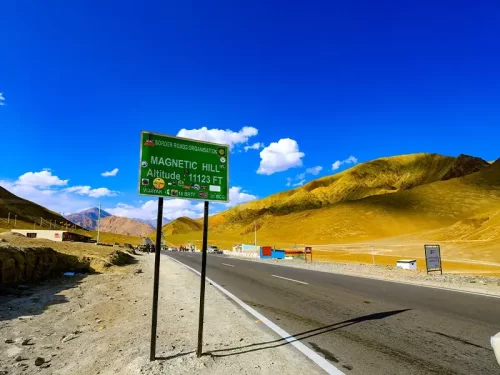
Magnetic Hill sign at Ladakh BRO during clear skies, featuring altitude 11312 ft board yellow mountains highway, perfect adventure Ladakh tour package.  Tourist Attraction

Magnetic Hill

Magnetic Hill is a gravity hill located at an elevation of approximately 3,350 meters (10,991 feet) on the Leh-Srinagar National Highway.
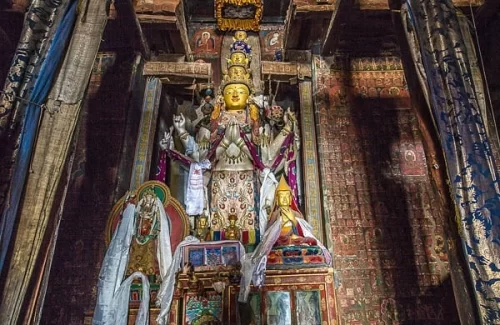
Buddha statue at Alchi Gompa Ladakh in dimly lit shrine during misty weather, featuring multiple arms prayer scarves and wall murals, perfect spiritual Ladakh tour package. Monastery

Alchi Monastery

Alchi Monastery is a historic Buddhist temple complex situated at an elevation of approximately 3,100 meters (10,170 feet) on the southern bank of the Indus River.
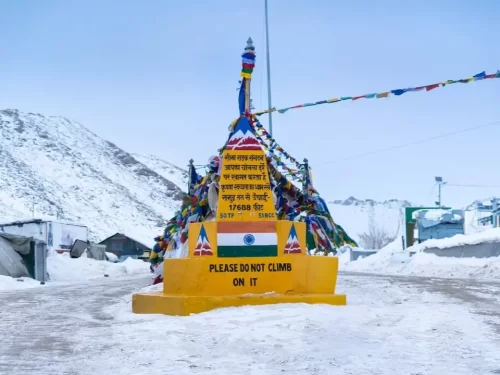
Memorial at Changla Pass 17688 ft during overcast skies, featuring prayer flags, Indian tricolor, snowy mountains, perfect spiritual adventure Ladakh tour pack Mountain Pass

Chang La Pass

Chang La is a high-altitude mountain pass situated at an elevation of approximately 5,360 meters (17,585 feet) on the road between Leh and Pangong Tso.

Frequently Asked Questions About Leh Market

Leh Market is located in the central area of Leh city in Ladakh and serves as the main commercial hub for visitors. It is within walking distance from most hotels and guesthouses in Leh city.
The best time to visit Leh Market in Leh city is during late afternoon and evening when shops are fully open and the weather is pleasant. Summer months in Ladakh offer comfortable conditions for exploring the market streets.
Leh Market offers a range of items including local handicrafts, woolen clothing, souvenirs, dry fruits, and traditional Ladakhi products. Travelers in Leh city often shop here for gifts and essentials needed during their stay in Ladakh.
Leh Market remains open for most of the year, though some shops may close during extreme winter months in Leh city, Ladakh. Tourist activity is highest between late spring and early autumn.
Leh Market generally opens in the morning around 9 or 10 am and stays active until evening in Leh city. Exact hours can vary slightly depending on the season and individual shop owners in Ladakh.
Leh Market is approximately 3 to 4 kilometers from Kushok Bakula Rimpochee Airport in Leh city, Ladakh. The drive usually takes about 10 to 15 minutes depending on traffic.
Leh Market is suitable for relaxed evening walks in Leh city as the streets are lively and well connected. Visitors can explore shops, cafes, and local stalls while enjoying views of surrounding mountains in Ladakh.
Several restaurants and cafes are located around Leh Market in Leh city offering local Ladakhi cuisine as well as Indian and continental options. Most dining places are within a short walking distance from the main market area.
Currency exchange facilities are available near Leh Market in Leh city through banks and authorized exchange counters. It is advisable to carry sufficient cash as digital payments may not be accepted everywhere in Ladakh.
Leh Market is largely accessible for senior citizens as it is situated on relatively flat terrain in Leh city. Comfortable footwear is recommended due to uneven patches and high altitude conditions in Ladakh.
Multiple ATMs are available near Leh Market in Leh city, including branches of major Indian banks. During peak tourist season in Ladakh, carrying backup cash is practical in case machines run out temporarily.
Leh Market becomes moderately crowded during peak travel season from May to September in Leh city, Ladakh. Even during busy periods, the area remains manageable and easy to navigate for most visitors.

Loved this place ? Let’s Plan Your Ladakh Trip

Get customized Ladakh tour planning designed around altitude comfort, acclimatization time, weather windows, and real Himalayan road conditions. Whether you are visiting for high mountain passes, monasteries, lakes, or remote valley experiences, our exper

⚡ Quick Response | 💰 Free consultation | 🕒 24×7 expert support

×

Plan Your Trip