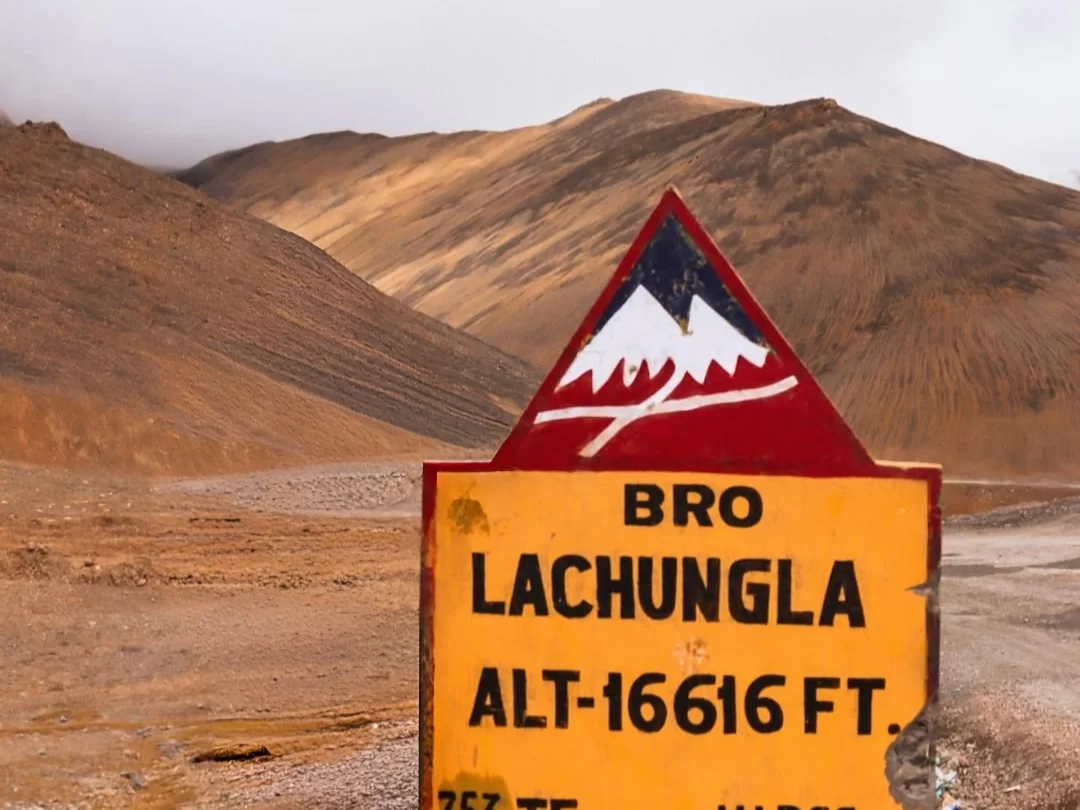
Lachulung La: High-Altitude Mountain Pass on Manali-Leh Highway, Ladakh, India

Lachulung La , Leh
Visitors cross this pass while traveling between Sarchu and Pang, making it a critical high-altitude transition point on the journey from Himachal Pradesh to Leh. It is characterized by its rugged terrain, unique rock formations, and its position as one of the highest points accessible by road on the Trans-Himalayan circuit.

Quick Facts About Lachulung La

Entry Fee Free
Timings 06:00 - 18:00
Altitude (m) 5059
Ideal Visit Duration (hrs) 0.1
Best Time of Day Morning
Crowd Level Moderate
Distance from Sarchu (km) 54
Walking Difficulty Moderate
Parking Available Yes
Last Mile Access Road
Suitable for Kids No
Suitable for Seniors No
Wheelchair Friendly No

Why Visit Lachulung La Pass on the Leh-Manali Highway

Travelers cross Lachulung La Pass, standing at 16,616 feet, as a vital high-altitude milestone on the journey between Sarchu and Pang. It is a primary transit point for those navigating the Manali-Leh Highway, offering a necessary stop to witness the sheer scale of the Zanskar Range and the transition into the deeper, more desolate terrain of the Ladakh plateau.

The on-ground atmosphere is defined by its rugged, moon-like appearance, featuring ochre-colored ridges and steep scree slopes that lack any significant vegetation. Visitors experience the raw power of the trans-Himalayan environment through biting winds and thin oxygen, creating a sense of being at the edge of the world where the only color comes from the fluttering Buddhist prayer flags at the summit.

Lachulung La is distinct for its position separating the valleys of the Tsarap and Tozay Chu rivers, providing a unique vantage point to view the natural rock-cut canyons and deep gullies formed by centuries of glacial melt. It offers travelers a rare opportunity to spot high-altitude wildlife, such as the Bharal (blue sheep) or Marmots, amidst the desolate limestone formations that make this stretch one of the most geologically fascinating parts of the route.

Historical and Geographic Significance of Lachulung La Pass

Lachulung La Pass is a high-altitude mountain crossing situated at an elevation of 5,059 meters (16,598 feet) within the Zanskar Range. Located on the border between Himachal Pradesh and Ladakh along the Leh-Manali Highway, it serves as one of the primary high-altitude gateways for travelers and supply convoys moving toward the Indus Valley.

Geographically, the pass bridges the gap between the Tsarap Chu river valley and the Toozay valley. It is characterized by its rugged, weather-worn rock formations and steep scree slopes, which are the result of centuries of intense cryoturbation and wind erosion in a high-alpine desert environment.

The pass is a vital segment of the ancient trade routes that once connected the Lahaul region with Western Tibet and Central Asia. Today, it remains a critical logistical point managed by the Border Roads Organization (BRO), marking the transition into the higher reaches of the Ladakh plateau. Its extreme altitude and thin air make it a significant physiological milestone for tourists navigating the Trans-Himalayan circuit.

Best Time to Visit Lachulung La Pass

Lachulung La, standing at an elevation of 16,616 feet, is a rugged crossing on the Manali-Leh Highway that remains accessible only during the summer months when the pass is cleared of heavy winter snow. Due to its position between the Sarchu plateau and the Pang plains, it is a high-altitude bottleneck where weather stability is essential for safe transit.

  • Ideal months: June to September is the only window for travel, with early June providing spectacular snow corridors and September offering the most reliable road surfaces before the autumn freeze.
  • Weather conditions: The pass is characterized by thin air and fierce, dehydrating winds; while daytime temperatures in the sun can reach 10°C, the lack of vegetation and high altitude mean temperatures can plummet to sub-zero levels instantly if clouds block the sun.
  • Periods to avoid: Avoid travel from October through May when the pass is entirely blocked by snow and the Manali-Leh Highway is closed; additionally, the peak monsoon period in August should be approached with extreme caution as the descent toward Pang is highly prone to loose scree slides and road washouts.

How to Reach Lachulung La Pass

Lachulung La (Lachalung La), standing at an elevation of approximately 5,065m (16,616 ft), is a rugged mountain pass located in the Ladakh region along the Leh-Manali Highway. It serves as a formidable crossing between Sarchu and Pang, characterized by its barren, moon-like landscapes and steep gradients.

  • Nearest Airport: Kushok Bakula Rimpochee Airport (IXL) in Leh is the nearest air gateway, situated approximately 165 km to the north. Most travelers fly into Leh and spend several days acclimatizing before attempting the drive south toward this pass.
  • Nearest Railway Station: Chandigarh Railway Station (broad gauge) is the most viable railhead, though it is roughly 560 km away. From there, travelers typically hire a private vehicle or take a bus via Manali.
  • Road Access and Connectivity: The pass is located directly on NH3. If traveling from the Manali side, the route follows the ascent from Sarchu via the Nakee La pass before reaching Lachulung La. The descent toward Pang leads through the spectacular Kangla Jal gorge.
  • Last-Mile Connectivity: Access is limited to high-clearance vehicles, 4x4 SUVs, and heavy-duty motorcycles. While the Border Roads Organization (BRO) maintains the highway, the stretch around Lachulung La is prone to landslides and features a rough, unpaved surface consisting of loose rocks and scree.
  • Travel Conditions: The pass is seasonally open from June to October. Due to the high altitude, oxygen levels are significantly depleted. It is a transit point rather than a destination; tourists are advised not to linger at the summit for more than 15 minutes to avoid severe AMS symptoms.
  • Logistical Limitations: This is a remote wilderness zone with no mobile connectivity, electricity, or permanent settlements. The nearest basic transit camps with medical oxygen are located at Sarchu (54 km south) and Pang (24 km north). Ensure your vehicle has a full tank, as the nearest reliable fuel is hundreds of kilometers away.

What to Expect When You Visit Lachulung La

  • Environment and Surroundings: Situated at an elevation of 5,059 meters (16,598 feet), the pass marks a transition into the rugged Zanskar Range. The landscape is a high-altitude cold desert characterized by crumbling ochre-colored rock formations, deep-cut gullies, and a complete absence of vegetation. Strong, freezing winds are a constant presence at the ridge, even during the peak summer months of June to September.
  • Facilities and Amenities: There is no infrastructure at the summit. No shops, toilets, or shelters are available. The nearest basic temporary dhabas and army transit camps are located 24 km north in Pang or roughly 54 km south in Sarchu. Mobile network connectivity is non-existent at the pass and remains patchy for a significant radius in both directions.
  • Accessibility and Movement: The pass is located on the Leh-Manali Highway (NH3) and is generally motorable for four to five months a year. While the road is paved, it is frequently damaged by frost heaves and heavy truck traffic, resulting in rough, gravel-heavy sections. The ascent is less steep than the neighboring Gata Loops, but the high elevation often causes vehicle engines to lose power and requires careful gear management.
  • Typical Visitor Behavior and Conditions: Most travelers stop only for 5–10 minutes to take photographs with the prayer flags and the summit marker. Due to the extreme altitude, even minor physical exertion like walking can cause immediate breathlessness. Visitors are advised to monitor for signs of Acute Mountain Sickness (AMS), such as dizziness or nausea, and should avoid sleeping or prolonged halts at the summit to prevent rapid health deterioration.

Essential Visitor Information for Lachulung La Pass

  • Crowd and Weather: Situated at 5,059 meters (16,600 feet), this pass is a major transit point on the Manali-Leh Highway; the environment is characterized by a high-altitude desert climate with oxygen-depleted air and persistent, high-velocity winds that create a significant wind-chill factor even in mid-summer.
  • Peak and Quiet Visiting Hours: Highest traffic occurs between 10:00 AM and 2:00 PM as convoys move between Sarchu and Leh; early morning (6:00 AM – 8:00 AM) offers the most serene experience but requires navigating frozen meltwater streams (nullahs) on the approach roads.
  • Dress Code: Technical layering is required; a heavy-duty windproof jacket, thermal base layers, and UV-protective eyewear are non-negotiable to combat the intense solar radiation and sub-zero wind gusts.
  • Safety and Altitude Cautions: Because it is over 500 meters higher than the nearby Nakee La, the risk of Acute Mountain Sickness (AMS) is high; visitors should remain at the pass for no more than 15 minutes and avoid any physical overexertion like running or climbing the surrounding ridges.
  • Terrain and Road Conditions: The ascent involves rugged, unpaved stretches and narrow bottle-necks; travelers should be alert for falling rocks and "shooting stones" in the dry, crumbly canyons leading up to the summit.

Professional Photography and Viewpoints at Lachulung La

Lachulung La, situated at an altitude of 5,065 meters (16,616 feet), serves as a rugged transition point between the Tsarap Chu and Toay Valley. Its photography profile is defined by unique weathered rock pillars and deep ochre-colored canyons that differ significantly from the granite peaks found elsewhere on the Leh-Manali Highway.
  • Iconic Rock Formations: Approximately 2-3 kilometers before reaching the summit from the Pang side, look for the "Hoodoos" or natural sedimentary pillars. These provide excellent foreground interest for wide-angle shots of the valley floor.
  • The Toay Valley Vista: From the summit marker, face south toward the descent into the Toay River canyon. This angle captures the road carved into sheer limestone cliffs, offering a dramatic sense of depth and engineering scale.
  • Golden Hour and Shadow Play: Due to the narrowness of the surrounding valleys, the "photographic window" is short. Mid-afternoon (2:00 PM – 4:00 PM) provides the best lateral light to emphasize the textures of the crumbling shale and sedimentary layers.
  • Wind and Stability Factors: Lachulung La is notoriously windy due to the funneling effect of the surrounding ridges. If shooting long exposures or using a telephoto lens, ensure your tripod is low to the ground and weighted to combat the high-velocity gusts that are common above 5,000 meters.
  • Traffic and Safety: The pass is a major bottleneck for heavy trucks. Always park in the designated wide shoulders near the prayer flags; avoid setting up on the narrow bends of the pass to maintain visibility for ascending convoys.

Near By Attraction

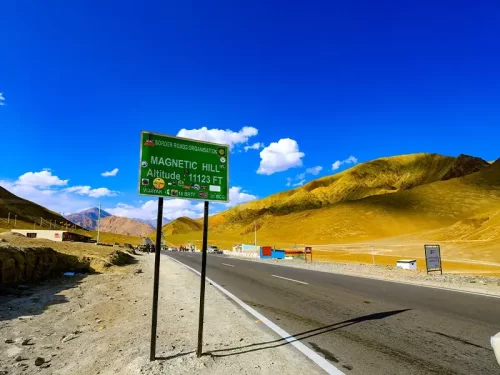
Magnetic Hill sign at Ladakh BRO during clear skies, featuring altitude 11312 ft board yellow mountains highway, perfect adventure Ladakh tour package.  Tourist Attraction

Magnetic Hill

Magnetic Hill is a gravity hill located at an elevation of approximately 3,350 meters (10,991 feet) on the Leh-Srinagar National Highway.
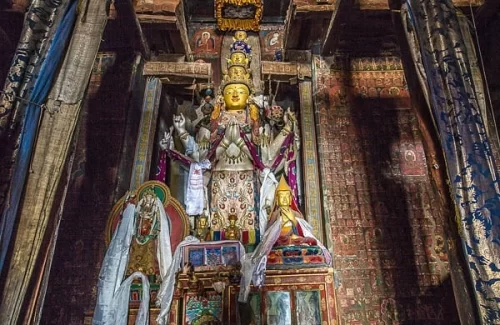
Buddha statue at Alchi Gompa Ladakh in dimly lit shrine during misty weather, featuring multiple arms prayer scarves and wall murals, perfect spiritual Ladakh tour package. Monastery

Alchi Monastery

Alchi Monastery is a historic Buddhist temple complex situated at an elevation of approximately 3,100 meters (10,170 feet) on the southern bank of the Indus River.
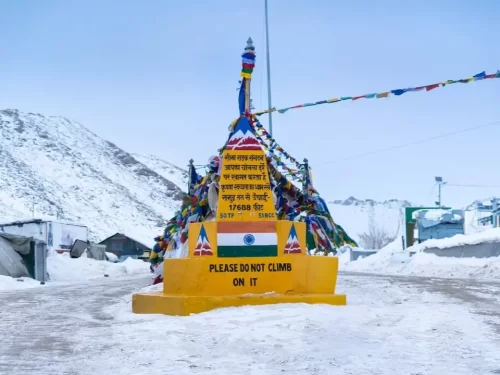
Memorial at Changla Pass 17688 ft during overcast skies, featuring prayer flags, Indian tricolor, snowy mountains, perfect spiritual adventure Ladakh tour pack Mountain Pass

Chang La Pass

Chang La is a high-altitude mountain pass situated at an elevation of approximately 5,360 meters (17,585 feet) on the road between Leh and Pangong Tso.

Frequently Asked Questions About Lachulung La

Nakee La Pass is located on the Leh Manali Highway in Ladakh between Sarchu and Pang. It stands at an elevation of around 4700 meters and forms part of the high altitude mountain route connecting Leh city with Himachal Pradesh.
Nakee La Pass can be reached by road from Leh city in Ladakh while traveling toward Manali. The drive usually takes several hours depending on weather and road conditions along the Leh Manali Highway.
No separate permit is required specifically for Nakee La Pass in Ladakh when traveling on the Leh Manali Highway. Travelers should still carry valid identification while journeying from Leh city.
The best time to visit Nakee La Pass in Ladakh is from June to September when the highway remains open for regular traffic. Access outside this period depends on snow clearance and weather stability.
Most visitors spend 10 to 20 minutes at Nakee La Pass in Ladakh for short breaks and photographs. It is generally a transit stop rather than a standalone sightseeing destination.
Nakee La Pass in Ladakh can be visited by families who are accustomed to long mountain drives. Proper acclimatization in Leh city is important before crossing high altitude passes.
Road conditions at Nakee La Pass in Ladakh include steep ascents, sharp curves, and occasional rough patches. Careful driving is necessary due to altitude and changing mountain weather.
There are no food stalls or fuel stations directly at Nakee La Pass in Ladakh. Travelers should refuel and arrange meals at Leh city, Sarchu, or other designated highway stops.
Nakee La Pass is situated at high altitude in Ladakh where oxygen levels are lower than in plains. Some travelers may feel mild breathlessness if they ascend rapidly without spending time in Leh city first.
Nakee La Pass in Ladakh is commonly combined with travel toward Sarchu, Pang, or Manali as part of the Leh Manali Highway journey. It naturally fits into longer road circuits starting from Leh city.
Mobile network coverage at Nakee La Pass in Ladakh is generally unavailable due to its remote location. Travelers should inform family members before leaving Leh city and not rely on connectivity along this stretch.

Loved this place ? Let’s Plan Your Ladakh Trip

Get customized Ladakh tour planning designed around altitude comfort, acclimatization time, weather windows, and real Himalayan road conditions. Whether you are visiting for high mountain passes, monasteries, lakes, or remote valley experiences, our exper

⚡ Quick Response | 💰 Free consultation | 🕒 24×7 expert support

×

Plan Your Trip