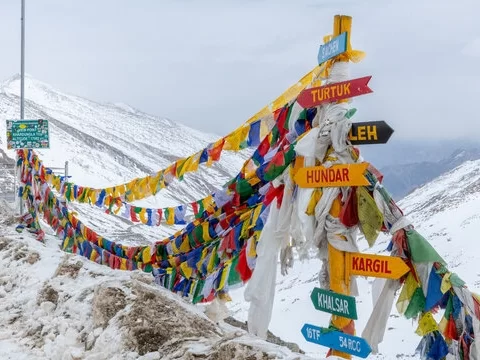
Khardung La – One of the World’s Highest Motorable Mountain Passes in Ladakh

Khardung La , Hunder
Khardung La is a historic mountain pass located north of Leh and serves as the main route connecting Leh to Nubra Valley. Situated at an extremely high altitude, the pass has long held strategic and logistical importance and is maintained by the Border Roads Organisation. Today, Khardung La is a major attraction for travelers seeking adventure, snow-covered landscapes, and panoramic Himalayan views. The pass also features a small viewpoint area and signboard that marks it as one of the highest motorable roads in the

Quick Facts About Khardung La

Entry Fee Free
Timings 00:00 - 23:59
Altitude (m) 5359
Ideal Visit Duration (hrs) 1
Best Time of Day Morning
Crowd Level High
Distance from Leh (km) 39
Walking Difficulty Moderate
Parking Available Yes
Last Mile Access Road
Suitable for Kids Yes
Suitable for Seniors No
Wheelchair Friendly No

Why Visit Khardung La

Khardung La is a must-visit for travelers seeking adventure and a true high-altitude Himalayan experience. The atmosphere at the pass is raw and dramatic, with thin air, strong winds, and vast mountain landscapes creating a sense of achievement and awe. Standing at such an extreme elevation offers a unique thrill that few places in the world can match.

What makes Khardung La special is its reputation as one of the world’s highest motorable mountain passes and its role as the gateway to Nubra Valley. The snow-covered surroundings, iconic altitude signboard, and panoramic views of the Ladakh ranges make it a memorable stop for road trip enthusiasts, bikers, and photographers. Its strategic importance and challenging conditions add to its legendary status in Ladakh travel.

History of Khardung La

Khardung La has historically served as a vital mountain pass connecting Leh with Nubra Valley and the northern regions of Ladakh. For centuries, it functioned as an important route for traders, caravans, and travelers moving along trans-Himalayan trade paths that linked Ladakh with Central Asia.

In more recent times, Khardung La gained strategic importance for military and logistical movement due to its proximity to sensitive border areas. The pass is maintained by the Border Roads Organisation and continues to play a key role in supplying remote regions of Ladakh. Its transformation from an ancient trade route to a modern high-altitude roadway highlights its long-standing importance in the region’s connectivity and defense.

Best Time to Visit Khardung La

The best time to visit Khardung La is from May to September, when the pass is accessible and weather conditions are relatively stable. During these months, snow clearance allows regular vehicle movement, and visibility is better for enjoying the surrounding mountain views.

Summer offers safer driving conditions compared to winter, when heavy snowfall often leads to road closures. Morning visits are strongly recommended, as weather tends to deteriorate later in the day with increased winds and cloud cover.
  • May to June: Fresh snow views with fewer tourists
  • July to August: Peak season with clear access and moderate crowds
  • September: Crisp weather and reduced tourist traffic
  • Early morning is the safest and most comfortable time to visit

How to Reach Khardung La

  • By Air: The nearest airport is Kushok Bakula Rimpochee Airport in Leh. Khardung La is located about 39 km from Leh. From the airport, travelers must proceed by road to reach the pass.
  • By Road from Leh: Khardung La is accessed via a well-known mountain road from Leh. The drive takes approximately 1.5–2 hours, depending on weather and traffic. The route ascends steeply and offers scenic Himalayan views along the way.
  • Local Transport: Taxis, rented cars, and motorcycles are commonly used to reach Khardung La. Guided tours from Leh are also available and recommended for first-time visitors.
  • Permit Requirement: An Inner Line Permit (ILP) is required for Indian nationals, while foreign travelers need a Protected Area Permit (PAP). Permits are checked en route and must be obtained in Leh.
  • Road Conditions: Roads are subject to sudden weather changes, snow, and landslides. Travelers should check local conditions and avoid visiting during bad weather.

What to Expect When You Visit Khardung La

  • Extremely high altitude with thin air, making even short walks physically demanding.
  • Snow-covered landscapes and rugged mountain views, depending on the season.
  • A brief stop at the iconic Khardung La signboard, popular for photos and viewpoints.
  • Cold temperatures and strong winds, even during summer months.
  • Limited facilities, usually including a small refreshment stall operated by the army.
  • A short visit is recommended to avoid altitude sickness.
  • Increased military presence due to strategic importance of the pass.

Important Visitor Information

  • Crowd & Weather Notes: Khardung La sees moderate to high visitor traffic during peak season from June to August. Weather conditions can change rapidly, with sudden snowfall, strong winds, and reduced visibility even in summer.
  • Peak / Quiet Hours: Peak hours are between 10:00 AM and 1:00 PM when most tourist vehicles arrive. Quiet hours are early morning, offering clearer skies, lighter winds, and safer driving conditions.
  • Dress Code: Heavy warm clothing is essential, including insulated jackets, gloves, caps, and sturdy footwear. Sunglasses and sunscreen are also important due to intense UV exposure at high altitude.
  • Safety Notes: Avoid staying longer than 20–30 minutes to reduce the risk of altitude sickness. Stay hydrated, avoid running or exertion, and descend immediately if symptoms such as dizziness or breathlessness occur. Follow army and local authority instructions at all times.

Photography and Viewpoints at Khardung La

  • Khardung La offers dramatic high-altitude photography with sweeping views of rugged mountain ranges and snow-covered landscapes.
  • The iconic Khardung La signboard is the most popular photo spot, symbolizing the achievement of reaching one of the world’s highest motorable passes.
  • Early morning provides the best light and visibility, with clear skies and minimal cloud cover for wide-angle mountain shots.
  • Seasonal snow along the roadside adds contrast and depth to photographs, especially during early summer.
  • Strong sunlight and high UV levels make polarizing filters useful for reducing glare and enhancing sky clarity.
  • Wind conditions can be harsh, so securing cameras and tripods is essential.
  • Drone photography is strictly restricted due to military sensitivity and requires special government permission.

Near By Attraction

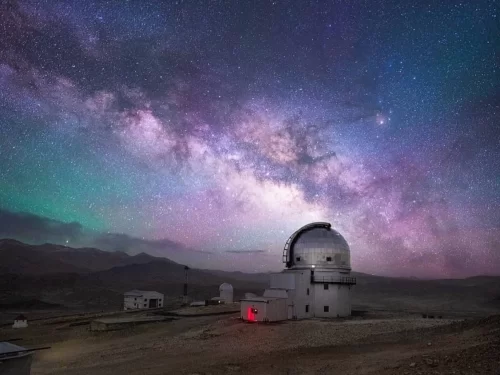
Hanle Indian Astronomical Observatory Milky Way night sky dome glow Himalayan peaks, Chandra Telescope dark sky reserve astrophotography, perfect stargazing cosmic adventure package.  Observatory

Hanle Observatory

Hanle Observatory is one of the world’s highest astronomical observatories, located in the cold desert of Ladakh and operated for deep-space research.
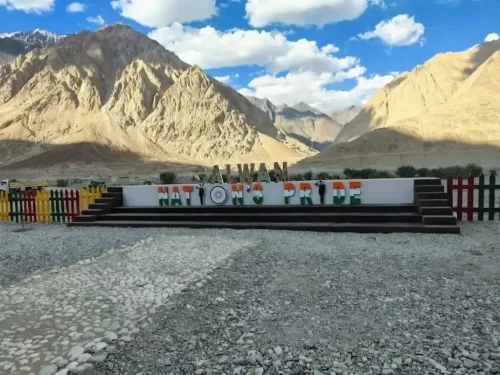
Galwan War Memorial, solemn tribute in Ladakh honoring the brave Indian soldiers who sacrificed their lives in the Galwan Valley clash. Memorial

Galwan War Memorial

Galwan War Memorial is a national war memorial in eastern Ladakh built in memory of the Indian Army soldiers who lost their lives in the Galwan Valley clash.
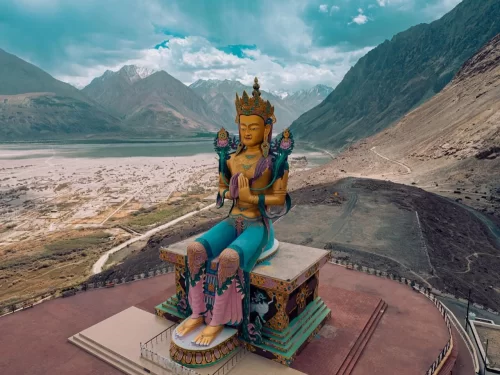
Diskit Gompa Ladakh aerial golden Maitreya Buddha statue snowy peaks Shyok River Nubra Valley desert backdrop, perfect Leh Ladakh spiritual adventure package. Monastery

Diskit Monastery

Diskit Monastery, also known as Deskit Gompa, is the oldest and largest Buddhist monastery in Nubra Valley, renowned for its giant Maitreya Buddha statue and panoramic valley views.

Frequently Asked Questions About Khardung La

Khardung La is a high mountain pass located about 40 kilometers from Leh city in Ladakh. It lies on the route connecting Leh to Nubra Valley and is one of the highest motorable passes in the region.
Khardung La can be reached by road from Leh city in approximately 1 to 2 hours depending on traffic and weather conditions in Ladakh. The road is steep and mountainous but commonly used by taxis and private vehicles.
Visitors traveling from Leh to Khardung La require an Inner Line Permit as the pass lies in a restricted area of Ladakh. Permits are usually arranged in Leh city before starting the journey.
The best time to visit Khardung La is between May and September when roads are generally more stable and weather conditions are clearer in Ladakh. Morning hours are preferred for better road conditions.
Khardung La can be visited during winter if the road remains open, though heavy snowfall in Ladakh may lead to temporary closures. Travelers should confirm road status before departure from Leh city.
Travelers usually spend 20 to 30 minutes at Khardung La due to high altitude conditions. Staying longer is not recommended because oxygen levels are lower compared to Leh city.
Khardung La is generally safe for tourists when road conditions are favorable and vehicles are well maintained. Drivers experienced in mountain roads in Ladakh are recommended for a smoother journey.
Visitors should carry warm clothing, stay hydrated, and avoid strenuous activity at Khardung La due to its high altitude. Those coming from Leh city should acclimatize properly before attempting the drive.
Khardung La may not be ideal for individuals with severe breathing or heart conditions due to its extreme altitude in Ladakh. Senior citizens can visit but should limit their time at the top.
Basic facilities such as small refreshment stalls and limited restrooms may be available at Khardung La depending on season. Travelers should not rely heavily on amenities and plan accordingly from Leh city.
Parking space is available near the Khardung La summit for vehicles stopping briefly. The parking area is close to the signboard and viewpoint.
Khardung La is commonly combined with a Nubra Valley trip from Leh city in Ladakh. Most travelers cross the pass as part of their onward journey to Diskit and Hunder.

Loved this place ? Let’s Plan Your Ladakh Trip

Get customized Ladakh tour planning designed around altitude comfort, acclimatization time, weather windows, and real Himalayan road conditions. Whether you are visiting for high mountain passes, monasteries, lakes, or remote valley experiences, our exper

⚡ Quick Response | 💰 Free consultation | 🕒 24×7 expert support

×

Plan Your Trip