Quick Facts About Diskit Monastery
| Entry Fee | Free |
| Timings | 06:00 - 18:00 |
| Altitude (m) | 3144 |
| Ideal Visit Duration (hrs) | 2 |
| Best Time of Day | Morning |
| Crowd Level | Moderate |
| Distance from Leh (km) | 150 |
| Walking Difficulty | Moderate |
| Parking Available | Yes |
| Last Mile Access | Walk |
| Suitable for Kids | Yes |
| Suitable for Seniors | Yes |
| Wheelchair Friendly | No |
Why Visit Diskit Monastery
Diskit Monastery is a must-visit for travelers who want to experience the spiritual heart of Nubra Valley along with breathtaking Himalayan views. The atmosphere is serene yet vibrant, with the soft sound of prayer chants, fluttering prayer flags, and sweeping views of the Shyok River below. Its hilltop location creates a sense of calm and elevation, making it ideal for reflection and cultural exploration.
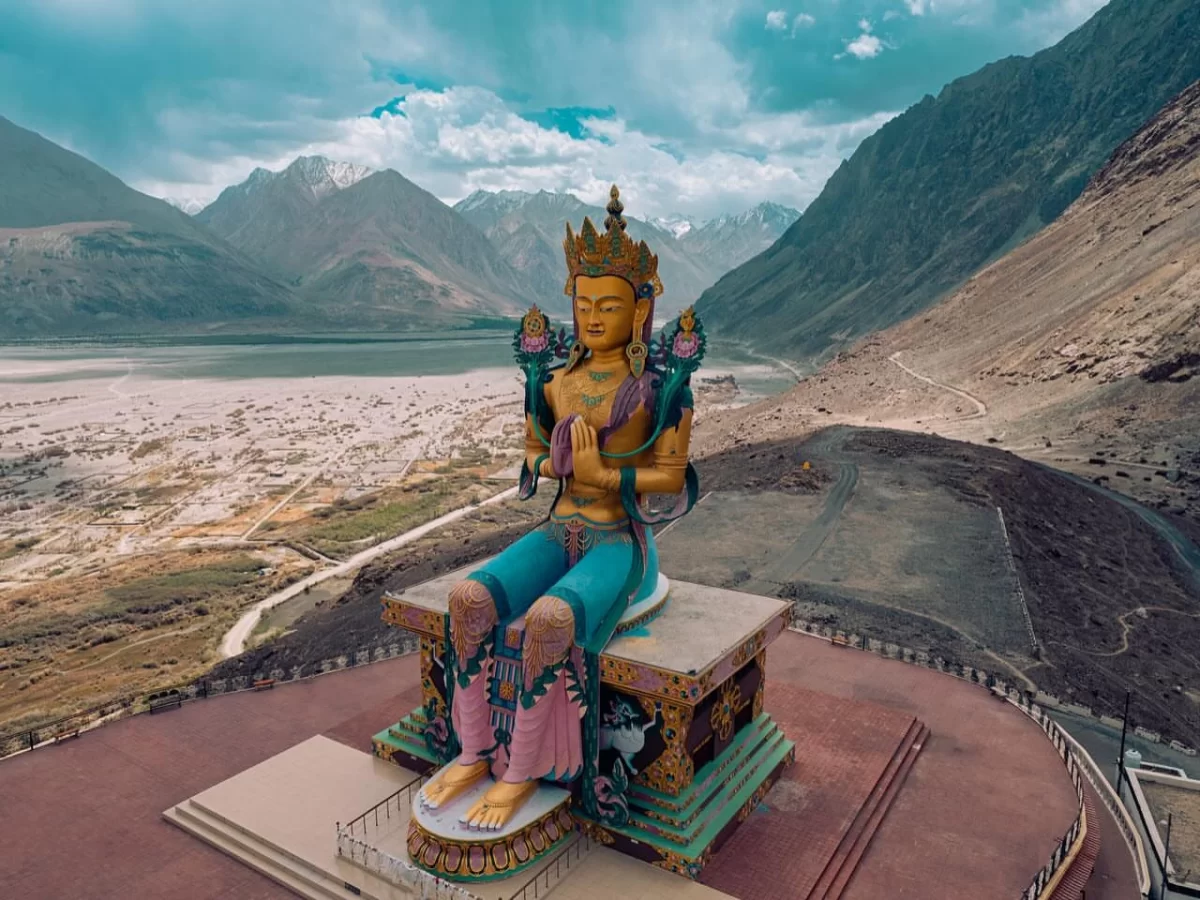
What makes Diskit Monastery truly special is its historical importance and iconic Maitreya Buddha statue, one of the largest in Ladakh. The monastery’s ancient murals, prayer halls, and traditional Gelugpa architecture offer deep insight into Tibetan Buddhism. Combined with panoramic valley vistas and its role as Nubra Valley’s main religious center, Diskit Monastery delivers a rich blend of spirituality, history, and scenic beauty.
History and Religious Significance of Diskit Monastery
Diskit Monastery was founded in the 14th century by Changzem Tserab Zangpo, a disciple of Je Tsongkhapa, the founder of the Gelugpa (Yellow Hat) sect of Tibetan Buddhism. As the oldest monastery in Nubra Valley, it has long served as the primary religious authority for the region and played a key role in the spread of Gelugpa teachings across northern Ladakh.
The monastery is spiritually significant as the administrative head monastery of Nubra Valley, with several smaller gompas under its influence. The towering Maitreya Buddha statue facing the Shyok River symbolizes peace, protection, and harmony, reflecting the monastery’s role in promoting spiritual well-being in this border region. Diskit Monastery continues to function as an active center of worship, education, and annual religious festivals, preserving centuries-old Buddhist traditions.
Best Time to Visit Diskit Monastery
The best time to visit Diskit Monastery is from May to September, when Nubra Valley is fully accessible and weather conditions are suitable for sightseeing. During these months, roads over Khardung La remain open, temperatures are comfortable during the day, and the monastery can be explored without weather-related interruptions.
Summer also coincides with local religious events and clearer skies, offering excellent views of the Shyok River and surrounding mountains. Morning and late afternoon visits are especially rewarding for experiencing prayer sessions and photography.
- May to June: Pleasant weather and fewer crowds
- July to August: Peak tourist season with full accessibility
- September: Clear skies, cooler air, and quieter surroundings
- Morning hours provide a peaceful spiritual atmosphere
How to Reach Diskit Monastery
- By Air: The nearest airport is Kushok Bakula Rimpochee Airport in Leh. Diskit Monastery is located approximately 150 km from Leh. From the airport, travelers must continue by road to Nubra Valley.
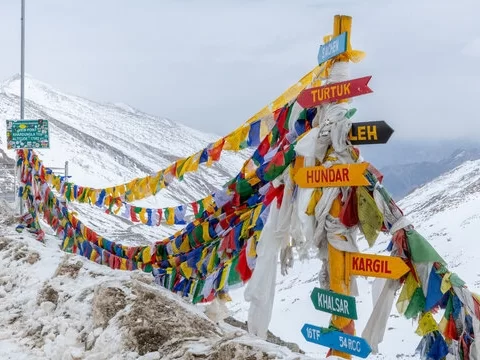
- By Road from Leh: Diskit Monastery can be reached via a scenic drive from Leh through Khardung La Pass. The journey takes around 5–6 hours, depending on weather and road conditions. The route passes through Khardung La, Khardung village, and Khalsar before reaching Diskit town.
- Local Transport: Taxis are the most convenient and reliable option to reach Diskit Monastery. Shared taxis and tourist vehicles are available from Leh during the peak season.
- Permit Requirement: Indian nationals need an Inner Line Permit (ILP) to visit Nubra Valley, including Diskit. Foreign nationals require a Protected Area Permit (PAP), which must be arranged in Leh before travel.
- Last-Mile Access: The monastery is accessible via a paved road, followed by a short uphill walk from the parking area.
What to Expect When You Visit Diskit Monastery
- A majestic hilltop monastery offering sweeping panoramic views of Nubra Valley and the Shyok River.
- The iconic 32-meter Maitreya Buddha statue, one of the largest in Ladakh, symbolizing peace and protection.
- Traditional prayer halls adorned with ancient murals, thangkas, and Buddhist statues.
- A calm yet active spiritual environment with monks performing daily prayers and rituals.
- A moderate uphill walk and steps to reach different sections of the monastery complex.
- A respectful and quiet atmosphere where modest clothing and mindful behavior are expected.
- Well-maintained surroundings with basic facilities and viewing points for visitors.
Important Visitor Information
- Crowd & Weather Notes: Diskit Monastery experiences moderate crowds during peak tourist months from June to August. Weather is generally dry in summer, but temperatures can be cool due to altitude and winds, especially in the afternoon.
- Peak / Quiet Hours: Peak hours are between 11:00 AM and 3:00 PM when most tour groups arrive. Quiet hours are early morning (7:00 AM–9:00 AM) and late afternoon, offering a more peaceful experience.
- Dress Code: Visitors should wear modest clothing covering shoulders and knees. Warm layers are recommended year-round, along with comfortable shoes suitable for walking on uneven paths and steps.
- Safety Notes: Take care while climbing steps and walking on slopes, especially at high altitude. Stay hydrated, move slowly to avoid altitude sickness, and follow monastery rules regarding silence and photography.
Photography and Viewpoints at Diskit Monastery
- The elevated hilltop location provides some of the best panoramic viewpoints in Nubra Valley, overlooking the Shyok River and surrounding mountains.
- Early morning and late afternoon light is ideal for capturing the monastery complex and the Maitreya Buddha statue with soft shadows and clear skies.
- The Maitreya Buddha statue area offers wide-angle photography opportunities, with dramatic backdrops of the valley and distant peaks.
- Exterior courtyards and terraces serve as natural viewing platforms for landscape photography and scenic shots of Diskit town below.
- Intricate murals, prayer wheels, and architectural details provide excellent subjects for cultural photography, mainly in well-lit areas.
- Photography inside prayer halls may be restricted; visitors should always seek permission and respect posted guidelines.