Quick Facts About Jama Masjid Leh
| Entry Fee | Free |
| Timings | 06:00 - 20:00 |
| Altitude (m) | 3500 |
| Ideal Visit Duration (hrs) | 1 |
| Best Time of Day | Morning |
| Crowd Level | Moderate |
| Distance from Leh (km) | 0 |
| Walking Difficulty | Easy |
| Parking Available | No |
| Last Mile Access | Road |
| Suitable for Kids | Yes |
| Suitable for Seniors | Yes |
| Wheelchair Friendly | No |
Why Visit
Jama Masjid in Leh is worth visiting to understand the Islamic heritage that exists alongside Buddhism in Ladakh. The atmosphere is calm and respectful, shaped by daily prayers and the steady presence of local worshippers rather than tourist activity.
What makes Jama Masjid special is its role as a central religious institution for Leh’s Muslim community. Its architecture reflects a blend of local and Central Asian influences, and its location in the main market area highlights the historical coexistence of different cultures and faiths within the town.
History
Jama Masjid in Leh was built in the 17th century during the reign of King Deldan Namgyal, around 1666. Its construction is linked to Ladakh’s historical relations with the Mughal Empire, reflecting a period of political negotiation and coexistence rather than conflict.
The mosque has served as the primary place of worship for Leh’s Muslim community for centuries. Its continued use highlights the long standing Islamic presence in Ladakh and the region’s tradition of religious diversity, with the mosque remaining an active center for daily prayers and community gatherings to this day.
Best Time to Visit
Jama Masjid can be visited throughout the year due to its central location in Leh town. Seasonal weather mainly affects overall comfort in Leh rather than access to the mosque itself.
- May to September: Best time to visit, with pleasant weather and easy movement around the market area.
- June to August: Ideal months for combining the visit with town walks and nearby attractions.
- October: Cooler and quieter, suitable for short daytime visits.
- November to April: Winter months are extremely cold, but the mosque remains active for worship.
- Best Time of Day: Late morning or early afternoon, outside prayer times, is most suitable for visitors.
- Friday Visits: Expect higher crowd levels during Friday prayers.
How to Reach
- From Leh Main Market: Jama Masjid is located directly within the main market area and can be reached easily on foot.
- On Foot: The mosque is best accessed by walking through the central market lanes. The route is flat and suitable for all age groups.
- By Taxi: Local taxis can drop visitors near the market, followed by a short walk due to restricted vehicle access.
- By Private Vehicle: Direct vehicle access is limited. Parking is available in designated areas around the market.
- Public Transport: Local buses and shared taxis stop near the main market, from where the mosque is easily accessible.
What to Expect When You Visit
- An active place of worship with regular daily prayers conducted by the local Muslim community.
- A peaceful and respectful atmosphere, especially outside prayer times.
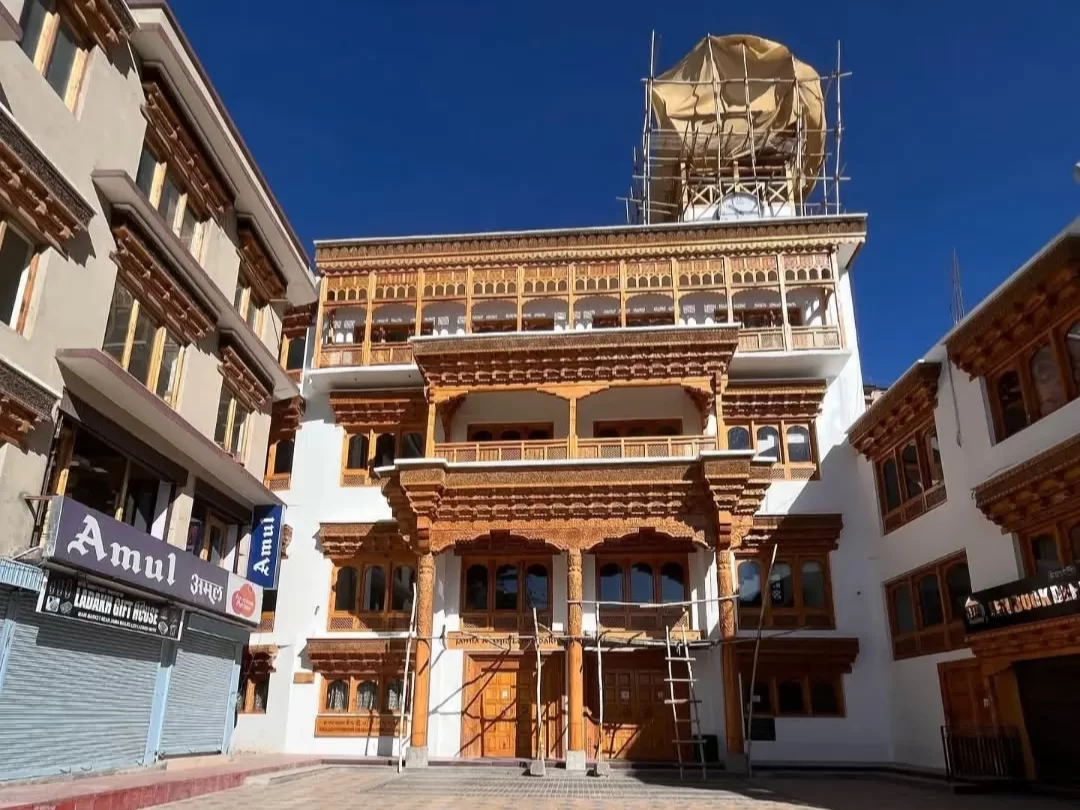
- Traditional mosque architecture featuring wooden elements and simple decorative details.
- Limited access to interior areas for non worshippers, depending on prayer schedules.
- No guided tours or informational displays, as the mosque primarily serves religious functions.
- A short visit duration, usually 15 to 30 minutes.
- A meaningful cultural stop while exploring the Leh Main Market area.
Important Visitor Information
- Crowd and Weather Notes: Jama Masjid experiences regular local footfall, with higher crowds during Friday prayers and Islamic festivals. Being in the town center, weather impact is minimal, though winters are extremely cold.
- Peak and Quiet Hours: Peak hours occur during prayer times, especially midday on Fridays. Late morning and early afternoon outside prayer hours are generally quieter.
- Dress Code: Modest clothing is mandatory. Visitors should cover arms and legs, and women may be required to cover their heads. Footwear must be removed before entry.
- Safety Notes: The mosque is generally safe. Visitors should be mindful of prayer activities and follow instructions from mosque staff or local worshippers.
Photography and Viewpoint
- Photography at Jama Masjid is generally restricted due to its active religious use.
- Exterior photography of the mosque façade is usually permitted from public areas.
- Interior photography is often not allowed, especially during prayer times.
- The mosque does not offer elevated viewpoints or panoramic views.
- Morning light highlights architectural details of the exterior walls and entrance.
- Visitors should always ask permission before taking any photographs.
- Respect for worshippers and religious practices is essential at all times.