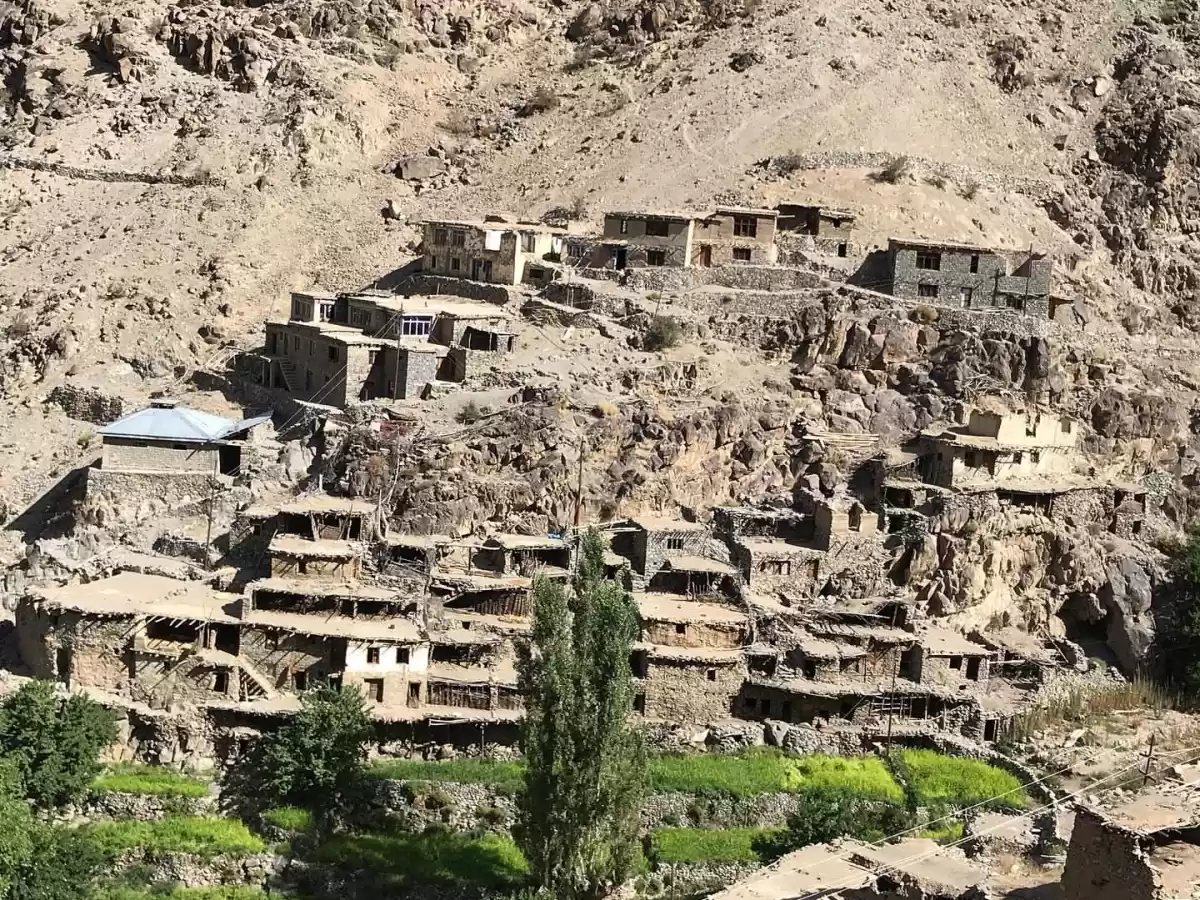
Hunderman Village Kargil Ladakh India

Hunderman Village , Kargil
Hunderman Village, also called Hundarman Brok, is located in the Kargil district of Ladakh close to the India Pakistan Line of Control. The village gained attention after the Kargil conflict, when several abandoned bunkers, weapons, and personal items from the war were discovered and later preserved locally. Today, Hunderman offers a rare look into recent border history alongside traditional Balti village life, making it more of a reflective stop than a conventional tourist attraction.

Quick Facts About Hunderman Village

Entry Fee Free
Timings 09:00 - 18:00
Altitude (m) 2700
Ideal Visit Duration (hrs) 1
Best Time of Day Morning
Crowd Level Low
Distance from Kargil (km) 10
Walking Difficulty Easy
Parking Available Yes
Last Mile Access Road
Suitable for Kids Yes
Suitable for Seniors Yes
Wheelchair Friendly No

Why Visit Hunderman Village

Hunderman Village is visited for its recent border history and lived reality rather than scenery or monuments. It offers a grounded perspective on life near the Line of Control and preserves physical traces of the Kargil conflict through locally curated exhibits and abandoned structures.

Atmosphere

The atmosphere is quiet and reflective. Daily village life continues at a slow pace, shaped by proximity to the border rather than tourism. There is little commercial activity, and visitors are expected to move respectfully through residential lanes and open fields.

What Makes It Special

What makes Hunderman Village distinct is the presence of preserved wartime remnants found after the conflict, now displayed by residents as informal heritage collections. Unlike formal museums, these artifacts remain embedded in the village setting, offering an unfiltered look at recent history alongside traditional Balti culture and architecture.

Border Legacy and Local Context of Hunderman Village

Hunderman Village sits close to the Line of Control and was directly affected during the Kargil conflict. After hostilities ended, villagers discovered abandoned bunkers, weapons, uniforms, and personal belongings scattered across nearby fields and hillsides. These remnants were left behind as forces withdrew, turning parts of the village landscape into unintended records of recent conflict.

Rather than removing or commercializing these items, residents preserved them as informal exhibits within the village. This local effort transformed Hunderman into a place of memory, where physical evidence of conflict exists alongside everyday village life. The site does not function as an official memorial, but as a community maintained reminder of the impact of war on civilian spaces.

Today, Hunderman represents a rare example of living border history, where the past is documented through artifacts and personal narratives rather than monuments or institutions. Its significance lies in witnessing how a small village adapted and continued life after being at the center of a modern military conflict.

Best Time to Visit Hunderman Village

The best time to visit Hunderman Village is from late April to October, when roads around Kargil are fully accessible and weather conditions are suitable for outdoor exploration. During this period, visitors can comfortably walk through the village and view preserved wartime remnants without weather disruptions.

May to September offers the most stable conditions, with moderate daytime temperatures and clear visibility. Winter months bring heavy cold and snowfall, limiting access and making village paths difficult to navigate.
  • Late April to June provides clear weather with minimal visitors
  • July and August remain accessible with slightly warmer conditions
  • September offers crisp air and quieter surroundings
  • October marks the onset of cold with reduced daylight

How to Reach Hunderman Village

  • By Air: The nearest airport is Leh Airport. From Leh, travel by road to Kargil, which serves as the base for visiting Hunderman Village.
  • By Road from Kargil: Hunderman Village is located about 10 km from Kargil town and can be reached easily by taxi or private vehicle via a fully motorable road.
  • By Road from Leh: The Leh to Kargil highway is open seasonally, usually from April to November, depending on weather and pass conditions.
  • Local Access: Vehicles can reach the village directly. Short walks are required within the village to explore preserved areas.
  • Public Transport: Shared taxis and local buses operate between Kargil and nearby villages, but frequency is limited and schedules may change.

What to Expect When You Visit Hunderman Village

  • A quiet border village where daily life continues with minimal tourism presence
  • Informal heritage displays created by locals, showcasing wartime remnants found in surrounding areas
  • Simple village lanes and open fields rather than structured sightseeing points
  • No formal visitor facilities such as ticket counters, guided tours, or cafes
  • Interaction with residents may be limited, as this is a living village and not a curated attraction
  • A reflective environment that emphasizes recent history over scenic or architectural highlights
  • Short visit duration, often combined with a drive around Kargil outskirts

Important Visitor Information

  • Crowd and Weather Notes: Hunderman Village remains largely uncrowded throughout the year. Weather is typical of the Kargil region, with strong sun during the day and cooler temperatures in the evening, even in summer.
  • Peak and Quiet Hours: There are no defined peak hours. Late morning to afternoon is the most comfortable time to explore the village. Early mornings and evenings can be colder and quieter.
  • Dress Code: No formal dress code is enforced, but modest clothing is recommended as the village is a residential area with cultural sensitivity.
  • Safety Notes: The village lies close to the Line of Control, so visitors should remain within permitted areas and follow local guidance. Avoid wandering into restricted zones or abandoned structures without supervision.

Photography and Viewpoints at Hunderman Village

  • Photography here focuses more on context and storytelling than scenic landscapes, capturing village life, preserved artifacts, and border surroundings.
  • Best light conditions are late morning to afternoon, when village lanes and open areas are evenly lit.
  • There are no designated viewpoints or platforms; photographs are taken from ground level within the village.
  • Wartime remnants displayed by locals can be photographed respectfully, without moving or touching items.
  • Close up photography of homes or people should be done only with permission, as this is a residential village.
  • Wide angle lenses work well for documenting village layout and surroundings near the border terrain.
  • Tripods are generally unnecessary due to short visit duration and limited open space.
  • Visitors should avoid photographing sensitive locations or any military related infrastructure.

Near By Attraction

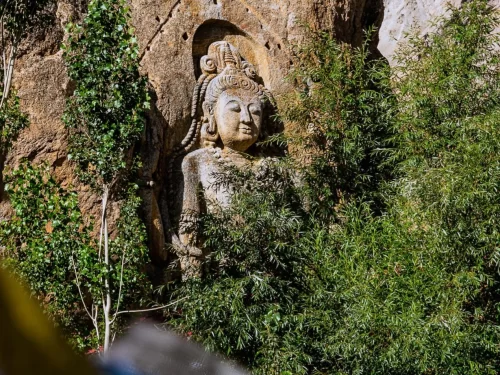
Close-up of majestic 9-meter 8th-century rock-carved Maitreya Buddha statue with ornate crown serene face carved into Mulbekh cliff overgrown with lush green poplars bushes against rugged brown Ladakh rock, perfect India Leh Kargil Buddhist heritage tour  Monastery

Mulbekh Monastery

Mulbekh Monastery is a dual Tibetan Buddhist monastery consisting of two gompas (Serdung and Rgaldan-se) overlooking the Srinagar-Leh Highway at an elevation of approximately 3,304 meters (10,840 feet).
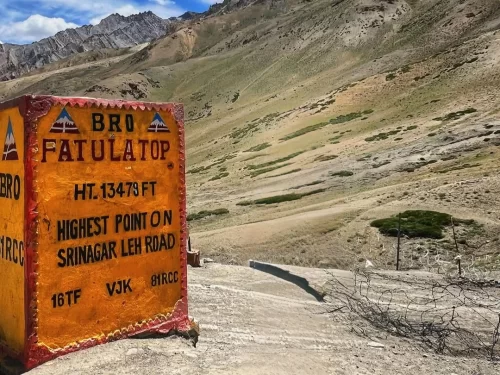
A vibrant yellow BRO sign marks the summit of Fotu La Pass at 13,479 feet, set against the sweeping, arid slopes and rugged peaks of the Himalayan landscape on the Srinagar-Leh highway. Mountain Pass

Fotu La Pass

Fotu La is a high-altitude mountain pass situated at an elevation of approximately 4,108 meters (13,478 feet) in the Zanskar Range of the Himalayas.
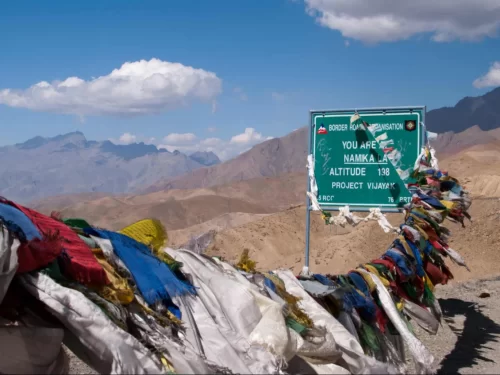
Namika La Pass signboard Ladakh India during clear partly cloudy day, featuring altitude marker prayer flags barren mountains highway, perfect high-altitude adventure Ladakh tour package. Mountain Pass

Namika La Pass

Namika La, also known as the Pillar of the Sky, is a high-altitude mountain pass situated at an elevation of approximately 3,700 meters (12,139 feet) in the Zanskar Range.

Frequently Asked Questions About Hunderman Village

Hunderman Village is located near Kargil in western Ladakh close to the Line of Control. It is a historic border village overlooking the Suru River valley.
Hunderman Village is approximately 210 to 220 kilometers from Leh and the drive usually takes 5 to 6 hours depending on road and weather conditions.
Travelers reach Hunderman Village by driving from Leh along the Leh Srinagar highway toward Kargil and then taking a short diversion to the village.
Visitors do not typically require a special permit to visit Hunderman Village when traveling through the standard Kargil route, though carrying valid identification is advisable due to its proximity to the border.
The best time to visit Hunderman Village is between May and September when weather conditions are stable and roads are clear.
Hunderman Village can be visited during winter if the Leh Srinagar highway remains open, though snowfall and low temperatures may affect travel plans.
Travelers usually spend one to two hours exploring Hunderman Village including time to walk through the preserved old settlement area.
Hunderman Village involves walking through narrow stone pathways and uneven terrain so moderate physical effort is required. Senior citizens can visit if comfortable with short walks.
Hunderman Village is special for its preserved old houses, heritage museum, and its historical significance as a border settlement that changed administration during past conflicts.
Basic homestays and small eateries are available in Hunderman Village and Kargil town offers more accommodation and dining options.
Road conditions toward Hunderman Village are generally good along the main highway though weather and landslides can occasionally affect travel.
Hunderman Village is often combined with visits to Kargil, Suru Valley, and other western Ladakh attractions as part of a road trip from Leh.

Loved this place ? Let’s Plan Your Ladakh Trip

Get customized Ladakh tour planning designed around altitude comfort, acclimatization time, weather windows, and real Himalayan road conditions. Whether you are visiting for high mountain passes, monasteries, lakes, or remote valley experiences, our exper

⚡ Quick Response | 💰 Free consultation | 🕒 24×7 expert support

×

Plan Your Trip