Quick Facts About Hall of Fame
| Entry Fee (INR) | 100 |
| Timings | 09:00 - 19:00 |
| Altitude (m) | 3500 |
| Ideal Visit Duration (hrs) | 2 |
| Best Time of Day | Morning |
| Crowd Level | Moderate |
| Distance from Leh (km) | 4 |
| Walking Difficulty | Easy |
| Parking Available | Yes |
| Last Mile Access | Road |
| Suitable for Kids | Yes |
| Suitable for Seniors | Yes |
| Wheelchair Friendly | No |
Why Visit Hall of Fame, Leh
Why Visit
Visiting the Hall of Fame in Leh offers a deeply moving and educational experience that goes beyond regular sightseeing. It provides an authentic insight into the sacrifices, courage, and resilience of the Indian Army soldiers who have served in some of the world’s harshest terrains. The museum helps visitors understand the strategic importance of Ladakh while instilling a strong sense of patriotism and respect for the armed forces.
Atmosphere
The atmosphere inside the Hall of Fame is solemn, respectful, and inspiring. Surrounded by snow-capped mountains, the setting itself feels powerful and reflective. Inside, the calm environment allows visitors to absorb the stories, photographs, and memorials at a thoughtful pace. Soft background audio, organized galleries, and memorial sections create an emotionally engaging yet dignified experience.
What Makes It Special
What truly sets the Hall of Fame apart is its authenticity and purpose. Maintained by the Indian Army, the museum features real war relics, weapons, uniforms, and detailed accounts of major operations such as the Kargil conflict. Exhibits explaining life at extreme altitudes and the challenges faced by soldiers make it both unique and informative. The memorial wall honoring fallen heroes adds a powerful emotional connection, making this site not just a museum, but a meaningful tribute to national service and sacrifice.
History of Hall of Fame, Leh
The Hall of Fame in Leh was established and is maintained by the Indian Army as a permanent memorial to honor soldiers who have served and sacrificed their lives in the defense of India’s northern frontiers. It was conceptualized to preserve the military history of Ladakh, a region of immense strategic importance due to its high-altitude terrain and sensitive borders.
The museum gained wider prominence after the 1999 Kargil conflict, when the Indian Army undertook efforts to document and display real accounts of modern high-altitude warfare. Exhibits were expanded to include authentic war memorabilia, weapons, uniforms, and personal belongings of soldiers, offering visitors a factual and first-hand perspective on military operations conducted in extreme climatic conditions.
Over time, the Hall of Fame evolved into an educational and commemorative space rather than a conventional museum. Detailed sections explain the geographical challenges of Ladakh, the evolution of military presence in the region, and the continuous efforts required to safeguard India’s borders at altitudes exceeding 3,000 meters. The memorial walls dedicated to fallen heroes ensure that their contributions are recorded for future generations.
Today, the Hall of Fame stands as a historically significant institution that documents the Indian Army’s role in Ladakh through verified records, real artifacts, and official narratives, making it an authoritative source of military history in the region.
Best Time to Visit Hall of Fame, Leh
The best time to visit the Hall of Fame in Leh is during the summer months when the region is easily accessible and weather conditions are suitable for sightseeing. Since Leh lies at a high altitude, seasonal weather plays a crucial role in travel planning. Choosing the right time ensures a comfortable visit and allows visitors to explore the museum without weather-related disruptions.
- May to September (Ideal Season): This is the most recommended period to visit the Hall of Fame. Roads to Leh are open, temperatures are moderate, and the museum operates regularly. Clear skies also offer scenic mountain views around the site.
- June to August (Peak Tourist Months): The weather is pleasant during the day, making it ideal for families and senior travelers. However, this period experiences higher tourist footfall, especially in the mornings.
- April & October (Shoulder Season): These months are suitable for visitors seeking fewer crowds. While temperatures are cooler, the museum remains accessible, though road conditions may vary depending on snowfall.
- November to March (Not Recommended): Harsh winter conditions, extreme cold, and road closures make travel challenging. Tourist movement is minimal, and visits during this period are generally avoided.
- Best Time of Day: Late morning to early afternoon is ideal, allowing visitors to acclimatize and enjoy the exhibits comfortably.
How to Reach Hall of Fame, Leh
- By Air: The nearest airport is Kushok Bakula Rimpochee Airport (Leh Airport), located approximately 6 km from the Hall of Fame. Regular flights operate from Delhi, Srinagar, and other major Indian cities. From the airport, taxis are easily available to reach the site within 15–20 minutes.
- By Road (From Leh City): The Hall of Fame is situated on the Leh–Kargil Road, about 4 km from Leh city centre. Visitors can reach it by taxi, private vehicle, bike, or even shared cabs. The road is well-maintained and clearly signposted.
- By Bus: Local buses and tourist buses operating from Leh bus stand towards Kargil pass near the Hall of Fame. Visitors may need to walk a short distance from the drop-off point. Bus frequency is higher during the tourist season (May–September).
- By Road (From Outside Ladakh): Leh is connected by two scenic highways during the summer months — the Manali–Leh Highway and the Srinagar–Leh Highway. Once in Leh, the Hall of Fame can be easily accessed by local transport.
- Last-Mile Connectivity: The attraction has direct road access with designated parking, making it convenient for visitors traveling by private or hired vehicles.
What to Expect When You Visit Hall of Fame, Leh
- Well-Organized Museum Galleries: Visitors can expect neatly curated indoor galleries displaying authentic military equipment, weapons, uniforms, photographs, and documents related to the Indian Army’s operations in Ladakh.
- Detailed War Exhibits: The museum presents factual accounts of major military operations, including high-altitude warfare and the Kargil conflict, explained through visual panels, maps, and official narratives.
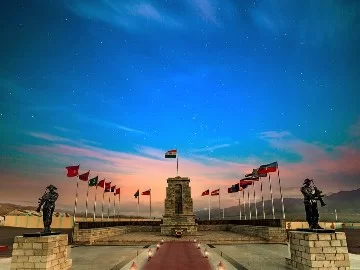
- Memorial Area: A dedicated memorial section honors soldiers who laid down their lives in service of the nation. This space is quiet and reflective, allowing visitors to pay respects in a dignified setting.
- Outdoor Displays: The premises include outdoor exhibits such as tanks, artillery, and aircraft parts used in combat, offering a closer look at military hardware in real-world conditions.
- Educational Experience: Informational sections explain the geography, climate, and survival challenges faced by soldiers stationed at extreme altitudes, making the visit informative for students and history enthusiasts.
- Souvenir & Refreshment Facilities: A small souvenir shop and refreshment area are available, offering memorabilia and basic snacks for visitors.
- Time & Physical Comfort: The visit generally takes 1–2 hours and involves minimal walking. However, due to Leh’s high altitude, visitors may feel mild breathlessness and should move at a relaxed pace.
Important Visitor Information for Hall of Fame, Leh
- Crowd & Weather Notes: The Hall of Fame experiences moderate crowds during the tourist season from June to August, especially between late morning and early afternoon. Weather remains generally pleasant in summer but can change quickly, so visitors should be prepared for sudden temperature drops and strong sunlight.
- Peak / Quiet Hours: Peak visiting hours are typically from 10:30 AM to 1:00 PM when most tour groups arrive. For a quieter and more comfortable experience, visiting early in the morning after opening or during the post-lunch hours is recommended.
- Dress Code: There is no formal dress code, but visitors are advised to wear modest, comfortable clothing. Warm layers are essential even in summer due to Leh’s high altitude and unpredictable weather. Comfortable walking shoes are recommended.
- Safety Notes: Due to the high altitude (around 3,500 meters), visitors should avoid overexertion and stay hydrated. Those experiencing symptoms of altitude sickness should rest and seek medical attention if required. Photography may be restricted in certain sections, and visitors are expected to follow all on-site guidelines issued by the Indian Army.
Photography and Viewpoint at Hall of Fame, Leh
- Photography Guidelines: Photography is allowed in designated outdoor areas of the Hall of Fame, including the entrance and open exhibit zones. Inside the museum galleries, photography is generally restricted or permitted only with an additional fee, and visitors must strictly follow instructions displayed on-site, as the museum is managed by the Indian Army.
- Outdoor Photo Opportunities: The outdoor section features military equipment, tanks, and artillery set against the dramatic Himalayan landscape, making it ideal for wide-angle and documentary-style photography.
- Scenic Surroundings: The Hall of Fame is surrounded by barren mountains and open valleys typical of Ladakh. Clear days offer unobstructed views of snow-capped peaks and blue skies, adding natural depth and contrast to photographs.
- Best Time for Photography: Morning hours provide softer natural light and clearer visibility, reducing harsh shadows and enhancing mountain textures. Afternoon light can be strong, especially during summer, requiring exposure adjustments.
- Viewpoint Experience: While the Hall of Fame itself is not a designated viewpoint, its open-air layout and elevated surroundings offer panoramic glimpses of the Leh–Kargil road and nearby landscapes, making it a pleasant stop for short scenic breaks.
- Respect & Restrictions: Visitors should avoid photographing restricted signage, security personnel, or sensitive installations. Respectful photography is encouraged, especially near memorial areas honoring fallen soldiers.