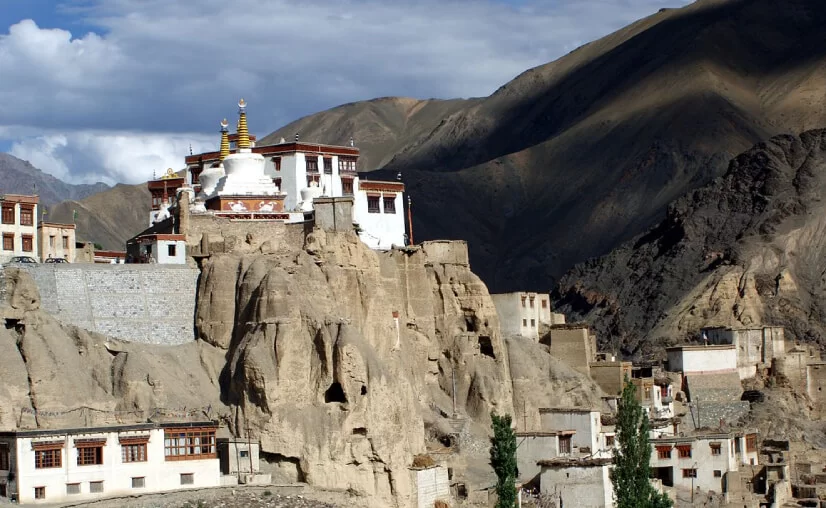
Dzongkul Gompa in Zanskar Ladakh A Remote Cave Monastery of Guru Rinpoche

Dzongkul Gompa , Padum
Dzongkul Gompa is located deep in the Zanskar Valley of Ladakh and is reached via a rough approach road followed by a short walk. The monastery is built around natural caves set into a cliff face and is associated with Guru Padmasambhava, who is believed to have meditated here. Dzongkul Gompa is an active religious site rather than a tourist facility, with monks residing on-site and daily prayers taking place. The surroundings are stark and quiet, facilities are minimal, and visits are usually brief but meaningful. It is best suited for travelers interested in Buddhist spirituality, remote monasteries, and offbeat locations rather than comfort or sightseeing infrastructure.

Quick Facts About Dzongkul Gompa

Entry Fee Free
Timings 07:00 - 18:00
Altitude (m) 3850
Ideal Visit Duration (hrs) 1
Best Time of Day Morning
Crowd Level Low
Distance from Padum (km) 32
Walking Difficulty Moderate
Parking Available No
Last Mile Access Walk
Suitable for Kids Yes
Suitable for Seniors No
Wheelchair Friendly No

Why Visit Dzongkul Gompa

Dzongkul Gompa is visited for its spiritual depth and remoteness rather than ease or visual spectacle. It appeals to travelers who want to experience a living cave monastery associated with Guru Padmasambhava, where religious practice continues in a raw Himalayan setting. The visit is quiet, personal, and rooted in belief rather than tourism.

Atmosphere

The atmosphere at Dzongkul Gompa is austere and deeply contemplative. Built into a cliff face, the caves feel enclosed and silent, with minimal external disturbance. Wind, prayer chants, and natural echoes dominate the soundscape. Visitor numbers are low, and most people move through the space slowly and respectfully.

What Makes It Special

Dzongkul Gompa is believed to be one of the meditation sites of Guru Padmasambhava, making it spiritually significant for followers of Tibetan Buddhism. The monastery is not a constructed complex but a series of natural caves adapted for worship and residence. Sacred footprints, meditation chambers, and simple prayer spaces reinforce its identity as a place of practice rather than display. Its isolation within the Zanskar landscape adds to the sense of authenticity and continuity of tradition.

Spiritual Background of Dzongkul Gompa

Dzongkul Gompa is closely associated with Guru Padmasambhava, also known as Guru Rinpoche, who is believed to have meditated in the natural caves that form the core of the monastery. These caves are considered sacred meditation spaces and have been preserved in their original form, with minimal structural alteration. The gompa later developed around these caves as monks began residing here to continue spiritual practice.

The monastery functions as an active religious site rather than a historical monument. Daily prayers, meditation, and seasonal rituals continue within the cave chambers, maintaining a direct link between past spiritual practice and present use. Sacred marks, meditation niches, and simple altars inside the caves reflect living Buddhist devotion and reinforce Dzongkul Gompa role as a place of retreat, discipline, and spiritual continuity in the Zanskar region.

Best Time to Visit Dzongkul Gompa

Dzongkul Gompa can only be accessed comfortably during a short seasonal window due to Zanskar harsh climate and limited road connectivity. Timing your visit correctly is important for safety and overall experience.
  • June to September is the best period, when roads to Zanskar are open and weather conditions are stable
  • July and August offer the most reliable access, though occasional rain or cloud cover may affect travel
  • Early September provides fewer visitors and cooler temperatures, suitable for longer stays in the region
  • October to May is not recommended due to road closures, heavy snowfall, and extremely cold conditions
  • Late morning to early afternoon is ideal for visiting, as temperatures are milder and natural light reaches the cave interiors

How to Reach Dzongkul Gompa

  • Dzongkul Gompa is located in the Zanskar Valley, around 32 km from Padum, the main town of the region
  • The monastery is accessed via the Padum to Stongde route, followed by a rough motorable road toward the monastery base
  • Private taxis or local vehicles from Padum are the most practical way to reach the site
  • There is no regular public transport directly to the monastery, and bus services are limited within Zanskar
  • The road condition varies by season and can be rough, requiring careful driving
  • The final approach involves a short uphill walk over rocky terrain to reach the cave monastery
  • No special permits are required for Indian nationals to visit Dzongkul Gompa

What to Expect When You Visit Dzongkul Gompa

  • Expect a remote and active cave monastery focused on meditation and prayer rather than tourism
  • The gompa is built into natural caves, with narrow entrances, low ceilings, and uneven rock surfaces
  • Facilities are extremely basic, with no shops, restrooms, or visitor services at the site
  • Photography inside the caves may be restricted; permission should be requested before taking photos
  • The approach involves a short uphill walk on rocky ground, requiring steady footing
  • Monks may be present and engaged in prayer or meditation, and visitors are expected to remain quiet
  • Mobile network connectivity is usually absent or very weak in this area
  • The visit is typically short but intense, centered on silence, spirituality, and isolation

Important Visitor Information for Dzongkul Gompa

  • Crowd and weather notes: Dzongkul Gompa sees very few visitors throughout the year, mostly pilgrims and serious travelers. Weather in Zanskar is highly seasonal, with cold winds and sudden temperature drops even during summer months
  • Peak hours: Late morning to early afternoon, when daylight reaches the cave interiors and temperatures are relatively comfortable
  • Quiet hours: Early morning and late afternoon are extremely quiet but can be colder and less suitable due to limited light
  • Dress code: Modest and respectful clothing is required, with covered shoulders and legs, as the site is an active spiritual retreat
  • Safety notes: The approach path and cave floors can be uneven and slippery. Visitors should walk carefully, avoid rushing, and be cautious of altitude related discomfort
  • Long stays are not advised due to limited oxygen, lack of shelter, and exposure to cold wind

Photography and Viewpoint at Dzongkul Gompa

  • Photography at Dzongkul Gompa is primarily experiential, focused on documenting a spiritual cave setting rather than wide scenic views
  • The monastery is built into a cliff face, so viewpoints are limited and photography happens in confined spaces
  • Natural light enters the caves unevenly, making late morning to early afternoon the best time for usable light
  • Interior photography may be restricted, especially around sacred meditation caves and altars; permission should always be requested
  • Low light conditions inside caves require steady hands; flash photography is not appropriate in prayer areas
  • Exterior shots capture the dramatic cliff setting and isolation of the gompa rather than valley panoramas
  • There are no designated viewing platforms or railings; photographers should maintain footing and personal safety
  • Drone photography is not suitable due to religious sensitivity, terrain constraints, and local regulations

Near By Attraction

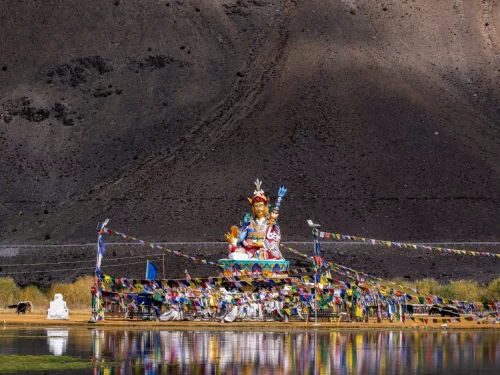
Guru Padmasambhava statue at Sani Lake near Padum village Zanskar Valley Ladakh during clear day, featuring prayer flags, motorcycles, barren mountain backdrop, perfect spiritual Zanskar tour package.  Monastery

Sani Monastery

Sani Monastery is one of the oldest Buddhist monasteries in the Zanskar region of Ladakh, closely associated with early Buddhist traditions and Padmasambhava.
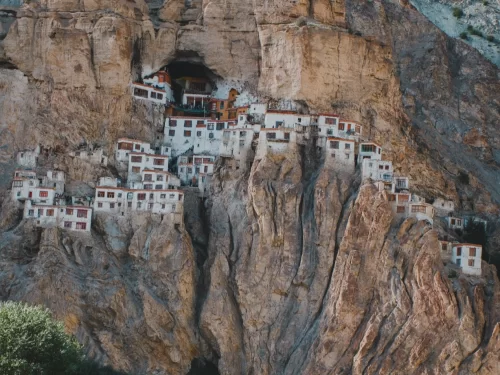
Zanskar Ladakh Phuktal Phugtal Gompa Buddhist cave monastery white buildings red roofs embedded rugged cliff cave entrance barren rocky Himalayan mountains landscape remote adventure trek pilgrimage tourism photography. Monastery

Phuktal Monastery

Phugtal Monastery is a remote cave monastery in the Zanskar region of Ladakh, built around a natural cave and known for its isolation and living Buddhist traditions.
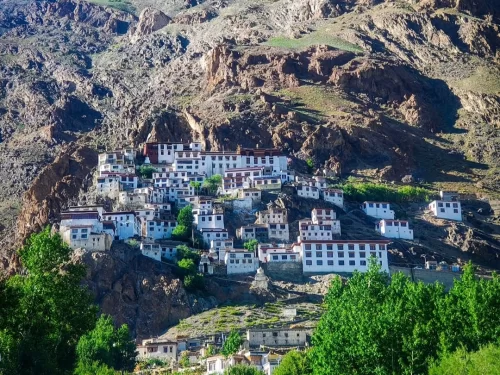
Karsha Monastery, largest Buddhist monastery in Zanskar Valley near Padum, Ladakh India. Monastery

Karsha Monastery

Karsha Monastery is a Tibetan Buddhist gompa and the largest and most important monastery in the Zanskar region of Ladakh, India.

Frequently Asked Questions About Dzongkul Gompa

Dzongkul Gompa is located in the remote Zanskar Valley of Ladakh near the Stod River and is built dramatically into a rocky cliff face. It lies far from Leh city in a sparsely populated mountain region.
Dzongkul Gompa can be reached from Leh city by driving toward Kargil and then continuing into Zanskar Valley, a journey that typically takes 10 to 12 hours depending on road and weather conditions in Ladakh.
Visitors generally do not require a separate permit specifically for Dzongkul Gompa when traveling via the Kargil Zanskar route, though it is advisable to confirm current regulations in Leh before departure.
The best time to visit Dzongkul Gompa is between June and September when roads to Zanskar Valley are open and weather conditions in Ladakh are relatively stable.
Around 45 minutes to one hour is sufficient to explore Dzongkul Gompa, including time to observe the prayer areas and the unique cave setting of the monastery.
Dzongkul Gompa is usually not accessible during peak winter months because heavy snowfall often blocks the road to Zanskar Valley in Ladakh.
Dzongkul Gompa involves walking on uneven rocky terrain and climbing steps carved into the hillside, so visitors should expect moderate physical effort. Senior citizens can visit if physically fit and moving carefully.
Inside Dzongkul Gompa visitors can see ancient murals, statues, meditation caves, and traditional Buddhist prayer halls integrated into the rock structure. The setting itself is one of the monastery?s most distinctive features.
There are no food stalls or accommodation facilities directly at Dzongkul Gompa, but basic guesthouses are available in nearby villages within Zanskar Valley. Travelers should plan supplies in advance.
Parking near Dzongkul Gompa is informal and usually along the roadside near the base of the monastery. Visitors then walk a short uphill path to reach the entrance.
Dzongkul Gompa is commonly combined with a broader Zanskar Valley trip from Leh city in Ladakh, often included in multi day itineraries exploring remote monasteries and high mountain landscapes.

Loved this place ? Let’s Plan Your Ladakh Trip

Get customized Ladakh tour planning designed around altitude comfort, acclimatization time, weather windows, and real Himalayan road conditions. Whether you are visiting for high mountain passes, monasteries, lakes, or remote valley experiences, our exper

⚑ Quick Response | πŸ’° Free consultation | πŸ•’ 24Γ—7 expert support

×

Plan Your Trip