Quick Facts About Chokhang Vihara Temple
| Entry Fee | Free |
| Timings | 06:00 - 19:00 |
| Altitude (m) | 3500 |
| Ideal Visit Duration (hrs) | 1 |
| Best Time of Day | Morning |
| Crowd Level | Moderate |
| Distance from Leh (km) | 0.3 |
| Walking Difficulty | Easy |
| Parking Available | No |
| Last Mile Access | Road |
| Suitable for Kids | Yes |
| Suitable for Seniors | Yes |
| Wheelchair Friendly | No |
Why Visit
Chokhang Vihara Temple is worth visiting for travelers who want to see how Buddhism functions as part of daily life in Leh rather than as a remote or scenic attraction. Its location near the main market means it is regularly visited by local residents, giving the temple an active and lived in atmosphere throughout the day.
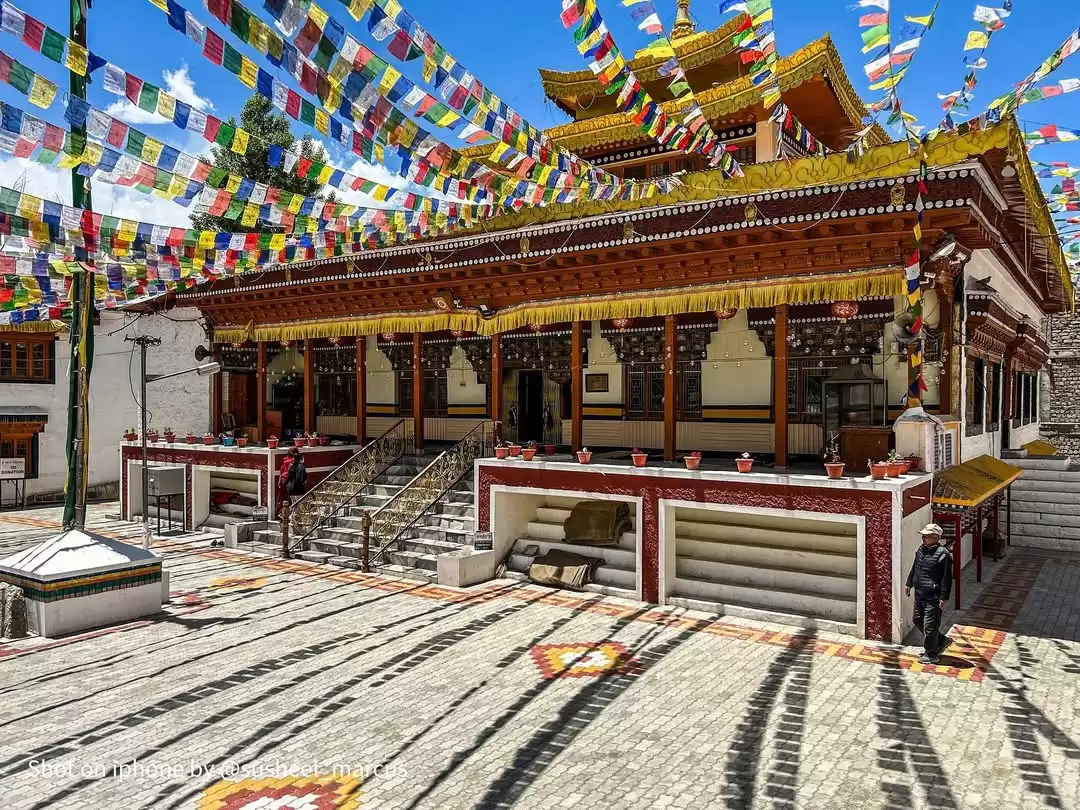
What makes Chokhang Vihara special is its age and continuity of use. It is among the oldest Buddhist temples in Leh and is closely associated with early Buddhist practice in the town. The temple remains simple in structure but holds strong religious importance, making it a meaningful stop for those interested in authentic local worship rather than visual spectacle.
History
Chokhang Vihara Temple is believed to date back to the early period of Buddhism in Leh and is considered one of the town’s oldest surviving religious structures. It was established as a central place of worship for the local population at a time when Leh was emerging as a trading and cultural hub along Himalayan routes.
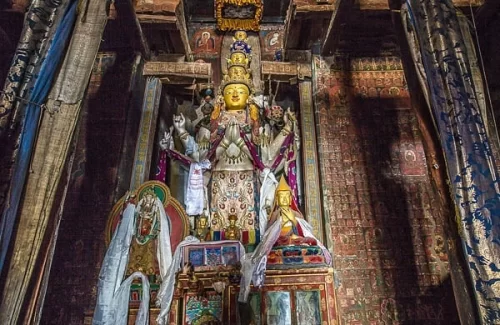
The temple is especially significant for housing sacred images associated with Avalokiteshvara, the Bodhisattva of compassion, which continue to be revered by local devotees. Unlike monasteries tied to royal patronage or monastic training, Chokhang Vihara has maintained its role as a community focused prayer temple, preserving everyday religious practices across generations.
Best Time to Visit
Chokhang Vihara Temple can be visited throughout the year due to its central location and easy access within Leh town. Weather conditions mainly affect comfort rather than accessibility, making it suitable for short visits in any season.
- May to September: Best overall period with pleasant daytime temperatures and comfortable walking conditions around the market area.
- October: Cooler and quieter, with fewer visitors and a more relaxed atmosphere inside the temple.
- November to April: Winter months are very cold, but the temple remains open and is regularly used by locals.
- Best Time of Day: Early morning and early evening are ideal to observe prayer activity and experience the temple at its most active.
- Festival Days: During Buddhist festivals, the temple may be busier with local worshippers and special rituals.
How to Reach
- From Leh Main Market: Chokhang Vihara Temple is located just a few minutes walk from the main market area and can be reached easily on foot.
- On Foot: The temple is best accessed by walking through the central lanes of Leh town. The approach is flat and suitable for all age groups.
- By Taxi: Local taxis can drop visitors close to the temple, but the final access is usually on foot due to narrow streets.
- By Private Vehicle: Direct vehicle access is limited. Parking is available on nearby roads, followed by a short walk.
- Public Transport: Local buses and shared taxis stop near the main market, from where the temple is easily reachable.
What to Expect When You Visit
- A compact, active prayer temple integrated into the daily rhythm of Leh town.
- Local residents visiting frequently to offer prayers, spin prayer wheels, and light butter lamps.
- A simple interior focused on sacred images, with minimal decorative elements.
- Soft chanting or bell sounds during prayer times, creating a calm spiritual atmosphere.
- No guided tours or informational signage, as the temple primarily serves worshippers.
- A short visit experience, usually completed within 15 to 30 minutes.
- An authentic glimpse into everyday Buddhist practice rather than a tourist oriented attraction.
Important Visitor Information
- Crowd and Weather Notes: Chokhang Vihara Temple experiences steady local footfall rather than tourist crowds. Being within Leh town, it is sheltered from strong winds, though winter temperatures are extremely cold.
- Peak and Quiet Hours: Peak activity occurs during early morning and evening prayer times. Midday hours are generally quieter.
- Dress Code: Modest clothing is expected. Visitors should cover shoulders and knees and remove footwear before entering the prayer area.
- Safety Notes: The temple is generally safe, but interior floors may be slippery due to butter lamps and wax residue. Move carefully and respect ongoing prayers.
Photography and Viewpoint
- Photography focuses on religious interiors rather than landscapes or viewpoints.
- The temple’s sacred images and prayer wheels are the main visual subjects.
- Soft natural light during morning hours is best for interior photography.
- There are no elevated viewpoints or panoramic views due to the temple’s town location.
- Photography of worshippers should be avoided to maintain respect.
- Tripods are not suitable due to limited space.
- Always ask permission before photographing inside the prayer hall.
Photography and Viewpoint
- Chokhang Vihara Temple is primarily suitable for quiet interior photography rather than scenic or panoramic views.
- The main visual subjects include sacred statues, prayer wheels, butter lamps, and traditional wall artwork.
- Soft natural light in the morning enhances details inside the prayer hall without harsh shadows.
- The temple’s central town location means there are no viewpoints or elevated photography angles.
- Photography should always be done respectfully and without disturbing ongoing prayers.
- Images of local worshippers should not be taken without consent.
- Tripods and flash photography are discouraged due to limited space and religious sensitivity.