Quick Facts About Chemrey Monastery
| Entry Fee (INR) | 30 |
| Timings | 07:00 - 18:00 |
| Altitude (m) | 3950 |
| Ideal Visit Duration (hrs) | 1 |
| Best Time of Day | Morning |
| Crowd Level | Low |
| Distance from Leh (km) | 40 |
| Walking Difficulty | Moderate |
| Parking Available | Yes |
| Last Mile Access | Walk |
| Suitable for Kids | Yes |
| Suitable for Seniors | No |
| Wheelchair Friendly | No |
Why Visit Chemrey Monastery
Chemrey Monastery is worth visiting for travelers who want to experience an active Buddhist monastery without heavy tourist movement. Unlike major monasteries near Leh, this site remains calm on most days, allowing visitors to observe prayer halls, murals, and monastic life without interruption. The visit is meaningful for those interested in Ladakh spiritual traditions rather than quick sightseeing.
Atmosphere
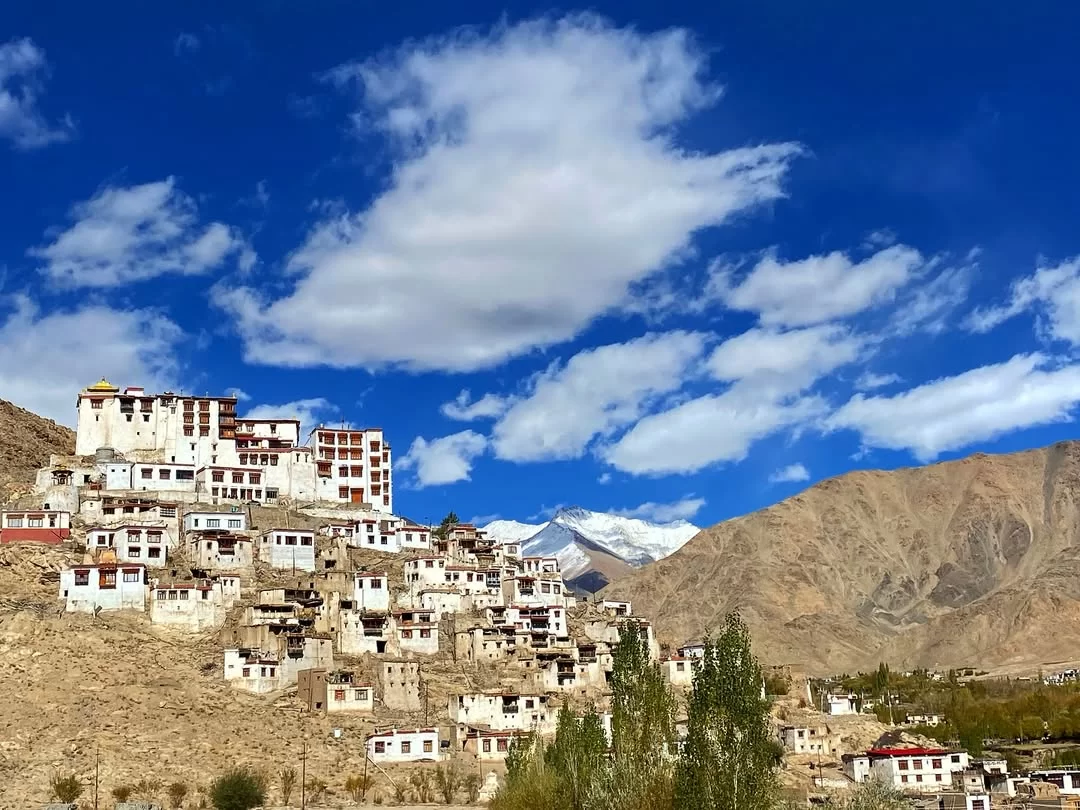
The atmosphere at Chemrey Monastery is quiet and contemplative. The monastery sits on a hillside overlooking the Chemrey village and Indus Valley, creating a sense of openness and isolation. Sounds are limited to wind, prayer chants, and occasional movement of monks. Crowds are rare, and the pace of the visit is slow, making it suitable for travelers seeking mental calm rather than activity.
What Makes It Special
Chemrey Monastery belongs to the Drukpa Kagyu lineage and houses well-preserved wall paintings, statues, and ritual objects that reflect everyday Buddhist practice rather than museum-style display. It is also known for the annual Chemrey Wangchok festival, during which masked dances are performed, showing living cultural continuity rather than staged performances. The monastery offers clear views of the surrounding valley, adding a strong sense of place to the spiritual experience.
History and Religious Significance of Chemrey Monastery
Chemrey Monastery was founded in the 17th century by Lama Tagsang Raschen and is closely associated with King Sengge Namgyal of Ladakh, who supported its establishment and growth. The monastery was built as a spiritual center for the Drukpa Kagyu school of Tibetan Buddhism and has remained active since its foundation. Over time, the structure was expanded to include prayer halls, monks quarters, and storage rooms for sacred texts and ritual objects.
The monastery holds religious importance as a functioning seat of the Drukpa Kagyu lineage rather than a historical monument alone. Daily prayers, rituals, and monastic education continue to take place, reflecting living Buddhist practice. Chemrey Monastery is also known for preserving traditional thangkas, wall murals, and statues that are used in worship, not display. Its annual masked dance festival, Chemrey Wangchok, is a religious event rooted in Buddhist teachings and community participation, reinforcing its role as an active spiritual institution in Ladakh.
Best Time to Visit Chemrey Monastery
Chemrey Monastery can be visited for most of the year, but the experience varies strongly by season due to weather, road conditions, and visitor movement in Ladakh. Choosing the right time helps avoid access issues and ensures a more comfortable visit at high altitude.
- May to September is the most reliable period, with clear roads, stable weather, and easier access from Leh
- June to August offers warmer daytime temperatures but also sees higher tourist traffic in the region, though the monastery itself remains relatively quiet
- October brings colder temperatures and fewer visitors, suitable for travelers comfortable with cold conditions
- November to March is not recommended for most travelers due to extreme cold, possible road closures, and limited local activity
- Early morning visits are ideal year-round for peaceful surroundings and better light inside prayer halls
How to Reach Chemrey Monastery
- Chemrey Monastery is located around 40 km east of Leh on the Leh to Pangong Lake route
- The most practical way to reach is by private taxi from Leh, which takes about 1.5 to 2 hours depending on traffic and road conditions
- Shared taxis operate on this route but are not frequent and may not stop directly at the monastery
- Public buses are limited and usually run only once a day, making them unreliable for fixed sightseeing plans
- The road is fully motorable till the parking area, followed by a short walk and stone steps to the monastery entrance
- No special permits are required for Indian nationals to visit the monastery
- Weather conditions can affect travel time, especially during early spring and late autumn
What to Expect When You Visit Chemrey Monastery
- Expect a quiet and functional monastery where daily prayers and monastic routines take priority over tourism
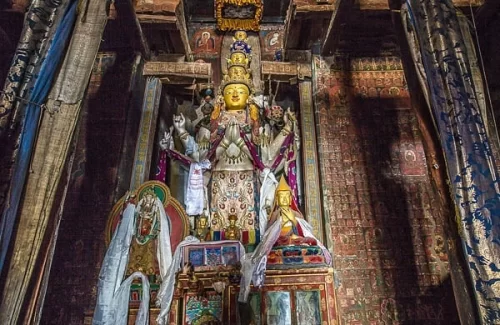
- Interiors include prayer halls with wall murals, statues, and ritual objects that may show signs of age but remain in active use
- Facilities are minimal, with no cafes, souvenir shops, or guided interpretation inside the monastery
- Photography may be restricted inside prayer halls and permission should be asked before taking photos
- The monastery complex includes uneven stone steps and open terraces, requiring careful walking
- Monks and residents may be present, and visitors are expected to maintain silence and respectful behavior
- Mobile network connectivity can be weak or inconsistent at the site
- Visits are usually short and unstructured, allowing travelers to explore at their own pace
Important Visitor Information for Chemrey Monastery
- Crowd and weather notes: The monastery remains uncrowded for most of the year, but weather can change quickly due to its high-altitude location. Sudden winds and temperature drops are common, even during summer months
- Peak hours: Late morning to early afternoon, especially when tour vehicles stop briefly while traveling toward Pangong Lake
- Quiet hours: Early morning and late afternoon offer the most peaceful experience with minimal visitor presence
- Dress code: Modest clothing is expected. Shoulders and knees should be covered as the monastery is an active religious site
- Safety notes: Walk carefully on stone steps and terraces, as surfaces can be uneven or slippery in cold conditions. Visitors sensitive to altitude should move slowly and avoid prolonged exertion
- Children and seniors should be supervised closely due to open edges and stairways
Photography and Viewpoint at Chemrey Monastery
- The monastery offers wide views of Chemrey village and the Indus Valley, making landscape photography a key highlight rather than architectural close-ups alone
- Morning light is best for photography, as it illuminates the valley and outer walls without harsh shadows
- Late afternoon can create strong contrast and glare, especially during summer, which may limit detail in photos
- Interior photography inside prayer halls is often restricted or discouraged; visitors should always ask permission before using a camera
- Tripods are generally not practical due to narrow spaces and active religious use of the halls
- Wind is common at the hilltop location, so stable handling of cameras and drones is important
- Drone photography is not advised due to religious sensitivity and local regulations
- The best viewpoints are from the upper terraces of the monastery, where visitors can photograph both the monastery complex and the surrounding valley in a single frame