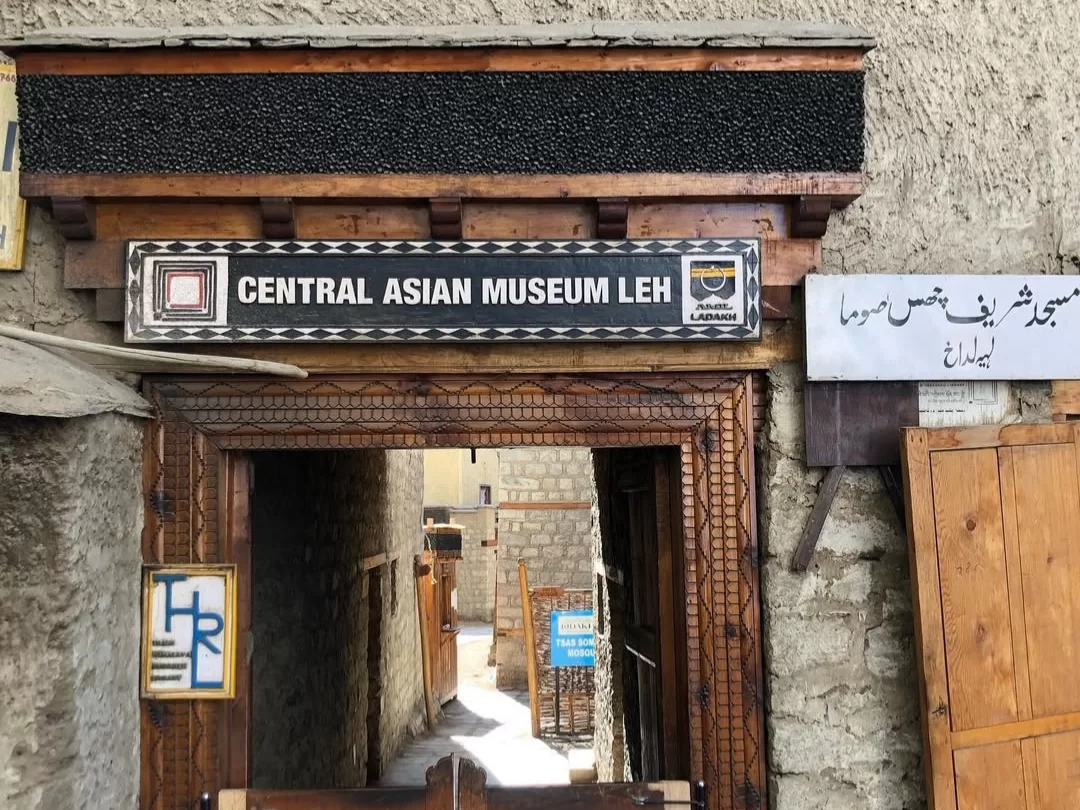
Quick Facts About Central Asian Museum
| Entry Fee (INR) | 50 |
| Timings | 10:00 - 17:00 |
| Altitude (m) | 3500 |
| Ideal Visit Duration (hrs) | 1 |
| Best Time of Day | Morning |
| Crowd Level | Low |
| Distance from Leh (km) | 0.5 |
| Walking Difficulty | Easy |
| Parking Available | No |
| Last Mile Access | Road |
| Suitable for Kids | Yes |
| Suitable for Seniors | Yes |
| Wheelchair Friendly | No |
Why Visit
The Central Asian Museum is worth visiting for travelers who want to understand Ladakh beyond monasteries and landscapes. The museum offers clear insights into Leh’s historical role as a trading hub linking Central Asia, Tibet, and the Indian plains, creating a calm and educational atmosphere rather than a crowded tourist experience.
What makes the Central Asian Museum special is its focused storytelling on trans-Himalayan trade and cultural exchange. The exhibits highlight traditional textiles, trade goods, and historical narratives that explain how commerce shaped Ladakh’s society. Its compact layout and community driven mission make it an authentic and meaningful stop for culturally curious visitors.
History
The Central Asian Museum was established to document and preserve Ladakh’s role as a key trading crossroads along ancient trans-Himalayan routes. For centuries, Leh connected traders from Central Asia, Tibet, Kashmir, and northern India, facilitating the exchange of goods, ideas, and skills.
The museum was developed as part of a cultural preservation initiative to record this trading legacy through artifacts, textiles, documents, and oral histories. Rather than focusing on royal or religious narratives, it highlights everyday trade life and the economic networks that shaped Ladakh’s multicultural identity.
Best Time to Visit
The Central Asian Museum can be visited throughout Leh’s tourist season, with weather conditions mainly affecting overall comfort rather than access. Being an indoor attraction, it remains suitable even during colder or windy days.
- May to September: Best time to visit, with Leh fully accessible and comfortable daytime temperatures.
- June to August: Ideal months to combine the museum visit with nearby market exploration.
- October: Cooler and quieter, suitable for visitors interested in slow paced exploration.
- November to April: Very cold months, but the museum may still open on select days depending on local conditions.
- Best Time of Day: Late morning or early afternoon when all exhibits are accessible.
How to Reach
- From Leh Main Market: The Central Asian Museum is located about 500 meters from Leh Main Market and can be reached easily on foot.
- On Foot: Walking is the most convenient option, with flat and well paved town roads leading to the museum.
- By Taxi: Local taxis can drop visitors close to the museum entrance. This is useful for those with limited mobility.
- By Private Vehicle: Private vehicles can reach nearby roads, though parking space is limited.
- Public Transport: Local buses and shared taxis stop near the main market, followed by a short walk to the museum.
What to Expect When You Visit
- A small, well organized museum focused on Ladakh’s trade history.
- Displays of traditional textiles, trade goods, photographs, and historical information panels.
- A quiet, indoor environment suitable for slow and thoughtful exploration.
- Minimal crowds, allowing visitors to read exhibits comfortably.
- No guided tours, but clear signage explaining the exhibits.
- A visit duration of around 30 to 45 minutes.
- An educational stop rather than an entertainment focused attraction.
Important Visitor Information
- Crowd and Weather Notes: The Central Asian Museum usually has very low visitor numbers. Being an indoor attraction, it is unaffected by wind or sun, making it a good option during harsh weather conditions.
- Peak and Quiet Hours: There are no distinct peak hours. Late morning to early afternoon is the most consistent time when the museum is fully open and staffed.
- Dress Code: No specific dress code is required. Comfortable clothing suitable for walking around Leh town is sufficient.
- Safety Notes: The museum is safe and well maintained. Visitors should avoid touching exhibits and follow any posted instructions inside the gallery spaces.
Photography and Viewpoint
- Photography is generally permitted inside the Central Asian Museum for personal use.
- Flash photography may be restricted to protect sensitive textiles and artifacts.
- The museum interiors offer good lighting for detailed shots of exhibits and display panels.
- There are no outdoor viewpoints or panoramic views associated with the museum.
- Tripods are usually not allowed due to limited space and visitor movement.
- Visitors should respect exhibit signage regarding photography restrictions.
- The museum is best suited for documentary style photography rather than scenic shots.