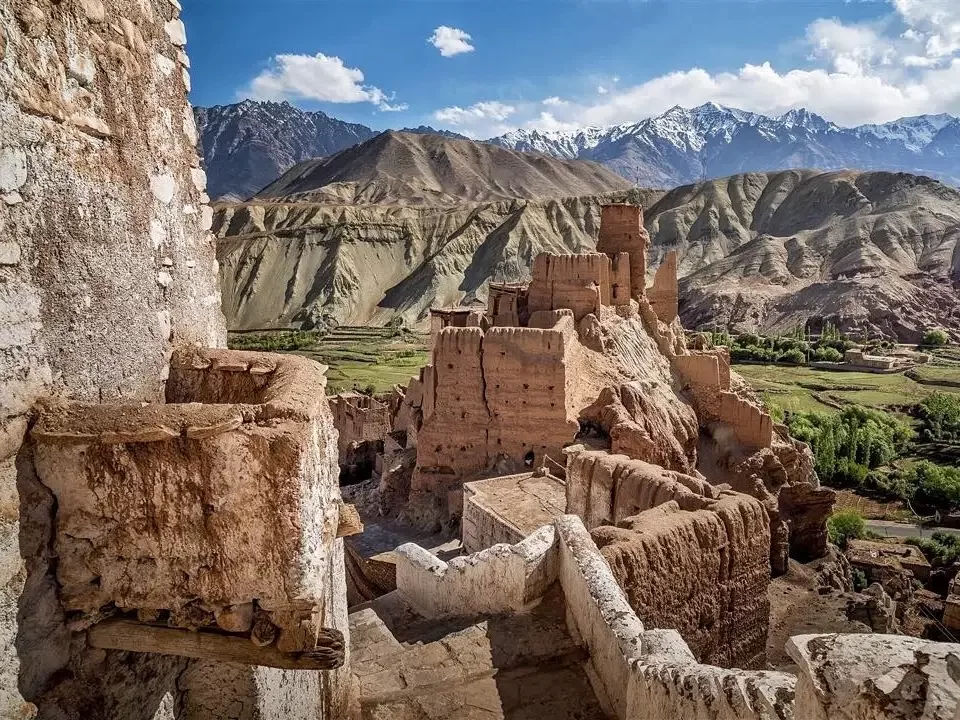
Basgo Fort in Leh Ladakh Ancient Ruins of the Namgyal Dynasty

Basgo Fort , Leh
Basgo Fort is located near the village of Basgo, about 40 km west of Leh on the Leh Srinagar highway. Once the capital of Lower Ladakh, Basgo was an important political and military center during the Namgyal dynasty. Today, the fort stands in ruins, spread across rugged hills with crumbling walls, mud brick structures, and steep paths. The site also includes well preserved Buddhist temples with murals, contrasting with the largely ruined fortifications. Basgo Fort is best suited for travelers interested in history, architecture, and offbeat heritage sites rather than comfort or easy access.

Quick Facts About Basgo Fort

Entry Fee (INR) 20
Timings 08:00 - 18:00
Altitude (m) 3200
Ideal Visit Duration (hrs) 1
Best Time of Day Morning
Crowd Level Moderate
Distance from Leh (km) 40
Walking Difficulty Moderate
Parking Available Yes
Last Mile Access Walk
Suitable for Kids Yes
Suitable for Seniors No
Wheelchair Friendly No

Why Visit Basgo Fort

Basgo Fort is visited by travelers who want to explore Ladakh political and architectural history beyond monasteries. The site offers a clear view into the former power center of the Namgyal dynasty and shows how Ladakh rulers adapted fort architecture to harsh terrain. It is best suited for history focused travelers and those comfortable walking through ruins.

Atmosphere

The atmosphere at Basgo Fort is quiet and stark. Wind moves freely across the exposed hilltops, and the absence of restoration gives the site a raw, abandoned feel. Unlike active monasteries, there are no daily rituals or crowds, only crumbling walls, silence, and wide views over the Indus Valley.

What Makes It Special

Basgo Fort stands out for its combination of ruined fortifications and well preserved Buddhist temples built into the same complex. While much of the palace structure has collapsed, the surviving temples contain rare murals that provide insight into Ladakh art and royal patronage. Its role as the former capital of Lower Ladakh and its dramatic hilltop layout make it one of the most historically significant fort sites in the region.

Political and Architectural Background of Basgo Fort

Basgo Fort was an important political center of Ladakh during the Namgyal dynasty and served as the capital of Lower Ladakh before Leh rose to prominence. The fort gained historical importance in the 17th century, particularly during conflicts between Ladakh and the combined forces of the Mughal Empire and Tibet. Its strategic hilltop location allowed control over trade and movement along the Indus Valley.

Although much of the palace and defensive structures have collapsed over time due to erosion and abandonment, the layout of Basgo Fort still reflects traditional Ladakhi fort architecture built with mud brick and stone adapted to arid conditions. Within the fort complex are surviving Buddhist temples commissioned by Ladakhi kings, notable for their preserved wall paintings and royal patronage. These temples remain the most intact elements of Basgo and provide direct evidence of the site role as both a political stronghold and a royal religious center.

Best Time to Visit Basgo Fort

Basgo Fort is best visited during the main Ladakh travel season when access roads are open and walking conditions across the ruins are safe. Because the site is exposed and largely unrestored, weather and light conditions directly affect comfort and visibility.
  • May to September is the most suitable period, with stable weather and clear access from Leh
  • June to August offers the easiest conditions, though midday sun can be harsh on exposed hilltops
  • September provides cooler temperatures and fewer visitors, making exploration more comfortable
  • October to April is not recommended due to cold, snow, and difficult walking conditions
  • Morning hours are ideal for softer light, cooler temperatures, and better visibility of murals inside the temples

How to Reach Basgo Fort

  • Basgo Fort is located around 40 km west of Leh, close to the Leh Srinagar highway
  • From Leh, drive toward Khaltse on NH1; Basgo village is clearly marked along the route
  • The fort is visible from the highway, and a short diversion road leads toward the base of the hill
  • Private taxis from Leh are the most convenient way to reach Basgo Fort
  • There is no direct public bus stop at the fort, but buses toward Khaltse or Lamayuru can drop visitors near Basgo village
  • The road is fully motorable up to the parking area near the fort base
  • The final access involves walking uphill across uneven paths and ruins

What to Expect When You Visit Basgo Fort

  • Expect an open archaeological site with largely unrestored ruins rather than a maintained fort complex
  • The terrain is uneven, with loose stones, crumbling walls, and exposed hilltop paths
  • There are no visitor facilities such as cafes, restrooms, or shaded rest areas
  • Walking involves gradual climbs and descents, requiring stable footwear
  • The temples within the fort complex are the most intact structures and may be locked outside standard hours
  • Signage is minimal, so understanding the layout requires slow exploration
  • Mobile network connectivity can be weak or inconsistent at the site
  • The experience is focused on historical context and landscape rather than guided interpretation

Important Visitor Information for Basgo Fort

  • Crowd and weather notes: Basgo Fort generally remains quiet with low visitor numbers. Weather is dry in summer, but the exposed hilltop can become very windy and hot during midday
  • Peak hours: Late morning to early afternoon, when travelers stop while driving between Leh and Lamayuru
  • Quiet hours: Early morning and late afternoon offer fewer visitors and more comfortable walking conditions
  • Dress code: Wear comfortable clothing and sturdy walking shoes; modest dress is advised when entering temple areas
  • Safety notes: Watch your footing on loose stones and crumbling walls. Avoid climbing unstable structures and keep children close due to exposed edges
  • There are no railings or safety barriers, so extra caution is required throughout the site

Photography and Viewpoint at Basgo Fort

  • Basgo Fort offers elevated views over the Indus Valley, making wide angle landscape photography the main highlight
  • The ruined fort walls and eroded structures create strong textures and contrasts, suitable for detail and ruin photography
  • Morning light is best for photography, as it illuminates the valley and highlights the mud brick and stone surfaces
  • Midday light can be harsh due to lack of shade, causing strong shadows and glare on exposed slopes
  • The hilltop location provides multiple informal vantage points, but there are no marked viewpoints or safety railings
  • Interior photography inside the preserved temples may be restricted; permission should be sought before taking photos
  • Tripods can be used in open areas but require caution on uneven ground
  • Drone photography should be avoided due to proximity to religious structures and local restrictions

Near By Attraction

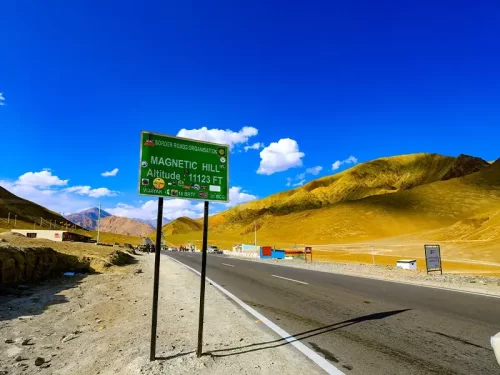
Magnetic Hill sign at Ladakh BRO during clear skies, featuring altitude 11312 ft board yellow mountains highway, perfect adventure Ladakh tour package.  Tourist Attraction

Magnetic Hill

Magnetic Hill is a gravity hill located at an elevation of approximately 3,350 meters (10,991 feet) on the Leh-Srinagar National Highway.
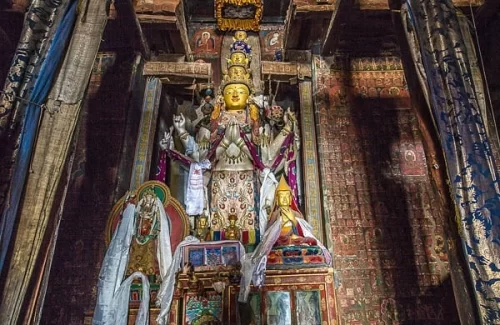
Buddha statue at Alchi Gompa Ladakh in dimly lit shrine during misty weather, featuring multiple arms prayer scarves and wall murals, perfect spiritual Ladakh tour package. Monastery

Alchi Monastery

Alchi Monastery is a historic Buddhist temple complex situated at an elevation of approximately 3,100 meters (10,170 feet) on the southern bank of the Indus River.
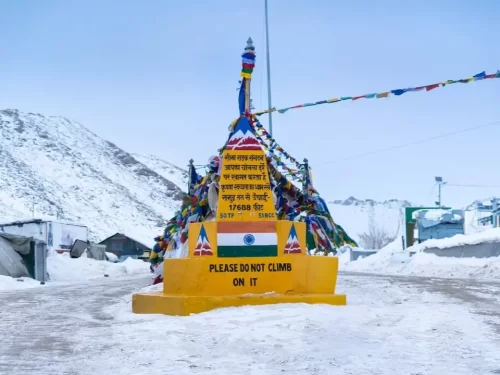
Memorial at Changla Pass 17688 ft during overcast skies, featuring prayer flags, Indian tricolor, snowy mountains, perfect spiritual adventure Ladakh tour pack Mountain Pass

Chang La Pass

Chang La is a high-altitude mountain pass situated at an elevation of approximately 5,360 meters (17,585 feet) on the road between Leh and Pangong Tso.

Frequently Asked Questions About Basgo Fort

Basgo Fort is located in western Ladakh along the Leh Srinagar highway near Basgo village overlooking the Indus Valley.
Basgo Fort is approximately 40 kilometers from Leh and the drive usually takes about one to one and a half hours depending on road conditions.
Travelers reach Basgo Fort by driving from Leh toward Nimmu along the Leh Srinagar highway and taking a short diversion toward Basgo village. The road is mostly paved and accessible.
Visitors do not require a special permit to visit Basgo Fort as it lies within the regular tourist circuit of Ladakh.
Basgo Fort is generally open during daytime hours from morning to late afternoon though exact timings may vary seasonally.
Basgo Fort usually has a small entry fee collected at the entrance which supports preservation and maintenance of the historic structure.
The best time to visit Basgo Fort is between May and September when weather conditions are stable and visibility of the surrounding valley is clear.
Basgo Fort can be visited during winter if the Leh Srinagar highway remains open though cold temperatures and occasional snowfall may affect travel plans.
Travelers typically spend 45 minutes to one hour exploring Basgo Fort including time to walk around the ruins and nearby temple structures.
Basgo Fort involves walking on uneven terrain and climbing short inclines so visitors should move carefully. Senior citizens can visit if comfortable with moderate physical effort.
There are no major food facilities at Basgo Fort itself though small eateries and guesthouses are available along the highway and in nearby villages.

Loved this place ? Let’s Plan Your Ladakh Trip

Get customized Ladakh tour planning designed around altitude comfort, acclimatization time, weather windows, and real Himalayan road conditions. Whether you are visiting for high mountain passes, monasteries, lakes, or remote valley experiences, our exper

⚑ Quick Response | πŸ’° Free consultation | πŸ•’ 24Γ—7 expert support

×

Plan Your Trip