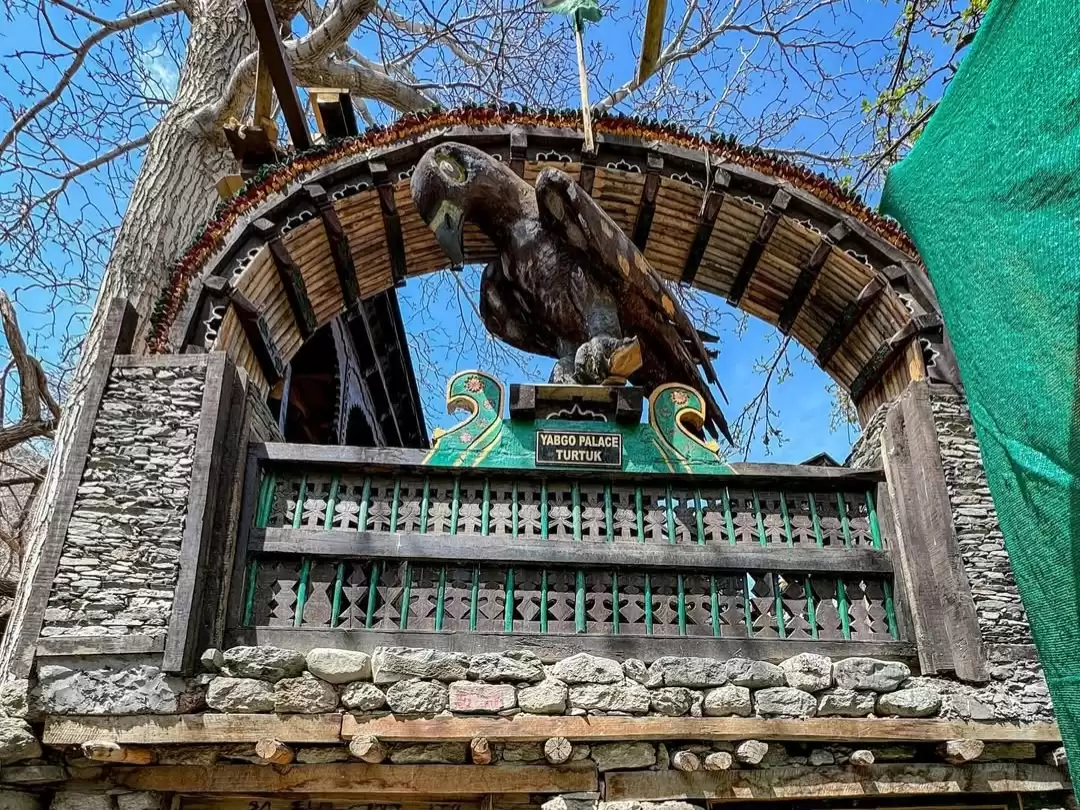
Balti Heritage House and Museum Turtuk | Traditional Balti Culture in Ladakh

Balti Heritage House & Museum , Turtuk
Balti Heritage House and Museum is located in Turtuk village in Nubra Valley, near the India Pakistan border. The house belongs to the Balti royal lineage and has been converted into a small, family run museum. Visitors can see traditional wooden architecture, household objects, clothing, tools, and photographs that reflect Balti life before modern influence. The experience is personal and guided, often explained by family members, making it more about cultural understanding than formal exhibition displays.

Quick Facts About Balti Heritage House & Museum

Entry Fee (INR) 100
Timings 09:00 - 18:00
Altitude (m) 3000
Ideal Visit Duration (hrs) 1
Best Time of Day Morning
Crowd Level Low
Distance from Turtuk (km) 1
Walking Difficulty Easy
Parking Available No
Last Mile Access Walk
Suitable for Kids Yes
Suitable for Seniors No
Wheelchair Friendly No

Why Visit Balti Heritage House and Museum

Balti Heritage House and Museum is worth visiting if you want to understand Turtuk beyond surface level sightseeing. It offers direct exposure to Balti history, customs, and family life, presented by people who still live the culture rather than through curated displays.

Atmosphere

The atmosphere is quiet, personal, and informal. This is a lived-in home, not a commercial museum. Wooden rooms, low ceilings, and family artifacts create an intimate setting where visitors move slowly and listen rather than browse. Conversations with the hosts are a key part of the experience.

What Makes It Special

What makes this place special is authenticity. The house belongs to the Balti royal lineage and preserves traditional architecture, tools, clothing, and stories that are rarely documented elsewhere. Unlike modern museums, there are no labels or barriers. Knowledge is shared through storytelling, making each visit slightly different and grounded in real experience.

History

Balti Heritage House and Museum is a traditional ancestral home belonging to the Balti royal lineage of Turtuk village. The house predates modern infrastructure in the region and reflects a time when Turtuk functioned as an important Balti settlement connected culturally and economically with Baltistan. The structure itself was built using local materials such as wood, stone, and mud, following architectural practices suited to the climate and lifestyle of the region.

After Turtuk became part of India in 1971, much of its earlier history remained undocumented for visitors. The family converted parts of their ancestral home into a small museum to preserve everyday objects, tools, clothing, and photographs that represent Balti life before political borders changed. The museum serves as a personal effort to safeguard local history that might otherwise be lost.

Cultural Significance

The museum holds cultural importance as one of the few places where Balti traditions are explained directly by community members rather than through external interpretation. Items on display reflect agricultural life, household practices, and social customs unique to the Balti people, many of which differ from Ladakhi Buddhist traditions seen elsewhere in the region.

More than an exhibition space, the house represents living Balti identity. Language, customs, and oral storytelling shared during visits help visitors understand how culture is maintained within families. This makes the museum an active cultural space rather than a static historical display.

Best Time to Visit Balti Heritage House and Museum

The best time to visit Balti Heritage House and Museum is from May to September, when Nubra Valley and Turtuk village are fully accessible and weather conditions are stable. During these months, village life is active and hosts are generally available to guide visitors.

June to August is the peak travel season in Nubra Valley. The museum remains open, but visits may coincide with other tourist groups. Morning and late afternoon hours are usually quieter and allow for better interaction with the hosts.

April and October are shoulder months. Visits are still possible, but cold mornings and limited village activity can affect the overall experience. Winter months see heavy snowfall and road closures, making visits impractical.
  • Best overall season: May to September
  • Best time of day: Late morning to afternoon
  • Peak period: June to August
  • Avoid winter months due to snow and road closures

How to Reach Balti Heritage House and Museum

  • By road from Leh: Turtuk village is around 205 km from Leh and is reached via Khardung La and Nubra Valley. The journey usually takes 7 to 8 hours depending on road and weather conditions.
  • By road from Diskit or Hunder: From Diskit or Hunder in Nubra Valley, Turtuk is approximately 85 to 90 km. Shared taxis and private vehicles operate regularly during the tourist season.
  • Permit requirement: Indian nationals require an Inner Line Permit to visit Turtuk. Foreign nationals are not permitted to visit Turtuk village.
  • Last mile access: The heritage house is located within Turtuk village and can be reached by vehicle up to the village area, followed by a short walk through village lanes.
  • Parking: Limited roadside parking is available near the village entrance. Vehicles usually do not go directly up to the house.
  • Public transport: Public transport options are limited. Hiring a taxi or traveling with a Nubra Valley tour is the most practical option.

What to Expect When You Visit Balti Heritage House and Museum

  • A small, family run heritage home rather than a formal museum, where the experience depends on interaction with the hosts.
  • Guided explanations by family members who share personal stories, history, and Balti traditions in a conversational manner.
  • Traditional wooden interiors with narrow staircases, low ceilings, and preserved household artifacts.
  • Displays of everyday items such as utensils, tools, clothing, photographs, and farming implements used by earlier generations.
  • A slow paced visit focused on listening and observation rather than browsing exhibits.
  • Limited signage or written descriptions, with knowledge shared verbally.
  • An expectation of respectful behavior, as parts of the house are still used by the family.

Important Visitor Information

  • Crowd and weather notes: Balti Heritage House and Museum experiences low visitor numbers throughout the day. Weather in Turtuk remains pleasant during summer but mornings and evenings can be cool. Wind and dust are common in the afternoon.
  • Peak hours: Late morning to early afternoon is the busiest period, usually when tour vehicles arrive in Turtuk village.
  • Quiet hours: Early morning and late afternoon are quieter, though the museum may open later depending on family availability.
  • Dress code: Modest and comfortable clothing is advised, as this is a private family home. Shoes must be removed before entering interior rooms.
  • Safety notes: Wooden stairs, low ceilings, and uneven flooring require careful movement. Visitors should watch their step, especially inside darker rooms. Children should be supervised at all times.

Photography and Viewpoints at Balti Heritage House and Museum

  • Photography here is primarily cultural and documentary in nature, focusing on interiors, artifacts, and traditional architecture rather than wide landscape views.
  • Natural light enters through small windows, so late morning to early afternoon offers the best lighting for interior photography.
  • There are no designated viewpoints or elevated platforms. All photography takes place within rooms and courtyards of the heritage house.
  • Exterior shots of the house reflect traditional Balti wooden architecture and blend naturally with the village setting.
  • Flash photography may not be permitted inside certain rooms to protect artifacts and respect the family’s space.
  • Visitors should always ask permission before photographing family members or personal areas of the house.
  • The surrounding village lanes can also be photographed respectfully to capture daily Balti life, but privacy should be maintained.

Near By Attraction

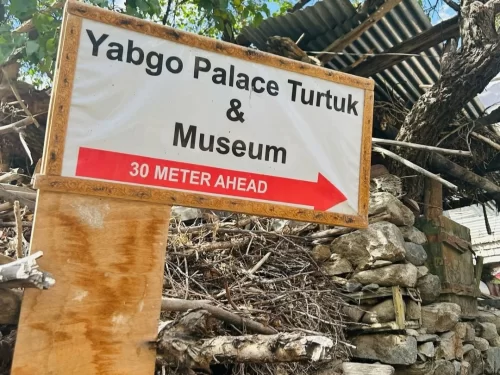
Yabgo Palace and Museum signboard in Turtuk village Nubra Valley Ladakh during sunny day, featuring 30m ahead arrow, stone wall, perfect heritage Turtuk tour package.  Museum

Royal House Yabgo Residence

The Royal House or Yabgo Residence in Diskit is the former home of the Yabgo dynasty, the traditional royal family that once ruled Nubra Valley.
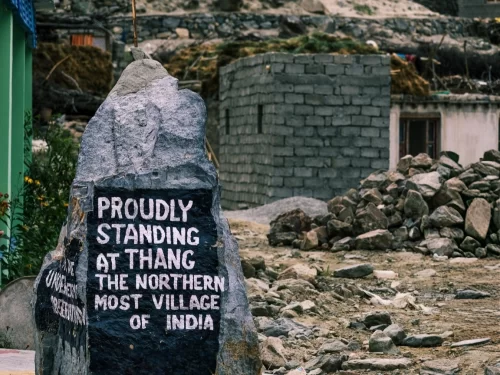
Turtuk village Ladakh Nubra Valley black stone sign Proudly standing at Thang the most northern village of India stone houses rocky hills green door, perfect border cultural tour package. Village

Thang Village

Thang Village is one of the northernmost inhabited villages of India, located just a few hundred meters from the India Pakistan border in Nubra Valley.
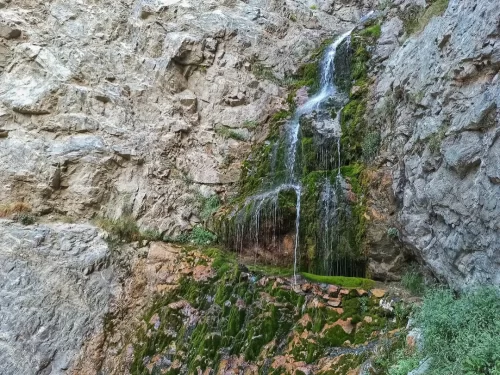
Turtuk Waterfall, scenic natural waterfall in Turtuk village near Nubra Valley, Ladakh India. Waterfall

Turtuk Waterfall

Turtuk Waterfall is a small natural waterfall near Turtuk village, known for its green surroundings and short walking access rather than scale.

Frequently Asked Questions About Balti Heritage House & Museum

Balti Heritage House & Museum is located in Turtuk village in Nubra Valley, around 200 kilometers from Leh city in Ladakh near the India Pakistan border region. It is situated within the old settlement area of Turtuk.
Balti Heritage House & Museum can be reached by road from Leh city via Khardung La and Nubra Valley in approximately 7 to 9 hours depending on road and weather conditions in Ladakh. Most travelers visit Turtuk as part of an extended Nubra Valley itinerary.
Visitors require an Inner Line Permit to travel to Turtuk and access Balti Heritage House & Museum as the region is a restricted border area in Ladakh. Permits are usually arranged in Leh city before departure.
Balti Heritage House & Museum in Turtuk generally remains open during daytime hours, though timings may vary depending on local management and visitor flow. It is advisable to visit during daylight for easier village access.
Balti Heritage House & Museum usually charges a small entry fee for visitors in Nubra Valley, Ladakh. The contribution supports preservation of the traditional house and artifacts.
Around 30 to 45 minutes is sufficient to explore Balti Heritage House & Museum comfortably. Visitors often combine the visit with a walk through Turtuk village.
Inside Balti Heritage House & Museum, visitors can see traditional Balti household items, tools, clothing, photographs, and architectural features that reflect local lifestyle in Nubra Valley. The exhibits focus on everyday culture rather than formal museum displays.
Balti Heritage House & Museum is suitable for families and senior citizens, though access involves walking through narrow village lanes in Turtuk. Visitors should move slowly due to altitude in Ladakh.
Balti Heritage House & Museum can be visited during winter only if road access to Turtuk remains open. Snowfall in Ladakh may restrict travel, so checking road conditions from Leh city is important.
Photography is generally allowed at Balti Heritage House & Museum, though visitors should seek permission before photographing private sections or individuals. Respecting local customs in Turtuk is essential.
Parking near Balti Heritage House & Museum is available at designated village entry points in Turtuk. Visitors usually walk from the parking area to reach the museum.
Balti Heritage House & Museum is commonly combined with visits to Turtuk village viewpoints, local orchards, and other Nubra Valley attractions. Most travelers include it as part of a two or three day Nubra Valley trip from Leh city in Ladakh.

Loved this place ? Let’s Plan Your Ladakh Trip

Get customized Ladakh tour planning designed around altitude comfort, acclimatization time, weather windows, and real Himalayan road conditions. Whether you are visiting for high mountain passes, monasteries, lakes, or remote valley experiences, our exper

⚑ Quick Response | πŸ’° Free consultation | πŸ•’ 24Γ—7 expert support

×

Plan Your Trip