Quick Facts About Kheer Bhawani Temple
| Entry Fee | Free |
| Timings | 06:00 - 19:00 |
| Altitude (m) | 1579 |
| Ideal Visit Duration (hrs) | 1 |
| Best Time of Day | Morning |
| Crowd Level | Moderate |
| Distance from Srinagar (km) | 25 |
| Walking Difficulty | Easy |
| Parking Available | Yes |
| Last Mile Access | Walk |
| Suitable for Kids | Yes |
| Suitable for Seniors | Yes |
| Wheelchair Friendly | Yes |
Why Visit Kheer Bhawani Temple in Ganderbal
Visitors come to Kheer Bhawani Temple to witness one of Kashmir’s most revered Hindu shrines, dedicated to the goddess Ragnya Devi. The temple is an important pilgrimage site, attracting devotees and travelers interested in cultural and religious practices.
The on-ground atmosphere is calm and devotional, with the sacred spring at the center of the temple complex creating a tranquil setting. Pilgrims often perform rituals here, and the surrounding gardens and water channels enhance the sense of serenity.
What makes Kheer Bhawani Temple distinct for travelers is the sacred red-colored spring that changes hues according to local beliefs, offering a unique spiritual and visual experience. Its cultural significance combined with the peaceful environment makes it a must-visit for those seeking both heritage and quiet reflection.
History of Kheer Bhawani Temple, Tulmulla
Kheer Bhawani Temple is a Hindu shrine dedicated to Goddess Ragnya Devi, worshipped as a manifestation of Shakti. Its origins trace back several centuries, with the current structure reflecting renovations and expansions carried out over time by local devotees and regional rulers.
The temple is renowned for the sacred spring nearby, whose water collects in a pool that turns color seasonally—a phenomenon considered a divine sign by worshippers. It has long been a central site for Kashmiri Pandit religious practices, especially during the annual Jyeshtha Ashtami festival.
Kheer Bhawani holds cultural and spiritual significance in Kashmir, serving as a place of worship, pilgrimage, and community gathering. Its enduring relevance highlights the continuity of religious traditions in the region despite historical and political upheavals.
Best Time to Visit Kheer Bhawani Temple
Kheer Bhawani Temple is most pleasant to visit during spring and summer when the temple grounds are accessible, the Tula Mula spring is active, and the surrounding gardens are vibrant, providing a comfortable and serene experience.
- Ideal months: March to October, with May to September offering the most favorable weather for sightseeing and rituals.
- Weather during the best season: Mild to warm days, clear skies, active spring waters, and comfortable conditions for walking around the temple complex.
- Periods to avoid: November to February due to cold temperatures, possible snowfall, and reduced accessibility of the temple grounds.
How to Reach Kheer Bhawani Temple, Tulmulla
Kheer Bhawani Temple is a prominent Hindu shrine located in Tulmulla village, Ganderbal district, Jammu & Kashmir, known for its sacred spring and religious significance. It is accessible via air, rail, and road, with a short drive from Srinagar.
- Nearest Airport: Srinagar International Airport (Sheikh ul-Alam Airport), approximately 50 km away. Direct flights are available from Delhi, Mumbai, Bengaluru, and other major Indian cities. From the airport, taxis or app-based cabs take around 1.5–2 hours to reach the temple.
- Nearest Railway Station: Srinagar Railway Station, about 45 km from Tulmulla. Visitors can hire taxis or local cabs for the onward journey to the temple.
- Road Access & Last-Mile Connectivity: The temple is approached via the Srinagar–Ganderbal road, then a short local road to Tulmulla. Private vehicles and taxis are recommended. During winter, snow or icy patches may affect the last-mile access, so checking conditions in advance is advised.
What to Expect When You Visit Kheer Bhawani Temple
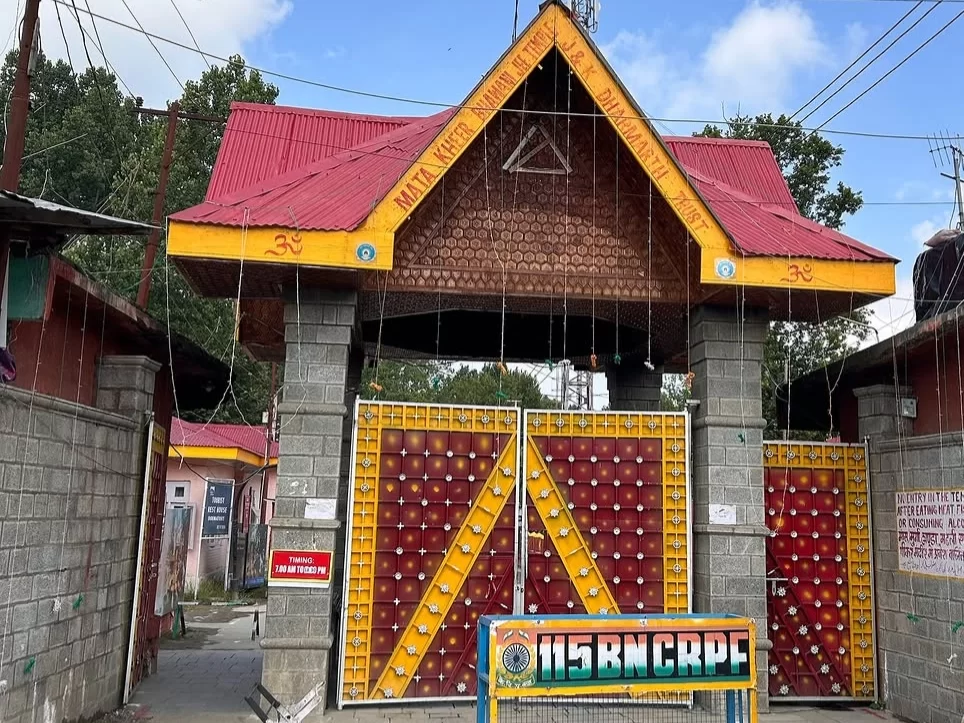
- Kheer Bhawani Temple is set along the banks of the sacred Tula Mula spring, surrounded by landscaped gardens and tall trees. Expect a serene, spiritual environment with a central red-roofed temple and clear water pools.
- Facilities are modest but functional. Visitors will find paved walkways, benches, and basic restrooms outside the main temple area. There are no large eateries on site, so carrying water or snacks is advisable.
- Accessibility is generally good with flat stone paths, though some areas near the spring may be slightly uneven or damp. Wheelchair access is limited but possible on main paths.
- Visitors engage in prayers, rituals, and photography of the temple and sacred spring. The atmosphere is respectful and quiet, with increased crowds during festivals such as Jyeshtha Ashtami.
- Time spent typically ranges from 30 to 60 minutes, including ritual observation and a walk around the temple gardens.
- Weather affects comfort: summers are pleasant, while winter mornings can be cold and foggy. Rain can make paths slippery, so appropriate footwear is recommended.
Important Visitor Information for Kheer Bhawani Temple, Ganderbal
- Crowd and Weather Notes: The temple attracts significant crowds during festivals like Jyeshtha Ashtami, while weekdays and off-season months remain quieter. Summers (April to October) have pleasant weather, and winters are cold with occasional snow affecting access.
- Peak and Quiet Visiting Hours: Peak visiting hours are from 10:00 AM to 1:00 PM. Early morning (8:30 AM to 10:00 AM) or late afternoon (after 3:00 PM) visits are less crowded and offer a more serene experience.
- Dress Code: Modest clothing is required as it is an active religious site. Visitors are expected to cover shoulders and legs, and footwear must be removed before entering the inner sanctum.
- Safety Notes and Practical Cautions: The temple premises have stone pathways that may be slippery when wet. Visitors should avoid stepping on sacred areas and follow local guidance. Carry water and sun protection; limited on-site facilities are available.
Photography and Viewpoints at Kheer Bhawani Temple, Ganderbal
- The main temple complex with the sacred spring pond offers the best wide-angle compositions, capturing the vibrant temple colors reflected in the water along with surrounding deodar trees.
- Side approaches near the pond provide close-up framing opportunities of temple architecture, stone carvings, and ritual activities during puja ceremonies.
- Early morning or late afternoon light enhances reflections in the pond and softens shadows on the temple walls; midday light can be harsh and reduce color vibrancy.
- Overcast days provide even lighting for capturing details in the temple façade and surrounding greenery, particularly during festivals or high-flow seasons of the spring.
- Photography is permitted for personal use; during rituals or crowded festival days, respect devotees’ privacy and avoid obstructing pathways. Tripods and professional equipment may require prior permission.
- Peak visiting times are mid-morning to afternoon; early visits allow for unobstructed shots and better access to key viewpoints around the pond and temple entrance.