Quick Facts About Gulmarg Golf Course
| Entry Fee | Free |
| Timings | 09:00 - 18:00 |
| Altitude (m) | 2650 |
| Ideal Visit Duration (hrs) | 4 |
| Best Time of Day | Morning |
| Crowd Level | Moderate |
| Distance from Gulmarg (km) | 1 |
| Walking Difficulty | Easy |
| Parking Available | No |
| Last Mile Access | Walk |
| Suitable for Kids | Yes |
| Suitable for Seniors | Yes |
| Wheelchair Friendly | No |
Why Visit Gulmarg Golf Course in Gulmarg
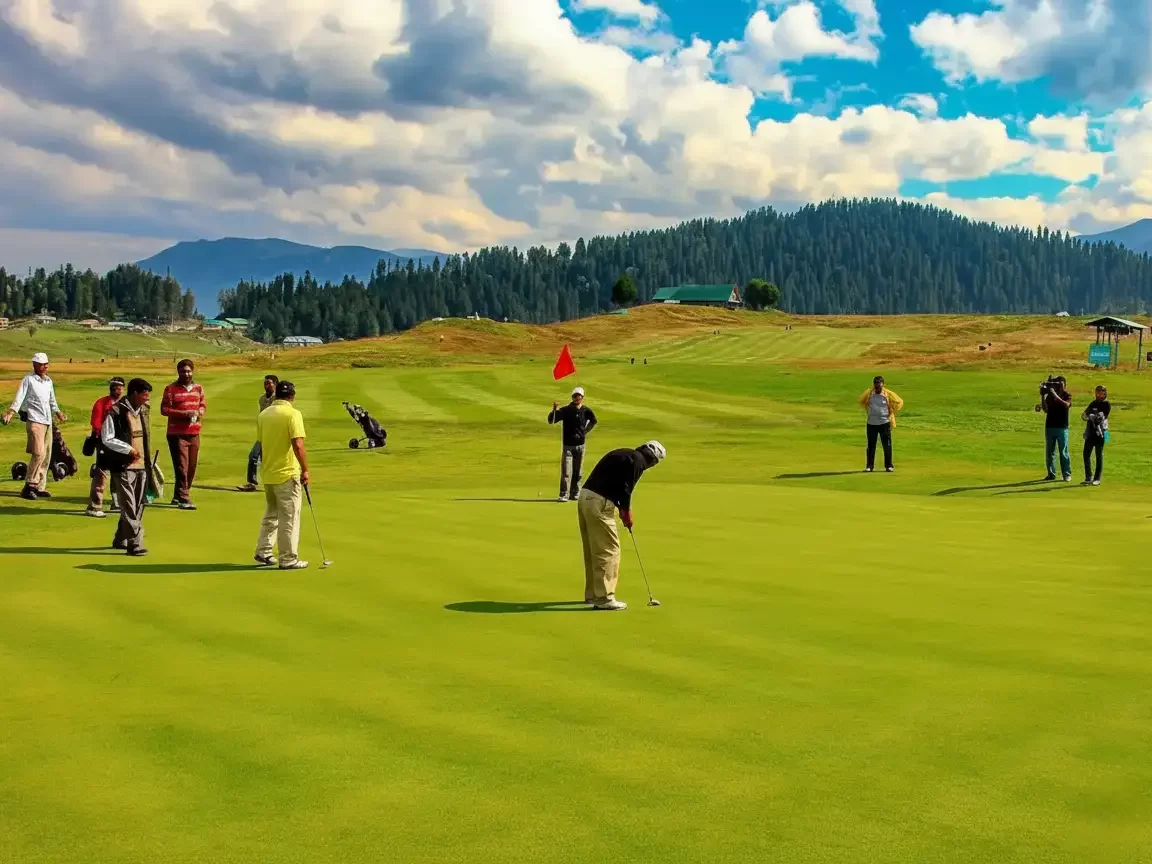
Visitors come to Gulmarg Golf Course to experience one of the world’s highest golf courses, set in an open alpine meadow surrounded by mountains. It attracts both golfers and non-golfers who want to spend time in a wide, scenic landscape without venturing far from central Gulmarg.
The on-ground atmosphere is spacious and relaxed, with well-maintained greens blending into natural grassland and forested edges. Even when games are in progress, the area feels open and unhurried, making it comfortable for walking and casual exploration.
What makes Gulmarg Golf Course distinct for travelers is its altitude and setting, offering panoramic views and cool weather conditions that shape a very different golfing and leisure experience compared to lowland courses. It suits visitors who enjoy scenery, fresh air, and quiet outdoor time alongside light activity.
History of Gulmarg Golf Course, Gulmarg
Gulmarg Golf Course was developed during the early 20th century when Gulmarg served as a summer retreat for British officers and administrators. The course emerged as part of the colonial effort to introduce leisure infrastructure suited to European recreational habits in high-altitude hill stations.
Originally laid out as a smaller golfing ground, the course was later expanded and refined over time, adapting to the natural contours of Gulmarg’s alpine meadow rather than reshaping the terrain extensively. Its location at a high elevation naturally influenced play conditions, setting it apart from lowland courses.
After independence, Gulmarg Golf Course continued to operate as a public sporting facility and gradually gained recognition for its altitude and setting. Its historical importance lies in its association with Gulmarg’s colonial-era transformation into a resort town and its continuity as a functional golf course rather than architectural or ceremonial heritage.
Best Time to Visit Gulmarg Golf Course
Gulmarg Golf Course is best visited during the snow-free months when the high-altitude course is fully operational, fairways are accessible, and weather conditions allow both casual visits and full rounds of golf.
- Ideal months: May to October, when the golf course is open and maintained for visitors and players.
- Weather during the best season: Cool to pleasant daytime temperatures, clear skies, fresh mountain air, and firm ground conditions suitable for walking the course.
- Periods to avoid: November to April due to heavy snowfall, course closure, and complete inaccessibility during winter months.
What to Expect When You Visit Gulmarg Golf Course
- The environment at Gulmarg Golf Course is open and expansive, set within high-altitude meadows surrounded by pine forests and mountain views. The setting feels natural and airy rather than formally landscaped.
- Facilities are limited to the golf course infrastructure. Basic amenities related to golfing are available seasonally, but there are no public restrooms, cafés, or shelters spread across the course area.
- Accessibility is easy from central Gulmarg, with level entry points and open walking areas. However, the course covers a large area, and walking long distances at altitude can feel tiring.
- Movement across the course is generally unrestricted for visitors not playing golf, but active play areas require caution and awareness of ongoing games.
- Visitor behavior varies by season. During summer, golfers and casual walkers share the space, while in winter the area may be snow-covered and not accessible for golfing activities.
- Weather strongly affects the experience. Clear summer days offer comfortable walking conditions, while sudden rain, fog, or cold winds can reduce visibility and comfort.
Important Visitor Information for Gulmarg Golf Course, Gulmarg
- Crowd and Weather Notes: Gulmarg Golf Course sees moderate visitor presence during summer months from May to September, especially when the course is fully operational. Weather remains cool, but sudden rain, fog, or strong winds are common due to its high-altitude meadow setting.
- Peak and Quiet Visiting Hours: Late morning to early afternoon is the busiest period when golfers and sightseeing visitors overlap. Early mornings offer quieter surroundings, clearer views of surrounding peaks, and more stable weather conditions.
- Dress Code: Basic golf etiquette is expected for players, including covered footwear and modest sportswear. Visitors walking around the course should wear warm layers and comfortable shoes due to uneven grassy terrain.
- Safety Notes and Practical Cautions: The course lies at high altitude, and walking long stretches can be physically tiring. Visitors should remain aware of ongoing play and avoid walking across active fairways. Weather can change quickly, so carrying warm clothing and rain protection is essential.
Photography and Viewpoints at Gulmarg Golf Course, Gulmarg
- The open fairways provide the best viewpoints, offering uninterrupted views of rolling green meadows framed by dense pine forests and surrounding Himalayan peaks.
- Photographing from the edges of the course allows wide compositions that capture the scale of the landscape without interfering with golfers or play areas.
- Morning light between 7 am and 9 am works best, as the grass appears fresh and evenly lit, and mountain visibility is clearer before clouds develop.
- Late afternoon light creates long shadows across the fairways, adding depth and texture, but contrast can be high on clear days.
- Photography is allowed for personal use, but entering active play zones or obstructing golfers is restricted; always follow on-site instructions.
- The course is generally calm on weekdays, while weekends and peak tourist season see increased activity that can limit clear, people-free frames.