Quick Facts About Drung Waterfall
| Entry Fee | Free |
| Timings | 06:00 - 18:00 |
| Altitude (m) | 2300 |
| Ideal Visit Duration (hrs) | 1 |
| Best Time of Day | Morning |
| Crowd Level | Moderate |
| Distance from Srinagar (km) | 30 |
| Walking Difficulty | Moderate |
| Parking Available | No |
| Last Mile Access | Walk |
| Suitable for Kids | Yes |
| Suitable for Seniors | No |
| Wheelchair Friendly | No |
Why Visit Drung Waterfall near Gulmarg
Visitors come to Drung Waterfall to see a powerful natural cascade fed by mountain streams, especially striking during late spring and summer when snowmelt increases the water flow. It is a popular short stop for travelers exploring the Tangmarg to Gulmarg route.
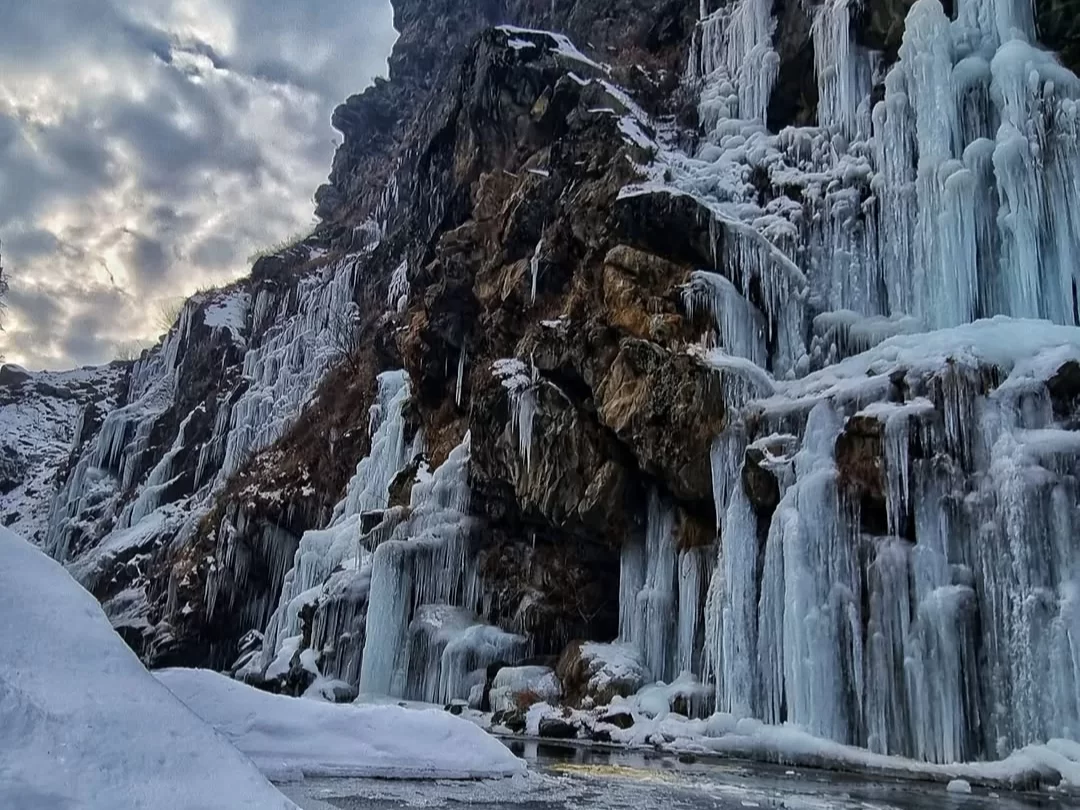
The on-ground atmosphere is cool and damp, with the sound of rushing water echoing through rocky surroundings and patches of greenery. During winter, the waterfall partially freezes, creating a very different, quieter visual experience compared to warmer months.
What makes Drung Waterfall distinct for travelers is its seasonal transformation, shifting from a frozen formation in winter to a fast-flowing cascade in summer. It suits visitors looking for a brief, scenic nature stop rather than a long stay or structured activity.
History of Drung Waterfall, Tangmarg
Drung Waterfall has no documented history linked to rulers, settlements, or constructed heritage. It is a natural waterfall formed by perennial mountain streams descending from the surrounding hills near the village of Drung, close to Tangmarg.
Historically, the waterfall was known mainly to nearby villages and local travelers using traditional routes between Tangmarg and Gulmarg. It functioned as a natural water source and seasonal landmark rather than a destination in itself.
Drung Waterfall gained wider attention only in recent years as road access improved and Gulmarg tourism expanded into surrounding areas. Its historical relevance lies in its long-standing presence as a natural feature shaped by terrain and climate, not by cultural, religious, or administrative significance.
Best Time to Visit Drung Waterfall Tangmarg
Drung Waterfall is best visited when the water flow is visible and access from Tangmarg is safe, as seasonal temperatures strongly affect both the appearance of the falls and road conditions.
- Ideal months: April to June for flowing water and easy access; January to February for frozen waterfall views.
- Weather during the best season: Cool to mild spring temperatures with steady water flow, or sub-zero winter conditions that turn the falls into ice formations.
- Periods to avoid: Late July to September due to slippery paths, occasional landslides on approach roads, and reduced visual clarity during heavy rain.
How to Reach Drung Waterfall, Gulmarg
- Nearest Airport: Srinagar International Airport (Sheikh ul-Alam Airport), approximately 60 km away. The airport has regular flights from major Indian cities. From the airport, taxis to Drung Waterfall are available, and the drive usually takes 2 to 3 hours depending on traffic and weather conditions.
- Nearest Railway Station: Srinagar Railway Station (Nowgam), about 55 km from Drung village. It is connected to the Banihal section of the Kashmir rail network. From the station, visitors must hire a taxi, as there is no direct rail or bus connectivity to Drung.
- Road Access & Last-Mile Connectivity: Drung Waterfall is located in Drung village near Tangmarg, on the route to Gulmarg. The site is accessible by road via Tangmarg, and private taxis can reach close to the waterfall area. The final approach involves a short walk on uneven ground, which can be slippery during winter due to ice and snow. In peak winter months, access may be limited by heavy snowfall and local traffic restrictions.
What to Expect When You Visit Drung Waterfall
- The environment around Drung Waterfall is narrow and rocky, with fast-flowing water cutting through a small gorge. In winter, the waterfall often freezes, creating ice formations rather than flowing water.
- Facilities are very limited. A few informal stalls may appear during peak seasons, but there are no permanent restrooms, managed pathways, or seating areas.
- Accessibility involves walking on uneven, sometimes muddy or icy paths near the waterfall. In winter, snow and ice make movement slippery and require extra caution.
- Visitor activity is concentrated near the base of the waterfall. People tend to gather for photographs, which can cause brief crowding in tight spaces.
- The area is not fenced or formally managed. Close access to water and ice edges can be risky, especially during snowmelt or freezing conditions.
- Weather directly affects the experience. Heavy rain, snow, or extreme cold can reduce safety and limit how close visitors can approach the waterfall.
Important Visitor Information for Drung Waterfall, Gulmarg
- Crowd and Weather Notes: Drung Waterfall receives steady visitor traffic during summer months from May to September and becomes extremely popular in winter when it partially freezes. Weather remains cool year-round, and mist from the waterfall lowers temperatures near the viewing area.
- Peak and Quiet Visiting Hours: Peak hours are late morning to early afternoon when day tourists arrive from Gulmarg and Tangmarg. Early mornings are quieter and offer a calmer atmosphere, while evenings see reduced visibility and colder conditions.
- Dress Code: No formal dress code applies, but warm clothing is recommended even in summer due to cold spray and shaded surroundings. Non-slip footwear is important as paths and rocks near the waterfall remain wet.
- Safety Notes and Practical Cautions: Rocks around the waterfall are slippery throughout the year and extremely icy in winter. Visitors should avoid climbing close to the water flow or frozen sections. Local guides and vehicle access rules should be followed strictly, especially during snowfall or heavy rain.
Photography and Viewpoints at Drung Waterfall, Gulmarg
- The primary viewpoint is from the open clearing directly in front of the waterfall, where the full cascade can be framed against exposed rock faces and surrounding greenery.
- Side angles from the left approach path work well for capturing the layered flow of water, especially during spring and early summer when volume is higher.
- Late morning to early afternoon offers the most usable light, as the sun reaches into the gorge and illuminates the falling water without deep shadow dominance.
- Early morning light is softer but much of the waterfall remains in shade due to surrounding cliffs, limiting detail in wide shots.
- Photography is allowed for personal use, but stepping onto wet rocks or moving too close to the base of the waterfall is unsafe and discouraged.
- The site gets crowded during peak tourist hours and weekends, which can obstruct clean frames; visiting on weekdays or just after opening hours improves access.