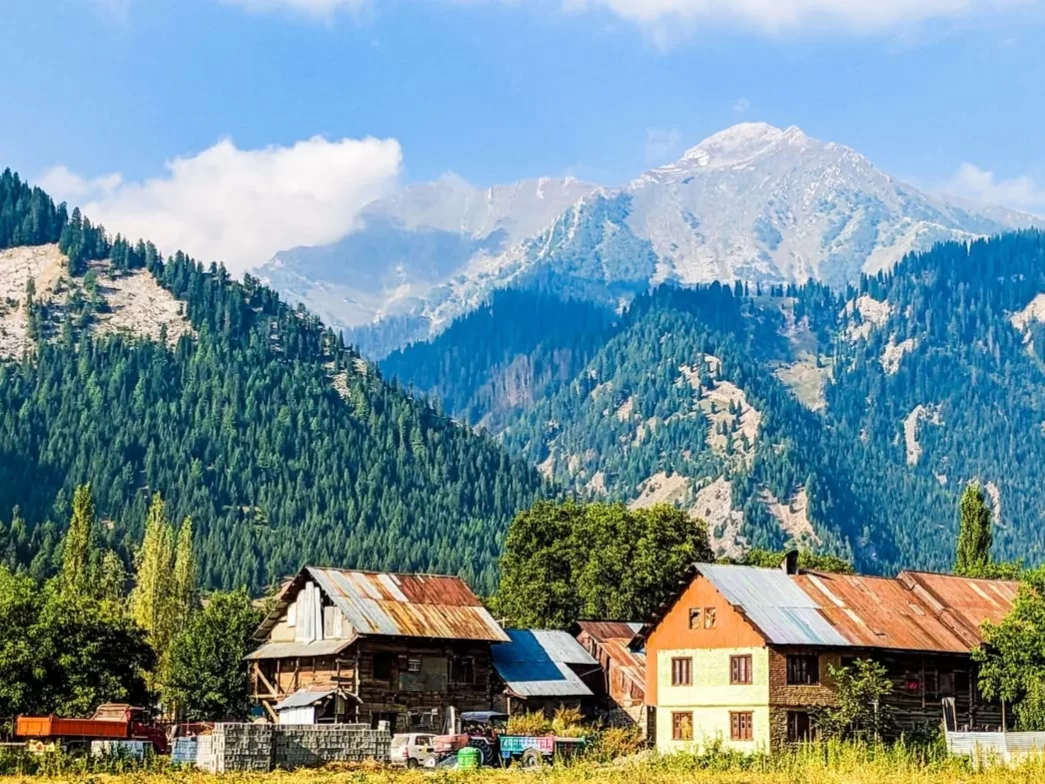
Dawar Village: Principal Town and Cultural Hub of Gurez Valley, Jammu and Kashmir, India

Dawar Village , Gurez
Tourists visit Dawar as the primary gateway and hospitality hub for exploring the Gurez Valley. The village is famous for its traditional wooden log houses and its proximity to the iconic Habba Khatoon Peak, a pyramid-shaped mountain named after the legendary 16th-century Kashmiri poetess. As a cultural center for the Shina-speaking Dard-Shin tribe, Dawar offers visitors a rare look into ancient Dardic customs, traditional Himalayan architecture, and a peaceful riverside environment that remained largely secluded for decades due to its location near the Line of Control.

Quick Facts About Dawar Village

Entry Fee Free
Timings 00:00 - 23:59
Altitude (m) 2400
Ideal Visit Duration (hrs) 48
Best Time of Day Evening
Crowd Level Low
Distance from Srinagar (km) 125
Distance from Bandipora (km) 85
Walking Difficulty Easy
Parking Available Yes
Last Mile Access Road
Suitable for Kids Yes
Suitable for Seniors Yes
Wheelchair Friendly No

Why Visit Dawar Village in Gurez Valley

Dawar serves as the primary gateway and the cultural heart of the Gurez Valley, acting as the central hub for the Dard-Shin community. Travelers visit this historic settlement to immerse themselves in a high-altitude border culture that was closed to the world for decades, offering a rare glimpse into a valley that preserves some of the most authentic Shina traditions and ancient log-cabin architecture in Jammu and Kashmir.

The atmosphere on the ground is dominated by the looming presence of Habba Khatoon, a colossal pyramid-shaped mountain peak named after the legendary Kashmiri poetess. Visitors experience a peaceful, slow-paced lifestyle where the Kishanganga River flows steadily through the town, surrounded by lush alpine forests and fertile fields that turn a brilliant gold during the harvest season, creating a serene environment protected by the watchful mountain ridges.

What makes Dawar distinct is its unique blend of strategic frontier importance and poetic heritage. It offers travelers the chance to explore the "Old Silk Road" connections through its traditional wooden marketplaces and provides the best infrastructure for those planning expeditions to the further reaches of Tulail or the high-altitude meadows. Standing in Dawar provides a unique vantage point to appreciate the resilience of a community that thrives in one of the most isolated yet breathtakingly beautiful corners of the Himalayas.

Historical and Geographic Significance of Dawar Village

Dawar is the central township and administrative hub of the Gurez Valley, situated at an elevation of approximately 2,400 meters (7,874 feet) in the Bandipora district of Jammu and Kashmir. Located along the banks of the Kishanganga River, it serves as the primary gateway to the remote border regions of Tulail and Bagtore, nestled deep within the northern Himalayas.

Geographically, the village is dominated by the towering presence of Habba Khatoon peak, a pyramid-shaped mountain that is the most iconic landmark of the region. Dawar is set in a fertile valley basin, surrounded by dense forests of pine and deodar, and remains isolated from the rest of Kashmir for nearly six months a year due to the closure of Razdan Pass during winter. This physical isolation has preserved its pristine environment and traditional high-altitude mountain ecology.

Historically, Dawar was a vital stop on the ancient Silk Route connecting the Kashmir Valley to Gilgit, Kashgar, and Central Asia. It is the cultural heartland of the Shina-speaking Dard Shin community, who are believed to be the descendants of ancient Aryan tribes. The village is characterized by its unique log-cabin architecture and a lifestyle that revolves around traditional agriculture and livestock. Today, while it remains a sensitive strategic location due to its proximity to the Line of Control (LoC), Dawar is emerging as a premier destination for off-beat tourism, offering a glimpse into a centuries-old way of life in one of the most secluded valleys in India.

Best Time to Visit Dawar Village

Dawar is the central hub and administrative heart of the Gurez Valley, located at approximately 8,000 feet along the Kishanganga River. Surrounded by the towering peaks of the Habba Khatoon massif, the village serves as the primary base for travelers; however, its accessibility is entirely governed by the Razdan Pass, which acts as the only road link between Gurez and the rest of Kashmir.

  • Ideal months: June to September is the peak season, with June offering the most dramatic views of the Habba Khatoon peak against lingering snow, and September providing crisp, clear weather ideal for riverside camping and trekking.
  • Weather conditions: Summer daytime temperatures are very comfortable, ranging from 15°C to 25°C, making it significantly cooler than the Srinagar plains; however, the valley is known for sudden evening temperature drops, necessitating light woolens even in the height of July.
  • Periods to avoid: Strictly avoid travel from December to April when the Razdan Pass is closed due to heavy snow, effectively landlocking the village; additionally, early May can be unpredictable as the "Z-Gali" (Razdan Pass) may face temporary closures due to late-season blizzards or slushy road conditions during the initial opening phase.

How to Reach Dawar Village

Dawar is the central hub and administrative capital of the Gurez Valley, situated at an elevation of approximately 2,400m (7,874 ft). Surrounded by the high peaks of the Shamsabari Range, it serves as the primary base for travelers exploring the border regions of northern Kashmir and is famous for the iconic Habba Khatoon peak that looms over the settlement.
  • Nearest Airport: Srinagar International Airport (SXR) is the closest air link, located about 125 km away. The drive from Srinagar to Dawar typically takes 6 to 7 hours, depending on traffic at the Bandipora market and road conditions at Razdan Pass.
  • Nearest Railway Station: Srinagar Railway Station (Nowgam) is the nearest railhead, roughly 135 km away. Most visitors reach Dawar via private taxi or shared Sumo from Srinagar or Bandipora.
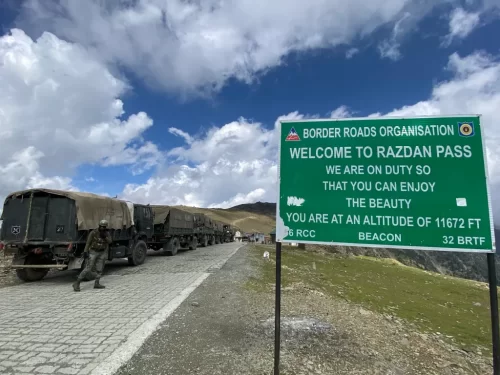
  • Road Access via Razdan Pass: The journey from Srinagar follows the Bandipora-Gurez Road. The most critical part of the route is the ascent to Razdan Pass (3,557m), which offers panoramic views of the Harmukh range before descending into the Gurez Valley. The road is a mix of paved sections and rugged mountain tracks.
  • Last-Mile Connectivity: Dawar is accessible by all sturdy vehicle types, though SUVs and high-clearance vehicles are preferred for comfort. Shared taxis (Sumos) operate regularly from the Stand in Bandipora. Within Dawar, the village is walkable, but a vehicle is needed to visit nearby sites like the Kishanganga Dam or the base of Habba Khatoon.
  • Permits and Security: Indian tourists must carry an original Aadhaar Card or government ID for verification at the Razdan Pass and Tragbal checkpoints. While a formal Inner Line Permit is not usually required for Dawar itself for Indian citizens, foreign nationals must obtain prior permission from the Department of Tourism and the Ministry of Home Affairs.
  • Seasonal Accessibility: Dawar is strictly a seasonal destination, open from May to late October. The Razdan Pass receives massive snowfall, closing the road and cutting off the valley from the rest of the world for nearly six months each winter.
  • Practical Amenities: As the valley's main town, Dawar offers the most reliable infrastructure in Gurez, including several guest houses, a few hotels, and JKTDC bungalows. It has the only functional petrol pump and ATM in the region. Mobile connectivity is primarily limited to BSNL postpaid, though some private networks may have intermittent signals.

Essential Visitor Information for DawarClick to open side panel for more information

  • Crowd and Weather: As the central hub of the Gurez Valley, Dawar maintains a peaceful atmosphere far removed from mainstream tourist circuits; summers (June–August) are pleasant with temperatures between 15°C and 25°C, while winters are brutal and snow-bound, often seeing the village completely cut off from the rest of Kashmir.
  • Peak and Quiet Visiting Hours: Most activity centers around the riverside and local markets between 10:00 AM and 4:00 PM; travelers are advised to conclude their sightseeing and return to their accommodation by 6:00 PM due to strict security protocols and the lack of street lighting in this remote border township.
  • Dress Code and Culture: Modest clothing is expected to respect the local Dard-Shin community; visitors are encouraged to wear layers, including a sturdy windbreaker, as the proximity to the Kishanganga River brings a sharp chill even on sunny days. Seek verbal permission before photographing traditional wooden homes or residents.
  • Safety and Permits: While Indian citizens no longer require a separate permit for Dawar itself, carrying a valid government-issued photo ID (like an Aadhaar card) is mandatory for verification at various military checkpoints along the Razdan Pass route; photographing military installations or bridges is strictly prohibited.
  • Logistics and Infrastructure: Dawar offers the most reliable (though basic) facilities in the valley, including BSNL mobile connectivity and small health centers; however, there are no functional ATMs, so travelers must carry sufficient cash for all expenses. Electricity is sporadic and usually provided by generators during evening hours.
  • Experience-Based Notes: The village sits in the shadow of the iconic Habba Khatoon peak; for the best views, head to the riverbanks at sunrise. Don't miss trying the local mountain trout or visiting the small "Army Cafe" for a unique insight into the region's frontier lifestyle.

Essential Visitor Information for DawarClick to open side panel for more information

  • Crowd and Weather: As the central hub of the Gurez Valley, Dawar maintains a peaceful atmosphere far removed from mainstream tourist circuits; summers (June–August) are pleasant with temperatures between 15°C and 25°C, while winters are brutal and snow-bound, often seeing the village completely cut off from the rest of Kashmir.
  • Peak and Quiet Visiting Hours: Most activity centers around the riverside and local markets between 10:00 AM and 4:00 PM; travelers are advised to conclude their sightseeing and return to their accommodation by 6:00 PM due to strict security protocols and the lack of street lighting in this remote border township.
  • Dress Code and Culture: Modest clothing is expected to respect the local Dard-Shin community; visitors are encouraged to wear layers, including a sturdy windbreaker, as the proximity to the Kishanganga River brings a sharp chill even on sunny days. Seek verbal permission before photographing traditional wooden homes or residents.
  • Safety and Permits: While Indian citizens no longer require a separate permit for Dawar itself, carrying a valid government-issued photo ID (like an Aadhaar card) is mandatory for verification at various military checkpoints along the Razdan Pass route; photographing military installations or bridges is strictly prohibited.
  • Logistics and Infrastructure: Dawar offers the most reliable (though basic) facilities in the valley, including BSNL mobile connectivity and small health centers; however, there are no functional ATMs, so travelers must carry sufficient cash for all expenses. Electricity is sporadic and usually provided by generators during evening hours.
  • Experience-Based Notes: The village sits in the shadow of the iconic Habba Khatoon peak; for the best views, head to the riverbanks at sunrise. Don't miss trying the local mountain trout or visiting the small "Army Cafe" for a unique insight into the region's frontier lifestyle.

Capturing the Frontier Heritage of Dawar Village

  • Habba Khatoon Peak Backdrop: The most iconic shot in Dawar is the pyramid-shaped Habba Khatoon peak. The best angle is from the banks of the Kishanganga River at sunrise, where the first light hits the summit, reflecting the mountain's symmetrical silhouette in the glacial waters.
  • Log Cabin Architectural Detail: Dawar is famous for its traditional Shina architecture, featuring homes built from interlocking deodar logs and mud. Photographers should focus on the intricate textures of the weathered wood and the unique rooftop layouts that characterize this remote Gurez settlement.
  • Kishanganga Riverbank Vistas: The boulder-strewn banks of the river provide a natural leading line toward the village and the surrounding mountains. Mid-morning light is ideal here to capture the vibrant turquoise hue of the water without the deep shadows cast by the steep valley walls.
  • Village Life and Market Portraits: The central market area offers authentic opportunities for environmental portraiture of the local Shina community. Photography is generally welcomed, but it is culturally essential to ask for permission before taking close-up photos of residents.
  • Sensitive Border Restrictions: Because Dawar is a high-security zone near the Line of Control (LoC), drone photography is strictly prohibited. While landscape and village photography are permitted, it is illegal to photograph any military installations, personnel, bunkers, or bridges. Heavy military presence means your camera may be checked at nearby checkpoints.
  • Twilight Shadow Play: Due to the high ridges surrounding the Gurez Valley, the sun disappears early. The "blue hour" provides a soft, ethereal light that emphasizes the smoke rising from traditional wood-fired kitchens, creating a moody and atmospheric village scene.

Near By Attraction

Welcome sign at Razdan Pass near Gurez during partly cloudy weather, featuring army trucks and mountains, perfect adventure Srinagar tour package.  Mountain Pass

Razdan Pass

Razdan Pass is a high-altitude mountain pass connecting Bandipora to Gurez Valley in Jammu and Kashmir.
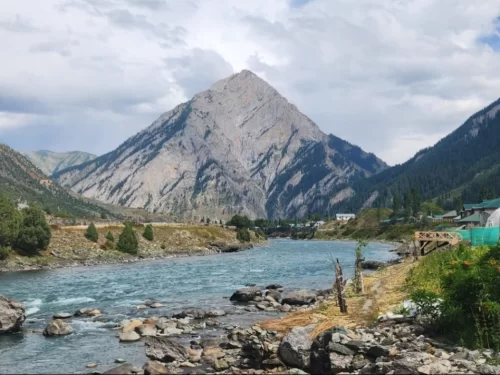
Majestic Habba Khatoon Peak at Gurez Valley during cloudy weather, featuring turquoise river and villages, perfect adventure Srinagar tour package.  Mountain

Habba Khatoon

Habba Khatoon is a distinctive pyramid-shaped mountain peak situated at an elevation of approximately 3,962 meters (13,000 feet) in the Dawar region of Gurez Valley.
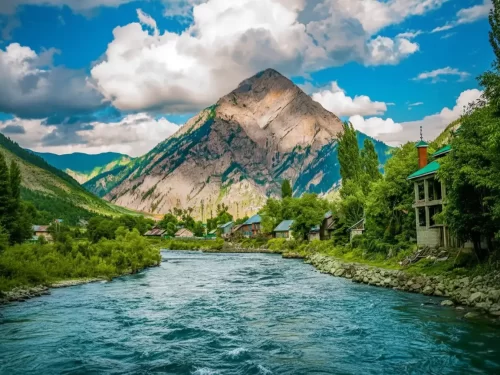
Kishanganga River Gurez Valley sunny day, featuring turquoise waters wooden houses poplar trees Habba Khatoon peak mountains, perfect adventure experience Srinagar tour packages. Adventure Park

Kishanganga River

The Kishanganga River, also known as the Neelum River in Pakistan-administered Kashmir, is a significant tributary of the Jhelum River, originating from the high-altitude glaciers near Krishansar Lake and Sonamarg.

Frequently Asked Questions About Dawar Village

Dawar Village is located in the Gurez Valley region of Jammu and Kashmir near the Line of Control. It serves as the main settlement area of the valley and lies along the Kishanganga River.
Dawar Village can be reached by road from Srinagar via Bandipora and Razdan Pass, and the journey usually takes 8 to 10 hours depending on weather and road conditions. The drive passes through high altitude mountain terrain.
The best time to visit Dawar Village is between June and September when roads are open and weather conditions remain stable. Summer months provide clearer views and easier travel access.
One to two days are generally sufficient to explore Dawar Village at a relaxed pace. The long travel distance makes overnight stays more practical than a short visit.
Dawar Village is suitable for families who are comfortable with long road journeys and limited infrastructure. The village environment allows slow exploration and interaction with local culture.
Dawar Village can be visited during winter, but heavy snowfall in Jammu and Kashmir often restricts road access through mountain passes. Travel plans should be confirmed based on current conditions.
Travelers in Dawar Village can see traditional wooden houses, open meadows, river views, and mountain landscapes. The setting reflects rural Himalayan life rather than commercial tourism.
Accommodation options in Dawar Village include small guesthouses and basic homestays. Facilities are simple but suitable for travelers seeking an authentic valley experience.
Dawar Village remains relatively less crowded compared to mainstream tourist destinations. Even during peak summer months, it maintains a calm and quiet atmosphere.
Food and basic facilities are available in Dawar Village through local eateries and small shops. Visitors should not expect extensive commercial services.
Dawar Village can be combined with visits to Habba Khatoon, Kishanganga River, and other scenic spots within Gurez Valley. Its central position makes it a base for regional exploration.
Travelers visiting Dawar Village should carry warm layers, personal essentials, and cash. Weather in this high altitude region of Jammu and Kashmir can change quickly, so preparation ensures a smoother travel experience.

Loved this place ? Let’s Plan Your Jammu and Kashmir Trip

Get customized Jammu and Kashmir tour planning designed around seasonal weather patterns, valley travel routes, snow conditions, and realistic hill road timing. Whether you are visiting for scenic landscapes, serene lakes, spiritual journeys, meadow stays

⚑ Quick Response | πŸ’° Free consultation | πŸ•’ 24Γ—7 expert support

×

Plan Your Trip