+91 9910402252
admin@chalbanjare.com


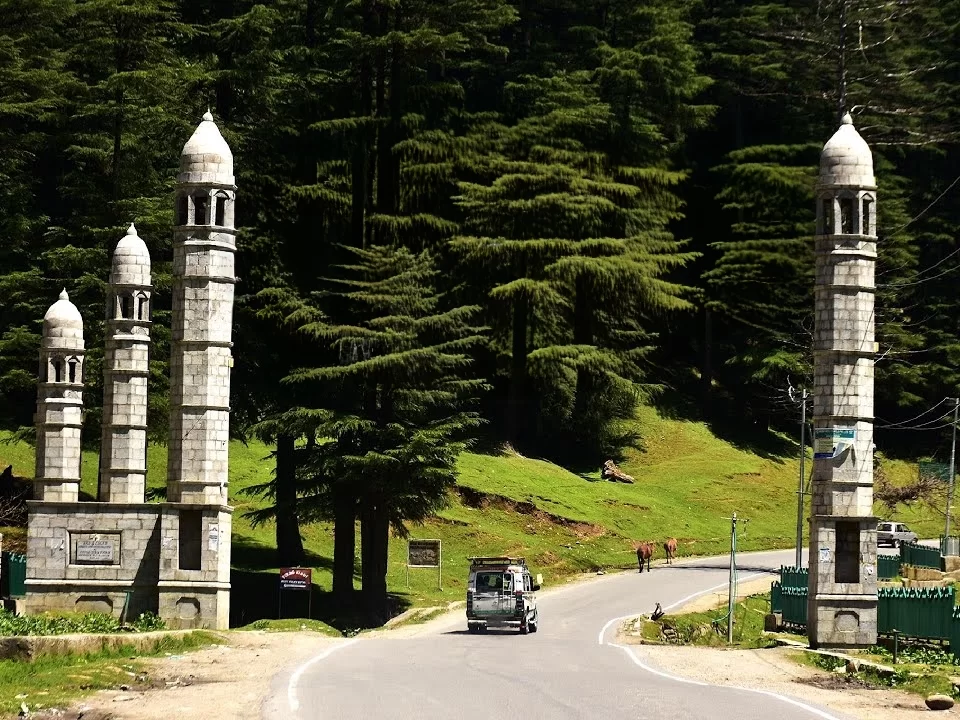
| Entry Fee | Free |
| Timings | 06:00 - 18:00 |
| Altitude (m) | 3000 |
| Ideal Visit Duration (hrs) | 48 |
| Best Time of Day | Morning |
| Crowd Level | Low |
| Distance from Srinagar (km) | 128 |
| Distance from Kupwara (km) | 40 |
| Distance from Handwara (km) | 35 |
| Walking Difficulty | Moderate |
| Parking Available | Yes |
| Last Mile Access | Trek |
| Suitable for Kids | Yes |
| Suitable for Seniors | No |
| Wheelchair Friendly | No |
Bungus Valley is one of Kashmir’s largest and most pristine high-altitude alpine meadows, situated at an elevation of approximately 10,000 feet in the Shamsabari Range. Travelers visit this sprawling grassland to experience an vast, untouched wilderness that was long restricted, offering a rare opportunity to explore a landscape of immense scale that rivals the more famous meadows of Gulmarg and Pahalgam but without the commercial crowds.
The on-ground atmosphere is defined by a sense of boundless freedom and natural purity, where the valley is divided into two distinct parts: "Badi Bungus" (Greater Bungus) and "Chhoti Bungus" (Lesser Bungus). Visitors encounter a landscape of rolling emerald-green pastures crisscrossed by crystal-clear glacial streams and surrounded by dense forests of deodar and pine, creating a serene environment where the only residents are the nomadic Bakarwal tribes tending to their herds during the summer months.
What makes Bungus distinct is its extraordinary biodiversity and its status as a premier destination for eco-tourism and rugged adventure. It serves as a vital habitat for rare Himalayan fauna, including the musk deer and snow leopard, and offers a unique vantage point to view the jagged peaks of the Line of Control. Standing in Bungus provides a visceral connection to the raw, unpolished beauty of the North Kashmir frontier, making it an essential journey for trekkers, photographers, and those seeking total immersion in the high-altitude solitude of the Himalayas.
Bungus Valley is a high-altitude meadow situated at an elevation of approximately 3,048 meters (10,000 feet) in the Kupwara district of Jammu and Kashmir. Spread across an estimated 300 square kilometers, it is one of the largest and most pristine alpine landscapes in the northern Himalayas, located within the Handwara and Kupwara sub-sectors near the Line of Control (LoC).
Geographically, the valley is divided into two main areas: Bod Bungus (Big Bungus) and Chota Bungus (Small Bungus). The topography is characterized by vast undulating grasslands, crystal-clear glacial streams, and a surrounding rim of dense coniferous forests consisting of pine, deodar, and fir. It is a vital ecological zone that serves as a natural habitat for diverse wildlife, including the Himalayan Brown Bear, the Red Fox, and various migratory bird species. The valley is enclosed by the majestic Shamsabari and Chowkibal mountain ranges, which keep it secluded from the more urbanized parts of the Kashmir province.
Historically, Bungus Valley has been an ancient grazing ground for the nomadic Gujjar and Bakarwal tribes, who migrate here during the summer months with their livestock. The name "Bungus" is believed to be derived from the words "Bun" (Forest) and "Gus" (Grass), perfectly describing its lush environment. Due to its proximity to the border, the valley remained largely inaccessible to the general public for decades. However, it is now being developed as a major eco-tourism hub, offering a glimpse into the untouched Trans-Himalayan wilderness. Today, it stands as a symbol of peace and natural preservation, managed by the Lolab-Bungus-Drangyari Development Authority (LBDDA).
Bungus Valley, often referred to as the "Hidden Paradise," is a massive high-altitude meadow situated at approximately 10,000 feet in the Kupwara district. Divided into Bodu Bungus (Big Bungus) and Choti Bungus (Small Bungus), the valley remains one of the most untouched alpine landscapes in Kashmir. Because it lacks paved road connectivity and requires trekking or off-road transit through dense forests, the timing of your visit is critical for navigating the primitive trails and witnessing the meadows in full bloom.
Bungus Valley, often referred to as the hidden gem of North Kashmir, is a massive high-altitude meadow situated at approximately 3,048m (10,000 ft) in the Kupwara district. Spanning over 300 square kilometers, the valley is divided into Bodh Bungus (Big Bungus) and Chota Bungus (Small Bungus), offering untouched alpine pastures, sprawling grasslands, and dense coniferous forests near the Line of Control.
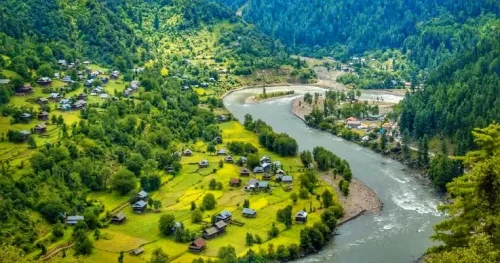 Valley
Keran Valley is a scenic Himalayan valley located in Kupwara district, Jammu and Kashmir, along the Kishanganga River near the Line of Control.
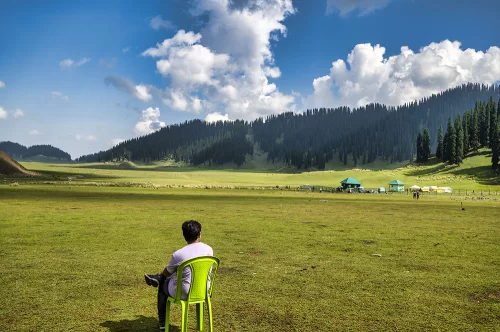 Valley
Bangus Valley is a high-altitude meadow valley located in Kupwara district, Jammu and Kashmir, known for its vast alpine grasslands surrounded by forested Himalayan mountains.
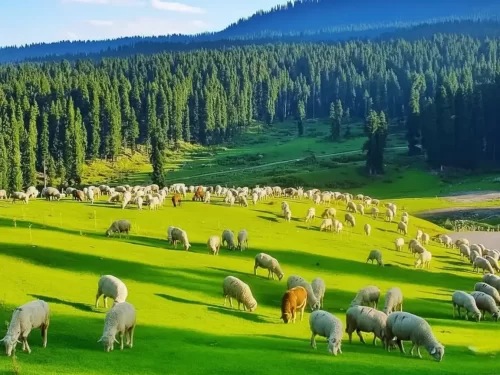 Meadow
Lolab Valley is an oval-shaped Himalayan valley situated at an average elevation of approximately 1,590 meters (5,215 feet) in the northern Kupwara district.
Get customized Jammu and Kashmir tour planning designed around seasonal weather patterns, valley travel routes, snow conditions, and realistic hill road timing. Whether you are visiting for scenic landscapes, serene lakes, spiritual journeys, meadow stays
⚡ Quick Response | 💰 Free consultation | 🕒 24×7 expert support