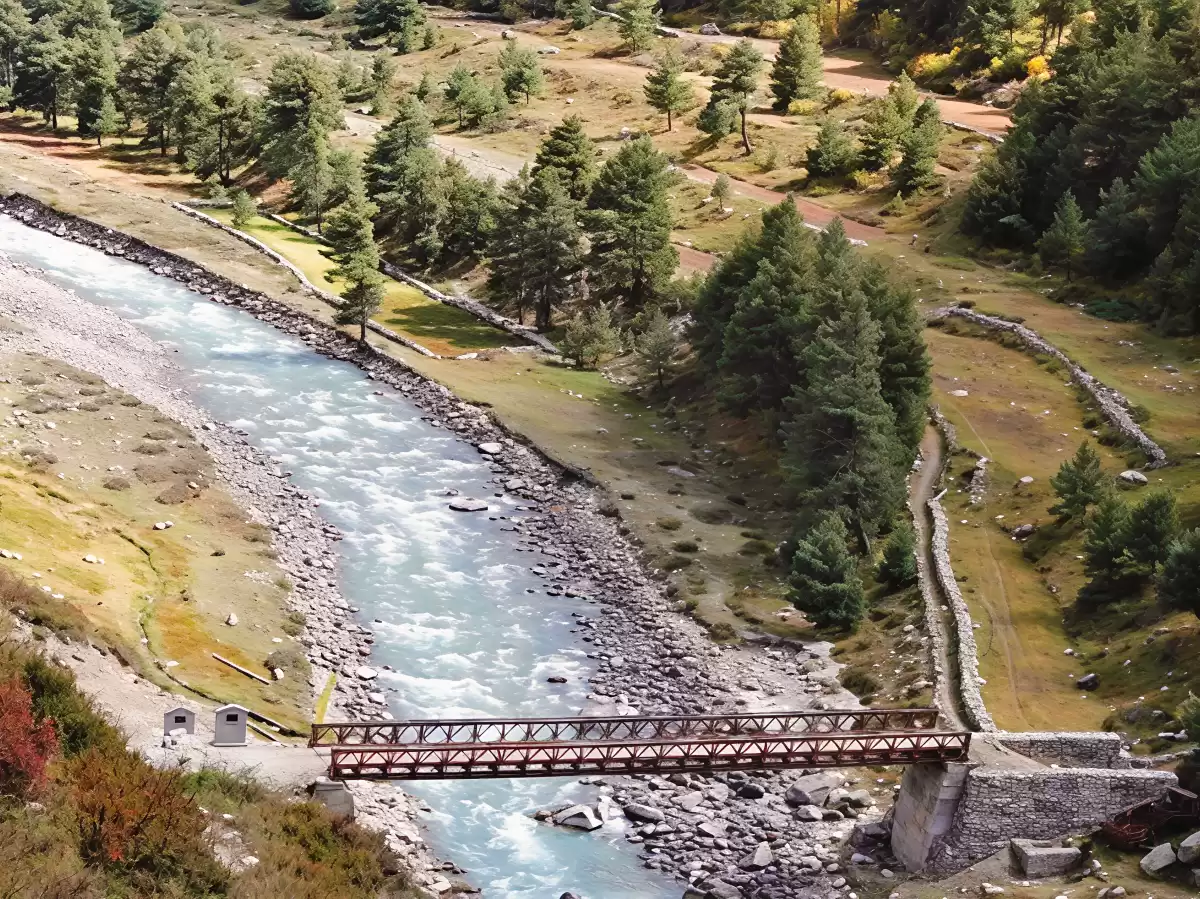
Chitkul Bridge – Gateway to India’s Last Inhabited Village

Chitkul Bridge , Chitkul
Chitkul Bridge serves as an important access point to Chitkul, the last inhabited village near the Indo-Tibetan border in Himachal Pradesh. Surrounded by snow-capped peaks, alpine forests, and the fast-flowing Baspa River, the bridge is a popular stop for travelers, photographers, and nature lovers. It provides panoramic views of the valley and is especially admired for its raw natural beauty and peaceful surroundings.

Quick Facts About Chitkul Bridge

Entry Fee Free
Timings 00:00 - 23:59
Altitude (m) 3450
Ideal Visit Duration (hrs) 1
Best Time of Day Morning
Crowd Level Moderate
Distance from Chitkul (km) 0.5
Walking Difficulty Easy
Parking Available No

Why Visit Chitkul Bridge

Why Visit: Chitkul Bridge is an essential stop for travelers visiting Chitkul, known as India’s last inhabited village near the Indo-Tibetan border. The bridge offers spectacular views of the crystal-clear Baspa River, surrounding alpine meadows, and towering Himalayan peaks, making it ideal for sightseeing, photography, and quiet reflection.

Atmosphere: The atmosphere at Chitkul Bridge is peaceful and refreshing, defined by crisp mountain air, flowing river sounds, and wide open landscapes. The area feels calm and unspoiled, especially during mornings and late afternoons, allowing visitors to experience the raw beauty and serenity of the high Himalayas.

What Makes it Special: What makes Chitkul Bridge special is its role as a scenic gateway to one of the most remote yet inhabited regions of India. Its high-altitude setting, untouched natural surroundings, and panoramic valley views offer a rare combination of cultural significance and natural beauty that few places can match.

History

Chitkul Bridge was developed as a functional pedestrian crossing to improve local connectivity within Chitkul village and its surrounding hamlets. Positioned over the Baspa River, the bridge has long served as an essential link for villagers, shepherds, and traders moving across the valley in this high-altitude Himalayan region.

Over time, as Chitkul gained recognition as the last inhabited village near the Indo-Tibetan border, the bridge evolved from a purely utilitarian structure into a notable landmark for visitors. Its strategic location and open views of the river and mountains naturally drew travelers, photographers, and trekkers exploring the Baspa Valley.

Today, Chitkul Bridge stands as a symbol of access and transition—connecting traditional village life with growing tourism—while still retaining its original purpose of supporting daily movement in a remote and challenging terrain.

Best Time to Visit Chitkul Bridge

The best time to visit Chitkul Bridge is during the warmer months when road access is open and weather conditions are favorable. Due to its high-altitude location, the region experiences extreme cold and heavy snowfall in winter, which can limit accessibility and visibility.

Summer and early autumn offer clear skies, pleasant daytime temperatures, and the best views of the Baspa River and surrounding Himalayan peaks. During this period, the landscape is vibrant, making it ideal for sightseeing, photography, and short walks around the bridge.
  • Best Season: May to October, when roads to Chitkul are generally accessible
  • Summer (May to June): Mild temperatures, clear views, and comfortable conditions for visitors
  • Monsoon (July to August): Lush scenery but occasional rainfall; travel with caution due to landslides
  • Autumn (September to October): Crisp weather, fewer crowds, and excellent visibility
  • Winter (November to April): Heavy snowfall and road closures; not recommended for general visitors

How to Reach Chitkul Bridge

  • By Road: Chitkul Bridge is accessible via Karcham from Shimla through National Highway NH-5. From Karcham, a well-maintained mountain road leads to Chitkul village, passing through Sangla. The bridge is located close to the village and can be reached on foot once you arrive in Chitkul.
  • By Rail: The nearest major railway station is Shimla Railway Station, connected by the Kalka–Shimla narrow-gauge line. From Shimla, travelers must continue the journey by road via Kinnaur to reach Chitkul.
  • By Air: The closest airport is Shimla Airport (Jubbarhatti), approximately 230 km away. From the airport, taxis and buses are available to reach Sangla and onward to Chitkul.
  • Local Access: Once in Chitkul village, the bridge is easily accessible on foot. It lies within a short walking distance from the main settlement and is well-known among locals and visitors.
  • Travel Tips: Due to mountainous terrain and weather conditions, road access may be restricted during winter. Always check road status before travel and plan journeys during daylight hours for safety.

What to Expect When You Visit Chitkul Bridge

  • Scenic Himalayan Views: Visitors can expect sweeping views of the Baspa River flowing below, framed by snow-capped peaks, alpine forests, and open valleys. The natural setting is one of the most visually striking aspects of the visit.
  • High-Altitude Environment: Chitkul Bridge is located at a high elevation, so the air may feel thinner, especially for first-time visitors. Slow walking, proper hydration, and short visit durations help ensure a comfortable experience.
  • Peaceful and Uncrowded Setting: Unlike busy tourist landmarks, the bridge offers a calm and relaxed atmosphere. Crowds are usually minimal, allowing visitors to enjoy quiet moments, photography, and uninterrupted views.
  • Short Walking Access: The bridge is reached via a short, easy walk from nearby areas in Chitkul village. The path is simple but may be uneven, so comfortable footwear is recommended.
  • Weather-Dependent Conditions: Weather can change quickly in the mountains. Visitors may experience bright sunshine, cool winds, or sudden drops in temperature, even during summer months.
  • Simple Facilities: There are limited amenities near the bridge. Travelers should not expect shops or restrooms directly at the site and are advised to carry essentials in advance.

Important Visitor Information

  • Crowd & Weather Notes: Chitkul Bridge generally experiences low to moderate footfall, with increased visitors during peak summer months (May to June) and autumn (September). Weather remains cool even in summer, while sudden winds, rain, or temperature drops are common due to the high-altitude Himalayan setting.
  • Peak / Quiet Hours: Peak hours are usually late morning to early afternoon when most tourists arrive in Chitkul village. For a quieter and more peaceful experience, early mornings and late afternoons are ideal, offering fewer crowds and better lighting for photography.
  • Dress Code: There is no formal dress code, but warm and layered clothing is strongly recommended due to cold winds and fluctuating temperatures. Comfortable walking shoes with good grip are advisable, especially near the bridge and riverbanks.
  • Safety Notes: Visitors should exercise caution while crossing or standing near the bridge edges, particularly during strong winds or wet conditions. Avoid leaning over railings, supervise children closely, and be mindful of altitude-related discomfort such as shortness of breath or fatigue.

Photography and Viewpoint

  • Panoramic Viewpoint: Chitkul Bridge serves as a natural viewpoint offering uninterrupted panoramas of the Baspa River, surrounding alpine meadows, and rugged Himalayan peaks. The elevated position of the bridge allows visitors to observe the valley from a unique perspective, making it one of the most scenic spots in Chitkul.
  • Photography Highlights: The contrast between the turquoise river, wooden village structures, and snow-dusted mountains creates striking photographic compositions. Both landscape and wide-angle shots work well here, capturing the raw and untouched beauty of the Baspa Valley.
  • Best Time for Photography: Early mornings provide soft natural light, minimal crowds, and clearer skies, while late afternoons offer warm tones and dramatic shadows. Clear-weather days are ideal, as cloud cover can reduce visibility in the high-altitude environment.
  • Seasonal Visual Appeal: Summer and early autumn reveal vibrant greenery and flowing river scenes, while post-monsoon months enhance clarity and color contrast. Winter photography is limited due to snow accumulation and restricted access.
  • Photography Etiquette and Safety: Visitors should remain within designated walking areas while taki

Near By Attraction

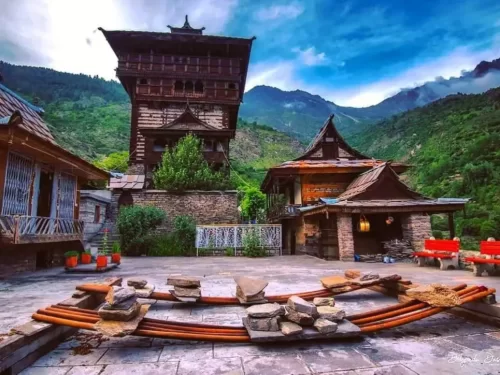
Kamru Fort Sangla Kinnaur Himachal Pradesh during partly cloudy skies, featuring tall multi-storey wooden tower temple complex lush green mountains courtyard benches, perfect cultural experience Himachal tour package. Fort

Kamru Fort

Kamru Fort is a historic hilltop fort near Sangla, once the capital of the Bushahr Kingdom and a key landmark of Kinnaur’s royal heritage.
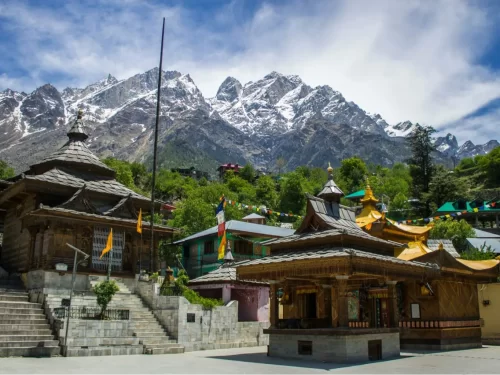
Shree Bering Nag Temple Chitkul Kinnaur, featuring wooden pagoda temples prayer flags steps colorful buildings backdrop snow peaks green valley, perfect Himachal Pradesh tour packages. Temple

Shree Bering Nag Ji Temple

Shree Bering Nag Ji Temple is a revered ancient temple in Kinnaur dedicated to Bering Nag, the local serpent deity worshipped for protection and prosperity.
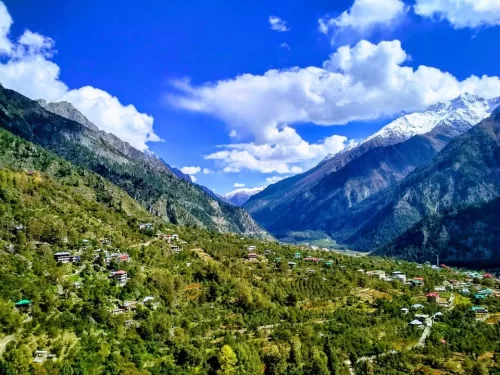
Panoramic view from Chitkul View Point showcasing lush green valley slopes dotted with houses, winding mountain roads, and snow-capped Himalayan peaks under a bright blue sky with scattered clouds. Viewpoint

Chitkul View Point

Chitkul View Point offers breathtaking panoramic views of the Baspa Valley, surrounding mountains, and the serene high-altitude landscape of Chitkul.

Frequently Asked Questions About Chitkul Bridge

The best time to visit Chitkul Bridge is between May and October when the roads in Kinnaur district of Himachal Pradesh remain open and weather conditions are stable. These months offer clear views of the Baspa River and surrounding mountains.
Chitkul Bridge is located in Chitkul village in Kinnaur district of Himachal Pradesh near the Indo Tibet border. It spans across the Baspa River and connects parts of the village.
Chitkul Bridge can be reached by road from Sangla, which is approximately 24 to 25 kilometers away. Visitors usually travel by private vehicle or taxi and then walk a short distance to the bridge.
There is no entry fee to visit Chitkul Bridge. Travelers can access the bridge area freely while following local safety precautions.
Chitkul Bridge is accessible during daylight hours from morning until sunset. Visiting during the day ensures better visibility and safer travel on mountain roads.
Around 20 to 30 minutes is sufficient to explore Chitkul Bridge and enjoy the river views. Many visitors combine it with sightseeing in Chitkul village.
Chitkul Bridge becomes difficult to access during peak winter due to heavy snowfall and road closures in Kinnaur. Travelers should check weather and road conditions before planning a winter visit.
Chitkul Bridge is suitable for families as it involves minimal walking, but children should be supervised near the river and open edges. Strong river currents require caution.
Photography and mobile videography are allowed at Chitkul Bridge. The river, wooden houses, and mountain backdrop make it a popular photo spot.
Visitors should carry warm clothing, drinking water, and sun protection while visiting Chitkul Bridge due to high altitude weather conditions. Comfortable footwear is recommended for walking on uneven surfaces.

Loved this place ? Let’s Plan Your Himachal Pradesh Trip

Get customized Himachal Pradesh tour planning designed around season, road conditions, hill travel pacing, and comfort preferences. Whether you are visiting for snow experiences, mountain landscapes, temple towns, adventure activities, or relaxed valley s

⚡ Quick Response | 💰 Free consultation | 🕒 24×7 expert support

×

Plan Your Trip