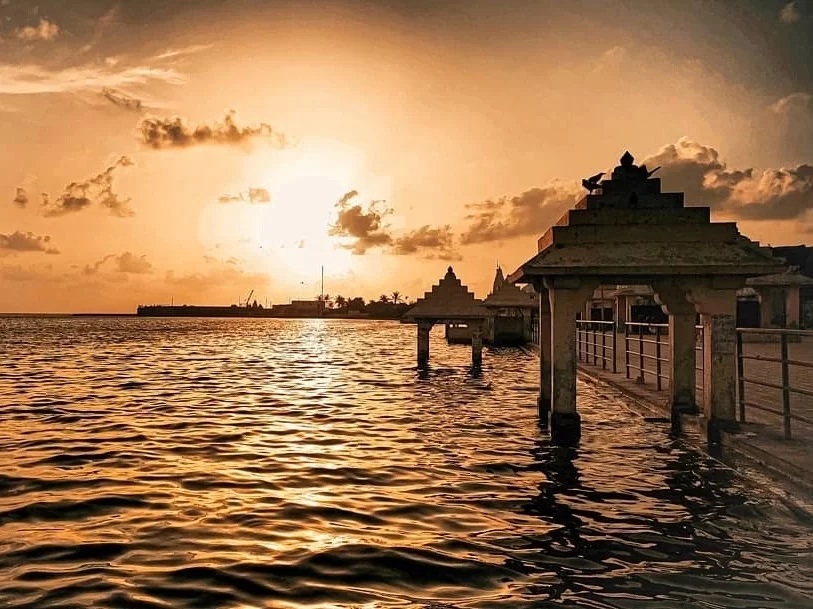
Triveni Sangam, Somnath, Gujarat, India

Triveni Sangam Somnath , Somnath
Tourists visit Triveni Sangam Somnath for its religious significance, river-sea confluence views, and the nearby temple and ghat area used for rituals. Many visitors come early morning or evening to observe prayers, take a short riverside walk, and see the confluence before visiting Somnath Temple. It is a common stop for pilgrims and cultural travelers.

Quick Facts About Triveni Sangam Somnath

Quick Facts About Triveni Sangam Somnath

Entry Fee Free (public ghat and confluence area)
Timings Open all day; best visited in early morning or evening (ritual activity depends on local timing)
Altitude (m) Approx. 0–10 m above sea level (coastal Somnath region)
Ideal Visit Duration 30 minutes to 1 hour
Best Time of Day Early morning (for rituals and calmer atmosphere) or sunset (for confluence views)
Crowd Level Moderate on weekdays; high during Somnath peak pilgrimage season and festival days
Distance from City Centre (km) Approx. 1–2 km from Somnath Temple area
Walking Difficulty Easy (short walk along ghat paths; steps near water edge)
Parking Available Yes (limited parking available near the ghat approach road)
Last Mile Access Accessible by auto-rickshaw, taxi, and local vehicles; short walking required to reach the ghat
Suitable for Kids Yes (with supervision near water and steps)
Suitable for Seniors Yes (but steps near the ghat may require careful movement)
Wheelchair Friendly Partially (approach is possible, but ghat steps and uneven edges limit full wheelchair access)

Why Visit Triveni Sangam Somnath

Triveni Sangam Somnath is visited mainly for its religious importance as a sacred river confluence near the Somnath Temple region. Tourists and pilgrims come here to observe the meeting point of the rivers, perform rituals at the ghat, and spend time near the water before or after temple darshan.

The on-ground atmosphere is devotional and quiet during early mornings, with priests and visitors conducting prayers along the steps. By evening, the area becomes more active with families and pilgrims walking along the ghat, and the coastal breeze makes the surroundings feel calmer despite steady visitor movement.

What makes Triveni Sangam distinct is the combination of river confluence and coastal setting, where the water flow meets the Arabian Sea near Somnath’s sacred landscape. For travelers, it offers a short but meaningful stop that combines spiritual activity with open views and a natural riverside environment.

Religious Significance of Triveni Sangam Somnath

Triveni Sangam Somnath is considered a sacred confluence where the Hiran, Kapila, and Saraswati rivers are believed to meet before flowing into the Arabian Sea. The site holds strong religious importance for Hindu pilgrims visiting Somnath, and it is traditionally associated with ritual bathing and prayer offerings at the ghat.

The confluence area is commonly used for performing pind daan and other ancestral rites, and priests are often present to guide visitors during ritual activities. Its proximity to Somnath Temple makes it an important part of the local pilgrimage circuit and a regular stop for devotees during major religious visits.

Best Time to Visit Triveni Sangam Somnath

Triveni Sangam Somnath is best visited during the cooler months when the coastal weather is comfortable for walking along the ghat and spending time near the river-sea confluence. Since the area is open and exposed to sun and wind, seasonal heat and monsoon conditions can directly affect the overall visit experience.
  • Ideal months: October to March for pleasant temperatures and comfortable ghat-side walking.
  • Best seasonal experience: Winter mornings are ideal for rituals and a calmer atmosphere, while evenings offer better coastal breeze and sunset views.
  • Weather during the best season: Cooler air, lower humidity, and clearer visibility along the confluence and sea-facing side.
  • Period to avoid for comfort: April to June afternoons due to strong heat and direct sun exposure on the open ghat area.
  • Monsoon limitation: July to September can bring heavy rain and rough coastal conditions, which may make ghat steps slippery and reduce access comfort.
  • Best time of day: Early morning for rituals and quiet surroundings, or evening for better views and a cooler coastal atmosphere.

How to Reach Triveni Sangam Somnath

  • Nearest airport: Diu Airport (DIU), approximately 80–90 km away; taxis and private vehicles are commonly used for onward travel to Somnath.
  • Nearest railway station: Somnath Railway Station (SMNH), located within the Somnath town area, making it the closest rail access point for visitors.
  • Major rail connectivity option: Veraval Junction (VRL) is the main railway hub nearby and is commonly used by tourists traveling from Ahmedabad, Rajkot, and other Gujarat cities.
  • Road access: Triveni Sangam is easily reachable by road from Somnath Temple and Veraval through well-connected local routes.
  • Local transport: Auto-rickshaws, local taxis, and private vehicles are easily available in Somnath for short-distance travel to the ghat area.
  • Last-mile connectivity: Vehicles can reach close to the approach road, followed by a short walk down to the ghat steps near the confluence.
  • Travel limitation: During peak pilgrimage season and festival periods, traffic and parking congestion near the Somnath temple zone can increase travel time.

What to Expect When You Visit Triveni Sangam Somnath

  • River confluence and coastal setting: Expect an open ghat area where the river flow meets the Arabian Sea, with visible water movement and sea breeze throughout the day.
  • Ghat-based experience: The visit mainly involves walking along stone steps, sitting near the water, and observing or participating in rituals conducted at the confluence.
  • Ritual activity: Priests and pilgrims are commonly present, especially in the morning, as many visitors come for pind daan and prayer offerings.
  • Limited facilities: Basic facilities are available nearby, but the confluence itself is not a managed tourist complex with structured visitor services.
  • Walking and movement: Access includes steps and uneven stone surfaces near the water edge, which may require careful movement for seniors and families.
  • Photography environment: Visitors often take photos of the confluence and sea-facing views, but crowd movement near the main steps can limit clear framing.
  • Weather exposure: The area is fully open with direct sun and wind, so comfort depends on season and time of day.
  • Water-edge caution: Water levels and current can vary, and visitors should avoid stepping too close to the edge during high flow or rough sea conditions.
  • Typical visit duration: Most visitors spend a short time here before moving toward Somnath Temple or nearby ghat-side religious spots.

Important Visitor Information for Triveni Sangam Somnath

  • Crowd and atmosphere: The confluence area is busiest during Somnath peak pilgrimage season, weekends, and festival days when ritual activity increases.
  • Weather note: The ghat is fully open and exposed to sun and sea wind, so heat and humidity can strongly affect comfort during daytime hours.
  • Peak visiting hours: Early morning hours are busiest due to ritual bathing, pind daan, and priest-guided ceremonies.
  • Quiet visiting hours: Mid-afternoon usually has fewer visitors, but weather can be harsh due to strong sun exposure.
  • Dress code: No formal dress code is enforced, but modest clothing is recommended as many visitors perform religious rituals at the ghat.
  • Footwear and steps caution: Stone steps near the water can be slippery, especially during monsoon season or after sea spray.
  • Water safety: Water current and sea conditions can vary, and visitors should avoid entering deep water or standing close to the edge during rough flow.
  • Festival crowd caution: During major religious dates, queues and crowding near ritual points can be heavy, so visitors should keep belongings secure.
  • Parking limitation: Parking near the ghat approach road is limited, and congestion is common when Somnath Temple visitor traffic is high.

Photography and Viewpoints at Triveni Sangam Somnath

  • Best viewpoint for confluence shots: The main ghat steps provide the clearest view of the river meeting point and the water flow moving toward the sea.
  • Sea-facing frames: The outer edge of the ghat area offers wide-angle views where the river channel and Arabian Sea can be captured together.
  • Best time for lighting: Early morning light works well for calm water scenes and ritual photography, while sunset hours create strong sky and sea backdrops.
  • Evening photography atmosphere: Sunset visits often provide a scenic coastal mood, but crowd levels may rise due to visitors arriving after Somnath Temple darshan.
  • Ritual-area sensitivity: Photography near priests and active ceremonies is common, but visitors should avoid close-up shots that disturb rituals or personal space.
  • Weather impact: Wind and sea spray can affect lens clarity, especially near the sea-facing side during rough coastal conditions.
  • Crowd limitation: Peak morning ritual hours can make it difficult to get clear frames near the main steps without waiting for space.
  • Access and safety factor: Lower steps closer to the water provide stronger angles for reflection shots, but they can be slippery and require careful movement.

Near By Attraction

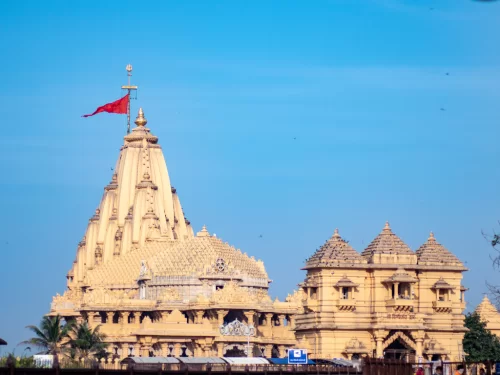
Shree Somnath Jyotirlinga Temple at Prabhas Patan during clear day, featuring shikhara with saffron flag, intricate carvings, domes, perfect pilgrimage experience with Gujarat tour packages. Temple

Shree Somnath Temple

Shree Somnath Temple is a major Hindu temple dedicated to Lord Shiva, located on the Arabian Sea coast in Somnath, Gujarat.
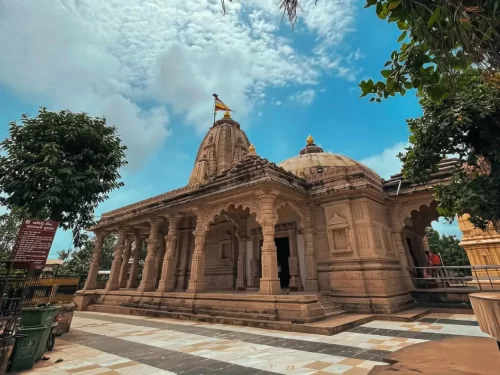
Bhalka Tirth Temple Somnath sacred Hindu pilgrimage site associated with Lord Krishna in Gujarat. Temple

Bhalka Tirth Temple

Bhalka Tirth Temple is a Hindu pilgrimage site near Somnath, associated with the spot where Lord Krishna is believed to have been accidentally struck by an arrow.
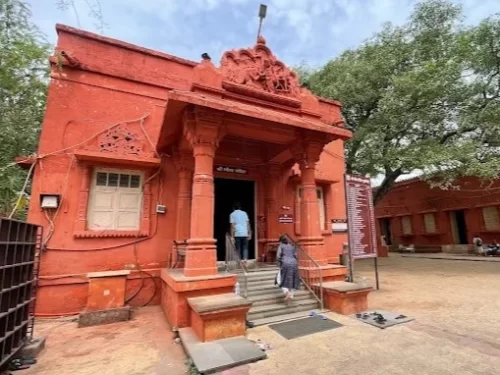
Gita Mandir sacred Hindu temple known for Bhagavad Gita inscriptions and spiritual significance in Gujarat. Temple

Gita Mandir

Gita Mandir is a Hindu temple near Somnath known for its Bhagavad Gita inscriptions and peaceful prayer environment.

Frequently Asked Questions About Triveni Sangam Somnath

Triveni Sangam Somnath in Gujarat is located in Prabhas Patan near Shree Somnath Temple in Gir Somnath district. It lies along the Arabian Sea coast where three rivers are believed to meet.
Triveni Sangam Somnath in Gujarat is approximately 1 kilometer from Shree Somnath Temple. The distance can be covered within a few minutes by road or on foot.
Triveni Sangam Somnath in Gujarat is considered a sacred confluence of the Hiran, Kapila, and Saraswati rivers. Pilgrims visit the site to perform ritual bathing and religious ceremonies.
Triveni Sangam Somnath in Gujarat is generally accessible throughout the day. Visitors typically prefer morning or evening hours due to coastal weather conditions.
There is no entry fee to visit Triveni Sangam Somnath in Gujarat. It is an open public religious site.
Most visitors spend about 20 to 40 minutes at Triveni Sangam Somnath in Gujarat. The visit duration depends on participation in rituals or personal prayers.
Triveni Sangam Somnath in Gujarat allows ritual bathing, but visitors should exercise caution due to changing tides and water currents. Following local safety advice is recommended.
Photography at Triveni Sangam Somnath in Gujarat is generally allowed in open areas. Visitors should respect religious practices while taking photographs.
Basic facilities such as changing areas and small shops are available near Triveni Sangam Somnath in Gujarat. Additional amenities are available in the nearby Somnath temple area.
Visitors can reach Triveni Sangam Somnath in Gujarat by road from Somnath or Veraval. Veraval Railway Station is around 6 to 7 kilometers away, and Diu Airport is the nearest airport within 80 to 85 kilometers.

Loved this place ? Let’s Plan Your Gujarat Trip

Get customized Gujarat tour planning designed around seasonal climate conditions, long-distance road travel flow, festival timing, and realistic pacing across regions. Whether you are visiting for heritage sites, desert experiences, coastal retreats, wild

⚡ Quick Response | 💰 Free consultation | 🕒 24×7 expert support

×

Plan Your Trip