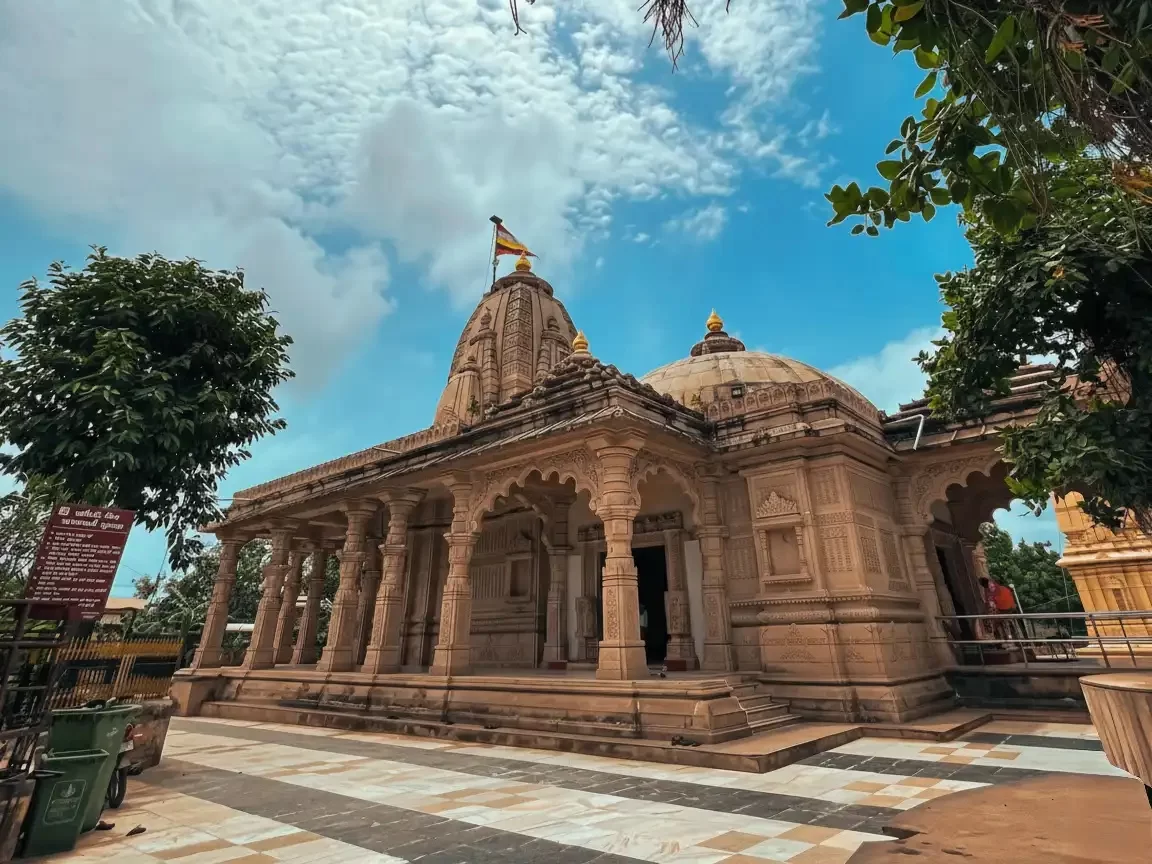
Bhalka Tirth Temple, Somnath, Gujarat, India

Bhalka Tirth Temple , Somnath
Tourists visit Bhalka Tirth Temple mainly for its religious importance linked to Krishna’s final moments and the Mahabharata-era legend. The site includes a temple area and a sacred atmosphere that attracts pilgrims visiting Somnath, often as part of a short religious circuit along with Triveni Sangam and Somnath Temple.

Quick Facts About Bhalka Tirth Temple

Quick Facts About Bhalka Tirth Temple Somnath

Entry Fee Free (donations optional)
Timings Generally open daily during temple hours; exact timings depend on local puja schedule (confirm on arrival)
Altitude (m) Approx. 0–10 m above sea level (coastal Somnath region)
Ideal Visit Duration 30 minutes to 1 hour
Best Time of Day Morning or early evening (comfortable weather and active prayer atmosphere)
Crowd Level Moderate on weekdays; high during pilgrimage season, weekends, and Krishna-related festival periods
Distance from City Centre (km) Approx. 4–6 km from Somnath Temple area
Walking Difficulty Easy (short walking within the temple complex)
Parking Available Yes (parking space available near the temple premises)
Last Mile Access Easily reachable by auto-rickshaw, taxi, and private vehicles; short walk from parking to temple entry
Suitable for Kids Yes (family-friendly pilgrimage environment)
Suitable for Seniors Yes (minimal walking and seating available in parts of the complex)
Wheelchair Friendly Partially (entry access is possible, but some areas may have steps and crowd congestion during peak times)

Why Visit Bhalka Tirth Temple Somnath

Bhalka Tirth Temple Somnath is visited mainly for its strong religious association with Lord Krishna’s final moments, making it an important pilgrimage stop near Somnath. Tourists and devotees come here for darshan and to experience a sacred site connected to Krishna-related traditions.

The on-ground atmosphere is devotional and peaceful, with steady visitor movement throughout the day. The temple premises are generally calm on weekdays, while weekends and pilgrimage seasons bring more crowd activity, including group visits and family pilgrims.

What makes Bhalka Tirth distinct for travelers is its identity as a location-specific Krishna pilgrimage point rather than a general temple visit. For visitors exploring Somnath, it is a short but meaningful stop that is usually combined with Triveni Sangam and the Somnath Temple circuit.

Religious Significance of Bhalka Tirth Temple Somnath

Bhalka Tirth Temple is considered one of the most important Krishna-associated pilgrimage sites near Somnath. It is traditionally believed to be the location where Lord Krishna was accidentally struck by an arrow, marking the final chapter of his earthly life in Hindu belief.

The temple is closely linked with Somnath’s wider religious circuit, and many pilgrims visit it after Somnath Temple darshan as part of a spiritually connected route. The site is especially significant for devotees interested in Krishna-related traditions and is commonly visited during major Hindu festivals.

Best Time to Visit Bhalka Tirth Temple Somnath

Bhalka Tirth Temple Somnath is best visited during the cooler months when outdoor movement around the temple complex is comfortable. As the site is part of an open pilgrimage route near Somnath, weather conditions directly affect walking comfort and crowd density.
  • Ideal months: October to March for pleasant temperatures and easier movement within the temple premises.
  • Best seasonal experience: Winter mornings and evenings provide a calm devotional atmosphere with manageable crowd levels.
  • Weather during the best season: Cooler air and reduced humidity, suitable for short temple visits and nearby travel.
  • Period to avoid for comfort: April to June afternoons due to high heat, which can make standing and walking uncomfortable.
  • Monsoon limitation: July to September may bring heavy rain and humidity, affecting road access and temple surroundings.
  • Best time of day: Morning or early evening for darshan with relatively lower heat and smoother visitor flow.

How to Reach Bhalka Tirth Temple Somnath

  • Nearest airport: Diu Airport (DIU), approximately 80–90 km away; taxis and private vehicles are commonly used for direct travel to Somnath.
  • Nearest railway station: Somnath Railway Station (SMNH), located within Somnath town and convenient for reaching nearby pilgrimage attractions.
  • Major rail connectivity option: Veraval Junction (VRL) is the nearest major railway hub and is widely used by tourists arriving from Ahmedabad, Rajkot, and other Gujarat cities.
  • Road access: Bhalka Tirth Temple is well connected by road and is located a short driving distance from Somnath Temple and Veraval.
  • Local transport: Auto-rickshaws, taxis, and private vehicles are easily available in Somnath for direct travel to the temple.
  • Last-mile connectivity: Vehicles can reach close to the temple premises, followed by a short walk from the parking area to the main entry zone.
  • Travel limitation: During peak pilgrimage season and major festivals, traffic congestion around Somnath roads can increase travel time and parking pressure.

What to Expect When You Visit Bhalka Tirth Temple Somnath

  • Peaceful pilgrimage setting: Expect a calm temple atmosphere where visitors mainly come for darshan and short prayer time.
  • Krishna-associated site experience: The visit focuses on the religious importance of the location, and most tourists spend time near the main shrine area and surrounding prayer spaces.
  • Short walking requirement: Movement inside the complex is generally easy, with a short walk from the entry and parking zone to the main temple area.
  • Devotional crowd behaviour: Visitors typically follow a respectful queue system and maintain silence near the sanctum, especially during prayer timings.
  • Facilities: Facilities are basic and focused on pilgrimage needs rather than tourist-style services; the visit is usually quick and straightforward.
  • Festival crowd pattern: During Krishna-related festivals and peak Somnath pilgrimage season, the temple can get crowded with group visitors.
  • Accessibility note: Entry is manageable for most visitors, but steps and crowd movement may make wheelchair access difficult during peak hours.
  • Time planning: Many tourists combine Bhalka Tirth with Somnath Temple, Triveni Sangam, and nearby religious stops in a single itinerary.
  • Photography expectation: Photography is usually possible in outer areas, but visitors should avoid photographing close to the sanctum during active worship.

Important Visitor Information for Bhalka Tirth Temple Somnath

  • Crowd and visitor flow: The temple receives steady pilgrimage traffic, with heavier crowds during Somnath peak season, weekends, and Krishna-related festival days.
  • Weather note: The temple surroundings are open, and summer heat in Somnath can make outdoor waiting uncomfortable during daytime hours.
  • Peak visiting hours: Morning and evening prayer timings are usually the busiest, as most pilgrims prefer darshan during these hours.
  • Quiet visiting hours: Mid-morning and early afternoon generally have fewer visitors, though the weather may be warmer.
  • Dress code: Modest clothing is recommended, as it is an active Hindu pilgrimage temple with regular worship activity.
  • Footwear rule: Footwear must be removed before entering the main prayer area, and visitors should plan accordingly during hot summer days.
  • Safety and movement: During crowded festival periods, entry pathways can become congested, so visitors should move carefully and keep belongings secure.
  • Child supervision: Families should supervise children closely during peak crowd hours, especially near queues and entry points.
  • Parking limitation: Parking is available but can become crowded during pilgrimage peaks, and local traffic may slow down near Somnath roads.

Photography and Viewpoints at Bhalka Tirth Temple Somnath

  • Best viewpoint for temple photos: The open entry approach provides the clearest angle to capture the main temple structure and entrance area without crowd obstruction.
  • Courtyard photography: Outer premises and open walking zones around the temple are suitable for wide-angle photos, especially when the crowd is low.
  • Best time for lighting: Morning hours provide softer daylight for exterior photography and allow cleaner frames before peak pilgrim rush.
  • Evening photography conditions: Early evening offers a devotional atmosphere, but visitor movement increases near the darshan queue area.
  • Photography sensitivity near sanctum: Close-up photography near the main shrine may not be appropriate during active worship, and visitors should follow local instructions.
  • Crowd impact: During festivals and peak Somnath season, crowded entry lines can limit space for photography near the temple front.
  • Best calm angles: Side pathways and outer sections of the complex often provide quieter framing options compared to the central darshan route.
  • Respect-based limitation: Photography of rituals and priests is common, but visitors should avoid intrusive shots and maintain temple decorum.

Near By Attraction

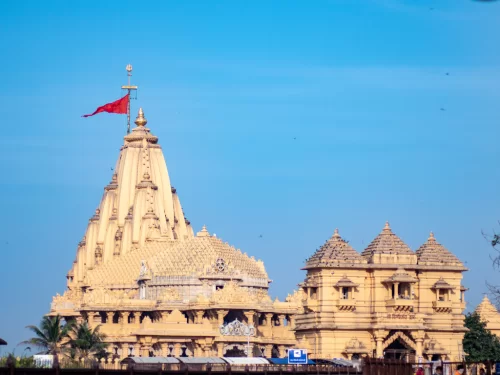
Shree Somnath Jyotirlinga Temple at Prabhas Patan during clear day, featuring shikhara with saffron flag, intricate carvings, domes, perfect pilgrimage experience with Gujarat tour packages. Temple

Shree Somnath Temple

Shree Somnath Temple is a major Hindu temple dedicated to Lord Shiva, located on the Arabian Sea coast in Somnath, Gujarat.
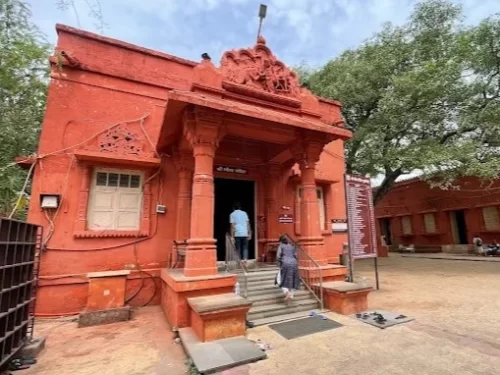
Gita Mandir sacred Hindu temple known for Bhagavad Gita inscriptions and spiritual significance in Gujarat. Temple

Gita Mandir

Gita Mandir is a Hindu temple near Somnath known for its Bhagavad Gita inscriptions and peaceful prayer environment.
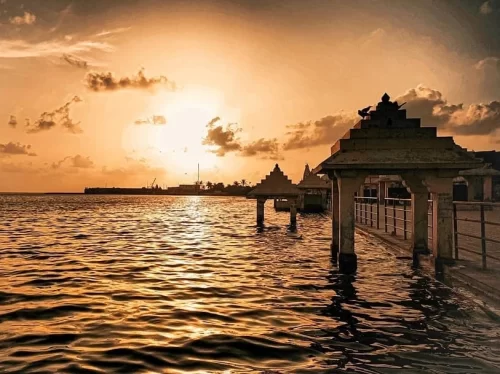
Triveni Sangam Somnath sacred confluence of three rivers and revered pilgrimage site in Gujarat. River Ghat

Triveni Sangam Somnath

Triveni Sangam in Somnath is the sacred confluence point where the Hiran, Kapila, and Saraswati rivers meet near the Arabian Sea.

Frequently Asked Questions About Bhalka Tirth Temple

Bhalka Tirth Temple in Gujarat is located near Prabhas Patan close to Somnath in Gir Somnath district. The temple lies a few kilometers from Shree Somnath Temple.
Bhalka Tirth Temple in Gujarat is approximately 4 to 5 kilometers from Shree Somnath Temple. The distance can be covered in about 10 to 15 minutes by road.
Bhalka Tirth Temple in Gujarat is generally open daily from morning until evening. Timings may vary slightly during festivals and special religious occasions.
There is no entry fee to visit Bhalka Tirth Temple in Gujarat. Visitors can offer voluntary donations at the temple.
Most visitors spend about 30 to 45 minutes at Bhalka Tirth Temple in Gujarat. The temple complex is compact and easy to explore within a short visit.
Photography at Bhalka Tirth Temple in Gujarat is generally allowed in open areas. Visitors should avoid taking photographs inside sanctum areas if restricted.
Bhalka Tirth Temple in Gujarat remains open throughout the year. Visitor numbers increase during major Hindu festivals and pilgrimage seasons.
Basic facilities such as restrooms, drinking water, and parking are available at Bhalka Tirth Temple in Gujarat. Additional amenities are available in nearby Somnath town.
The best time to visit Bhalka Tirth Temple in Gujarat is between October and March when the weather is relatively comfortable. Summers can be hot due to the coastal climate.
Visitors can reach Bhalka Tirth Temple in Gujarat by road from Somnath or Veraval. Veraval Railway Station is about 6 to 7 kilometers away, and Diu Airport is the nearest airport within 80 to 85 kilometers.

Loved this place ? Let’s Plan Your Gujarat Trip

Get customized Gujarat tour planning designed around seasonal climate conditions, long-distance road travel flow, festival timing, and realistic pacing across regions. Whether you are visiting for heritage sites, desert experiences, coastal retreats, wild

⚡ Quick Response | 💰 Free consultation | 🕒 24×7 expert support

×

Plan Your Trip