Quick Facts About Gita Mandir
Quick Facts About Gita Mandir Somnath
| Entry Fee | Free (donations optional) |
|---|---|
| Timings | Generally open daily during temple hours; exact timings vary by local puja schedule (confirm on arrival) |
| Altitude (m) | Approx. 0–10 m above sea level (coastal Somnath region) |
| Ideal Visit Duration | 20 to 40 minutes |
| Best Time of Day | Morning or early evening (pleasant weather and active prayer atmosphere) |
| Crowd Level | Low to moderate on normal days; higher during Somnath pilgrimage season and festival periods |
| Distance from City Centre (km) | Approx. 1–3 km from Somnath Temple area (depending on route) |
| Walking Difficulty | Easy (short walking inside temple premises) |
| Parking Available | Yes (limited parking available nearby) |
| Last Mile Access | Easily accessible by auto-rickshaw, taxi, and local vehicles; short walk to the entrance |
| Suitable for Kids | Yes (quiet and safe temple environment) |
| Suitable for Seniors | Yes (minimal walking and generally calm surroundings) |
| Wheelchair Friendly | Partially (entry access depends on steps and temple layout) |
Why Visit Gita Mandir Somnath
Gita Mandir Somnath is visited by tourists and pilgrims looking for a peaceful temple stop near the main Somnath religious circuit. Visitors mainly come for darshan and to read Bhagavad Gita verses displayed and engraved within the temple premises.
The on-ground atmosphere is calm and devotional, with light footfall compared to the Somnath Temple complex. The surroundings usually feel quiet, and most visitors spend time walking slowly around the temple walls, reading inscriptions, and sitting briefly for prayer.
What makes Gita Mandir distinct for travelers is its focus on the Bhagavad Gita through visible verse inscriptions, making the visit more reflective than a typical quick temple stop. It works well as a short, low-crowd religious visit for tourists exploring Somnath beyond the main temple.
Religious Significance of Gita Mandir Somnath
Gita Mandir Somnath is dedicated to the teachings of the Bhagavad Gita and is visited as a devotional site focused on scripture-based worship. The temple is known for displaying verses of the Bhagavad Gita within its premises, making it a spiritually reflective stop for pilgrims visiting Somnath.
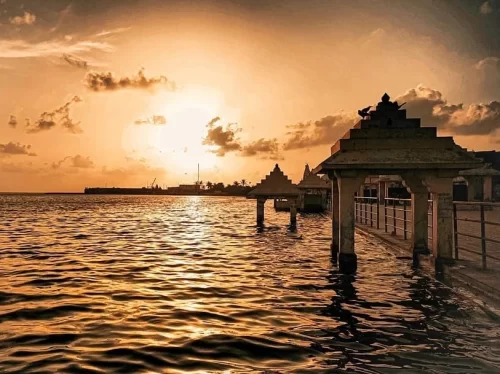
Its religious importance is closely linked to Somnath’s wider pilgrimage landscape, and many visitors include it as part of a short temple circuit along with Somnath Temple and nearby ghats. The temple is commonly used for quiet prayer, reading, and brief spiritual visits rather than large-scale ceremonial gatherings.
Best Time to Visit Gita Mandir Somnath
Gita Mandir Somnath can be visited throughout the year, but the most comfortable time is during the cooler months when walking between nearby temples and spending time in the open areas around Somnath feels easier. Since the visit is usually short, weather mainly affects travel comfort and crowd levels during peak pilgrimage periods.
- Ideal months: October to March for pleasant temperatures and comfortable temple visits in Somnath.
- Best seasonal experience: Winter mornings and evenings offer a quieter atmosphere for prayer and reading Gita inscriptions.
- Weather during the best season: Cooler coastal air and lower humidity, making short temple walks more comfortable.
- Period to avoid for comfort: April to June afternoons due to high coastal heat, which can make walking between Somnath attractions tiring.
- Monsoon limitation: July to September may bring heavy rain and humidity, which can affect local movement and outdoor comfort near temple surroundings.
- Best time of day: Morning or early evening for calmer surroundings and active prayer hours.
How to Reach Gita Mandir Somnath
- Nearest airport: Diu Airport (DIU), approximately 80–90 km away; taxis and private vehicles are commonly used for onward travel to Somnath.
- Nearest railway station: Somnath Railway Station (SMNH), located within Somnath town and convenient for reaching nearby temple attractions.
- Major rail connectivity option: Veraval Junction (VRL) is the main railway hub near Somnath and is frequently used by tourists arriving from major Gujarat cities.
- Road access: Gita Mandir is well connected by local roads from Somnath Temple area and Veraval, and is reachable by short-distance road travel.
- Local transport: Auto-rickshaws, taxis, and private vehicles are easily available in Somnath for quick travel to the temple.
- Last-mile connectivity: Vehicles can reach close to the temple approach area, followed by a short walk to the main entrance.
- Travel limitation: During peak pilgrimage season and festival periods, traffic congestion near Somnath Temple roads can increase travel time.
What to Expect When You Visit Gita Mandir Somnath
- Quiet temple environment: Expect a calm devotional setting where most visitors come for short darshan and scripture-focused prayer.
- Bhagavad Gita inscriptions: The main visitor experience includes reading and observing Bhagavad Gita verses displayed within the temple premises.
- Short visit duration: Most tourists spend limited time here, as the temple is usually covered quickly while exploring Somnath’s nearby attractions.
- Low crowd compared to Somnath Temple: The temple generally remains less crowded, except during major pilgrimage days and festival periods.
- Simple facilities: Facilities are basic, and visitors should not expect large tourist infrastructure or guided interpretation systems.
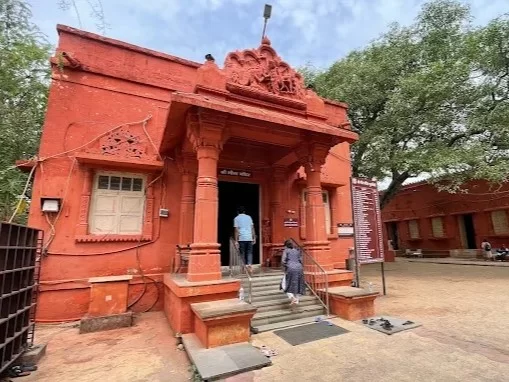
- Footwear rules: Footwear must be removed before entering the main worship area, and a footwear space is usually available near the entry.
- Accessibility and movement: Walking inside the temple is minimal, but entry steps may be present depending on the access point.
- Visitor behaviour: Visitors usually maintain silence, read inscriptions, offer prayers, and move respectfully without long queues on normal days.
- Photography expectation: Photography is generally possible in outer areas, but visitors should avoid taking photos inside prayer zones during active worship.
Important Visitor Information for Gita Mandir Somnath
- Crowd and visitor flow: The temple is usually less crowded than the Somnath Temple complex, but footfall increases during peak pilgrimage season and festival days.
- Weather note: The visit is short, but Somnath’s coastal heat and humidity can make daytime walking uncomfortable, especially in summer months.
- Peak visiting hours: Morning and evening prayer timings generally see the highest number of devotees.
- Quiet visiting hours: Mid-morning and early afternoon usually have fewer visitors and allow a calmer reading and darshan experience.
- Dress code: Modest clothing is recommended, as it is an active Hindu worship site with regular devotional visitors.
- Footwear rule: Footwear must be removed before entering the main temple area, and visitors should be prepared for warm floors during summer.
- Respectful behaviour: Visitors are expected to maintain silence near prayer areas, especially where devotees are reading or reciting scripture.
- Safety note: During festival periods, entry areas can become crowded, so visitors should keep valuables secure and move carefully near queues.
- Parking limitation: Parking availability depends on local Somnath traffic conditions and may be limited during peak temple rush hours.
Photography and Viewpoints at Gita Mandir Somnath
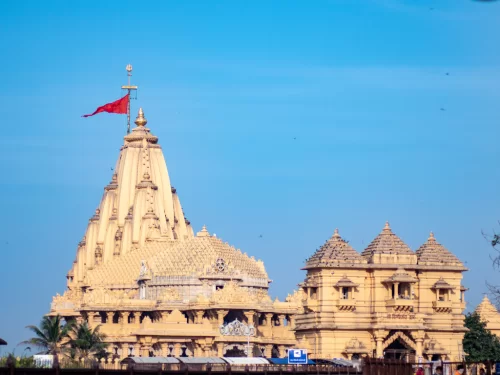
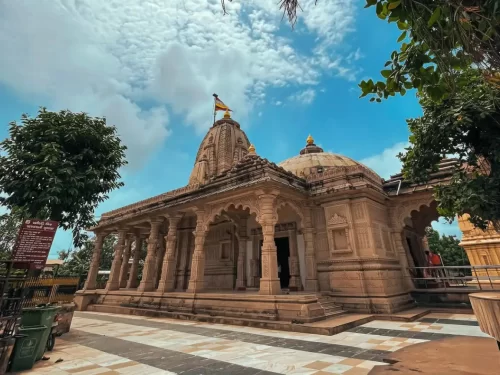
- Best viewpoint for temple structure: The open space near the entrance provides the clearest angle to capture the front façade and overall temple layout.
- Scripture-focused photography: Visitors often photograph Bhagavad Gita inscriptions displayed on temple walls, especially in outer corridors and accessible reading sections.
- Best time for natural lighting: Morning hours offer cleaner daylight for exterior photography and allow clearer images of inscriptions without heavy crowd interference.
- Evening atmosphere shots: Early evening visits can capture a devotional mood during prayer time, but visitor movement may increase compared to mornings.
- Interior photography sensitivity: Photography inside the main prayer area may not be appropriate during rituals, and visitors should follow any on-site restrictions.
- Crowd impact: During Somnath pilgrimage peaks and festivals, crowded corridors can limit space for steady photography near inscription panels.
- Best calm angles: Side pathways and outer temple premises usually provide quieter framing options compared to the main entry zone.
- Respect-based limitation: Close-up photography of devotees during prayer is discouraged, as the temple is actively used for worship.