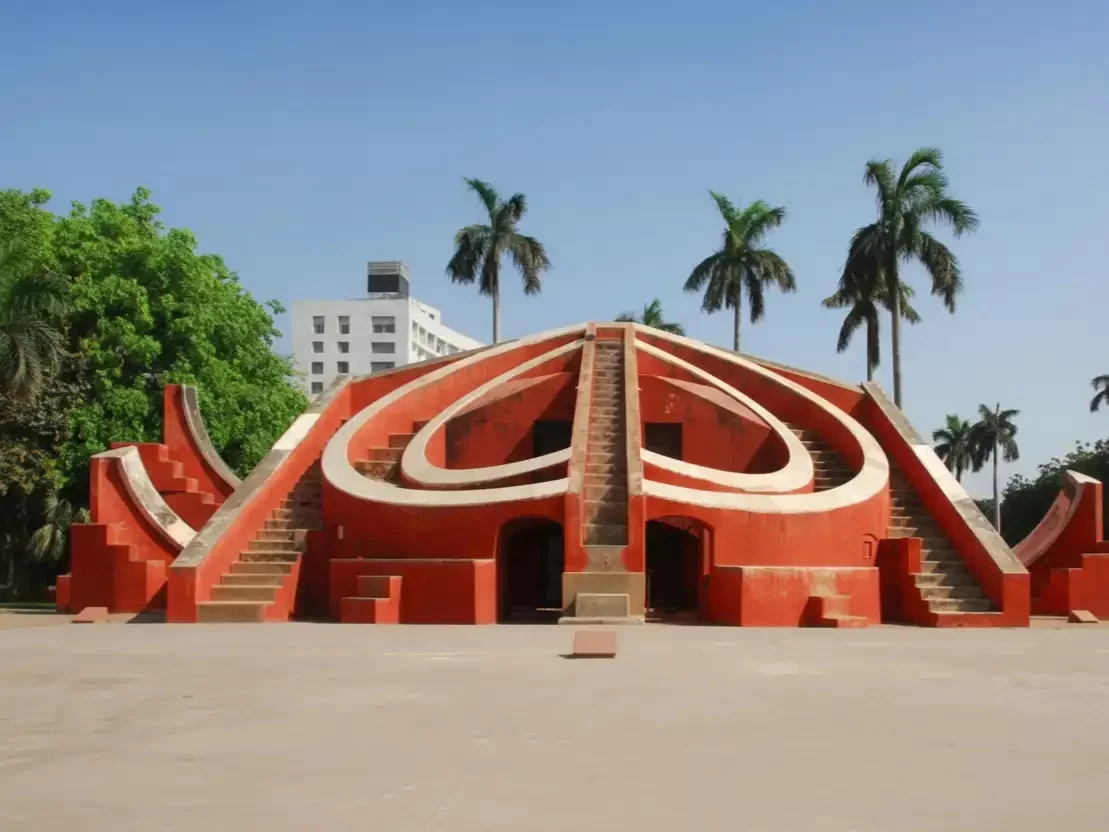
Jantar Mantar Delhi – Historic Astronomical Observatory

Jantar Mantar , Delhi
Jantar Mantar in Delhi is a historic astronomical observatory built by Maharaja Sawai Jai Singh II in 1724. It features a collection of architectural instruments designed to observe celestial events, track time, and study planetary movements. The site is an important representation of India’s scientific and cultural heritage and attracts both history enthusiasts and tourists.

Quick Facts About Jantar Mantar

Entry Fee INR 80
Timings 09:00 - 17:00
Altitude (m) 216
Ideal Visit Duration (hrs) 3
Best Time of Day Morning
Crowd Level High
Distance from India Gate (km) 4
Walking Difficulty Moderate
Parking Available Yes
Last Mile Access Metro
Suitable for Kids Yes
Suitable for Seniors Yes
Wheelchair Friendly Yes

Why Visit

Why Visit

Jantar Mantar in Delhi is a rare blend of science, history, and architectural design that dates back to the early 18th century. Built in 1724 by Maharaja Sawai Jai Singh II, this open?air observatory was designed to accurately measure time, track celestial bodies, and update astronomical tables long before modern equipment existed. It represents India’s early achievements in scientific understanding and reflects a fascinating chapter in astronomical history. Many visitors also include Jantar Mantar in their Delhi sightseeing itineraries because of its educational and cultural significance.

Atmosphere

Located in the heart of New Delhi near Connaught Place, Jantar Mantar offers a unique atmosphere where ancient science meets modern city life. The expansive grounds are peaceful and open, surrounded by sculptural instruments made of stone and plaster, creating a contemplative environment that contrasts with the busy streets around it. The interplay of light and shadows on the massive geometric structures adds to the serene yet intriguing ambiance, making it ideal for reflection, photography, and leisurely exploration.

What Makes It Special

What sets Jantar Mantar apart is its remarkable collection of large astronomical instruments, each with a specific purpose. The Samrat Yantra, one of the world’s largest sundials, can measure time with surprising precision, while structures like the Jai Prakash Yantra and Misra Yantra were used for accurate celestial observations and predicting planetary movements. These stone instruments demonstrate advanced knowledge of astronomy, mathematics, and engineering from centuries ago. Today, the observatory continues to educate visitors about traditional astronomical practices and stands as a testament to India’s scientific heritage.

History

The Jantar Mantar in Delhi is a historic astronomical observatory constructed in 1724 by Maharaja Sawai Jai Singh II of Jaipur. This complex was the first of five Jantar Mantars he built across India to observe celestial events, compile astronomical data, and improve calendar accuracy. The name “Jantar Mantar” derives from the Sanskrit words *yantra* (instrument) and *mantra* (calculation), meaning an apparatus for celestial measurement and computation.

Designed for naked?eye astronomy, the observatory includes a series of large architectural instruments such as the Samrat Yantra, Ram Yantra, Jai Prakash Yantra, and Misra Yantra, each engineered to perform specific astronomical observations like measuring time, predicting planetary positions, and charting celestial movements. Over time, some parts of the Delhi observatory deteriorated, especially during the 19th century, but many structures remain important historical examples of pre?telescopic astronomy.

Beyond its scientific role, Jantar Mantar reflects the intellectual and cultural priorities of the early 18th century in India, when rulers like Jai Singh II promoted astronomy and mathematics alongside political authority. Although not actively used for observations today due to urban development around it, the site remains a protected historical monument and a testament to India’s rich scientific heritage.

Best Time to Visit

Visiting Jantar Mantar Delhi at the right time can greatly enhance your experience. The open-air observatory is best enjoyed when the weather is pleasant and daylight conditions are comfortable for walking around the large stone instruments.
  • October to March – Ideal Season: This is the most favorable time to visit due to mild and comfortable temperatures, avoiding Delhi’s extreme summer heat. Early morning or late afternoon visits during these months are perfect for exploring and photography.
  • Early Morning Visits: Arriving shortly after opening allows you to enjoy softer sunlight on the instruments, cooler temperatures, and fewer crowds, making your experience more enjoyable.
  • Late Afternoon: The shadows and light on the massive instruments in the late afternoon provide dramatic views and excellent photographic opportunities.
  • Summer Months (April – June): Summers in Delhi can be extremely hot, so if visiting during this period, early morning is the best option. Carry water and sun protection to stay comfortable.
  • Monsoon Season (July – September): Occasional rain cools the city but increases humidity and may make some surfaces slippery. A clear day during monsoon is best if you plan to visit during this time.

How to Reach

  • By Metro: The Delhi Metro is the most convenient way to reach Jantar Mantar. The nearest stations are Rajiv Chowk Metro Station (Yellow & Blue Lines), Janpath Metro Station (Violet Line), and Patel Chowk Metro Station (Yellow Line). From these stations, it’s a short walk or a quick auto-rickshaw ride to the observatory.
  • By Bus: Several Delhi Transport Corporation (DTC) buses stop near Jantar Mantar, including stops like Jantar Mantar (Tolstoy Marg) and Palika Kendra. This provides a budget-friendly option for reaching the site from various parts of the city.
  • By Taxi or Auto-Rickshaw: Taxis and app-based cabs like Uber and Ola can drop visitors directly at the entrance. Auto-rickshaws are also readily available around central Delhi and are a convenient last-mile option from nearby metro stations.
  • By Car: Jantar Mantar is accessible via major roads like Sansad Marg and Ashoka Road in central Delhi. On-site parking is limited, so using public transport or drop-off services is recommended.
  • From Railway Stations: New Delhi Railway Station is approximately 2.5 km away. Visitors can take a short taxi ride or the metro to reach one of the nearby stations for a quick walk to Jantar Mantar.
  • From Indira Gandhi International Airport: The airport is about 20 km from Jantar Mantar. Visitors can take a taxi directly or use the Airport Express Line to connect to the metro network, then walk or take an auto-rickshaw to the observatory.

What to Expect When You Visit

  • Architectural Marvels: You will see a remarkable collection of 13 large stone and masonry instruments, each designed for specific astronomical measurements, including timekeeping, shadow angles, and planetary tracking. These instruments showcase India’s pre-modern scientific expertise.
  • Up-Close Exploration: The instruments are accessible for walking around and close observation. Visitors can explore the scales, steps, and structures, making it an interactive and educational experience, especially for students and science enthusiasts.
  • Open-Air Experience: The observatory is entirely outdoors, so you can enjoy ample sunlight and clear skies. Be prepared for minimal shade, so visiting during cooler hours or seasons is advisable.
  • Informative Signage: Most major instruments have explanatory plaques describing their purpose and usage. Hiring a guide or reading up beforehand will enrich your understanding of the observatory’s functions.
  • Walking and Duration: Most visitors spend around 1–2 hours exploring at a relaxed pace. Those deeply interested in astronomy or architecture may spend longer studying the instruments.
  • Photography Opportunities: The dramatic geometry and shadows of the instruments make excellent photography subjects, particularly during early morning or late afternoon light.
  • Minimal On-Site Facilities: There are basic restrooms near the entrance, but no food or beverage stalls inside, so it’s advisable to carry water and light snacks if needed.
  • Nearby Amenities: The central Delhi location means plenty of restaurants, cafes, and shops nearby, making it easy to combine your visit with other sightseeing in Connaught Place.

Important Visitor Information

  • Crowd & Weather Notes: Jantar Mantar is located in central Delhi, so it can get moderately crowded, especially on weekends, public holidays, and during peak tourist season (October to March). Summers (April–June) are extremely hot, while monsoon months (July–September) are humid with occasional rain. Planning visits during cooler months or early in the day is recommended.
  • Peak / Quiet Hours: The quietest times to visit are early mornings right after opening (around 6:00 AM) and late afternoons before closing (around 5:30–6:00 PM). Midday tends to be busier with tourist groups and school visits.
  • Dress Code: Comfortable, light clothing is recommended due to the open-air nature of the observatory. Wearing sun protection, hats, and comfortable walking shoes is advised. Modest attire is preferable as a general practice for visiting cultural and historical sites in India.
  • Safety Notes: The observatory is generally safe for all ages. However, some instruments have steps, ledges, and sloped surfaces, so visitors should watch their step and supervise children. Carrying water is advisable, especially during hot weather. Photography is allowed, but avoid climbing on the instruments.

Photography and Viewpoints

  • Iconic Instruments: The Samrat Yantra, Jai Prakash Yantra, and Ram Yantra are the most photogenic structures. Their geometric designs and precise angles create dramatic lines and shadows that make for striking photographs.
  • Best Time for Photography: Early morning and late afternoon provide soft lighting and long shadows, highlighting the contours of the instruments and enhancing depth in photos. Midday sun can create harsh lighting and glare.
  • Angles and Perspectives: Walk around the instruments to capture different perspectives. Wide-angle shots work well to encompass the size and scale of the structures, while close-ups on the scales and markings reveal intricate details.
  • Aerial & Elevated Views: While drone photography is generally restricted due to regulations in Delhi, you can capture elevated perspectives from nearby terraces or by positioning yourself on steps provided around some instruments, giving a top-down view of the observatory layout.
  • Background Considerations: The central Delhi location means urban surroundings may appear in your frame. Using shallow depth of field or framing carefully can minimize distractions and emphasize the instruments.
  • Photography Tips: Carry extra batteries and memory cards if you plan to spend time capturing the details. Neutral or polarizing filters can help manage reflections on the stone surfaces during bright daylight.
  • Visitor Etiquette: Avoid climbing on instruments or blocking pathways for photos. The observatory is a protected heritage site, so respect the signage and maintain safe distances while photographing.

Near By Attraction

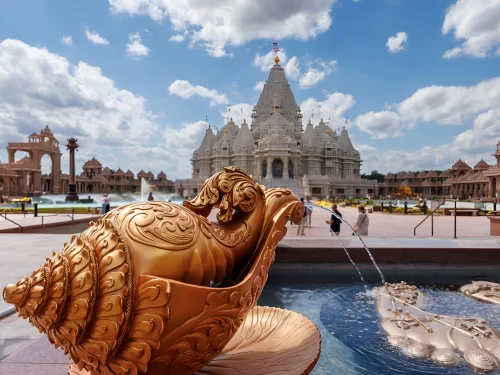
Akshardham Temple Delhi, grand Hindu temple complex with intricate carvings and iconic cultural landmark in India. Temple

Akshardham Temple

Akshardham Temple is a stunning Hindu temple in Delhi, celebrated for its intricate architecture, spiritual ambiance, and cultural exhibitions.
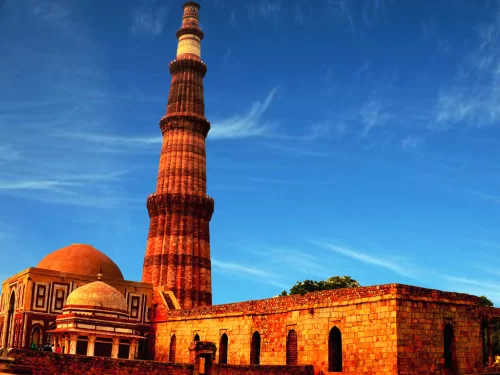
Qutub Minar with Quwwat-ul-Islam Mosque and surrounding sandstone ruins under a vivid blue sky in Delhi, showcasing UNESCO World Heritage Indo-Islamic architecture for Qutub Minar tour packages. Historical Site

Qutub Minar

Qutub Minar is a towering 73-meter-high minaret in Delhi, renowned for its Indo-Islamic architecture and historical significance.
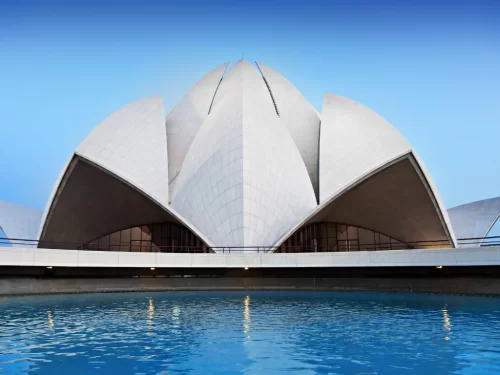
Lotus Temple, New Delhi – elegant white marble lotus petals rising above the tranquil blue reflecting pool, iconic Bahá’í House of Worship and serene highlight of Delhi city tour packages. Tourist Attraction

Lotus Temple

Lotus Temple is a stunning flower-shaped Bahá?í House of Worship in Delhi, renowned for its serene ambiance and architectural beauty.

Frequently Asked Questions About Jantar Mantar

Jantar Mantar Delhi is located on Sansad Marg near Connaught Place in Central Delhi. The observatory complex is easily accessible by road and metro.
Jantar Mantar Delhi has an entry fee for both Indian and foreign visitors. Tickets can be purchased at the counter or online through the ASI portal.
Jantar Mantar Delhi is open daily from morning until evening. Visiting hours generally begin around 6:00 AM and continue until sunset.
A visit to Jantar Mantar Delhi typically takes 45 minutes to 1.5 hours. Visitors exploring all instruments in detail may spend additional time.
Photography is allowed inside Jantar Mantar Delhi for personal use. Professional shoots may require prior permission from authorities.
The nearest metro station to Jantar Mantar Delhi is Patel Chowk on the Yellow Line. Rajiv Chowk Metro Station is also within walking distance.
Jantar Mantar Delhi is approximately 2 to 3 kilometers from New Delhi Railway Station. Travel time by car usually ranges between 10 to 20 minutes depending on traffic.
Parking near Jantar Mantar Delhi is limited due to its central location. Visitors are advised to use nearby public parking areas or metro services.
Jantar Mantar Delhi provides basic facilities including restrooms, drinking water, security screening, and walking pathways within the complex.
Jantar Mantar Delhi remains open on most public holidays as it operates daily. Visitors should check official notices for any special restrictions.

Loved this place ? Let’s Plan Your Delhi Trip

Get customized Delhi tour planning designed around traffic flow, seasonal weather comfort, heritage site exploration time, and realistic city pacing. Whether you are visiting for historical monuments, cultural experiences, food walks, shopping districts,

⚡ Quick Response | 💰 Free consultation | 🕒 24×7 expert support

×

Plan Your Trip