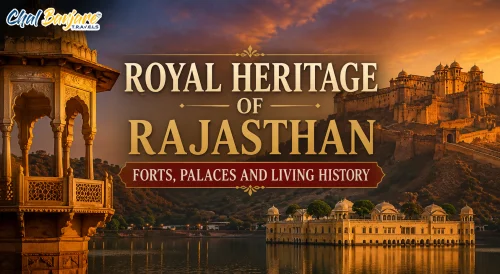
Royal Heritage of Rajasthan – Forts, Palaces and Living History
Rajasthan’s royal heritage showcases magnificent forts, grand palaces, ancient traditions, and living cultural experiences that reflect the state’s historic kingdoms and royal legacy.
+91 9910402252
admin@chalbanjare.com


Rajasthan remains accessible throughout the year, but peak summer temperatures can become extremely challenging in many regions, making travel uncomfortable for certain types of travelers.
Rajasthan experiences some of the highest summer temperatures in India, especially between April and June. Popular destinations such as Jaipur, Jodhpur, Jaisalmer, Bikaner, and Churu regularly experience daytime temperatures exceeding 40°C, while certain desert regions can occasionally approach 45°C or higher. These conditions significantly affect outdoor tourism activities, particularly during midday hours.
Most heritage attractions in Rajasthan were built centuries ago and involve extensive outdoor exploration. Walking through large forts, palace complexes, stepwells, old city markets, and desert landscapes becomes physically demanding under intense sunlight. Travelers often need to shorten sightseeing schedules, take frequent breaks, and avoid outdoor activities during the hottest parts of the day.
Understanding these conditions helps travelers build realistic schedules and avoid overestimating how much sightseeing can comfortably be completed in a single day during Rajasthan's hottest months.
Winter is traditionally considered the most comfortable tourism season in Rajasthan because temperatures remain pleasant for sightseeing throughout the day. Summer presents a very different experience, where travelers often need to structure activities around weather conditions rather than personal preferences.
During winter, tourists can comfortably spend long hours exploring forts, bazaars, desert camps, lakes, and heritage neighborhoods. In summer, many visitors limit outdoor activities to mornings and evenings while spending afternoons resting indoors. As a result, the overall pace of travel becomes slower and more weather-dependent.
Travelers expecting the same experience offered during Rajasthan's winter tourism season may find summer conditions considerably different and should plan accordingly.
Many travelers focus primarily on attractions while overlooking seasonal conditions. Rajasthan remains culturally rich and visually impressive throughout the year, but summer travel requires adjustments in expectations regarding comfort, sightseeing hours, and daily activity levels.
Visitors should understand that sightseeing schedules may be shorter, outdoor activities may require additional preparation, and flexibility becomes essential. A realistic understanding of climate conditions helps travelers avoid disappointment and make informed decisions about destinations and travel timing.
Setting realistic expectations before departure allows travelers to focus on enjoying Rajasthan's culture, architecture, and heritage while minimizing weather-related challenges.
Travelers who struggle in hot weather may find Rajasthan's summer conditions particularly challenging. Cities across the state experience prolonged periods of intense heat, especially during May and June when temperatures regularly remain above comfortable sightseeing levels for much of the day.
Unlike coastal regions where sea breezes provide some relief, many Rajasthan destinations experience dry and intense heat. Urban areas, stone structures, roads, and open desert landscapes can absorb and radiate heat throughout the day, creating a much hotter environment than travelers may anticipate.
Those who generally avoid hot climates may wish to consider alternative seasons when weather conditions are more suitable for extended sightseeing.
Many of Rajasthan's major attractions require extended periods outdoors. Exploring places such as Amer Fort, Mehrangarh Fort, Chittorgarh Fort, Kumbhalgarh Fort, and Jaisalmer Fort often involves walking through large complexes with limited shade in certain areas.
For travelers sensitive to heat, prolonged exposure can quickly lead to exhaustion, discomfort, and reduced enjoyment. Frequent breaks become necessary, and the ability to cover multiple attractions in a day may be reduced considerably.
Travelers should realistically assess their comfort level with sustained outdoor activity before choosing Rajasthan during peak summer months.
Heat affects more than physical comfort. It can influence mood, energy levels, sightseeing enthusiasm, and overall trip satisfaction. Activities that seem appealing during planning may feel less enjoyable when performed under extreme weather conditions.
Travelers who enjoy relaxed exploration, photography walks, market visits, and cultural experiences may discover that excessive heat limits the amount of time they wish to spend outdoors.
Understanding how heat affects personal travel preferences can help determine whether Rajasthan summer travel is the right choice.
Senior citizens often experience the effects of high temperatures more quickly than younger travelers. During Rajasthan's summer months, prolonged exposure to heat can lead to faster fatigue, reduced energy levels, and increased physical discomfort. Even routine sightseeing can become demanding when temperatures remain above 40°C for several hours during the day.
Many popular tourist destinations require travelers to move between attractions under direct sunlight. Walking through heritage complexes, exploring old city areas, and traveling between destinations may become tiring for seniors who are sensitive to heat or who prefer moderate weather conditions. Recovery time after outdoor activities may also be longer compared to cooler seasons.
Senior travelers should carefully evaluate their comfort level with hot weather before planning a Rajasthan summer itinerary, especially if multiple destinations and extensive sightseeing are involved.
Many of Rajasthan's most famous attractions were built on elevated terrain or cover large areas. Forts such as Amer Fort, Mehrangarh Fort, Kumbhalgarh Fort, and Chittorgarh Fort involve stairways, slopes, uneven pathways, and long walking distances. During summer, these physical demands become more challenging due to intense sunlight and heat.
Palaces, heritage structures, and historic neighborhoods often require visitors to spend considerable time outdoors. While some attractions provide shaded sections, significant portions of the sightseeing experience may still involve direct exposure to summer conditions.
Travelers should consider the physical requirements of major attractions and determine whether summer conditions align with their mobility and comfort preferences.
Every traveler has different health conditions and heat tolerance levels. Senior citizens with concerns related to blood pressure, circulation, mobility, or general endurance should carefully assess how Rajasthan's summer climate may affect their travel experience.
Rather than following ambitious itineraries, many senior travelers benefit from slower schedules that allow time for rest, hydration, and indoor relaxation during peak afternoon temperatures. Comfortable accommodation, shorter travel distances, and flexible planning can significantly improve the overall experience.
Prioritizing comfort and realistic daily activity levels helps senior travelers enjoy Rajasthan while minimizing unnecessary physical stress during the hottest months.
Families traveling with infants and very young children often face additional challenges during Rajasthan's summer season. Young children are generally more sensitive to heat and may become uncomfortable much faster than adults when exposed to direct sunlight and high temperatures for extended periods.
Daily travel routines become more complicated as parents must frequently monitor hydration, sun exposure, rest periods, and overall comfort. Long sightseeing sessions that may be manageable during winter can become significantly more difficult during peak summer conditions.
Families should carefully evaluate whether peak summer weather aligns with the needs and comfort levels of young children before finalizing travel plans.
Many of Rajasthan's major attractions involve open courtyards, fort walls, viewpoints, historic streets, and outdoor heritage areas. Afternoon temperatures can make these locations uncomfortable for children who may quickly become tired or irritable in hot weather.
Parents often find themselves shortening visits, seeking shaded areas, or returning to accommodations earlier than planned. As a result, sightseeing productivity may be lower than expected, particularly on trips that include multiple destinations.
Families should expect a slower pace and prioritize comfort rather than attempting to cover numerous attractions during the hottest hours of the day.
While Rajasthan remains accessible year-round, certain seasons naturally offer more comfortable conditions for family travel. Cooler months allow children to spend longer periods outdoors, participate in sightseeing activities more comfortably, and enjoy a wider range of experiences.
Summer travel can still be possible with proper planning, but families should realistically compare the advantages of cooler seasons before making a final decision. Weather often plays a significant role in determining how enjoyable a trip becomes for younger travelers.
Families should choose travel dates that match both destination interests and the practical comfort requirements of young children.
Rajasthan's summer climate combines high temperatures with dry desert conditions across many regions. Travelers with heart-related concerns, respiratory sensitivities, or conditions affected by heat may experience greater physical stress when spending long periods outdoors.
The combination of heat exposure, sightseeing activity, and travel-related fatigue can place additional demands on the body. Conditions that may feel manageable in moderate climates can become more noticeable when temperatures remain consistently high throughout the day.
Travelers should carefully evaluate how extreme weather conditions may affect their ability to comfortably participate in sightseeing activities.
Hydration becomes one of the most important aspects of summer travel in Rajasthan. Dry weather can increase fluid loss without travelers immediately noticing symptoms. Spending several hours outdoors without adequate hydration may increase discomfort and reduce overall travel enjoyment.
Successful summer travel often involves maintaining consistent hydration, limiting direct sun exposure, wearing appropriate clothing, and avoiding unnecessary physical exertion during the hottest part of the day.
Simple precautions can significantly reduce weather-related discomfort and help travelers maintain better energy levels throughout the trip.
Travelers with pre-existing medical conditions should consider discussing summer travel plans with their healthcare provider before visiting Rajasthan during the hottest months. Individual health situations vary significantly, and professional guidance can help determine whether summer travel is appropriate.
Medical advice becomes particularly valuable when planning itineraries involving extensive sightseeing, multiple destinations, long road journeys, or prolonged outdoor activities in desert regions.
A well-informed travel decision based on personal health circumstances often leads to a safer and more enjoyable Rajasthan experience.
Rajasthan is famous for its massive forts, royal palaces, stepwells, old city neighborhoods, and heritage complexes. While these attractions are among the state's biggest highlights, many of them require extensive walking across large areas. Visitors often spend several hours exploring fort ramparts, palace courtyards, museum sections, viewpoints, and historic streets.
During summer, these walking requirements become considerably more demanding. Stone pathways, open courtyards, elevated viewpoints, and exposed fort walls absorb heat throughout the day. Travelers planning to cover multiple heritage attractions daily may find the physical effort greater than expected, particularly in destinations such as Jaipur, Jodhpur, Jaisalmer, Chittorgarh, and Kumbhalgarh.
Travelers focused on intensive sightseeing should understand that summer temperatures can reduce the amount of walking comfortably achievable within a single day.
The period between late morning and late afternoon is usually the most challenging time for sightseeing in Rajasthan during summer. Temperatures frequently remain at their highest levels during these hours, making prolonged outdoor activity uncomfortable for many visitors.
Tourists often discover that attractions they intended to visit during midday become less enjoyable due to heat exposure. Photography sessions, walking tours, local market exploration, and fort visits may need to be shifted to cooler hours to maintain comfort and energy.
Adjusting sightseeing schedules around temperature patterns often produces a far more comfortable and enjoyable travel experience.
Many travelers create ambitious itineraries expecting to visit numerous attractions every day. During Rajasthan's peak summer season, however, weather conditions often limit how much can realistically be explored without causing excessive fatigue.
Rather than attempting to maximize attraction counts, successful summer travelers usually focus on quality experiences, comfortable pacing, and selective sightseeing. Accepting these practical limitations helps avoid unnecessary exhaustion and disappointment.
Recognizing the practical limitations created by summer weather allows travelers to build realistic itineraries that remain enjoyable throughout the trip.
Some travelers compare Rajasthan with destinations such as Shimla, Manali, Darjeeling, Gangtok, Munnar, or other hill stations. This comparison can create unrealistic expectations because Rajasthan's summer climate is fundamentally different from mountain environments.
Most of Rajasthan consists of plains, semi-arid landscapes, and desert regions where temperatures rise significantly during summer. Even though the state offers remarkable heritage experiences and cultural attractions, visitors should not expect naturally cool conditions similar to Himalayan or Western Ghats destinations.
Understanding the difference between desert tourism and mountain tourism helps travelers choose destinations that match their seasonal preferences.
While mornings and evenings can be more comfortable, most Rajasthan destinations still experience substantial daytime heat during summer. Travelers expecting consistently pleasant weather throughout the day may find conditions more challenging than anticipated.
Even locations with lakes, gardens, or elevated viewpoints generally do not provide the same cooling effect associated with traditional hill stations. As a result, weather management becomes an important part of daily sightseeing plans.
Travelers seeking consistently cool weather may wish to consider alternative destinations or visit Rajasthan during cooler seasons.
One of the most important aspects of travel planning is ensuring that destination conditions align with personal expectations. Travelers primarily seeking cool temperatures, misty landscapes, and extended outdoor comfort may not find Rajasthan's summer environment suitable.
On the other hand, visitors interested in heritage architecture, royal history, cultural experiences, and unique desert landscapes may still enjoy Rajasthan despite the heat if expectations are realistic from the beginning.
Choosing destinations based on genuine weather preferences often leads to a more enjoyable and comfortable travel experience.
Rajasthan's desert and semi-arid regions are characterized not only by high temperatures but also by dry atmospheric conditions. During summer, hot winds are common in many parts of the state, particularly across western Rajasthan where desert influences are strongest.
Travelers who are accustomed to coastal climates, humid regions, or moderate temperatures may find these conditions unfamiliar. The combination of strong sunlight, hot winds, and low humidity can create a distinctly different travel experience compared to other Indian destinations.
Travelers unfamiliar with desert climates should understand these environmental conditions before planning a summer visit.
Dry weather can cause moisture loss more rapidly than many travelers realize. Even without visible perspiration, the body may lose fluids continuously during outdoor activities. This makes hydration a critical part of daily travel planning throughout Rajasthan's summer season.
Proper sun protection also becomes essential. Long hours outdoors without adequate protection can significantly reduce comfort levels and increase fatigue during sightseeing.
Simple precautions often make a significant difference in maintaining comfort and enjoyment while exploring Rajasthan during summer.
Desert climates operate differently from many other travel destinations. Temperatures can rise rapidly after sunrise and remain elevated throughout much of the day. Open landscapes, limited vegetation, and dry conditions contribute to the overall summer environment experienced by visitors.
Understanding these characteristics helps travelers prepare both physically and mentally for the realities of summer tourism across Rajasthan's desert regions.
Travelers who understand desert weather realities are generally better equipped to enjoy Rajasthan's landscapes while minimizing climate-related discomfort.
Many travelers visiting Rajasthan attempt to cover multiple cities, attractions, forts, palaces, and cultural sites within a limited number of days. While such itineraries may seem achievable on paper, summer temperatures often reduce the amount of sightseeing that can comfortably be completed each day. Continuous exposure to heat gradually drains energy levels, making long travel days significantly more tiring.
Even travelers who are generally active may notice that walking through heritage sites, navigating local markets, and moving between attractions becomes more physically demanding during peak summer. The body naturally works harder to regulate temperature, which can lead to quicker fatigue compared to travel during cooler months.
Travelers planning intensive sightseeing schedules should recognize that summer weather can significantly affect productivity and comfort throughout the day. Building flexibility into the itinerary often produces a much better overall experience.
Rajasthan is often explored through multi-city circuits that include destinations such as Jaipur, Jodhpur, Jaisalmer, Udaipur, Bikaner, Pushkar, Mount Abu, Chittorgarh, and Ranthambore. While these routes offer diverse experiences, combining numerous destinations within a short period can become exhausting during summer.
Road transfers, hotel check-ins, sightseeing activities, and changing weather conditions create cumulative fatigue over several days. Travelers frequently discover that the combination of travel logistics and extreme temperatures makes packed schedules harder to maintain than initially anticipated.
Rather than attempting to maximize destinations, many summer travelers benefit from focusing on fewer locations and spending more time enjoying each place comfortably.
Summer travel in Rajasthan often rewards travelers who adopt a slower pace. Flexible itineraries allow visitors to adjust sightseeing times according to weather conditions, take afternoon breaks when necessary, and spend more time enjoying experiences without feeling rushed.
A slower schedule also provides opportunities to enjoy local culture, traditional cuisine, heritage hotels, museums, and indoor attractions without constantly moving between locations. This approach often results in a more relaxed and enjoyable journey despite the challenging weather conditions.
Travelers who prioritize comfort and flexibility over attraction counts are often better able to enjoy Rajasthan's culture, architecture, and hospitality during the summer season.
Before planning a Rajasthan summer trip, the most important consideration is honestly evaluating your personal comfort level with extreme heat. Rajasthan remains one of India's most rewarding cultural and historical destinations throughout the year, but the travel experience during peak summer differs significantly from the pleasant conditions many visitors associate with the state during winter. Understanding your tolerance for high temperatures helps determine whether summer travel is likely to be enjoyable or unnecessarily challenging.
Travelers who regularly spend time in hot climates, enjoy early morning activities, and are comfortable adjusting sightseeing schedules often adapt well to Rajasthan's summer environment. On the other hand, visitors who strongly prefer mild weather, extended outdoor exploration, and physically demanding sightseeing days may find peak summer less suitable. Recognizing these preferences before booking a trip helps avoid unrealistic expectations and improves overall satisfaction.
A successful Rajasthan summer trip begins with understanding your own travel style and comfort requirements. The more accurately these factors are considered during planning, the more enjoyable and stress-free the journey is likely to be.
Different travelers seek different experiences from Rajasthan. Some focus on architecture, forts, and cultural heritage, while others prioritize photography, local experiences, luxury stays, food exploration, wildlife, or relaxed vacations. Matching destinations with personal interests and weather tolerance plays a major role in determining overall travel satisfaction during summer.
Travelers comfortable with hot weather may enjoy classic circuits covering Jaipur, Jodhpur, Jaisalmer, Udaipur, and other heritage destinations. Those seeking a slower pace may prefer spending more time in fewer locations, enjoying cultural experiences, museums, local markets, heritage properties, and evening activities rather than attempting to cover numerous attractions in a short period. A balanced approach often produces better results than trying to maximize sightseeing during extreme weather conditions.
When destinations, expectations, and travel style are aligned, Rajasthan's rich history, architecture, cuisine, and cultural heritage can still provide a memorable experience even during the summer season.
Careful preparation can significantly improve comfort and reduce common summer travel challenges. Before finalizing bookings, travelers should review weather conditions, transportation plans, accommodation choices, health considerations, and daily sightseeing schedules. Small planning decisions often make a substantial difference when dealing with Rajasthan's intense summer climate.
Creating realistic itineraries, maintaining hydration, choosing suitable travel timings, and understanding local conditions help travelers avoid unnecessary stress. Rather than focusing solely on attractions, successful summer trips are usually built around comfort, flexibility, and proper preparation. This approach allows visitors to enjoy Rajasthan's unique heritage while minimizing the impact of extreme temperatures.
| Planning Area | Important Consideration |
|---|---|
| Weather Preparation | Check expected temperatures before travel dates |
| Sightseeing Schedule | Prioritize mornings and evenings for outdoor activities |
| Hydration | Maintain regular water intake throughout the day |
| Accommodation | Select comfortable properties for afternoon rest |
| Health Planning | Consider personal medical and fitness requirements |
| Transportation | Allow sufficient travel time between destinations |
| Itinerary Design | Avoid overloading schedules with excessive sightseeing |
| Travel Expectations | Align plans with realistic summer conditions |
Rajasthan during summer is not necessarily unsuitable for travel, but it is best suited for visitors who understand the climate and plan accordingly. A well-prepared traveler with realistic expectations can still enjoy remarkable heritage sites, cultural experiences, local traditions, and memorable journeys across one of India's most distinctive states.

Get customized Rajasthan tour planning designed around desert climate comfort, long-distance road travel flow, heritage exploration time, and realistic pacing between regions. Whether you are visiting for fort architecture, palace heritage, cultural exper
⚡ Quick Response | 💰 Free consultation | 🕒 24×7 expert support