Homepage Banner

Wildlife Conservation in Assam – National Parks and Protected Areas

Wildlife conservation in Assam focuses on protecting endangered species, preserving forests, maintaining biodiversity, and supporting national parks and protected areas through responsible tourism.

Travel Guide


01 May, 2026 By: Rituparna Borah

Understanding Wildlife Conservation in Assam

Explore the importance of protecting Assam’s rich biodiversity

Assam is one of India’s most important wildlife regions because its landscapes support an exceptional variety of mammals, birds, reptiles, amphibians, fish, insects, and plant species. The state lies within a biologically rich part of Northeast India where Himalayan foothills, Brahmaputra floodplains, tropical forests, wetlands, river islands, and grasslands meet. This unusual combination of habitats allows species with very different ecological requirements to survive within the same region. Protecting Assam’s biodiversity therefore means conserving not only individual animals but also the interconnected environments that provide food, water, shelter, breeding grounds, and migration routes.
Wildlife conservation is particularly important because Assam is home to several rare and threatened species, including the Indian one-horned rhinoceros, Asian elephant, Bengal tiger, wild water buffalo, pygmy hog, golden langur, hoolock gibbon, swamp deer, and many specialised bird species. Some of these animals depend on highly specific habitats that are vulnerable to disturbance. Grassland species require open floodplain areas, primates depend on connected forest canopies, while waterbirds and aquatic animals rely on healthy wetlands and river systems. Damage to one habitat can therefore affect several species simultaneously.
Conservation also protects the natural resources that support human communities. Forests regulate water flow, wetlands reduce flooding, grasslands support ecological food chains, and rivers sustain agriculture and fisheries. When wildlife habitats remain healthy, they contribute to cleaner water, stable soil, climate regulation, and reduced environmental degradation. Protecting biodiversity is therefore not separate from human well-being; it is a long-term investment in the ecological security, cultural identity, and economic future of Assam.
  • Assam supports wildlife across forests, wetlands, rivers, and grasslands.
  • The state shelters several rare and endangered animal species.
  • Different habitats support different ecological communities.
  • Conservation protects food, water, shelter, and breeding areas.
  • Healthy ecosystems help regulate floods and water movement.
  • Forests reduce soil erosion and support climate stability.
  • Wetlands sustain birds, fish, reptiles, and aquatic mammals.
  • Grasslands provide essential habitat for rhinos and herbivores.
  • Biodiversity protection benefits local communities and livelihoods.
  • Wildlife conservation strengthens Assam’s natural heritage.
Protecting Assam’s biodiversity requires long-term commitment because every species depends on a wider ecological network. Conservation becomes most effective when forests, rivers, wetlands, grasslands, wildlife corridors, and local communities are managed together rather than as separate parts of the landscape.

Understand how forests wetlands and grasslands support wildlife

Forests, wetlands, and grasslands form the ecological foundation of Assam’s wildlife conservation system. Tropical and semi-evergreen forests provide shelter, nesting sites, food, shade, and movement routes for elephants, primates, deer, carnivores, reptiles, and forest birds. Dense tree canopies allow species such as hoolock gibbons and golden langurs to move between feeding areas, while forest floors support insects, fungi, smaller mammals, and decomposers that maintain soil fertility and nutrient cycles.
Wetlands are equally important because they store water, support fish populations, provide feeding grounds for resident and migratory birds, and create wallowing or cooling areas for large mammals. Assam’s floodplain wetlands change naturally with seasonal rainfall and river movement, creating productive habitats for waterbirds, turtles, amphibians, otters, and numerous aquatic organisms. During dry periods, these water bodies become especially valuable because animals gather around dependable sources of water and vegetation.
Grasslands support many of Assam’s most iconic animals, including one-horned rhinoceroses, wild buffalo, swamp deer, hog deer, elephants, and grassland birds. These open habitats provide grazing areas, breeding grounds, and visibility for species adapted to floodplain ecosystems. Grasslands require active management because invasive plants, uncontrolled fires, habitat conversion, and changes in natural flooding can reduce their quality. Maintaining a balance between grassland, wetland, and forest habitats is essential for supporting Assam’s complete wildlife community.
  • Forests provide shelter and movement routes for wildlife.
  • Tree canopies support primates and specialised bird species.
  • Wetlands store water and support aquatic biodiversity.
  • Migratory birds depend on seasonal wetland habitats.
  • Grasslands provide grazing areas for large herbivores.
  • Rhinos depend heavily on floodplain vegetation and water.
  • Natural flooding helps renew many grassland ecosystems.
  • Invasive vegetation can reduce suitable wildlife habitat.
  • Connected habitats improve animal movement and survival.
  • Conservation must protect entire ecological landscapes.
Assam’s wildlife survives because forests, wetlands, and grasslands function together. Protecting only one habitat type would leave many species vulnerable, so conservation planning must maintain ecological connections and seasonal movement between these natural environments.

Discover the role of conservation in maintaining natural ecosystems

Conservation helps natural ecosystems remain stable by protecting the relationships between plants, animals, water, soil, and climate. Predators regulate herbivore populations, herbivores influence vegetation growth, birds disperse seeds, insects pollinate plants, and wetlands filter water. When these relationships remain balanced, ecosystems can recover from seasonal floods, droughts, storms, and other natural changes. The loss of one important species or habitat can create wider effects throughout the food chain.
Protected areas help maintain these ecological processes by limiting destructive land use and managing human activity within sensitive habitats. Forest departments monitor wildlife populations, control poaching, manage grasslands, protect water sources, and respond to fires or floods. Scientific surveys provide information about breeding success, migration patterns, disease risks, habitat quality, and population trends. These findings help conservation teams make practical decisions rather than depending only on general assumptions.
Conservation also allows damaged ecosystems to recover over time. Restoring grasslands, protecting riverbanks, reconnecting fragmented forests, and controlling invasive plants can improve conditions for wildlife. However, ecosystem recovery is often gradual and requires consistent monitoring. Successful conservation therefore depends on long-term planning, sufficient resources, trained staff, supportive communities, and responsible tourism practices that respect ecological limits.
  • Conservation maintains balance across natural food chains.
  • Predators and herbivores influence ecosystem health.
  • Birds and insects support seed dispersal and pollination.
  • Wetlands naturally filter water and store seasonal rainfall.
  • Protected areas reduce destructive pressure on habitats.
  • Scientific monitoring guides wildlife management decisions.
  • Habitat restoration helps damaged ecosystems recover.
  • Forest connectivity supports animal movement and breeding.
  • Long-term management is necessary for lasting conservation.
  • Healthy ecosystems benefit both wildlife and people.
Conservation is essential because natural ecosystems cannot remain healthy when habitats are repeatedly fragmented, polluted, or disturbed. By protecting ecological relationships and restoring damaged landscapes, Assam can preserve wildlife while maintaining the natural systems that support communities across the state.


Importance of National Parks in Assam Conservation

Explore how national parks protect endangered species and habitats

National parks are central to wildlife conservation in Assam because they provide legally protected spaces where endangered animals can feed, breed, rest, and move with reduced human disturbance. Parks such as Kaziranga, Manas, Orang, Nameri, Dibru-Saikhowa, Dehing Patkai, and Raimona protect a wide variety of habitats, including floodplain grasslands, tropical forests, riverine islands, wetlands, foothill woodlands, and river systems. Each park contributes differently to Assam’s conservation network according to its landscape and wildlife population.
These protected areas shelter some of India’s most threatened species. Kaziranga is internationally recognised for one-horned rhinoceroses, while Manas protects elephants, tigers, wild buffalo, golden langurs, pygmy hogs, and many rare birds. Orang supports important floodplain wildlife, Nameri protects riverine forest species, and Dibru-Saikhowa supports wetlands, grasslands, birds, and river-dependent animals. By safeguarding several habitat types across multiple regions, national parks reduce the risk of wildlife becoming dependent on a single location.
National parks also protect breeding grounds and seasonal refuges that may not be visible to tourists. Tall grasslands provide shelter for young herbivores, forests contain nesting trees and fruiting plants, while wetlands support fish breeding and bird migration. Restricted zones, buffer areas, and controlled tourism help reduce disturbance during sensitive periods. These protections are essential because endangered species often recover slowly and can be severely affected by habitat loss or repeated disruption.
  • National parks provide legally protected wildlife habitats.
  • Different parks conserve different ecosystems and species.
  • Grasslands protect rhinoceroses, deer, and wild buffalo.
  • Forests support elephants, primates, carnivores, and birds.
  • Wetlands provide feeding and breeding areas for aquatic species.
  • Protected areas reduce habitat conversion and disturbance.
  • Restricted zones safeguard sensitive breeding locations.
  • Multiple parks reduce dependence on one conservation site.
  • National parks protect complete ecological communities.
  • Long-term protection supports endangered species recovery.
Assam’s national parks are valuable because they conserve entire landscapes rather than isolated animals. Their continued protection gives endangered species the space and ecological conditions needed to survive while preserving habitats that cannot easily be recreated once they are damaged.

Understand the role of protected areas in wildlife management

Protected areas provide the administrative and ecological framework needed for organised wildlife management. Forest departments use defined boundaries, patrol systems, ranger camps, observation points, and scientific surveys to monitor species and reduce illegal activity. These systems allow conservation teams to identify poaching threats, injured animals, habitat changes, fire risks, flooding impacts, and movement near park boundaries. Without structured protected-area management, responding to these challenges would be far more difficult.
Wildlife management also includes maintaining grasslands, wetlands, water sources, forest paths, and natural corridors. In floodplain parks, teams may monitor higher ground used by animals during severe flooding. In forest parks, canopy connectivity and river health may receive greater attention. Management plans differ according to the needs of each landscape, but the goal remains the same: to maintain enough secure habitat for wildlife populations to survive naturally.
Protected areas also make long-term scientific monitoring possible. Regular population estimates, camera-trap studies, bird counts, vegetation surveys, and habitat assessments help managers identify whether wildlife populations are improving or declining. This information supports decisions about anti-poaching deployment, habitat restoration, controlled tourism, veterinary intervention, and community outreach. Effective management therefore combines field experience with scientific evidence.
  • Protected areas create organised systems for wildlife management.
  • Forest patrols help prevent poaching and illegal entry.
  • Ranger camps improve monitoring across large landscapes.
  • Habitat management supports food and water availability.
  • Higher ground helps wildlife during severe flood conditions.
  • Camera traps support monitoring of elusive species.
  • Bird and vegetation surveys reveal ecological changes.
  • Management plans vary according to habitat requirements.
  • Scientific evidence improves conservation decision-making.
  • Protected boundaries help control harmful human disturbance.
National parks allow wildlife management to remain continuous rather than reactive. Through regular monitoring, habitat care, law enforcement, and scientific planning, protected areas create the stability required for Assam’s wildlife populations to survive over the long term.

Discover how tourism supports conservation initiatives

Wildlife tourism can support conservation when it is carefully regulated and centred on ecological responsibility. Entry fees, safari charges, accommodation demand, guiding services, and local transport create economic value around protected areas. This value can strengthen public interest in protecting forests and wildlife because healthy national parks support employment for guides, drivers, lodge workers, naturalists, artisans, food suppliers, and community-based tourism operators.
Tourism also increases awareness by allowing visitors to understand the importance of habitats, endangered species, anti-poaching work, and local conservation challenges. A guided safari can explain why grasslands require management, how floods influence wildlife movement, or why vehicles must remain on designated routes. Travellers who understand these issues are more likely to respect park rules and support responsible conservation initiatives rather than treating wildlife only as entertainment.
However, tourism supports conservation only when visitor numbers, vehicle movement, waste, noise, and construction are managed responsibly. Uncontrolled tourism can disturb animals, damage habitats, create pollution, and place pressure on local resources. Visitors should therefore choose authorised services, avoid littering, maintain silence, follow safari regulations, and support locally operated businesses. Responsible behaviour helps ensure that tourism contributes to conservation instead of becoming an additional threat.
  • Tourism creates employment around protected areas.
  • Safari services support guides, drivers, and local workers.
  • Visitor fees contribute to organised park operations.
  • Guided experiences improve conservation awareness.
  • Local tourism businesses benefit from healthy wildlife habitats.
  • Authorised services help control visitor activity.
  • Noise and waste must remain carefully managed.
  • Vehicles should stay on designated safari routes.
  • Tourists should support local and responsible businesses.
  • Sustainable tourism can strengthen long-term wildlife protection.
Tourism becomes a conservation tool when visitors respect ecological limits and local communities benefit fairly from wildlife protection. By travelling responsibly, tourists can help strengthen Assam’s protected areas while enjoying meaningful encounters with the state’s extraordinary natural heritage.

Kaziranga National Park Conservation Efforts

Explore protection efforts for the one-horned rhinoceros

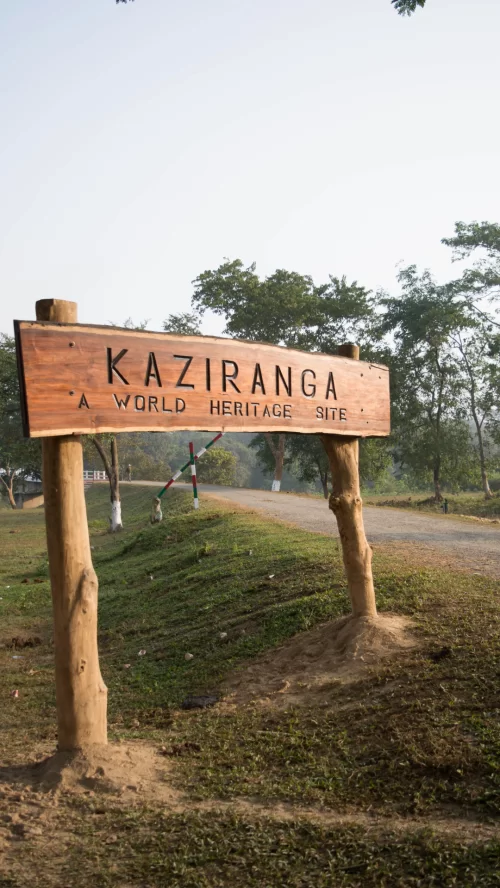
Kaziranga National Park is one of the most important conservation landscapes for the Indian one-horned rhinoceros. Its extensive grasslands, wetlands, forests, and floodplain habitats provide the food, water, shelter, and breeding conditions required by the species. Protection efforts focus on maintaining secure habitats while monitoring rhinoceros populations across different ranges of the park. Regular field surveys, patrols, and wildlife observations help conservation teams understand population movement, breeding patterns, calf survival, and changing habitat use.
Forest personnel work across a large and seasonally dynamic landscape where river channels, grasslands, and wetlands change throughout the year. Patrol teams monitor sensitive areas, wildlife corridors, park boundaries, and locations where animals may move during floods. Rhino protection also requires coordination between field staff, veterinary teams, researchers, local authorities, and communities living around the wider conservation landscape. This combined approach helps reduce threats while improving the ability to respond quickly when wildlife requires assistance.
The conservation success of Kaziranga is closely linked to continuous monitoring rather than occasional intervention. Rhinoceroses are counted through organised surveys, while individual animals may be observed for signs of injury, illness, or unusual movement. Calves and breeding females receive particular attention because their survival is essential for population stability. Protecting the species therefore involves law enforcement, habitat care, scientific research, and long-term planning across the entire park.
  • Kaziranga protects one of the world’s most important rhino populations.
  • Regular patrols monitor grasslands, wetlands, and park boundaries.
  • Population surveys help track rhino numbers and breeding trends.
  • Wildlife corridors are monitored during seasonal movement.
  • Calf survival remains important for long-term population stability.
  • Veterinary teams assist injured or vulnerable wildlife when required.
  • Forest staff work across difficult floodplain terrain.
  • Scientific monitoring supports practical conservation decisions.
  • Local cooperation strengthens protection around the park.
  • Continuous management is essential for rhino survival.
Kaziranga’s rhinoceros conservation efforts demonstrate how sustained protection can support the recovery and survival of an endangered species. The park’s success depends on maintaining secure habitats, reducing threats, and ensuring that field teams have the resources needed to protect wildlife throughout the year.

Understand habitat management and anti-poaching measures

Habitat management in Kaziranga is essential because rhinoceroses and other large herbivores depend on productive grasslands, wetlands, and access to higher ground. Natural flooding helps renew parts of the floodplain by depositing fresh sediment and supporting new vegetation, but severe floods can also displace animals. Conservation teams therefore monitor water levels, wildlife movement, damaged routes, and access to elevated areas during difficult seasonal conditions.
Grassland management may include controlling invasive plants, maintaining open feeding areas, monitoring fire use, and protecting wetlands from excessive disturbance. These activities help ensure that rhinos, swamp deer, hog deer, wild buffalo, elephants, and many smaller species continue to find suitable food and shelter. Management decisions must remain carefully balanced because too much interference can damage natural processes, while too little action can allow important habitats to decline.
Anti-poaching protection is another major part of Kaziranga’s conservation system. Forest guards conduct patrols from camps located across the park, monitor entry points, gather field information, and respond to suspicious activity. Surveillance, communication systems, boundary monitoring, and coordination with enforcement agencies strengthen protection. These measures are especially important because illegal wildlife trade can threaten even well-established populations if law enforcement becomes weak.
  • Grassland management supports rhinos and other herbivores.
  • Wetlands are monitored for ecological health and water availability.
  • Higher ground becomes important during severe flooding.
  • Invasive vegetation can reduce suitable feeding habitats.
  • Controlled management helps maintain open grassland areas.
  • Forest camps support regular anti-poaching patrols.
  • Boundary monitoring reduces illegal entry risks.
  • Communication systems improve emergency response.
  • Enforcement coordination strengthens wildlife protection.
  • Habitat care and anti-poaching must work together.
Kaziranga’s conservation model combines habitat management with strong field protection. Healthy grasslands and wetlands provide the ecological foundation for wildlife, while anti-poaching measures help ensure that protected species can survive without being threatened by illegal activity.

Discover how responsible tourism helps preserve Kaziranga ecosystem

Responsible tourism helps preserve Kaziranga when visitor activity remains controlled, respectful, and connected to conservation priorities. Authorised jeep safaris, designated routes, regulated entry times, and trained guides reduce unnecessary disturbance while allowing travellers to experience the park. Visitor fees and tourism-related income also support local employment and create economic reasons for communities and businesses to value wildlife protection.
Tourists contribute positively by maintaining silence, avoiding litter, staying inside safari vehicles, and never pressuring drivers to approach animals too closely. Rhinoceroses, elephants, wild buffalo, deer, and birds should be observed from a safe distance without blocking their movement. Flash photography, loud music, feeding wildlife, and leaving designated routes can disturb animals and weaken the conservation purpose of the safari.
Accommodation and tourism businesses around Kaziranga also influence the wider ecosystem. Responsible operators can reduce plastic waste, manage water use, employ local staff, source supplies locally, and educate guests about park rules. Visitors who choose such services help encourage a tourism model that benefits communities while reducing pressure on natural resources. This balance is essential because uncontrolled tourism can create pollution, traffic, and habitat disturbance.
  • Use only authorised safari vehicles and registered guides.
  • Remain on designated tourism routes.
  • Keep noise levels low inside the park.
  • Never feed or attract wild animals.
  • Avoid flash photography near wildlife.
  • Do not block animal movement for photographs.
  • Carry waste back from the safari area.
  • Support local guides and responsible accommodation providers.
  • Reduce single-use plastic during the trip.
  • Follow every instruction given by forest staff.
Tourism supports Kaziranga only when conservation remains more important than visitor convenience. Travellers who follow park rules, support local services, and minimise environmental impact help protect the ecosystem while ensuring that wildlife experiences remain available for future generations.

Manas National Park Wildlife Protection

Explore conservation efforts across forests and grasslands

Manas National Park protects a complex landscape of forests, grasslands, rivers, wetlands, and Himalayan foothill habitats. Conservation efforts must therefore address several ecological systems rather than focusing on a single species or habitat type. Forest areas support primates, elephants, carnivores, and specialised birds, while grasslands provide feeding and breeding areas for herbivores and rare grassland wildlife. Rivers and wetlands connect these habitats and support aquatic species, reptiles, and waterbirds.
Field teams monitor wildlife movement, habitat condition, fire risks, illegal activity, and seasonal changes across the park. Grasslands may require management to prevent excessive woodland expansion or invasive vegetation, while forest areas need protection from fragmentation and disturbance. River systems must remain healthy because they provide water, shape floodplain vegetation, and influence animal movement throughout the year.
Conservation in Manas also depends on maintaining ecological connections beyond the central protected area. Wildlife often moves across larger landscapes, including buffer zones, forest corridors, and adjoining habitats. Protecting these connections reduces isolation and allows animals to access food, water, breeding areas, and seasonal refuges. Long-term protection therefore requires cooperation between park authorities, communities, researchers, and regional conservation agencies.
  • Manas protects forests, grasslands, rivers, and wetlands.
  • Different habitats support different wildlife communities.
  • Grassland management benefits herbivores and rare species.
  • Forest protection supports primates, elephants, and carnivores.
  • Rivers provide water and ecological connectivity.
  • Field patrols monitor wildlife and illegal activity.
  • Invasive vegetation can reduce habitat quality.
  • Wildlife corridors support seasonal animal movement.
  • Buffer zones strengthen the wider conservation landscape.
  • Habitat protection requires long-term regional cooperation.
Manas remains ecologically valuable because its forests and grasslands function as one connected system. Protecting this diversity allows many species to survive together while preserving the natural processes that make the park one of Assam’s most important conservation areas.

Understand protection programs for rare wildlife species

Manas National Park supports several rare and threatened wildlife species that require specialised conservation attention. These include the pygmy hog, golden langur, Bengal florican, wild water buffalo, Asian elephant, tiger, one-horned rhinoceros, and many uncommon forest and grassland birds. Each species faces different ecological challenges, so protection programmes must be designed according to habitat needs, breeding behaviour, population size, and movement patterns.
For grassland species, conservation may focus on maintaining suitable vegetation, reducing habitat disturbance, and protecting breeding areas. Primates depend on connected tree canopies and healthy forest patches, while large mammals require secure movement corridors and sufficient space. Rare birds may need protection during nesting seasons, especially in open grasslands where disturbance can easily affect breeding success.
Monitoring programmes use field surveys, camera traps, direct observations, population counts, and habitat assessments to track changes over time. Reintroduction and population restoration efforts may also be considered when suitable habitat and security conditions exist. Such programmes require careful planning because releasing or relocating animals is only successful when food, water, protection, and long-term monitoring remain available.
  • Manas protects several rare and threatened species.
  • Pygmy hogs depend on healthy grassland habitats.
  • Golden langurs require connected forest canopies.
  • Bengal floricans need secure breeding grasslands.
  • Wild buffalo depend on wetlands and open habitats.
  • Large mammals require safe movement corridors.
  • Camera traps help monitor elusive wildlife.
  • Population surveys guide species protection programs.
  • Reintroduction requires suitable habitat and long-term security.
  • Species-specific planning improves conservation success.
Rare species conservation in Manas succeeds only when protection extends beyond individual animals to the habitats and ecological relationships they require. Continuous monitoring and species-specific management help ensure that vulnerable populations receive the attention needed for long-term recovery.

Discover the importance of biodiversity preservation in Manas

Biodiversity preservation in Manas is important because the park supports a remarkable range of species across several connected ecosystems. Forests, grasslands, rivers, wetlands, and foothill habitats together create ecological opportunities for mammals, birds, reptiles, amphibians, butterflies, insects, and plants. Protecting this diversity strengthens the resilience of the entire landscape because healthy ecosystems can respond more effectively to floods, fires, disease, and seasonal change.
Every species contributes to the functioning of the ecosystem. Herbivores shape grassland vegetation, predators regulate animal populations, birds disperse seeds, insects pollinate plants, and decomposers return nutrients to the soil. Rivers transport sediment and support aquatic food chains, while forests regulate shade, moisture, and soil stability. Losing one part of this network can create wider effects that are difficult to reverse.
Biodiversity also supports tourism, research, education, and local livelihoods. Visitors come to Manas not only for one flagship species but for the opportunity to experience elephants, primates, birds, forests, rivers, and open landscapes together. This variety creates long-term conservation value because the park remains important even when individual wildlife sightings vary. Preserving biodiversity therefore protects both ecological integrity and the wider benefits associated with a healthy natural landscape.
  • Biodiversity strengthens ecosystem resilience.
  • Different species perform different ecological roles.
  • Predators help regulate herbivore populations.
  • Birds and mammals support seed dispersal.
  • Insects contribute to pollination and nutrient cycles.
  • Rivers sustain aquatic and floodplain ecosystems.
  • Forests improve soil stability and moisture balance.
  • Wildlife diversity supports responsible nature tourism.
  • Research benefits from protected and varied habitats.
  • Healthy ecosystems support nearby communities over time.
Preserving biodiversity in Manas protects far more than a collection of rare animals. It maintains the ecological relationships that keep forests, grasslands, rivers, and wildlife populations functioning together across one of Assam’s most valuable natural landscapes.

Pobitora Wildlife Sanctuary Conservation

Explore conservation efforts for rhinoceros habitats

Pobitora Wildlife Sanctuary is one of Assam’s most significant conservation areas for the Indian one-horned rhinoceros. Although the sanctuary covers a comparatively compact landscape, it supports a high concentration of rhinoceroses within floodplain grasslands, wetlands, marshes, and scattered woodland patches. Conservation efforts therefore focus on protecting limited but highly productive habitat while ensuring that animals have sufficient feeding areas, water sources, resting grounds, and secure movement space.
Forest personnel regularly monitor rhinoceros movement, breeding activity, habitat use, and conditions near the sanctuary boundary. Patrol teams help reduce poaching risks, control unauthorised entry, and identify injured or vulnerable animals. Population surveys and field observations provide information about changes in rhino numbers and the carrying capacity of the sanctuary. This monitoring is especially important because a dense wildlife population can place pressure on available grassland and wetland resources.
Conservation planning in Pobitora must also consider the movement of wildlife beyond the core sanctuary. Rhinoceroses may use adjoining grasslands, agricultural edges, or connecting landscapes depending on water availability and seasonal conditions. Protecting movement routes and reducing conflict around the boundary are therefore essential. Cooperation between forest officials, local communities, researchers, and district authorities helps create a wider conservation approach rather than limiting protection only to the officially notified area.
  • Pobitora protects an important one-horned rhinoceros population.
  • Compact habitats require careful and continuous management.
  • Patrol teams monitor poaching risks and wildlife movement.
  • Population surveys help track breeding and survival trends.
  • Grassland quality directly affects rhinoceros feeding conditions.
  • Reliable water sources are essential throughout the year.
  • Boundary areas require regular conservation attention.
  • Wildlife movement may extend beyond the core sanctuary.
  • Community cooperation helps reduce human-wildlife conflict.
  • Long-term habitat security remains the main conservation priority.
Pobitora demonstrates how a relatively small protected area can hold exceptional conservation value. Its future depends on maintaining healthy rhinoceros habitat, securing movement routes, strengthening field protection, and managing the relationship between wildlife and surrounding human settlements carefully.

Understand the role of wetlands and grasslands

Wetlands and grasslands form the ecological foundation of Pobitora Wildlife Sanctuary. The open floodplain grasslands provide food for rhinoceroses, wild buffalo, deer, and other herbivores, while wetlands offer drinking water, wallowing areas, aquatic vegetation, and refuge during warmer conditions. These habitats also support reptiles, amphibians, fish, insects, and numerous resident and migratory birds, making Pobitora far more than a rhino conservation site.
Grassland management is necessary because invasive plants, excessive shrub growth, altered flooding, and uncontrolled disturbance can reduce the availability of suitable grazing areas. Conservation teams may monitor vegetation patterns, maintain selected open habitats, and assess how seasonal water movement influences plant growth. The objective is not to remove natural processes but to ensure that important grassland ecosystems remain productive enough to support the sanctuary’s dense wildlife population.
Wetlands require equal attention because changes in water quality, sedimentation, drainage, pollution, or encroachment can affect the entire food chain. Shallow water bodies provide feeding areas for birds and aquatic organisms, while marshy edges offer vegetation for rhinos and wild buffalo. Seasonal rainfall naturally changes the size and depth of these wetlands, so conservation planning must protect both permanent water bodies and temporary floodplain habitats.
  • Grasslands provide essential food for large herbivores.
  • Wetlands offer water, cooling, and wallowing areas.
  • Rhinos depend on both dry and marshy habitats.
  • Wild buffalo use open grasslands and wetland margins.
  • Migratory birds benefit from seasonal water bodies.
  • Invasive vegetation can reduce suitable grazing areas.
  • Natural flooding helps renew parts of the landscape.
  • Water quality affects fish, birds, and aquatic wildlife.
  • Habitat management must balance natural ecological processes.
  • Protecting wetlands benefits the entire sanctuary ecosystem.
The conservation value of Pobitora depends on maintaining the connection between wetlands and grasslands. When these habitats remain healthy, they support rhinoceroses, birds, mammals, reptiles, and aquatic species together, strengthening the ecological resilience of the sanctuary.

Discover how local initiatives support wildlife protection

Local communities living around Pobitora Wildlife Sanctuary play an important role in conservation because their daily lives are closely connected with the surrounding land, water, agriculture, and natural resources. Wildlife may occasionally move beyond protected boundaries, creating challenges for crops, livestock, and personal safety. Community participation helps conservation teams understand these local conditions and develop practical responses that reduce conflict while protecting both people and animals.
Local initiatives may include wildlife awareness programmes, reporting animal movement, supporting anti-poaching information networks, participating in habitat protection, and promoting responsible tourism services. Residents working as guides, drivers, homestay operators, food providers, and local transport workers gain direct economic benefits from wildlife tourism. When communities receive fair opportunities from conservation-linked tourism, they are more likely to view healthy wildlife populations as valuable long-term assets.
Education and communication are especially important for strengthening local conservation support. Schools, village groups, tourism operators, and community organisations can help spread awareness about rhino protection, wetland conservation, waste management, and safe behaviour during wildlife movement. Community knowledge of seasonal flooding, animal routes, and local land use can also improve planning because residents often understand landscape changes that may not be immediately visible through formal surveys.
  • Communities help report wildlife movement near villages.
  • Local knowledge supports practical conservation planning.
  • Awareness programmes encourage safer human-wildlife interactions.
  • Tourism creates employment for guides and drivers.
  • Homestays and food services support local livelihoods.
  • Community information can strengthen anti-poaching efforts.
  • Schools can promote long-term wildlife awareness.
  • Waste management helps protect wetlands and grasslands.
  • Fair tourism benefits improve local conservation support.
  • Cooperation reduces conflict around the sanctuary boundary.
Local participation strengthens Pobitora’s conservation efforts by connecting wildlife protection with community well-being. When residents benefit from responsible tourism and contribute their knowledge to conservation planning, the sanctuary gains stronger social support for long-term habitat and rhinoceros protection.

Orang National Park Conservation Experience

Explore protection efforts in riverine ecosystems

Orang National Park protects an important riverine conservation landscape along the northern side of the Brahmaputra floodplain. Its grasslands, wetlands, streams, woodland patches, and seasonal water channels support one-horned rhinoceroses, elephants, wild buffalo, deer, carnivores, reptiles, and diverse birdlife. Conservation teams must therefore protect a constantly changing ecosystem where water movement, sediment, vegetation, and wildlife distribution vary throughout the year.
Riverine habitats require regular monitoring because floods can reshape grasslands, damage tracks, alter wetlands, and influence animal movement. During periods of high water, wildlife may move towards elevated areas or use routes near the park boundary. Forest staff monitor these movements, maintain communication across patrol areas, and respond to situations where animals become stranded, injured, or exposed to conflict. Seasonal preparedness is therefore a major part of conservation management in Orang.
Protection efforts also include anti-poaching patrols, boundary surveillance, wildlife population surveys, and habitat assessments. Rhinoceroses receive particular attention because Orang supports an important population within a relatively small floodplain landscape. At the same time, conservation cannot focus on one species alone. Protecting river channels, grasslands, wetlands, and woodland cover is necessary for maintaining the wider ecological community that supports the park’s long-term stability.
  • Orang protects a dynamic Brahmaputra floodplain ecosystem.
  • Riverine grasslands support rhinoceroses and wild herbivores.
  • Wetlands provide water and feeding areas for wildlife.
  • Seasonal floods influence animal movement and habitat condition.
  • Forest teams monitor higher ground during difficult conditions.
  • Anti-poaching patrols strengthen rhinoceros protection.
  • Boundary surveillance helps reduce illegal entry.
  • Population surveys support long-term wildlife management.
  • Habitat assessments identify ecological changes.
  • Complete ecosystem protection benefits many species.
Conservation in Orang depends on understanding the natural behaviour of a riverine landscape. Protecting wildlife requires flexible management that responds to seasonal flooding while preserving the grasslands, wetlands, and woodland habitats that make the park ecologically important.

Understand conservation challenges faced by wildlife areas

Orang National Park faces conservation challenges that are common across many floodplain wildlife areas. Habitat pressure near park boundaries, seasonal flooding, invasive vegetation, wildlife movement into surrounding land, and the risk of illegal activity can all affect long-term protection. Because the park is comparatively compact, ecological changes within or around the protected area can quickly influence the availability of food, water, shelter, and safe movement space.
Human-wildlife interaction is a significant challenge when elephants, rhinoceroses, wild buffalo, or other animals move near agricultural fields and settlements. Crop damage and concerns about personal safety can create tension between conservation priorities and local livelihoods. Effective management requires early information, safe response systems, community communication, and practical measures that reduce conflict without harming animals.
Climate variability and changing river behaviour may create additional pressure by altering flood timing, wetland depth, grass growth, and erosion patterns. Conservation teams must also manage tourism carefully so that vehicle movement, noise, waste, and construction do not become new sources of disturbance. Meeting these challenges requires sufficient field staff, scientific monitoring, reliable equipment, community trust, and consistent financial support.
  • Flooding can temporarily reduce accessible wildlife habitat.
  • River erosion may alter grasslands and park boundaries.
  • Invasive plants can reduce grazing opportunities.
  • Wildlife movement may create conflict near settlements.
  • Crop damage can affect local support for conservation.
  • Illegal entry and poaching remain serious risks.
  • Tourism must remain within ecological limits.
  • Waste and noise can disturb sensitive habitats.
  • Scientific monitoring helps identify changing threats.
  • Long-term protection requires adequate staff and resources.
The challenges faced by Orang cannot be solved through wildlife patrols alone. Conservation must combine habitat management, community cooperation, scientific assessment, responsible tourism, and seasonal preparedness to protect both the park’s wildlife and the people living around it.

Discover the importance of preserving natural habitats

Preserving natural habitat is essential in Orang because every major wildlife species depends on a combination of grasslands, wetlands, woodland, and river systems. One-horned rhinoceroses need grazing areas, water, and wallowing sites, while elephants require larger movement spaces and diverse vegetation. Deer and wild buffalo depend on open feeding areas, whereas birds, primates, reptiles, and smaller mammals use woodland patches, marshes, and riverbanks.
Habitat preservation also protects ecological processes that are less visible to visitors. Seasonal water flow renews vegetation, wetlands support fish and amphibian breeding, insects pollinate plants, and birds disperse seeds. Predators and scavengers help regulate animal populations and recycle nutrients. When habitats become fragmented or degraded, these relationships weaken, making the ecosystem less capable of recovering from floods, disease, fire, or other natural pressures.
Protecting natural habitats around Orang also supports communities beyond the park. Wetlands store water, vegetation stabilises soil, and floodplain ecosystems help absorb seasonal changes in river flow. Responsible conservation therefore protects both wildlife and environmental services that benefit agriculture, fisheries, water security, and local climate conditions. Once these natural systems are severely damaged, restoring them can be costly and may take many years.
  • Rhinos depend on grasslands, wetlands, and water sources.
  • Elephants require connected and diverse habitats.
  • Woodland patches support birds and smaller mammals.
  • Wetlands provide breeding grounds for aquatic species.
  • Seasonal floods contribute to vegetation renewal.
  • Healthy habitats support natural food chains.
  • Vegetation helps reduce erosion and soil loss.
  • Wetlands provide ecological benefits beyond park boundaries.
  • Habitat fragmentation can isolate wildlife populations.
  • Preservation is more effective than later restoration.
Preserving Orang’s natural habitats ensures that wildlife populations can continue feeding, breeding, and moving according to seasonal needs. It also protects the wider ecological services of the Brahmaputra floodplain, making habitat conservation essential for both biodiversity and regional environmental stability.

Protected Areas and Biodiversity of Assam

Explore wildlife sanctuaries reserves and forest regions

Assam has one of the richest protected area networks in India, consisting of national parks, wildlife sanctuaries, reserve forests, community conservation landscapes, and ecologically significant riverine habitats. Together, these protected regions conserve diverse ecosystems ranging from the floodplains of the Brahmaputra River to tropical evergreen forests, foothill woodlands, wetlands, bamboo forests, and extensive grasslands. Each protected area contributes differently to wildlife conservation while forming part of a larger ecological network that supports countless plant and animal species.
National parks such as Kaziranga, Manas, Orang, Raimona, Nameri, Dibru-Saikhowa, and Dehing Patkai protect internationally significant wildlife populations. Wildlife sanctuaries including Pobitora, Deepor Beel, Chakrashila, Bornadi, Sonai Rupai, and several others preserve habitats for rhinoceroses, elephants, primates, migratory birds, aquatic life, reptiles, and many endemic species. Reserve forests and adjoining natural landscapes complement these protected areas by acting as wildlife corridors that allow seasonal movement between habitats.
The effectiveness of Assam's conservation system depends on maintaining ecological connections between these protected landscapes rather than managing them independently. Rivers, forests, wetlands, and grasslands allow animals to migrate, disperse, breed, and adapt to seasonal environmental changes. Long-term biodiversity conservation therefore requires continuous protection not only within officially designated parks but also across surrounding buffer zones and connecting natural habitats.
  • Assam contains a diverse network of protected landscapes.
  • National parks conserve internationally important wildlife.
  • Wildlife sanctuaries protect specialised ecosystems and species.
  • Reserve forests strengthen habitat connectivity.
  • River systems link many protected landscapes.
  • Wetlands support aquatic biodiversity and migratory birds.
  • Grasslands remain essential for large herbivores.
  • Forest corridors allow seasonal wildlife movement.
  • Buffer zones reduce pressure on core habitats.
  • Connected landscapes improve long-term conservation success.
The strength of Assam's biodiversity lies in its connected conservation network. Protecting parks, sanctuaries, forests, wetlands, and surrounding natural landscapes together creates resilient ecosystems capable of supporting wildlife across changing environmental conditions.

Understand how different ecosystems support various species

Every ecosystem in Assam supports a unique combination of wildlife because species have evolved according to different habitat requirements. Floodplain grasslands provide grazing areas for one-horned rhinoceroses, swamp deer, wild buffalo, elephants, and numerous grassland birds. Dense forests shelter primates, carnivores, hornbills, reptiles, insects, and countless smaller organisms. Wetlands sustain fish, amphibians, turtles, otters, aquatic plants, and thousands of resident and migratory birds throughout the year.
River systems are equally important because they transport nutrients, create floodplain habitats, and connect wetlands with forests and grasslands. Seasonal flooding reshapes the landscape, encouraging new vegetation growth while supporting aquatic food chains. Forest canopies provide fruit, nesting sites, shade, and movement routes for arboreal species such as hoolock gibbons and golden langurs. Woodland edges often support herbivores that feed between open grasslands and denser forests.
The interaction between these ecosystems maintains ecological stability across Assam. Birds disperse seeds between forests and wetlands, insects pollinate flowering plants, herbivores influence grassland structure, predators regulate prey populations, and decomposers recycle nutrients. Conservation therefore depends on protecting ecological relationships rather than focusing only on individual animals. Maintaining healthy ecosystems ensures that wildlife populations continue performing their natural ecological roles.
  • Grasslands support rhinos, buffalo, deer, and grassland birds.
  • Forests provide habitat for primates and carnivores.
  • Wetlands sustain aquatic wildlife and migratory birds.
  • River systems connect multiple habitat types.
  • Floods naturally renew many floodplain ecosystems.
  • Forest canopies support tree-dwelling mammals.
  • Predators help regulate herbivore populations.
  • Birds assist seed dispersal across habitats.
  • Insects contribute to pollination and biodiversity.
  • Connected ecosystems strengthen ecological resilience.
Assam's wildlife survives because forests, rivers, wetlands, and grasslands operate as one ecological system. Protecting these diverse habitats together provides the conditions needed for hundreds of species to thrive naturally throughout the state.

Discover Assam’s importance for biodiversity conservation

Assam holds exceptional importance for biodiversity conservation because it lies within one of Asia's richest ecological regions. Its geographical position, varied climate, extensive river systems, fertile floodplains, and Himalayan foothill forests create ideal conditions for an extraordinary range of wildlife. Many threatened, endemic, and globally significant species depend on Assam's protected habitats, making the state a key contributor to wildlife conservation both nationally and internationally.
The conservation value of Assam extends beyond charismatic animals such as rhinoceroses, elephants, and tigers. Thousands of birds, butterflies, reptiles, amphibians, fish, insects, orchids, medicinal plants, and native trees contribute to the state's biological richness. Scientific research conducted across Assam improves understanding of species behaviour, migration, breeding ecology, habitat restoration, and climate resilience. These studies help guide conservation strategies that benefit entire ecosystems.
Assam also demonstrates how biodiversity conservation can support sustainable tourism, education, environmental awareness, and local livelihoods. Visitors travel from across the world to experience wildlife, wetlands, forests, and birdlife, creating opportunities for responsible tourism that benefits nearby communities. Continued protection of biodiversity therefore supports ecological health while contributing to long-term economic and educational opportunities throughout the region.
  • Assam is one of India's most biodiverse states.
  • Its habitats support many threatened wildlife species.
  • Floodplains and forests create exceptional ecological diversity.
  • Scientific research strengthens conservation planning.
  • Protected areas preserve globally important habitats.
  • Birdlife contributes significantly to biodiversity value.
  • Native plants support healthy ecological processes.
  • Responsible tourism encourages wildlife awareness.
  • Conservation benefits both ecosystems and communities.
  • Long-term biodiversity protection remains essential.
Assam's biodiversity represents an irreplaceable natural asset that extends far beyond its famous wildlife. Protecting the state's varied ecosystems ensures that future generations can continue benefiting from healthy forests, wetlands, rivers, grasslands, and the remarkable species they support.

Protecting One-Horned Rhinoceros in Assam

Explore conservation programs for the iconic species

The Indian one-horned rhinoceros is one of Assam's most recognisable wildlife species and remains at the centre of several long-term conservation programmes. These initiatives focus on protecting natural habitats, strengthening wildlife security, monitoring populations, improving breeding success, and ensuring that suitable grassland and wetland ecosystems remain available for future generations. National parks and wildlife sanctuaries across Assam collectively contribute to safeguarding the species rather than depending on a single protected area.
Conservation programmes involve regular field surveys, habitat assessment, veterinary support when necessary, scientific research, anti-poaching patrols, and continuous wildlife monitoring. Forest personnel observe population trends, identify ecological changes, and monitor the condition of feeding grounds and water sources. Information collected through these activities helps managers understand how rhinoceroses respond to seasonal flooding, habitat changes, and conservation measures.
Successful rhinoceros conservation also depends on maintaining several healthy populations across different landscapes. By protecting rhinos in multiple parks and sanctuaries, conservation authorities reduce the risks associated with disease outbreaks, habitat pressure, and environmental disasters affecting a single location. This landscape-level approach strengthens the long-term survival of the species while improving overall ecosystem resilience.
  • Conservation programmes focus on habitat and population protection.
  • Grasslands and wetlands remain essential rhino habitats.
  • Scientific monitoring guides management decisions.
  • Field surveys track breeding and population trends.
  • Veterinary assistance supports wildlife when required.
  • Multiple protected populations improve long-term survival.
  • Anti-poaching measures strengthen species protection.
  • Habitat monitoring helps identify ecological changes.
  • Research supports future conservation planning.
  • Landscape-level management reduces conservation risks.
Protecting the one-horned rhinoceros requires continuous scientific management, secure habitats, and coordinated conservation across multiple protected areas. These combined efforts ensure that the species continues to survive within Assam's unique floodplain ecosystems.

Understand threats affecting rhinoceros populations and habitats

Although rhinoceros populations have benefited from decades of conservation, they continue to face several environmental and management challenges. Habitat fragmentation, seasonal flooding, invasive vegetation, human-wildlife interaction, illegal wildlife activities, and changing environmental conditions can all influence the availability and quality of suitable habitat. Addressing these issues requires continuous monitoring rather than occasional intervention.
Floods are a natural part of Assam's ecology and often help renew grasslands, but exceptionally severe floods may temporarily displace rhinoceroses and other wildlife. During such periods, animals may move towards higher ground or areas outside protected boundaries where they become more vulnerable to disturbance. Conservation teams monitor these movements and implement protective measures to reduce risks whenever possible.
Habitat quality also depends on maintaining healthy grasslands and wetlands. Invasive plants may reduce grazing opportunities, while pollution, encroachment, and unsuitable land-use changes can affect water availability and vegetation. Effective conservation therefore requires both habitat restoration and strong field protection to ensure that rhinoceroses continue finding secure feeding, breeding, and resting areas across Assam's protected landscapes.
  • Habitat fragmentation can affect wildlife movement.
  • Floods influence seasonal rhinoceros distribution.
  • Higher ground becomes important during severe flooding.
  • Invasive vegetation reduces suitable grazing areas.
  • Wetlands require continuous ecological protection.
  • Pollution can affect habitat quality.
  • Illegal wildlife activities remain conservation concerns.
  • Scientific monitoring helps identify emerging threats.
  • Habitat restoration supports long-term population health.
  • Multiple conservation strategies work together.
Understanding the challenges facing rhinoceroses highlights why conservation must remain continuous. Protecting habitats, monitoring environmental change, and responding quickly to emerging threats are all essential for ensuring the long-term survival of this iconic species.

Discover how protection efforts have improved wildlife survival

Long-term conservation efforts have significantly strengthened the future of the one-horned rhinoceros in Assam. Continuous habitat protection, organised wildlife management, scientific monitoring, and improved security have allowed protected populations to remain stable across several conservation landscapes. These achievements demonstrate the value of sustained management rather than short-term interventions.
Habitat restoration, anti-poaching patrols, research programmes, veterinary support, and responsible tourism have all contributed to improving wildlife protection. Maintaining healthy grasslands, safeguarding wetlands, and protecting breeding areas provide rhinoceroses with the ecological conditions necessary for successful reproduction and natural population growth. Conservation success also benefits many other animals sharing the same ecosystems.
The progress achieved through rhinoceros conservation has created valuable lessons for broader biodiversity protection. Strong habitat management, cooperation between conservation agencies and local communities, scientific research, and responsible tourism can together protect entire ecosystems rather than only one flagship species. Continued commitment will remain essential as environmental conditions and conservation challenges evolve in the future.
  • Long-term protection has strengthened rhinoceros conservation.
  • Habitat restoration improves wildlife survival.
  • Scientific monitoring supports effective management.
  • Anti-poaching efforts protect vulnerable populations.
  • Healthy wetlands and grasslands support breeding success.
  • Responsible tourism contributes to conservation awareness.
  • Conservation benefits many associated wildlife species.
  • Community cooperation strengthens protection programmes.
  • Research continues improving management practices.
  • Ongoing conservation remains essential for future success.
The conservation of the one-horned rhinoceros demonstrates what sustained habitat protection and coordinated wildlife management can achieve. Continued commitment from conservation authorities, researchers, communities, and responsible visitors will help secure the future of this remarkable species across Assam.

Conservation of Birds and Other Wildlife Species

Explore protection of birds mammals and aquatic species

Assam supports one of the richest combinations of birdlife, mammals, reptiles, amphibians, fish, and aquatic wildlife in India. The state's diverse landscapes provide habitats for thousands of resident and migratory birds, large mammals such as elephants, tigers, one-horned rhinoceroses and wild water buffalo, along with primates, deer, otters, turtles, snakes, and numerous freshwater fish species. Conservation efforts therefore extend well beyond protecting a few flagship animals and focus on preserving complete ecosystems that sustain a wide variety of wildlife.
Bird conservation is especially important because Assam lies along important migratory routes and contains numerous wetlands, river islands, floodplains, forests, and grasslands used by resident as well as seasonal visitors. Species such as hornbills, storks, pelicans, eagles, waterfowl, kingfishers, herons, and grassland birds depend on healthy nesting, feeding, and breeding habitats. Similarly, mammals require secure forests, open grasslands, and wildlife corridors, while aquatic species rely on clean rivers, marshes, and wetlands for survival.
Protecting different groups of wildlife requires habitat-specific conservation rather than a single management strategy. Forest protection benefits arboreal mammals and woodland birds, wetlands sustain aquatic organisms and migratory birds, while grasslands provide feeding grounds for herbivores and specialised bird species. By conserving these interconnected habitats, Assam safeguards ecological processes that support wildlife populations throughout the year.
  • Assam supports exceptional bird and mammal diversity.
  • Wetlands provide habitat for migratory and resident birds.
  • Forests shelter primates, carnivores, and woodland birds.
  • Grasslands support herbivores and grassland bird species.
  • River systems protect aquatic wildlife and fish populations.
  • Healthy habitats benefit reptiles and amphibians.
  • Conservation protects complete ecological communities.
  • Habitat diversity supports year-round wildlife survival.
  • Wildlife corridors improve species movement.
  • Long-term habitat protection strengthens biodiversity.
The conservation of birds, mammals, reptiles, and aquatic species depends on protecting the natural habitats that connect them. Healthy ecosystems ensure that wildlife can continue feeding, breeding, migrating, and maintaining ecological balance across Assam.

Understand the importance of wetlands and forest habitats

Wetlands and forests are among the most valuable ecosystems for wildlife conservation in Assam because they support thousands of species while performing essential ecological functions. Wetlands provide freshwater, breeding areas, aquatic vegetation, fish habitat, and feeding grounds for birds, while forests supply shelter, nesting sites, food resources, and movement corridors for mammals, reptiles, insects, and countless smaller organisms. These habitats together maintain the biological richness that makes Assam internationally recognised for wildlife conservation.
Seasonal wetlands become particularly important during bird migration, attracting numerous species that depend on shallow water, aquatic plants, and abundant food resources. Forests support complex ecological interactions where flowering plants, insects, birds, mammals, and decomposers contribute to nutrient cycling, pollination, seed dispersal, and natural regeneration. Healthy forests also regulate local climate, protect watersheds, and reduce soil erosion, benefiting wildlife as well as surrounding communities.
Conservation teams regularly monitor these habitats to identify ecological changes such as invasive vegetation, pollution, habitat degradation, or fragmentation. Restoration activities may include improving wetland quality, protecting riverbanks, encouraging natural forest regeneration, and reducing human disturbance. Such efforts strengthen ecosystem resilience while supporting a wide range of wildlife species with different ecological needs.
  • Wetlands provide breeding habitat for aquatic wildlife.
  • Migratory birds depend on healthy seasonal wetlands.
  • Forests support mammals, reptiles, birds, and insects.
  • Tree cover helps regulate local environmental conditions.
  • Wetlands naturally store and filter water.
  • Forest regeneration improves habitat quality.
  • Healthy ecosystems reduce soil erosion.
  • Habitat monitoring identifies ecological threats.
  • Restoration strengthens long-term biodiversity conservation.
  • Connected habitats support wildlife movement.
Wetlands and forests remain fundamental to Assam's conservation success because they support wildlife while maintaining ecological services that benefit both nature and people. Their continued protection ensures healthier ecosystems across the state.

Discover Assam’s role in supporting diverse wildlife populations

Assam plays a nationally and internationally significant role in supporting wildlife populations because of its exceptional ecological diversity. From the floodplains of the Brahmaputra River to tropical forests and Himalayan foothills, the state provides habitat for an extraordinary variety of species adapted to different environmental conditions. Many protected areas together create a conservation landscape that allows wildlife to survive across changing seasons and natural environmental cycles.
The state contributes to the conservation of globally important species while also protecting numerous lesser-known birds, insects, amphibians, reptiles, freshwater fish, and native plants. Each of these organisms performs valuable ecological functions that strengthen ecosystem stability. Scientific research conducted within Assam continues improving understanding of wildlife ecology, habitat restoration, migration patterns, and conservation planning, helping guide future protection strategies.
Assam also demonstrates how responsible tourism, scientific management, and community participation can work together to strengthen biodiversity conservation. Visitors who experience forests, wetlands, grasslands, and wildlife responsibly contribute to greater public awareness while supporting local economies connected with conservation. Continued habitat protection ensures that Assam remains one of India's leading wildlife destinations for future generations.
  • Assam protects wildlife across diverse ecosystems.
  • Floodplains and forests support globally important species.
  • Scientific research guides future conservation planning.
  • Protected areas strengthen ecological resilience.
  • Native biodiversity supports healthy ecosystems.
  • Responsible tourism promotes wildlife awareness.
  • Community participation supports conservation initiatives.
  • Habitat diversity allows seasonal wildlife movement.
  • Healthy ecosystems benefit local livelihoods.
  • Long-term conservation secures future biodiversity.
Assam's contribution to wildlife conservation extends far beyond its famous national parks. By protecting interconnected habitats and encouraging responsible conservation practices, the state continues supporting one of the richest concentrations of biodiversity in South Asia.

Responsible Tourism and Wildlife Conservation

Explore how tourists can support conservation efforts

Responsible tourism is one of the most effective ways visitors can contribute to wildlife conservation in Assam. Every travel decision, from choosing authorised safari operators to respecting protected area regulations, influences the health of natural ecosystems. Tourism generates employment for guides, drivers, accommodation providers, naturalists, local transport operators, and community businesses, creating economic incentives to preserve forests, wetlands, grasslands, and wildlife habitats instead of allowing environmentally damaging activities.
Visitors can support conservation by selecting government-approved safari services, staying in environmentally responsible accommodation, reducing waste generation, avoiding single-use plastics, and respecting wildlife at all times. Spending money through locally operated businesses also strengthens nearby communities that depend on sustainable tourism. When tourism benefits local people, they are more likely to participate in conservation programmes and protect surrounding natural resources.
Responsible tourism extends beyond financial contributions. Visitors who learn about wildlife, respect ecological limits, and share positive conservation messages after returning home help build wider public awareness. Every responsible traveller becomes an ambassador for Assam's protected areas by encouraging sustainable tourism practices that benefit both biodiversity and future generations of visitors.
  • Choose authorised safari operators and licensed guides.
  • Support locally owned accommodation and tourism businesses.
  • Reduce plastic waste during wildlife trips.
  • Carry reusable water bottles where possible.
  • Respect protected area regulations.
  • Learn about local conservation initiatives.
  • Support community-based tourism experiences.
  • Avoid disturbing wildlife for photographs.
  • Follow eco-friendly travel practices throughout the journey.
  • Promote responsible wildlife tourism after your visit.
Every responsible travel decision contributes to stronger wildlife conservation. By respecting nature, supporting local communities, and following sustainable practices, tourists help ensure that Assam's remarkable biodiversity remains protected for many years to come.

Understand wildlife rules during safaris and nature visits

Wildlife rules are designed to protect both visitors and animals while maintaining the natural behaviour of wildlife. During safaris, tourists should remain inside authorised vehicles unless specifically instructed otherwise by forest officials. Approaching wild animals too closely, making loud noises, feeding wildlife, or attempting to attract animals for better photographs can disturb natural behaviour and increase safety risks. These regulations help create a safe and respectful environment for everyone.
Visitors should always follow designated safari routes, obey speed restrictions, and listen carefully to instructions provided by guides and forest staff. Responsible observation allows animals to continue feeding, resting, and moving naturally without unnecessary stress. Flash photography should be avoided where it may disturb wildlife, while littering, smoking, or carrying prohibited items into protected areas should never occur. Respecting these rules improves the experience for all visitors while reducing environmental impact.
Nature visits extend beyond safari vehicles. Walking trails, birdwatching areas, river viewpoints, and interpretation centres should also be enjoyed responsibly. Visitors should remain on marked paths, avoid damaging vegetation, maintain quiet surroundings, and never collect plants, feathers, rocks, or other natural materials. Respecting these simple guidelines helps preserve Assam's protected landscapes while ensuring that wildlife habitats remain undisturbed.
  • Remain inside authorised safari vehicles.
  • Follow instructions from guides and forest officials.
  • Maintain a safe distance from all wildlife.
  • Avoid loud noises and unnecessary disturbance.
  • Do not feed or attract wild animals.
  • Stay on designated safari routes and walking paths.
  • Never litter inside protected areas.
  • Avoid flash photography when observing wildlife.
  • Respect speed limits within wildlife parks.
  • Protect habitats by following park regulations.
Wildlife rules exist to safeguard fragile ecosystems while allowing visitors to enjoy authentic nature experiences. Following these regulations demonstrates respect for conservation and helps maintain healthy wildlife populations across Assam's protected areas.

Follow sustainable travel practices while exploring Assam

Sustainable travel encourages visitors to minimise their environmental footprint while maximising positive contributions to conservation and local communities. Choosing environmentally responsible accommodation, reducing waste, conserving water and electricity, and avoiding unnecessary pollution are simple but meaningful actions that protect natural resources. Travellers should also plan efficient itineraries that reduce repeated long-distance travel, lowering fuel consumption and associated environmental impacts.
Respecting local culture and supporting community enterprises are equally important aspects of sustainable tourism. Purchasing locally made handicrafts, enjoying regional cuisine, hiring local guides, and staying in community-managed accommodation create economic opportunities directly connected with conservation. These choices encourage local participation in wildlife protection while preserving traditional knowledge and cultural heritage alongside biodiversity.
Visitors should leave every destination in the same or better condition than they found it. Carrying reusable items, disposing of waste responsibly, avoiding damage to vegetation, respecting wildlife habitats, and encouraging fellow travellers to adopt sustainable behaviour all contribute to healthier ecosystems. Small actions taken consistently by thousands of visitors can collectively make a significant positive impact on Assam's protected landscapes.
  • Carry reusable bottles and shopping bags.
  • Reduce single-use plastic throughout your journey.
  • Conserve water and electricity during your stay.
  • Choose eco-friendly accommodation whenever possible.
  • Support local guides and family-run businesses.
  • Purchase locally produced handicrafts responsibly.
  • Dispose of waste in designated locations.
  • Protect vegetation and natural landscapes.
  • Respect local customs and conservation values.
  • Encourage sustainable travel among fellow visitors.
Sustainable travel allows visitors to enjoy Assam's extraordinary wildlife while protecting the natural environments that make these experiences possible. Responsible choices made throughout the journey strengthen conservation efforts and help preserve the state's biodiversity for future generations.

Final Assam Wildlife Conservation Travel Guide

Explore national parks and protected areas responsibly

Assam offers one of the finest wildlife experiences in India through its network of national parks, wildlife sanctuaries, wetlands, and reserve forests. Destinations such as Kaziranga National Park, Manas National Park, Orang National Park, Pobitora Wildlife Sanctuary, Nameri National Park, Dibru-Saikhowa National Park, Dehing Patkai National Park, Raimona National Park, and Deepor Beel together showcase the state's extraordinary biodiversity. Every protected area has its own ecological character, wildlife population, and conservation priorities, making responsible exploration an essential part of every visit.
Travellers should prepare their itinerary by selecting authorised safari zones, confirming accommodation in advance, understanding park timings, and learning about seasonal conditions before travelling. Visiting during the official tourism season ensures better accessibility while reducing unnecessary pressure on conservation authorities. Choosing trained guides and authorised safari operators also improves visitor safety while providing accurate information about wildlife, habitats, and conservation initiatives.
Responsible exploration means appreciating the complete ecosystem rather than focusing only on a single animal. Forests, wetlands, rivers, grasslands, birds, reptiles, butterflies, aquatic life, and native vegetation together create the ecological richness that makes Assam internationally recognised for wildlife conservation. Visitors who approach these landscapes with patience and respect often enjoy a deeper and more rewarding nature experience.
  • Visit only authorised national parks and wildlife sanctuaries.
  • Book safaris through approved operators.
  • Learn about each park before visiting.
  • Respect wildlife viewing regulations.
  • Support trained local guides and naturalists.
  • Carry reusable travel essentials.
  • Keep protected areas clean throughout the visit.
  • Observe complete ecosystems, not only flagship species.
  • Follow seasonal travel advice and park timings.
  • Respect every conservation guideline issued by forest authorities.
Exploring Assam responsibly creates meaningful wildlife experiences while helping protect the landscapes that support some of India's most remarkable biodiversity. Respect for nature remains the foundation of every successful wildlife journey.

Support conservation through mindful wildlife experiences

Mindful wildlife tourism encourages visitors to observe animals without interfering with their natural behaviour. During safaris, birdwatching excursions, wetland visits, or nature walks, travellers should maintain silence, keep an appropriate distance from wildlife, and avoid actions that create unnecessary disturbance. Ethical wildlife observation allows animals to continue feeding, breeding, resting, and moving naturally while providing visitors with authentic experiences based on respect rather than entertainment.
Visitors can further support conservation by choosing environmentally responsible accommodation, purchasing locally produced goods, reducing waste generation, and supporting businesses operated by nearby communities. Responsible tourism creates sustainable livelihoods that encourage local people to value forests, wetlands, and wildlife as long-term assets. This partnership between tourism and conservation strengthens habitat protection while improving economic opportunities around protected areas.
Every visitor also contributes by sharing accurate conservation messages after returning home. Promoting ethical wildlife photography, sustainable travel practices, habitat protection, and respect for biodiversity encourages more travellers to adopt environmentally responsible behaviour. When tourism focuses on education, awareness, and conservation rather than only sightseeing, it becomes a valuable tool for protecting Assam's natural heritage.
  • Observe wildlife quietly and respectfully.
  • Maintain safe viewing distances.
  • Support community-based tourism businesses.
  • Reduce plastic waste throughout the trip.
  • Choose environmentally responsible accommodation.
  • Practice ethical wildlife photography.
  • Respect habitats during every visit.
  • Encourage conservation awareness among fellow travellers.
  • Support local products and sustainable businesses.
  • Leave every destination clean and undisturbed.
Mindful wildlife experiences create lasting memories while protecting the ecosystems that make Assam unique. Responsible visitors become valuable partners in conservation by ensuring that wildlife tourism contributes positively to both biodiversity and local communities.

Final checklist for understanding wildlife conservation in Assam

Before beginning a wildlife journey in Assam, travellers should understand that conservation extends beyond protected park boundaries. Forests, wetlands, grasslands, rivers, buffer zones, and nearby villages all contribute to healthy ecosystems. Planning the trip with conservation in mind helps visitors appreciate the broader environmental significance of every destination rather than viewing wildlife only as a tourist attraction.
A responsible traveller should confirm safari bookings through authorised channels, carry reusable travel items, respect park rules, avoid littering, support local communities, remain patient during wildlife observation, and never disturb animals for photographs. Learning about the importance of biodiversity, habitat restoration, anti-poaching efforts, and community participation also adds greater meaning to the overall travel experience while encouraging environmental awareness.
Assam's remarkable conservation success has been achieved through decades of scientific research, habitat protection, wildlife management, community involvement, and responsible tourism. Visitors who follow sustainable travel practices help continue this progress while ensuring that future generations can experience thriving forests, wetlands, grasslands, and the extraordinary wildlife that depends upon them.
  • Plan visits through authorised tourism services.
  • Respect all wildlife protection regulations.
  • Support conservation-focused local businesses.
  • Reduce environmental impact during travel.
  • Carry reusable bottles and eco-friendly essentials.
  • Never disturb wildlife for closer viewing.
  • Learn about Assam's biodiversity before travelling.
  • Support ethical wildlife tourism practices.
  • Protect habitats by following conservation guidelines.
  • Leave Assam's natural landscapes exactly as you found them.
Wildlife conservation in Assam succeeds because governments, conservation organisations, researchers, local communities, and responsible travellers work together to protect nature. By travelling thoughtfully and respecting every protected landscape, visitors become part of this ongoing conservation journey while enjoying one of India's greatest wildlife destinations.

Frequently Asked Questions About Wildlife Conservation in Assam – National Parks and Protected Areas

Wildlife conservation in Assam focuses on protecting forests wetlands grasslands and wildlife habitats through national parks and protected areas. It helps preserve endangered species maintain biodiversity and support ecological balance across the diverse landscapes of the state.
Assam is important for wildlife conservation because it contains rich ecosystems supporting one horned rhinoceros elephants tigers birds and many rare species. The states protected areas help preserve unique habitats including floodplains forests wetlands and grasslands.
Assams major national parks supporting conservation include Kaziranga Manas Orang Nameri Dibru Saikhowa Dehing Patkai and Raimona. These protected areas conserve different ecosystems and provide safe habitats for numerous endangered and threatened wildlife species.
National parks help wildlife protection in Assam by creating secure habitats where animals can breed feed and move safely. They reduce human disturbance support scientific monitoring and allow conservation teams to manage forests wetlands grasslands and wildlife populations.
Assam conservation efforts protect species such as one horned rhinoceros Asian elephant Bengal tiger wild water buffalo pygmy hog golden langur hoolock gibbon swamp deer and many rare birds across different protected landscapes.
Forests support wildlife conservation in Assam by providing shelter food breeding areas and movement routes for many species. Healthy forest ecosystems help maintain biodiversity and support elephants primates birds reptiles and other wildlife communities.
Wetlands are important for Assam wildlife conservation because they provide water feeding areas breeding grounds and shelter for birds aquatic species reptiles and mammals. They also support ecological balance by storing water and maintaining natural floodplain systems.
Grasslands play an important role in Assam protected areas by providing grazing areas and breeding habitats for rhinoceroses deer wild buffalo elephants and grassland birds. Maintaining healthy grasslands is essential for conserving floodplain wildlife ecosystems.
Kaziranga supports wildlife conservation in Assam by protecting one horned rhinoceroses and other species through habitat management anti poaching measures scientific monitoring and regulated tourism. Its grasslands wetlands and forests create suitable conditions for wildlife survival.
Manas National Park conservation work includes protecting forests grasslands rivers and wetlands while monitoring rare species. Efforts focus on habitat management wildlife protection scientific surveys and maintaining ecological connections needed for endangered animals.
Responsible tourism supports conservation in Assam by creating awareness generating local employment and contributing to protected area management. Controlled safari activities and visitor guidelines help reduce disturbance while encouraging travellers to value wildlife and natural habitats.
Protected areas in Assam are used for conserving wildlife habitats preventing habitat loss protecting endangered species and maintaining ecological systems. They provide managed spaces where forests wetlands grasslands and wildlife populations can survive together.
Assam protects endangered animal species through national parks wildlife sanctuaries habitat management anti poaching measures research programs and conservation planning. These efforts help maintain populations of rare animals and preserve their natural environments.
Biodiversity preservation is important in Assam because different plants animals and ecosystems work together to maintain natural balance. Protecting biodiversity supports wildlife survival improves ecosystem health and benefits communities dependent on natural resources.
Anti poaching plays a major role in Assam conservation by protecting endangered animals from illegal hunting and wildlife trade. Forest patrols monitoring systems and enforcement efforts help secure protected areas and support long term species recovery.
Tourists can contribute to wildlife conservation in Assam by following safari rules avoiding litter supporting local businesses and choosing responsible tourism services. Respectful travel helps reduce environmental pressure and supports the protection of natural habitats.
Visitors can explore protected areas like Kaziranga National Park Manas National Park Orang National Park Nameri National Park Dibru Saikhowa and other wildlife reserves. These destinations offer opportunities to experience diverse ecosystems and wildlife.
Assam wildlife habitats should be protected because they support endangered species ecological balance and natural resources. Protecting forests wetlands and grasslands ensures that wildlife populations can survive while preserving environmental benefits for future generations.

Explore Assam Tour Packages

Explore All Packages

Latest Travel Blogs

View all Blogs →

Loved this place ? Let’s Plan Your Assam Trip

Get customized Assam tour planning designed around seasonal weather patterns, river conditions, wildlife safari timing, and realistic road travel flow. Whether you are visiting for national parks, tea estate stays, cultural experiences, spiritual sites, o

⚡ Quick Response | 💰 Free consultation | 🕒 24×7 expert support

×

Plan Your Trip