
How Tea is Made in Assam – A Tourist's Guide
Understanding how tea is made in Assam allows travellers to explore plantations, learn traditional processing methods, and experience the journey from fresh tea leaves to the final product.
+91 9910402252
admin@chalbanjare.com


Assam and Arunachal Pradesh offer two very different Northeast India road trip experiences, with one focusing on tea gardens, wildlife and smooth highways while the other showcases mountains, valleys and remote Himalayan landscapes.
Assam and Arunachal Pradesh offer two completely different road trip experiences despite being neighboring states. Assam road trips are generally characterized by wide plains, tea gardens, wildlife reserves, river systems, cultural towns, and relatively comfortable highway travel. The focus is often on combining scenic drives with wildlife tourism, heritage attractions, river landscapes, and local culture. Travelers can cover significant distances without facing the challenges associated with high-altitude mountain roads.
Arunachal Pradesh road trips are far more adventurous and landscape-driven. The journey takes travelers through mountain passes, deep valleys, dense forests, river gorges, remote villages, and Himalayan scenery. Unlike Assam, where destinations are often connected through flatter terrain, Arunachal requires navigating winding mountain roads that pass through some of India's most remote regions. The road trip itself becomes the primary attraction rather than simply a way of reaching destinations.
Both journeys showcase the diversity of Northeast India, but they appeal to different travel styles. Assam is generally more relaxed and accessible, while Arunachal is more adventurous and exploratory. Travelers should choose based on their comfort level, driving confidence, available time, and interest in either cultural landscapes or Himalayan environments.
For many travelers, these road trips represent two very different ways of experiencing Northeast India. Assam introduces visitors to the cultural and natural landscapes of the plains, while Arunachal Pradesh reveals the dramatic beauty of the Eastern Himalayas.
Road trips remain one of the best ways to explore both Assam and Arunachal Pradesh because many attractions are spread across large geographic areas. Travelers gain flexibility, enjoy scenic transitions between destinations, and experience landscapes that cannot be appreciated fully through air travel alone. The journey itself becomes an essential part of the overall experience.
Assam road trips attract travelers interested in tea estates, wildlife safaris, river landscapes, historical towns, and cultural experiences. Popular routes often connect destinations such as Guwahati, Kaziranga, Majuli, Jorhat, Sivasagar, Dibrugarh, and other important locations. The roads generally support comfortable travel and allow visitors to combine multiple attractions within a single itinerary.
Arunachal Pradesh road trips attract travelers seeking mountain landscapes, adventure, remote villages, monasteries, tribal cultures, and less-explored regions. Routes leading to Tawang, Ziro, Mechuka, Anini, Dirang, Bomdila, and other destinations are often considered among the most scenic drives in India. These journeys provide a sense of exploration that appeals strongly to adventure-minded travelers.
The popularity of these road trips comes from the freedom they provide. Whether driving through tea gardens in Assam or crossing mountain passes in Arunachal Pradesh, travelers gain a deeper understanding of the region through the journey itself.
The choice between Assam and Arunachal Pradesh often comes down to whether travelers prefer comfortable plains travel or adventurous Himalayan exploration. Assam offers a road trip experience that is easier to manage, more accessible to a wider range of travelers, and less physically demanding. Scenic tea estates, wildlife reserves, river landscapes, and cultural attractions create variety without requiring difficult driving conditions.
Arunachal Pradesh offers a more dramatic and adventurous journey. Mountain roads, changing elevations, remote valleys, and stunning scenery create a sense of exploration that is difficult to replicate elsewhere. However, these rewards come with additional challenges including longer driving times, weather-related disruptions, and greater physical demands.
| Travel Preference | Assam Road Trip | Arunachal Pradesh Road Trip |
|---|---|---|
| Driving Comfort | Excellent | Moderate |
| Mountain Scenery | Limited | Excellent |
| Wildlife Experiences | Excellent | Moderate |
| Adventure Factor | Moderate | Excellent |
| Family Friendliness | Excellent | Good |
| Ease of Planning | Excellent | Moderate |
| Scenic Diversity | Very Good | Excellent |
Travelers seeking a relaxed road trip with strong infrastructure often choose Assam. Those seeking dramatic scenery, adventure, and Himalayan exploration generally choose Arunachal Pradesh. Both journeys are memorable, but they cater to very different expectations and travel styles.
An Assam road trip is one of the most diverse driving experiences in Northeast India because it combines wildlife, tea plantations, river systems, historical towns, wetlands, and cultural destinations within a single journey. Unlike mountain road trips that focus primarily on scenery, Assam provides a constantly changing landscape where travelers move between tea gardens, forests, national parks, riverside settlements, and heritage regions.
One of the defining features of an Assam road trip is the presence of tea estates spread across large parts of the state. Long stretches of road pass through beautifully maintained plantations, creating some of the most recognizable landscapes in the region. Areas around Jorhat, Dibrugarh, Tinsukia, Golaghat, and Upper Assam are especially known for these scenic tea garden drives. The greenery, estate roads, and plantation atmosphere make driving enjoyable throughout much of the year.
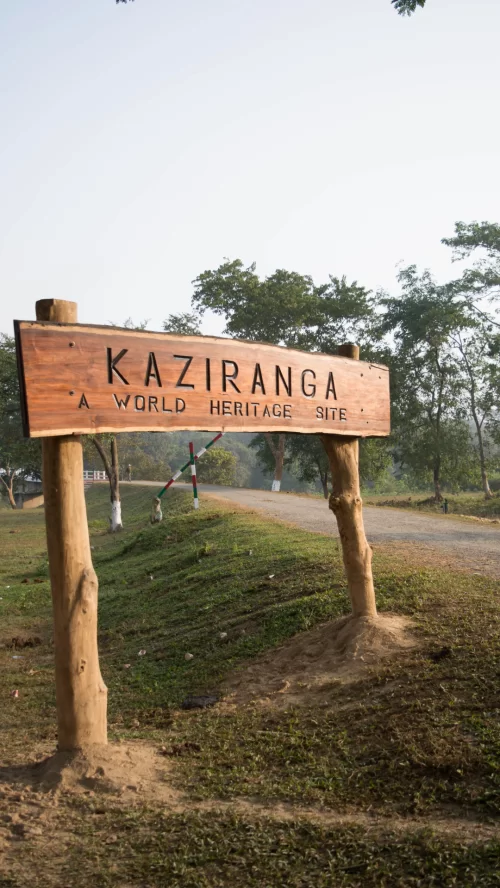
Wildlife also plays a major role in Assam tourism. Routes connecting destinations such as Kaziranga National Park, Orang National Park, Manas National Park, Pobitora Wildlife Sanctuary, and Dibru Saikhowa provide opportunities to combine road travel with wildlife experiences. Travelers often encounter wetlands, grasslands, river channels, and forest landscapes that support diverse ecosystems. The presence of the Brahmaputra River further enhances the scenery by adding wide river views, ferry crossings, and riverbank landscapes.
The combination of tea gardens, wildlife reserves, river systems, and cultural towns makes Assam one of the most balanced road trip destinations in Northeast India. The experience appeals to a wide range of travelers because it offers variety without requiring extreme driving conditions.
One of Assam's biggest advantages as a road trip destination is its relatively well-developed highway network. Major routes connecting Guwahati, Kaziranga, Jorhat, Dibrugarh, Tezpur, Nagaon, Sivasagar, and other important destinations are generally easier to drive compared to the mountain roads of neighboring states. Travelers can cover long distances comfortably while maintaining a reasonable travel pace.
Because much of Assam consists of plains and gently rolling terrain, road conditions are generally less demanding than those found in Himalayan regions. Drivers do not need to constantly navigate steep climbs, hairpin bends, or high-altitude passes. This makes the state particularly attractive to families, senior travelers, self-drive tourists, and those with limited experience driving in challenging conditions.
Although seasonal weather, road construction, and traffic can occasionally affect travel times, the overall driving experience remains comfortable for most visitors. Fuel stations, food stops, accommodation options, and emergency services are also more accessible compared to many remote mountain destinations.
Travelers who prioritize comfortable driving conditions often find Assam one of the easiest states to explore by road in Northeast India. The highway network supports both short scenic drives and longer multi-day road trip itineraries.
A major strength of Assam road trips is the variety of attractions available along almost every route. Travelers rarely spend entire days driving through empty landscapes. Instead, they encounter temples, historical monuments, cultural centers, tea estates, wildlife reserves, river viewpoints, traditional markets, and local communities throughout the journey.
Historic destinations such as Sivasagar provide insight into the Ahom kingdom and Assam's rich past, while Majuli introduces visitors to the state's cultural and spiritual heritage. Wildlife enthusiasts can explore Kaziranga and Manas, while nature lovers enjoy wetlands, forests, and river landscapes. This diversity ensures that road trips remain engaging regardless of individual travel interests.
The cultural dimension of Assam also adds value to the journey. Local cuisine, tea culture, traditional festivals, handicrafts, and village experiences create opportunities for deeper engagement with the destination. Road travel allows visitors to stop frequently and experience these elements more naturally than they might during faster forms of transportation.
The ability to combine nature, wildlife, history, culture, and scenic driving makes Assam one of the most versatile road trip destinations in the region. Travelers can customize their itinerary according to personal interests while still enjoying a coherent and rewarding journey.
An Arunachal Pradesh road trip is one of the most adventurous and visually rewarding journeys in India. The state is dominated by mountains, deep valleys, powerful rivers, dense forests, and remote settlements that remain far removed from mainstream tourism. Driving through Arunachal often feels like entering an entirely different world compared to the plains of Assam.
Road trips frequently pass through dramatic river valleys carved by major Himalayan rivers, including the Siang, Subansiri, Kameng, Lohit, Dibang, and other river systems. Travelers encounter changing landscapes at almost every stage of the journey. One moment the route may pass through dense forests, while the next reveals mountain villages, river gorges, waterfalls, or panoramic viewpoints.
The remoteness of many destinations adds to the appeal. Places such as Mechuka, Anini, Tawang, Ziro, Tuting, Walong, and the Dibang Valley region remain relatively untouched by large-scale tourism. Travelers often experience a genuine sense of exploration as they move through landscapes that feel far removed from urban India.
The natural diversity of Arunachal Pradesh ensures that the journey itself remains as exciting as the destinations. For many travelers, the drive becomes the highlight of the entire trip.
Arunachal Pradesh is widely considered one of the most scenic road trip destinations in the country. Routes leading to Tawang, Ziro, Mechuka, Dirang, Bomdila, Sangti Valley, and other regions pass through landscapes that rival some of India's most famous mountain destinations. Snow-capped peaks, alpine valleys, monasteries, waterfalls, and high mountain passes create unforgettable driving experiences.
The Tawang route is particularly famous because it crosses Sela Pass, one of the most spectacular high-altitude roads in Northeast India. Similarly, routes into the Siang Valley, Ziro Valley, and Mechuka region offer unique combinations of forests, rivers, traditional villages, and mountain scenery. Every route has its own character and visual identity.
Unlike many road trips where travelers spend most of their time focused on reaching destinations, Arunachal encourages frequent stops for photography, sightseeing, and simply appreciating the scenery. The landscape constantly changes, making even long driving days feel rewarding.
For road trip enthusiasts, Arunachal Pradesh offers an experience that extends beyond sightseeing. The act of driving through the Himalayas becomes an adventure in itself, creating memories that remain long after the journey ends.
One of Arunachal Pradesh's greatest strengths is the presence of destinations that remain relatively unexplored compared to other mountain regions in India. Many valleys, villages, monasteries, and scenic routes receive only a fraction of the visitors seen in more commercialized Himalayan destinations. This allows travelers to experience landscapes and cultures in a more authentic and peaceful environment.
Destinations such as Mechuka, Anini, Walong, Tuting, Dibang Valley, and remote parts of the Siang region offer remarkable scenery while maintaining a sense of discovery. Travelers often spend entire days driving through forests, valleys, and villages without encountering large tourist crowds. This creates a feeling of exclusivity that is increasingly rare in modern travel.
The state's tribal diversity, mountain communities, monasteries, and remote settlements further enrich the journey. Every region offers something different, making Arunachal one of the most varied road trip destinations in India.
For travelers who enjoy venturing beyond popular routes, Arunachal Pradesh offers some of the most rewarding road trip experiences in the country. The combination of scenery, remoteness, and cultural diversity creates an adventure that feels genuinely special.
Assam offers a unique type of natural scenery that differs significantly from the mountain landscapes commonly associated with Northeast India. The state's beauty comes from its vast tea estates, mighty river systems, wetlands, grasslands, forests, and wildlife habitats. Road trips through Assam often reveal endless stretches of tea gardens, rural countryside, riverbanks, and protected natural areas that create a calm and visually appealing driving experience.
One of Assam's most recognizable landscapes is its tea-growing region. Roads passing through Upper Assam often cut through vast plantations where neatly arranged tea bushes extend across the horizon. These landscapes create a distinctive visual identity that cannot be found elsewhere in India. Combined with old tea bungalows, plantation roads, and forested surroundings, the scenery remains attractive throughout much of the journey.
The Brahmaputra River adds another dimension to Assam's natural beauty. Riverbanks, wetlands, sandbars, ferry crossings, and floodplain ecosystems create constantly changing views. Wildlife reserves such as Kaziranga, Manas, Orang, and Pobitora further enrich the scenery with grasslands, forests, and opportunities to observe animals in natural habitats.
Assam's natural beauty is subtle rather than dramatic. Travelers who appreciate rivers, tea plantations, wildlife habitats, and open landscapes often find the state's scenery highly rewarding, especially when combined with cultural and historical attractions.
Arunachal Pradesh offers some of the most dramatic and visually impressive scenery in India. The state is dominated by Himalayan mountains, dense forests, deep valleys, alpine landscapes, powerful rivers, waterfalls, and remote villages. Unlike Assam's relatively gentle terrain, Arunachal delivers constant elevation changes and spectacular panoramic views throughout much of the journey.
Routes leading to destinations such as Tawang, Mechuka, Ziro, Anini, Walong, and the Siang Valley pass through landscapes that often feel untouched and remote. Snow-covered peaks, high-altitude lakes, mountain passes, forested slopes, and river valleys create extraordinary visual diversity. Every region has a distinct character, ensuring that travelers encounter new scenery almost every day.
The scale of Arunachal's landscapes is one of its greatest strengths. Travelers frequently encounter viewpoints overlooking vast valleys, rivers flowing through mountain gorges, and ridgelines stretching far into the distance. This dramatic scenery appeals strongly to nature lovers, photographers, and road trip enthusiasts.
For travelers seeking grand landscapes and visual impact, Arunachal Pradesh generally offers stronger natural scenery than Assam. The combination of mountains, forests, valleys, and remote environments creates one of India's most scenic driving experiences.
The choice between Assam and Arunachal Pradesh depends largely on what type of natural scenery travelers enjoy. Assam focuses on tea gardens, wildlife reserves, wetlands, rivers, and countryside landscapes. Arunachal Pradesh focuses on mountains, forests, valleys, waterfalls, and Himalayan scenery. Both are beautiful, but they provide very different visual experiences.
Travelers who enjoy wildlife, tea estates, and river systems may prefer Assam because of its unique environmental diversity. Those who prioritize dramatic mountain views, panoramic landscapes, and remote wilderness generally prefer Arunachal Pradesh. The difference is not necessarily one of quality but rather one of landscape type and personal preference.
| Scenery Preference | Assam | Arunachal Pradesh |
|---|---|---|
| Tea Garden Landscapes | Excellent | Limited |
| Mountain Scenery | Limited | Excellent |
| Wildlife Habitats | Excellent | Good |
| Forests and Valleys | Good | Excellent |
| River Landscapes | Excellent | Excellent |
| Photography Diversity | Very Good | Excellent |
| Overall Scenic Impact | Very Good | Excellent |
Travelers looking for dramatic scenery and Himalayan landscapes usually choose Arunachal Pradesh. Those who enjoy a balance of wildlife, tea gardens, river systems, and cultural landscapes often find Assam equally satisfying in a different way.
Assam offers one of the most comfortable road trip experiences in Northeast India because much of the state is connected by relatively well-developed highways. Major tourist destinations such as Guwahati, Kaziranga, Jorhat, Dibrugarh, Tezpur, Sivasagar, and Silchar are linked through routes that generally support smooth travel for private vehicles, taxis, and self-drive tourists.
The plains geography of Assam plays a major role in driving comfort. Unlike mountain states, travelers rarely encounter steep gradients, sharp hairpin bends, high-altitude passes, or challenging terrain. This allows drivers to maintain more consistent speeds and reduces fatigue during long-distance journeys. Families, senior travelers, and first-time Northeast visitors often find Assam much easier to navigate.
Road conditions can vary depending on the region and season. Construction projects, local traffic, and monsoon-related disruptions occasionally affect travel times. However, compared to most Himalayan road trips, the driving experience remains relatively straightforward and predictable. Fuel stations, repair facilities, restaurants, and accommodation options are also more widely available.
Travelers seeking a relaxed road trip with minimal driving challenges often prefer Assam. The combination of accessible infrastructure and comfortable terrain makes it suitable for almost every type of traveler.
Driving in Arunachal Pradesh is a very different experience from driving in Assam. The state is dominated by mountain terrain, and most routes involve steep climbs, winding roads, elevation changes, river crossings, and remote stretches with limited services. While the scenery is extraordinary, drivers must be prepared for conditions that demand greater concentration and experience.
Routes leading to Tawang, Mechuka, Anini, Walong, Ziro, and other remote destinations often pass through high mountain regions where weather conditions can change rapidly. Fog, rainfall, landslides, road repairs, and occasional snowfall in higher elevations can influence travel times. Drivers frequently need to adjust their pace according to terrain and conditions.
Long travel days are common because distances that appear short on a map may require several hours due to road conditions and elevation changes. However, most travelers accept these challenges because the scenery and sense of adventure more than compensate for the slower pace of travel.
Arunachal Pradesh rewards confident drivers with some of the most spectacular road trip experiences in India. However, travelers should approach the journey with realistic expectations regarding driving difficulty and travel times.
The driving comparison between Assam and Arunachal Pradesh is largely a comparison between comfort and adventure. Assam prioritizes convenience, accessibility, and ease of movement. Arunachal prioritizes exploration, scenery, and remote travel experiences. Neither approach is better; each serves different types of travelers.
Drivers with limited mountain experience often feel more comfortable in Assam because the routes are easier to navigate and infrastructure is more accessible. Experienced drivers and adventure enthusiasts frequently prefer Arunachal because the roads themselves contribute significantly to the overall travel experience.
| Driving Factor | Assam | Arunachal Pradesh |
|---|---|---|
| Road Comfort | Excellent | Moderate |
| Driving Difficulty | Low | High |
| Travel Speed | Higher | Lower |
| Mountain Driving | Limited | Extensive |
| Infrastructure Availability | Excellent | Moderate |
| Adventure Factor | Moderate | Excellent |
| First-Time Driver Suitability | Excellent | Moderate |
Travelers prioritizing smooth journeys and convenience generally choose Assam. Those seeking challenging mountain drives, remote landscapes, and a stronger sense of adventure often prefer Arunachal Pradesh. The best choice depends on driving confidence, available time, and the type of road trip experience desired.
Assam is one of India's premier wildlife destinations and offers a road trip experience that combines excellent biodiversity with relatively easy accessibility. The state is internationally known for its national parks, wildlife sanctuaries, wetlands, grasslands, and river ecosystems. Travelers driving across Assam can easily incorporate multiple wildlife destinations into a single itinerary, making the journey particularly attractive for nature enthusiasts.
Kaziranga National Park is the most famous wildlife attraction in the state and is known globally for its population of the Indian one-horned rhinoceros. However, Assam's wildlife appeal extends far beyond Kaziranga. Destinations such as Manas National Park, Orang National Park, Pobitora Wildlife Sanctuary, Dibru Saikhowa National Park, and Deepor Beel provide diverse ecosystems and opportunities to observe birds, mammals, reptiles, and aquatic life.
The combination of grasslands, wetlands, riverine forests, tea garden ecosystems, and floodplain habitats creates extraordinary biodiversity. Road travelers frequently encounter scenic stretches passing near forests, wetlands, and protected areas, adding a strong wildlife element to the overall journey. For travelers interested in safaris, birdwatching, and conservation-focused tourism, Assam remains one of the strongest destinations in Northeast India.
Travelers whose primary interest is wildlife generally find Assam more rewarding than most destinations in the Northeast. The combination of accessibility, biodiversity, and safari opportunities creates an exceptional nature-focused road trip experience.
Arunachal Pradesh offers a different type of nature experience. Rather than focusing on wildlife safaris and protected grassland ecosystems, the state emphasizes untouched mountain landscapes, dense forests, remote valleys, alpine environments, rivers, waterfalls, and wilderness. Nature in Arunachal feels larger, more dramatic, and often more remote than in Assam.
The state contains some of India's least disturbed natural environments. Forests cover vast areas of land, while river valleys cut through mountain ranges to create spectacular scenery. Regions such as Tawang, Mechuka, Ziro Valley, Dibang Valley, Siang Valley, Namdapha, and Walong showcase different ecological zones ranging from temperate forests to high-altitude mountain environments.
Wildlife exists throughout Arunachal Pradesh, but tourism generally focuses more on scenery and exploration than organized safari experiences. Travelers often appreciate the destination because of its sense of wilderness and the opportunity to experience landscapes that remain largely untouched by large-scale tourism.
For travelers who define nature as mountains, forests, rivers, and remote landscapes rather than wildlife safaris, Arunachal Pradesh often feels more rewarding. The scale and diversity of its scenery create a powerful sense of immersion in the natural world.
The choice between Assam and Arunachal Pradesh depends largely on what type of nature experience travelers seek. Assam is stronger for wildlife viewing, safaris, birdwatching, and accessible biodiversity experiences. Arunachal Pradesh is stronger for mountain landscapes, wilderness exploration, rivers, forests, and scenic outdoor travel.
Travelers interested in animals and protected ecosystems often prefer Assam because of its established wildlife tourism infrastructure. Those interested in dramatic scenery and remote environments generally prefer Arunachal Pradesh. Both destinations offer outstanding nature experiences, but they satisfy different travel motivations.
| Nature Interest | Assam | Arunachal Pradesh |
|---|---|---|
| Wildlife Safaris | Excellent | Limited |
| Birdwatching | Excellent | Very Good |
| Mountain Landscapes | Limited | Excellent |
| Forest Exploration | Good | Excellent |
| River Valleys | Good | Excellent |
| Nature Photography | Very Good | Excellent |
| Outdoor Adventure | Moderate | Excellent |
Wildlife enthusiasts generally prefer Assam, while travelers seeking dramatic landscapes and wilderness experiences often prefer Arunachal Pradesh. The ideal choice depends on whether the focus is biodiversity or mountain scenery.
Assam offers a rich cultural experience shaped by centuries of history, river-based civilizations, tea plantation heritage, spiritual traditions, and diverse ethnic communities. A road trip across the state allows travelers to encounter different aspects of Assamese culture through historical sites, monasteries, temples, traditional villages, local markets, festivals, and culinary experiences.
Destinations such as Majuli, Sivasagar, Jorhat, and Guwahati reveal different layers of the state's identity. Majuli preserves Vaishnavite traditions and cultural institutions, while Sivasagar showcases the legacy of the Ahom kingdom through historic monuments and archaeological sites. Tea-growing regions introduce travelers to plantation culture, while riverside communities highlight lifestyles shaped by the Brahmaputra.
Local food, handicrafts, weaving traditions, music, and festivals add further depth to the journey. Road travelers benefit from the flexibility to stop in villages, interact with local communities, and experience everyday life beyond the state's major attractions. This creates a cultural experience that feels accessible and authentic.
Travelers interested in history, heritage, and cultural diversity often find Assam highly rewarding because the state offers a balance between accessibility and authentic local experiences.
Arunachal Pradesh offers one of India's most fascinating cultural landscapes because it is home to numerous indigenous tribal communities, each with its own traditions, languages, architecture, clothing styles, festivals, and social customs. Unlike Assam, where cultural attractions are often connected to historical institutions and heritage sites, Arunachal's culture is closely linked to mountain communities and traditional lifestyles.
Road trips through regions such as Tawang, Ziro, Mechuka, Siang Valley, Dibang Valley, and other districts introduce travelers to diverse cultural environments. Monasteries, tribal villages, traditional houses, local festivals, and community interactions create opportunities to learn about cultures that remain relatively unknown outside the Northeast.
The remoteness of many destinations has helped preserve local traditions. Travelers often encounter communities that maintain distinctive identities despite increasing connectivity. This cultural richness adds another dimension to the road trip, transforming it from a scenic journey into an educational experience.
Arunachal Pradesh appeals strongly to travelers interested in indigenous cultures and remote communities. The cultural diversity found across the state is one of its greatest strengths and enhances every road journey.
Although both Assam and Arunachal Pradesh offer rich cultural experiences, the nature of those experiences differs significantly. Assam's culture is often expressed through historical sites, religious institutions, tea heritage, festivals, and established cultural traditions. Arunachal Pradesh's culture is expressed through tribal communities, mountain villages, monasteries, and local customs preserved across remote regions.
Travelers interested in historical heritage and Assamese identity often find Assam more appealing. Those interested in indigenous communities, traditional lifestyles, and cultural diversity across mountain regions often prefer Arunachal Pradesh. Both states provide meaningful cultural experiences, but they represent different dimensions of Northeast India.
| Cultural Aspect | Assam | Arunachal Pradesh |
|---|---|---|
| Historical Heritage | Excellent | Good |
| Tribal Diversity | Moderate | Excellent |
| Religious Sites | Excellent | Very Good |
| Cultural Accessibility | Excellent | Moderate |
| Village Experiences | Good | Excellent |
| Local Traditions | Very Good | Excellent |
| Cultural Immersion | Very Good | Excellent |
Assam is often the better choice for travelers interested in heritage and historical culture, while Arunachal Pradesh is often the stronger choice for those seeking indigenous traditions and deep cultural immersion. Together, the two states showcase the remarkable cultural diversity of Northeast India.
Assam generally offers better tourism infrastructure and accommodation diversity than most destinations in Northeast India. Major cities and tourism hubs such as Guwahati, Kaziranga, Jorhat, Dibrugarh, Tezpur, Sivasagar, and Silchar provide a wide range of hotels, resorts, guesthouses, business hotels, boutique properties, and heritage stays. This allows travelers to choose accommodations that match different budgets and comfort expectations.
One of Assam's strengths is the consistency of its tourism facilities. Travelers can usually find reliable accommodation options, restaurants, fuel stations, medical services, and transportation support throughout most major routes. Tea estate stays add another dimension to the experience by allowing visitors to stay in heritage bungalows surrounded by plantations while still enjoying comfortable facilities.
Because the state has a relatively developed road network and major urban centers, travelers rarely need to compromise significantly on comfort. Long road trips can be planned with confidence because accommodation options remain available across most popular routes. This accessibility makes Assam especially appealing to families, senior travelers, and first-time visitors to Northeast India.
Travelers prioritizing convenience and predictable travel conditions often prefer Assam because it combines scenic road trips with reliable accommodation and tourism facilities. The overall experience remains comfortable even during longer journeys.
Accommodation in Arunachal Pradesh has improved significantly in recent years, but it remains more limited and destination-dependent compared to Assam. Major tourism centers such as Tawang, Ziro, Dirang, Bomdila, Mechuka, and Pasighat offer a growing range of hotels, guesthouses, homestays, lodges, and tourism-focused properties. However, comfort standards can vary considerably between destinations.
The remoteness of many regions means that travelers often choose accommodations based on availability and location rather than luxury. In several mountain destinations, the primary attraction is the surrounding scenery rather than the property itself. Many travelers willingly accept simpler accommodations because they provide access to extraordinary landscapes and unique cultural experiences.
Homestays have become increasingly popular throughout Arunachal Pradesh and often provide some of the most memorable experiences. Staying with local families allows visitors to learn about regional culture, traditional lifestyles, and mountain communities while supporting local tourism initiatives. However, travelers expecting luxury resort experiences should carefully research accommodation options before finalizing their itinerary.
Arunachal Pradesh provides rewarding accommodation experiences, but travelers should approach the journey with realistic expectations. Comfort levels are improving, yet the destination remains focused more on exploration and scenery than on luxury tourism infrastructure.
When comparing travel comfort, Assam generally has a clear advantage because of its stronger infrastructure, larger urban centers, easier road conditions, and wider range of accommodation options. Travelers can move efficiently between destinations while enjoying consistent access to services and facilities.
Arunachal Pradesh offers a different type of reward. While travel may involve longer driving days, simpler accommodations, and more logistical planning, the scenery and sense of adventure are often unmatched. The destination appeals to travelers who are willing to trade some convenience for more dramatic landscapes and unique experiences.
| Travel Comfort Factor | Assam | Arunachal Pradesh |
|---|---|---|
| Accommodation Variety | Excellent | Good |
| Luxury Options | Very Good | Limited to Moderate |
| Travel Convenience | Excellent | Moderate |
| Tourism Infrastructure | Excellent | Good |
| Service Availability | Excellent | Moderate |
| Adventure Factor | Moderate | Excellent |
| Overall Comfort | Excellent | Good |
Travelers seeking maximum comfort and convenience generally prefer Assam. Those prioritizing scenery, adventure, and unique mountain experiences often choose Arunachal Pradesh despite the additional logistical challenges. The best choice depends on whether comfort or exploration is the higher priority.
Assam is one of the most family-friendly road trip destinations in Northeast India because it combines comfortable travel conditions, diverse attractions, and reliable infrastructure. Families can enjoy wildlife safaris, tea gardens, river landscapes, cultural destinations, and historical attractions without facing the physical demands associated with high-altitude mountain travel.
Road journeys are generally smoother and less tiring than those in mountainous regions, making the state suitable for children, senior citizens, and multi-generational family groups. Destinations such as Kaziranga, Majuli, Guwahati, Sivasagar, and various tea-growing regions provide enough variety to keep travelers of different age groups engaged throughout the trip.
Accommodation availability also enhances the family travel experience. Parents can plan journeys confidently because hotels, restaurants, fuel stations, and medical facilities are available across most major routes. Wildlife safaris, cultural attractions, river cruises, and tea estate visits create activities that appeal to a broad range of interests.
Families looking for a well-rounded Northeast road trip often find Assam the easiest destination to enjoy. The combination of accessibility, comfort, and attraction diversity creates a stress-free travel experience.
Arunachal Pradesh can also be an excellent family destination, but it is generally better suited to families who enjoy adventure, nature, and exploration. The road trip involves longer travel days, mountain roads, changing weather conditions, and remote destinations. These factors create excitement but may also require greater patience and flexibility from travelers.
Older children, teenagers, and nature-loving families often find Arunachal particularly rewarding because of the dramatic scenery and sense of discovery. Visiting monasteries, mountain valleys, rivers, traditional villages, and scenic viewpoints creates memorable experiences that differ significantly from conventional family holidays. However, the physical demands of travel should not be underestimated.
Families traveling with elderly members or very young children may need to choose destinations carefully. Regions such as Dirang, Bomdila, and Ziro are often easier to manage than more remote or higher-altitude areas. Thoughtful itinerary planning helps ensure a comfortable and enjoyable experience for all family members.
Arunachal Pradesh offers extraordinary family experiences, but it works best for travelers who are comfortable with adventure-oriented journeys. The destination rewards effort with remarkable scenery and unique cultural encounters.
The choice between Assam and Arunachal Pradesh for family travel depends largely on the family's priorities. Assam emphasizes comfort, accessibility, wildlife, and cultural attractions. Arunachal Pradesh emphasizes adventure, mountain scenery, and exploration. Both can be excellent family road trip destinations when matched with the right expectations.
Families with young children, senior citizens, or limited travel experience often find Assam more practical. Families seeking memorable adventures, dramatic landscapes, and less-explored destinations frequently prefer Arunachal Pradesh. The best decision depends on balancing comfort requirements with travel ambitions.
| Family Travel Factor | Assam | Arunachal Pradesh |
|---|---|---|
| Travel Comfort | Excellent | Moderate |
| Wildlife Experiences | Excellent | Moderate |
| Mountain Scenery | Limited | Excellent |
| Family Convenience | Excellent | Good |
| Adventure Opportunities | Moderate | Excellent |
| Senior Citizen Suitability | Excellent | Moderate |
| Multi-Generational Travel | Excellent | Good |
Families seeking an easier and more comfortable road trip generally choose Assam. Families looking for adventure, mountain scenery, and unique experiences often choose Arunachal Pradesh. Both journeys can be highly rewarding when planned according to the needs of the travelers involved.
Assam is often considered the ideal introduction to Northeast India for travelers planning their first road trip in the region. The state combines comfortable highways, diverse attractions, reliable tourism infrastructure, and relatively simple travel logistics. Visitors can experience tea gardens, wildlife reserves, river landscapes, historical sites, cultural destinations, and local cuisine without dealing with the challenges of high-altitude mountain travel.
For first-time visitors, Assam provides an excellent balance between exploration and convenience. Road conditions are generally easier, accommodation is widely available, and major attractions are well connected. Travelers can focus on enjoying the journey rather than worrying about difficult driving conditions or remote travel challenges. This accessibility helps build confidence for those unfamiliar with Northeast India.
Another advantage is the variety of experiences available within a single itinerary. A traveler can enjoy a wildlife safari in Kaziranga, visit cultural destinations such as Majuli and Sivasagar, explore tea estates in Upper Assam, and experience the Brahmaputra River system without extensive route planning. This diversity allows visitors to understand multiple aspects of the region during one road trip.
First-time Northeast travelers often find Assam easier to understand and navigate. The combination of accessibility, comfort, and attraction diversity makes it one of the safest choices for those beginning their exploration of the region.
Arunachal Pradesh appeals strongly to travelers who already have some experience with long-distance road trips, mountain driving, or adventure travel. The state rewards effort with extraordinary scenery, remote destinations, unique cultures, and a strong sense of exploration. However, the journey often requires more patience, flexibility, and preparation than a road trip through Assam.
Mountain roads, changing weather conditions, longer travel times, and remote regions create challenges that may feel overwhelming to some first-time visitors. At the same time, these very factors contribute to the destination's appeal. Many experienced travelers consider Arunachal Pradesh one of India's most rewarding road trip destinations because of its dramatic landscapes and relatively untouched character.
Destinations such as Tawang, Ziro, Mechuka, Dibang Valley, and the Siang region offer experiences that feel genuinely adventurous. Travelers often spend hours driving through valleys, forests, and mountain passes without encountering significant tourist crowds. This sense of remoteness and discovery is a major reason why Arunachal attracts seasoned explorers.
Travelers who enjoy challenging journeys often find Arunachal Pradesh unforgettable. The destination is less about convenience and more about the experience of exploring one of India's most spectacular and remote regions.
The decision between Assam and Arunachal Pradesh depends largely on driving confidence, travel expectations, and personal interests. Assam provides an easier introduction to Northeast road travel, while Arunachal offers a more adventurous and demanding experience. Neither option is better for everyone; the right choice depends on the traveler's goals.
Those looking for comfortable highways, wildlife experiences, tea gardens, and cultural attractions usually prefer Assam. Those looking for mountain scenery, remote valleys, adventure, and challenging drives often prefer Arunachal Pradesh. Travelers should be realistic about the amount of driving, weather variability, and logistical planning involved before making a decision.
| Traveler Profile | Better Choice | Reason |
|---|---|---|
| First Northeast Road Trip | Assam | Easier logistics and comfortable roads. |
| Experienced Road Tripper | Arunachal Pradesh | Offers greater adventure and exploration. |
| Family Travelers | Assam | Higher comfort and accessibility. |
| Adventure Enthusiasts | Arunachal Pradesh | Mountain roads and remote destinations. |
| Wildlife Lovers | Assam | Excellent safari opportunities. |
| Mountain Lovers | Arunachal Pradesh | Dramatic Himalayan scenery. |
| Self-Drive Beginners | Assam | More forgiving driving conditions. |
For most first-time Northeast travelers, Assam serves as the easier and more accessible introduction. Arunachal Pradesh becomes particularly rewarding for those who are comfortable with longer journeys and are eager to experience remote Himalayan landscapes.
Assam and Arunachal Pradesh are both exceptional road trip destinations, but they appeal to very different travel personalities. Assam focuses on comfortable driving, cultural exploration, wildlife tourism, tea garden landscapes, and river-based experiences. Arunachal Pradesh focuses on adventure, mountain scenery, remote destinations, tribal culture, and Himalayan exploration. Choosing the right destination depends on understanding what kind of journey will be most enjoyable and rewarding.
Travelers who enjoy relaxed itineraries, shorter driving challenges, wildlife experiences, and easier logistics often find Assam more suitable. The state allows visitors to combine tea gardens, national parks, river landscapes, cultural attractions, and historical sites within a comfortable travel framework. It is particularly appealing to families, senior travelers, photographers, and first-time visitors to Northeast India.
Arunachal Pradesh appeals to travelers who view the road itself as an adventure. Long mountain drives, changing elevations, remote valleys, and spectacular viewpoints create a sense of discovery that is difficult to match elsewhere. Travelers willing to accept longer driving hours and more unpredictable conditions are often rewarded with some of the most memorable scenery in India.
| Traveler Type | Better Choice | Main Advantage |
|---|---|---|
| First-Time Northeast Traveler | Assam | Easier planning and travel comfort. |
| Adventure Seeker | Arunachal Pradesh | Remote landscapes and mountain exploration. |
| Wildlife Enthusiast | Assam | National parks and safari opportunities. |
| Mountain Lover | Arunachal Pradesh | Himalayan scenery and high-altitude routes. |
| Family Traveler | Assam | Comfortable roads and stronger infrastructure. |
| Experienced Road Tripper | Arunachal Pradesh | Greater challenge and scenic rewards. |
| Cultural Explorer | Both | Different but equally rewarding experiences. |
The better road trip depends entirely on travel priorities. Assam offers balance and convenience, while Arunachal Pradesh offers adventure and dramatic landscapes. Both provide unforgettable journeys when matched with the right expectations.
At its core, the comparison between Assam and Arunachal Pradesh is a choice between comfortable exploration and Himalayan adventure. Assam's highways allow travelers to move efficiently between destinations while enjoying tea gardens, wildlife reserves, rivers, cultural landmarks, and local experiences. The journey is enjoyable without being physically demanding, making it accessible to a broad range of travelers.
Arunachal Pradesh presents a more demanding but equally rewarding experience. Travelers navigate winding mountain roads, cross high passes, pass through remote villages, and encounter landscapes that often feel untouched by modern tourism. The slower pace of travel becomes part of the attraction, encouraging visitors to appreciate every stage of the journey.
Neither approach is superior. Some travelers prefer the comfort and diversity of Assam, while others are drawn to the adventure and grandeur of Arunachal Pradesh. Understanding personal travel preferences is the most important factor in making the right choice.
Many experienced travelers eventually explore both destinations because they complement each other perfectly. Together they provide a complete introduction to the cultural, natural, and geographical diversity of the Northeast.
Proper planning plays a major role in the success of both road trips. Travelers should evaluate route distances, accommodation availability, seasonal weather patterns, vehicle condition, sightseeing priorities, and available travel time before finalizing an itinerary. While both destinations are rewarding, preparation helps avoid unnecessary challenges during the journey.
For Assam, attention should focus on wildlife safari bookings, accommodation reservations, ferry schedules where applicable, and seasonal road conditions. For Arunachal Pradesh, travelers should additionally consider permits, mountain weather, road conditions, fuel availability in remote regions, and realistic daily driving distances. Proper preparation significantly improves safety and overall enjoyment.
| Planning Factor | Assam Road Trip | Arunachal Pradesh Road Trip |
|---|---|---|
| Driving Difficulty | Low to Moderate | Moderate to High |
| Tourism Infrastructure | Excellent | Good |
| Permit Requirements | Usually Not Required | Required for Most Visitors |
| Road Trip Duration | 5 to 10 Days Ideal | 7 to 14 Days Ideal |
| Fuel and Services | Widely Available | Limited in Remote Areas |
| Accommodation Availability | Excellent | Moderate |
| Weather Impact | Moderate | High |
Assam and Arunachal Pradesh represent two of the finest road trip experiences in Northeast India. Assam excels in comfort, wildlife, culture, and accessibility, while Arunachal Pradesh excels in mountains, adventure, remoteness, and spectacular scenery. The ideal choice depends on whether travelers seek a relaxed exploration of the plains or an unforgettable Himalayan journey through one of India's most scenic regions.


Get customized Assam tour planning designed around seasonal weather patterns, river conditions, wildlife safari timing, and realistic road travel flow. Whether you are visiting for national parks, tea estate stays, cultural experiences, spiritual sites, o
⚡ Quick Response | 💰 Free consultation | 🕒 24×7 expert support