
How Tea is Made in Assam – A Tourist's Guide
Understanding how tea is made in Assam allows travellers to explore plantations, learn traditional processing methods, and experience the journey from fresh tea leaves to the final product.
+91 9910402252
admin@chalbanjare.com


The Guwahati–Kaziranga–Majuli–Shillong circuit is one of Northeast India’s most rewarding road trips, combining wildlife safaris, river islands, cultural heritage, waterfalls, hill station experiences, and scenic countryside drives.
The Assam and Meghalaya road trip circuit is one of the most rewarding journeys in Northeast India because it combines Assam's river plains, wildlife parks, tea landscapes, and cultural destinations with Meghalaya's hill roads, waterfalls, viewpoints, caves, and village experiences. Most travelers begin in Guwahati because it has the best air, rail, and road connectivity, making it the natural gateway for both states. From Guwahati, the route can move east towards Kaziranga and Majuli before returning towards Meghalaya through Shillong, Cherrapunji, Dawki, Mawlynnong, and nearby Khasi Hills attractions.
This circuit is best understood as a gradual landscape transition rather than a simple point-to-point journey. Assam offers long valley roads, tea gardens, wildlife zones, river crossings, and cultural towns, while Meghalaya introduces winding hill roads, misty valleys, forested slopes, and compact sightseeing clusters. A well-planned road trip allows travelers to enjoy both states without rushing, giving enough time for safaris, ferry crossings, city sightseeing, hill drives, waterfalls, and local food experiences.
Understanding the circuit properly helps travelers create a practical route that balances driving comfort with sightseeing depth. Instead of treating Assam and Meghalaya as separate trips, this road journey connects both states naturally through changing landscapes and complementary travel experiences.
The ideal duration for an Assam and Meghalaya road trip depends on how much of each state you want to experience. A short five to six day journey can cover Guwahati, Kaziranga, Shillong, and Cherrapunji, but it will feel slightly fast-paced because several major attractions require road travel and early starts. A more comfortable seven to nine day trip allows travelers to include Kaziranga safaris, Majuli Island, Shillong, Cherrapunji, Dawki, and Mawlynnong with better spacing between destinations.
For travelers who want a complete experience covering wildlife, river culture, tea landscapes, hill stations, waterfalls, and village tourism, ten to twelve days is more suitable. This duration allows two nights near Kaziranga, one night in Majuli, two or more nights in Shillong, and additional nights around Cherrapunji or Dawki. Longer itineraries reduce driving pressure and allow flexibility for safari schedules, ferry timing, rainfall, fog, and sightseeing delays.
A complete journey should not be planned only by distance on a map. Safari timings, hill road speeds, ferry schedules, weather conditions, and sightseeing depth all influence the real duration needed for a smooth and enjoyable road trip.
Route planning is the most important part of an Assam and Meghalaya road trip because the journey includes both long highway stretches and slower hill roads. In Assam, drives such as Guwahati to Kaziranga or Kaziranga to Jorhat generally follow broader roads across plains, tea landscapes, villages, and river areas. In Meghalaya, road travel becomes slower because of curves, elevation changes, fog, rainfall, and frequent scenic stops. Travelers should calculate each day based on realistic driving time rather than just distance.
A practical route often begins with Guwahati sightseeing, continues to Kaziranga for wildlife safaris, moves towards Majuli through the Jorhat ferry point, returns towards Guwahati, and then enters Meghalaya for Shillong, Cherrapunji, Dawki, and Mawlynnong. Sightseeing should be grouped geographically to avoid unnecessary backtracking. For example, Cherrapunji waterfalls and caves should be covered together, while Dawki and Mawlynnong can be planned on the same route if started early.
Good route planning keeps the journey comfortable and prevents unnecessary travel fatigue. A balanced road trip gives enough time for driving, sightseeing, rest, photography, and local experiences across both Assam and Meghalaya.
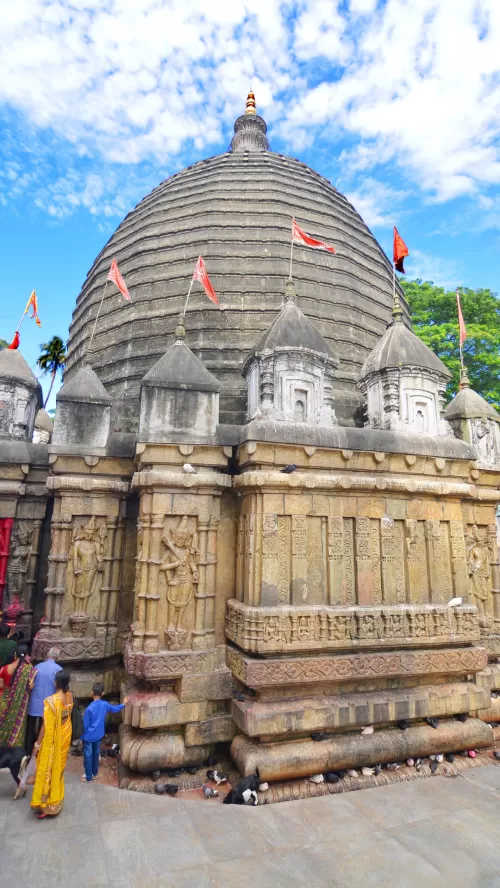
Guwahati is the ideal starting point for an Assam and Meghalaya road trip because it connects easily with major Indian cities and provides a strong cultural introduction before the journey moves into wildlife parks and hill regions. The most important attraction in the city is Kamakhya Temple, located on Nilachal Hill. This revered temple is one of India's major Shakti Peethas and attracts pilgrims throughout the year. Visiting early in the morning is usually more comfortable because queues can become longer later in the day, especially during weekends and festivals.
Beyond Kamakhya Temple, travelers can explore Umananda Temple on Peacock Island, Assam State Museum, Srimanta Sankardev Kalakshetra, local markets, riverfront areas, and traditional Assamese dining spaces. These attractions help visitors understand Assam's religious, cultural, and urban identity before beginning the longer road journey. If arriving by flight or train, spending one full day in Guwahati is useful for rest, vehicle arrangements, local sightseeing, and trip preparation.
Starting in Guwahati gives the journey a smooth beginning by combining cultural sightseeing with practical road trip preparation. The city works as both a gateway and a meaningful first destination on the Assam Meghalaya circuit.
The Brahmaputra River is central to Guwahati's identity and adds a memorable experience before travelers move towards Kaziranga or Meghalaya. River cruises, ferry rides, sunset viewpoints, and riverside walks allow visitors to understand the scale and beauty of one of India's most powerful rivers. Evening cruises are especially popular because the sunset over the Brahmaputra creates warm reflections across the water while the city lights slowly begin appearing along the riverfront.
Local culture in Guwahati can also be experienced through Assamese food, traditional markets, temples, museums, and cultural centers. Trying an Assamese thali, visiting local sweet shops, exploring handloom stores, or walking through busy market areas gives travelers a grounded experience of everyday city life. This cultural introduction makes the road trip richer because the journey later continues through the same river valley, rural villages, tea gardens, and wildlife landscapes shaped by the Brahmaputra region.
Experiencing the Brahmaputra in Guwahati helps travelers connect with Assam's geography and culture before the road trip moves deeper into the state. The river becomes a recurring theme throughout the journey, especially towards Majuli and Upper Assam.
Before leaving Guwahati, travelers should complete all practical road trip preparations because the city offers the best access to transport services, fuel stations, ATMs, pharmacies, restaurants, and shopping. If hiring a vehicle, it is important to confirm the driver's route knowledge, vehicle condition, permit requirements if crossing into Meghalaya, luggage space, pickup timing, and daily driving plan. Self-drive travelers should check documents, tyre condition, emergency tools, fuel level, navigation apps, and offline maps before starting.
Guwahati is also the best place to purchase essentials such as medicines, rainwear, power banks, snacks, bottled water, warm layers, and basic travel gear. Once the journey moves towards Kaziranga, Majuli, or Meghalaya's hill regions, supplies remain available but may not be as convenient as in the city. Planning the departure early in the morning helps avoid city traffic and gives enough time to reach the next destination comfortably before evening.
Good preparation in Guwahati makes the rest of the road trip smoother and more comfortable. Once the journey begins, travelers can focus on Assam's wildlife, river landscapes, tea gardens, and Meghalaya's hill scenery without unnecessary delays.
The drive from Guwahati to Kaziranga National Park is one of Assam's classic road journeys, covering roughly 190 to 220 kilometers depending on the chosen route and safari range. The highway gradually leaves the busy city behind and enters the fertile Brahmaputra Valley, where the scenery changes to green agricultural fields, forest patches, wetlands, rivers, and traditional Assamese villages. Smooth highway sections make this one of the most comfortable long-distance drives in Northeast India, allowing travelers to appreciate the transition from urban landscapes to Assam's famous countryside.
As the journey progresses eastward, tea gardens begin appearing along sections of the route, particularly closer to central Assam. During winter and post-monsoon months, the countryside remains especially attractive with clear skies, lush vegetation, and occasional views of distant hills. Numerous roadside cafés, local restaurants, and tea stalls provide opportunities to pause, enjoy Assamese refreshments, and experience the slower pace of rural Assam before reaching the wildlife zone around Kaziranga.
The Guwahati to Kaziranga drive is much more than a highway transfer. It introduces travelers to Assam's rural landscapes, tea-growing countryside, and peaceful valley scenery before the wildlife experiences begin.
One of the most enjoyable aspects of the Guwahati to Kaziranga road trip is the opportunity to observe everyday life across rural Assam. Small villages, bamboo houses, roadside temples, local markets, ponds, grazing livestock, and agricultural fields appear regularly along the highway, creating an authentic picture of the Brahmaputra Valley. Travelers passing through these areas gain insight into the agricultural traditions that continue to shape life across central Assam.
Although the route is primarily a highway journey, several stretches offer pleasant viewpoints overlooking wetlands, open grasslands, river channels, and distant forested areas. These locations become especially attractive during early morning or late afternoon when soft natural light enhances the surrounding scenery. Travelers should stop only at safe designated areas and avoid sudden roadside parking along busy highway sections. Short photography breaks make the drive more enjoyable without significantly increasing travel time.
The highway journey becomes more rewarding when travelers appreciate the villages, wetlands, and countryside rather than treating the drive simply as transportation between destinations.
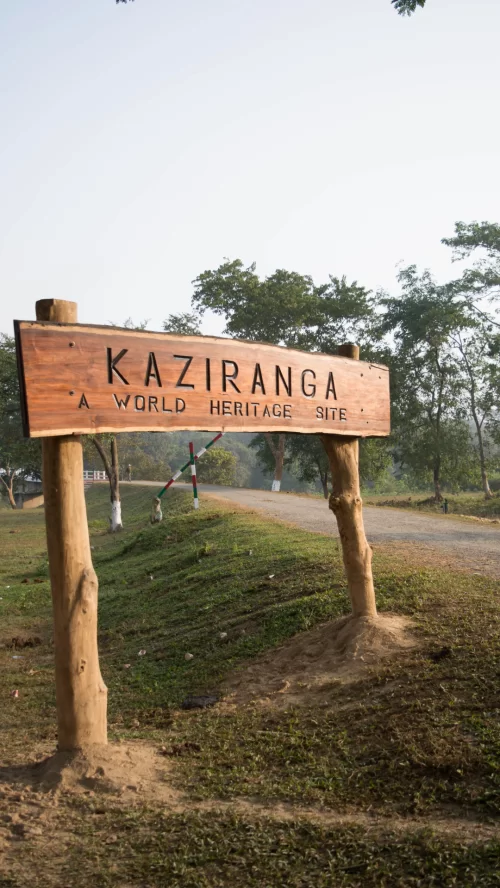
Approaching Kaziranga National Park marks a noticeable change in the landscape as dense grasslands, protected forests, and wildlife corridors begin replacing agricultural countryside. Road signs indicating safari ranges, conservation areas, and eco-tourism facilities become more frequent, signaling arrival at one of India's most celebrated wildlife destinations. Several accommodation options, restaurants, visitor centers, and safari booking facilities are located near the park's tourism zones, making arrival straightforward for first-time visitors.
Travelers should ideally reach Kaziranga by afternoon, allowing enough time to check into accommodation, confirm safari bookings, and relax before early morning wildlife activities the following day. Driving after dark is generally less desirable because wildlife movement increases around protected areas and visibility naturally decreases. Arriving during daylight also provides opportunities to explore nearby orchid parks, village walks, or cultural centers before beginning the safari experience.
Arriving comfortably in Kaziranga allows travelers to begin their wildlife experience well rested, making the following day's safari more enjoyable while maximizing opportunities to observe Assam's remarkable biodiversity.
Jeep safari is the most popular way to explore Kaziranga National Park because it allows visitors to travel through grasslands, wetlands, forest patches, and riverine habitats while covering larger areas than walking is permitted. The park is divided into multiple tourism ranges, including Central, Western, Eastern, and Burapahar, each offering slightly different landscapes and wildlife opportunities. Booking safaris in more than one range gives visitors a broader understanding of Kaziranga's remarkable ecosystems while increasing the chances of observing different animal species.
Morning safaris generally begin shortly after sunrise, when wildlife remains active and temperatures are comfortable. Afternoon safaris provide different lighting conditions that are especially attractive for photography. Experienced drivers and authorized guides accompany visitors throughout the safari, sharing information about the park's ecology, conservation programs, and wildlife behavior while ensuring all forest department regulations are followed.
Jeep safaris provide the best opportunity to experience Kaziranga's grasslands, wetlands, and forests while observing wildlife safely within one of India's most important protected landscapes.
Kaziranga National Park is globally famous for protecting the world's largest population of the endangered one-horned rhinoceros. Sightings of these impressive animals are common across several safari ranges, especially where tall grasslands meet wetlands and open grazing areas. Beyond rhinoceroses, the park supports Bengal tigers, Asian elephants, wild water buffaloes, swamp deer, hog deer, sambar, wild boar, reptiles, and numerous smaller mammals that together create one of India's richest wildlife destinations.
Wildlife sightings vary according to season, weather, vegetation, and natural animal movement. Visitors should remain patient throughout the safari because unexpected encounters often occur while quietly observing the landscape rather than constantly searching for individual species. Maintaining silence inside safari vehicles improves the overall wildlife experience while allowing guides to explain animal behavior and conservation efforts taking place across the park.
The opportunity to observe rhinoceroses alongside many other wild species makes Kaziranga one of the finest safari destinations in Asia and an unforgettable highlight of any Assam road trip.
Kaziranga is equally rewarding for birdwatchers because its wetlands, marshes, rivers, forests, and grasslands support hundreds of resident and migratory bird species. Winter is particularly attractive as migratory waterbirds arrive from Central Asia and other northern regions, increasing both diversity and photographic opportunities. Raptors, storks, pelicans, kingfishers, hornbills, eagles, ducks, and many wetland birds can be observed across different habitats within the park.
Beyond wildlife observation, Kaziranga offers opportunities to appreciate its unique ecosystem through nature photography, scenic grassland landscapes, river channels, and conservation-focused tourism. Sunrise mist rising above the grasslands creates beautiful photographic conditions during early morning safaris, while quiet stretches of wetland provide peaceful moments between wildlife encounters. Visitors interested in ecology often find Kaziranga's landscapes just as rewarding as its famous animals.
Kaziranga offers an exceptional blend of wildlife, birdwatching, conservation, and natural scenery, making it one of the most complete nature experiences anywhere in Northeast India.
After completing wildlife safaris in Kaziranga National Park, the journey continues northeast through the scenic landscapes of Upper Assam towards Jorhat and the ferry terminal at Nimati Ghat. This section of the road trip showcases a different side of Assam, where long stretches of tea gardens, rice fields, bamboo villages, wetlands, and quiet rural roads gradually replace the wildlife grasslands surrounding Kaziranga. Compared with the earlier highway drive from Guwahati, this route feels more relaxed and rural, allowing travelers to appreciate the everyday countryside of Upper Assam.
The drive passes through several small towns and agricultural communities where tea cultivation remains an important part of local life. Road conditions are generally comfortable, although occasional local traffic and village crossings require steady driving. Travelers often stop briefly at tea stalls, local restaurants, and scenic plantation viewpoints before reaching Jorhat. From there, the road continues to Nimati Ghat, which serves as the primary ferry departure point for visitors traveling to Majuli Island.
The drive from Kaziranga to Majuli is a peaceful transition from wildlife tourism to cultural exploration, allowing travelers to experience the changing landscapes and rural character that define Upper Assam.
The ferry crossing between Nimati Ghat and Majuli is one of the most memorable parts of the entire Assam road trip. Rather than functioning only as transportation, the journey across the mighty Brahmaputra River offers spectacular views of open water, distant sandbars, fishing boats, migratory birds during winter, and the vast river landscape that has shaped Assam's history and culture for centuries. Vehicles, local residents, motorcycles, bicycles, and visitors all travel together, creating an authentic experience of daily life along the river.
Ferry schedules vary according to weather conditions, river levels, and seasonal operations, making advance planning important. Travelers should arrive early, especially when carrying vehicles, because boarding procedures take additional time. During the crossing, passengers can enjoy panoramic views of the Brahmaputra while observing the immense scale of one of Asia's great rivers. The journey also provides excellent photography opportunities, particularly during clear winter mornings when visibility is at its best.
The Brahmaputra ferry journey is much more than a river crossing. It becomes one of the defining experiences of traveling through Assam, connecting visitors with the landscapes and river culture that make Majuli so unique.
Majuli welcomes visitors with peaceful village roads, green fields, bamboo groves, wetlands, and centuries-old monasteries known as Satras. Unlike busy tourist destinations, the island encourages slow exploration through cycling, short village drives, and relaxed walks between monasteries, artisan workshops, and traditional Assamese homes. The Satras preserve classical dance, devotional music, mask-making, manuscript traditions, and religious practices established by the saint-reformer Srimanta Sankardev, making Majuli one of Assam's most culturally important destinations.
Beyond its monasteries, the island offers beautiful river landscapes, seasonal wetlands, pottery villages, weaving communities, and quiet roads that pass through agricultural settlements. Sunrise and sunset create particularly attractive conditions for photography as soft light falls across the Brahmaputra floodplains and village scenery. Spending at least one night on the island allows visitors to experience Majuli's relaxed atmosphere while avoiding the pressure of same-day ferry travel.
Majuli offers a completely different travel experience from Kaziranga, replacing wildlife safaris with traditional culture, river landscapes, and peaceful island life that reflects the heart of rural Assam.
The journey from Majuli to Shillong begins with an early ferry crossing back to Nimati Ghat before continuing by road across Assam towards Guwahati. This route retraces part of the Brahmaputra Valley while passing tea gardens, agricultural landscapes, small towns, wetlands, and open countryside. Travelers generally prefer starting early because the combined ferry journey and long drive require a full day of travel before reaching Meghalaya.
After returning to Guwahati, the journey continues west for a short distance before gradually climbing towards Meghalaya through the East Khasi Hills. Guwahati also provides a convenient opportunity for fuel, refreshments, ATM access, vehicle checks, and meal breaks before entering the hill roads. Careful timing helps travelers reach Shillong comfortably during daylight while avoiding unnecessary night driving through unfamiliar mountain roads.
The transition from Majuli to Shillong is one of the longest travel days of the circuit, making early planning and steady driving essential for a comfortable journey into Meghalaya.
After crossing into Meghalaya, the landscape changes dramatically as the road begins climbing through the East Khasi Hills. Wide river plains gradually disappear, replaced by forest-covered hills, winding roads, rocky slopes, valleys, and cooler temperatures. The drive towards Shillong is among Northeast India's most scenic hill journeys, offering continuous views of changing landscapes as elevation steadily increases.
Several viewpoints appear along the route where travelers can briefly stop to enjoy panoramic views of the surrounding hills and valleys. Weather conditions also become noticeably different, with cooler air, occasional mist, and seasonal fog adding to the mountain atmosphere. The roads are generally well maintained, although sharp curves require slower driving than the highways of Assam. Reaching Shillong during daylight allows visitors to appreciate the scenery while driving safely through the hill sections.
The drive into Shillong marks one of the most beautiful landscape transitions of the entire Assam Meghalaya road trip, introducing travelers to the forests, valleys, and mountain scenery that define Meghalaya.
Few road trips in India showcase such dramatic geographical variation within a relatively short distance. The journey begins amid the wide floodplains of the Brahmaputra, passes through tea estates and rural Assam, crosses one of Asia's largest rivers by ferry, and finally enters the cool mountain environment of Meghalaya. This gradual transformation highlights the remarkable diversity of Northeast India and makes the drive itself one of the major attractions of the itinerary.
As travelers approach Shillong, pine forests, rocky hillsides, mountain streams, and expanding valley views replace the broad agricultural landscapes left behind in Assam. The cooler climate, fresh mountain air, and distinctive Khasi architecture immediately signal arrival in a completely different cultural and geographical region. This transition prepares visitors for the waterfalls, caves, viewpoints, and scenic drives that await throughout Meghalaya.
The journey from Majuli to Shillong perfectly captures the diversity of Northeast India, where river islands, tea gardens, mountain forests, and hill towns come together within one unforgettable road trip experience.
The Assam section of the road trip offers countless photography opportunities that extend far beyond the famous wildlife destinations. Between Guwahati and Kaziranga, travelers pass through open countryside, rice fields, wetlands, village roads, bamboo houses, and roadside tea gardens that represent the everyday landscape of the Brahmaputra Valley. Morning light is particularly attractive because soft sunlight highlights the green fields while creating gentle mist over rivers and agricultural land. Winter also provides clearer skies, making long-distance landscape photography much easier.
Kaziranga National Park becomes the highlight for wildlife photography, where one-horned rhinoceroses, elephants, wild buffaloes, deer, birds, and expansive grasslands create remarkable safari images. Around Jorhat and Upper Assam, tea estates provide beautiful geometric patterns formed by neatly maintained plantations, while workers harvesting tea leaves add authentic cultural elements to photographs. Travelers should always respect local communities and request permission before photographing people inside villages or tea estates where required.
Photography across Assam captures much more than famous attractions. The combination of tea gardens, wildlife, villages, wetlands, and open countryside creates a diverse collection of landscapes that define the state's natural beauty.
Majuli offers one of the most peaceful photography experiences anywhere in Northeast India. Wide river landscapes, quiet ferry crossings, traditional monasteries, bamboo houses, open agricultural fields, and village roads provide opportunities to document both nature and Assamese culture. Sunrise and sunset are particularly rewarding because the soft golden light spreads across the Brahmaputra floodplains, creating beautiful reflections and dramatic skies above the island.
The ferry journey itself provides unique viewpoints that cannot be experienced elsewhere along the road trip. Wide-angle photography works especially well while crossing the Brahmaputra, capturing the immense scale of the river together with boats, sandbars, birds, and distant villages. On the island, monasteries, mask-making workshops, pottery villages, and handloom weaving centers introduce human stories that complement the surrounding landscapes. Visitors should always ask permission before photographing local residents or artisans inside working communities.
Majuli combines culture and landscape in a way few destinations can match, allowing photographers to document river life, traditional communities, and peaceful countryside within one extraordinary island environment.
After leaving Assam, the road trip enters Meghalaya's hill landscapes where photography shifts from river plains to mountain valleys, forests, waterfalls, and panoramic viewpoints. The drive towards Shillong introduces travelers to winding roads surrounded by pine forests and rolling hills, while several roadside viewpoints provide sweeping views across the Khasi Hills. As the journey continues towards Cherrapunji, Dawki, and Mawlynnong, dramatic cliffs, deep valleys, cloud-covered mountains, and seasonal waterfalls become increasingly common.
Photographers should plan flexible stops because weather conditions change rapidly throughout Meghalaya. Clear winter mornings provide excellent long-distance visibility, while post-monsoon months create lush green landscapes with flowing waterfalls. Golden-hour lighting around Shillong Peak, Laitlum Canyon, Mawkdok Dympep Valley, and Umiam Lake produces some of the finest landscape photography along the entire Assam Meghalaya circuit. Carrying weather protection for cameras is advisable because sudden rain or mist can occur even outside the monsoon season.
The Meghalaya section of the road trip complements Assam perfectly by replacing river landscapes with mountain scenery, creating one of Northeast India's most varied photography journeys.
An Assam and Meghalaya road trip covers significant distances across highways, rural roads, and hill sections, making vehicle planning one of the largest components of the travel budget. Fuel expenses depend on the total itinerary length, vehicle type, and driving style, while SUVs generally consume more fuel than compact cars but provide greater comfort on longer journeys. Self-drive travelers should also consider parking charges, occasional ferry fees for Majuli, and routine vehicle checks before beginning the trip.
Compared with many long-distance highways elsewhere in India, toll expenses across much of this circuit remain relatively moderate, although travelers should still carry sufficient cash or digital payment options where available. Hiring a vehicle with an experienced local driver is a popular option for visitors unfamiliar with Northeast India's roads, particularly when combining long Assam highways with Meghalaya's winding hill routes. Choosing the appropriate vehicle depends on group size, luggage, comfort expectations, and travel season.
Careful vehicle budgeting allows travelers to enjoy the road trip comfortably while avoiding unexpected costs during long drives through Assam and Meghalaya.
Accommodation options throughout the route range from budget guesthouses and homestays to premium wildlife lodges, boutique hotels, heritage tea bungalows, and luxury resorts. Guwahati, Kaziranga, Shillong, and Cherrapunji offer the widest choice of hotels, while Majuli provides comfortable village homestays and locally operated guesthouses that emphasize authentic cultural experiences. Booking accommodation early is recommended during winter, long weekends, and holiday periods when demand increases across both states.
Food expenses vary according to travel style but remain reasonable across most destinations. Local Assamese restaurants, Khasi eateries, cafés, and roadside dhabas serve regional cuisine alongside Indian dishes suitable for road travelers. Wildlife lodges and premium hotels generally include higher dining costs, while village homestays often provide simple home-cooked meals. Carrying light snacks and drinking water between destinations is useful because some highway sections have fewer refreshment options.
Accommodation and dining can be adjusted easily according to personal preferences, allowing travelers to create a road trip that matches both their comfort expectations and overall budget.
Budget travelers generally combine guesthouses, homestays, public transport, or economical vehicle rentals while focusing on practical accommodation and local restaurants. Mid-range travelers often choose comfortable hotels, private taxis, organized safari bookings, and selected heritage stays that provide greater convenience without significantly increasing overall costs. This category remains the most popular because it balances comfort, flexibility, and value throughout the journey.
Premium road trips usually include luxury SUVs, heritage tea bungalows, boutique hill resorts, upscale wildlife lodges, private guides, premium river cruises, and personalized sightseeing schedules. Although more expensive, this style allows slower travel, higher comfort, and access to unique experiences such as heritage plantation stays or exclusive safari programs. Regardless of travel style, advance planning helps control expenses while ensuring accommodation availability during the busiest travel months.
Choosing the right travel style allows every visitor to experience Assam and Meghalaya comfortably while balancing accommodation, transport, wildlife activities, and sightseeing according to their preferred budget.
Winter, from October through April, is widely considered the best season for completing the Assam and Meghalaya road trip because it combines comfortable weather, clear skies, excellent road conditions, and open wildlife parks. Assam's famous national parks, including Kaziranga and Manas, operate during this period, allowing visitors to enjoy jeep safaris, birdwatching, and wildlife photography under favorable conditions. Comfortable daytime temperatures also make long highway drives more enjoyable while reducing travel fatigue during sightseeing.
In Meghalaya, winter provides excellent visibility across Shillong, Cherrapunji, Dawki, Mawlynnong, and the Khasi Hills. Waterfalls continue flowing after the monsoon, roads remain easier to drive than during the rainy season, and crystal-clear conditions on the Umngot River make Dawki especially attractive for boating and photography. Pleasant temperatures throughout both states allow travelers to comfortably explore viewpoints, villages, caves, tea gardens, and riverside attractions without facing extreme weather.
Winter offers the most balanced combination of weather, wildlife, road conditions, and sightseeing opportunities, making it the ideal season for experiencing both Assam and Meghalaya in one continuous journey.
The period immediately after the monsoon, generally from late September through November, transforms both Assam and Meghalaya into remarkably green landscapes. Tea gardens appear vibrant, forests become dense, rivers remain full, and waterfalls continue flowing with impressive volume across Meghalaya. Travelers seeking dramatic scenery and fresh post-rain landscapes often prefer this period because the countryside looks exceptionally colorful after months of rainfall.
Photography enthusiasts particularly enjoy this season as mist-covered hills, fresh vegetation, and clean air create striking natural scenes throughout the route. Although occasional showers may still occur during early post-monsoon weeks, road conditions usually improve steadily as the season progresses. Visitors should remain flexible with sightseeing schedules because weather can change quickly, especially in Meghalaya's higher elevations where clouds and mist frequently move across valleys during the day.
Post-monsoon travel rewards visitors with some of the most beautiful scenery of the year while combining fresh landscapes with improving weather conditions across both Assam and Meghalaya.
Seasonal weather significantly influences driving conditions throughout the Assam Meghalaya circuit. Winter generally provides dry roads, clear visibility, and predictable travel times, making it the safest and most comfortable season for long-distance driving. During summer, warmer temperatures in Assam contrast with the cooler hill climate of Meghalaya, creating pleasant conditions for travelers who begin driving early each morning.
The monsoon season, usually extending from late May or June until September, brings heavy rainfall across both states. Assam may experience localized flooding in low-lying areas, while Meghalaya's hill roads often become wet, foggy, and slower to navigate because of reduced visibility. Landslides are uncommon on major tourist routes but may occasionally affect smaller roads after prolonged rainfall. Travelers visiting during this period should monitor weather updates, keep flexible schedules, and avoid driving after dark whenever possible.
Understanding seasonal road conditions helps travelers select the safest and most enjoyable time for the journey while minimizing weather-related delays across both Assam and Meghalaya.
The most practical Assam Meghalaya road trip begins in Guwahati before gradually moving east towards Kaziranga National Park, Jorhat, Majuli Island, and then returning through Guwahati to enter Meghalaya via Shillong. From Shillong, travelers can comfortably continue towards Cherrapunji, Dawki, Mawlynnong, and nearby attractions without unnecessary backtracking. This route follows the natural geography of Northeast India while allowing visitors to experience river valleys, tea gardens, wildlife reserves, hill stations, waterfalls, caves, and traditional villages in a logical sequence.
Rather than trying to visit every destination within a limited number of days, travelers should select attractions according to their interests and available time. Wildlife enthusiasts may spend additional nights near Kaziranga, while photographers often allocate more time to Cherrapunji, Dawki, and Shillong. Careful planning ensures that long driving days are balanced with lighter sightseeing days, making the overall journey more comfortable and rewarding.
A carefully planned route allows travelers to experience the remarkable diversity of Assam and Meghalaya while keeping driving distances realistic and sightseeing enjoyable throughout the journey.
A successful Assam Meghalaya road trip combines wildlife, culture, tea tourism, river landscapes, waterfalls, and mountain scenery rather than focusing heavily on only one destination. Guwahati introduces travelers to Assamese heritage and the Brahmaputra River before Kaziranga provides unforgettable wildlife experiences. Majuli then offers peaceful cultural exploration, while Shillong serves as the gateway to Meghalaya's scenic hill landscapes, waterfalls, caves, viewpoints, and traditional Khasi villages.
Keeping two nights at important destinations such as Kaziranga and Shillong allows travelers to enjoy the region without rushing between attractions every day. Tea estates, Brahmaputra ferry crossings, local cuisine, roadside photography, and village experiences naturally enrich the journey when enough time is available. A balanced itinerary also reduces travel fatigue while allowing greater flexibility for weather changes and seasonal sightseeing opportunities.
A balanced itinerary creates a richer travel experience where every destination contributes something unique, allowing visitors to appreciate the extraordinary diversity of Northeast India.
Preparing thoroughly before beginning the journey helps ensure a smooth and enjoyable road trip across both states. Travelers should carry valid identification, driving documents if self-driving, comfortable walking shoes, lightweight clothing, warm layers for hill stations, rain protection, sunscreen, insect repellent, reusable water bottles, power banks, chargers, and personal medicines. Wildlife enthusiasts should also pack binoculars and camera equipment with sufficient memory cards and spare batteries.
Advance reservations for Kaziranga safaris, accommodation, Majuli ferry planning, and popular Meghalaya hotels help avoid last-minute difficulties during peak travel seasons. Downloading offline navigation maps is useful because mobile network coverage may vary in remote sections of the route. Finally, travelers should begin driving early each day, avoid unnecessary night driving, respect local customs, follow wildlife regulations, and travel responsibly by supporting local businesses and keeping the environment clean throughout the journey.
With careful preparation, realistic planning, and a flexible approach, the Assam Meghalaya road trip becomes one of Northeast India's most rewarding journeys, combining wildlife, tea gardens, rivers, mountains, villages, and unforgettable landscapes in a single adventure.


Get customized Assam tour planning designed around seasonal weather patterns, river conditions, wildlife safari timing, and realistic road travel flow. Whether you are visiting for national parks, tea estate stays, cultural experiences, spiritual sites, o
⚡ Quick Response | 💰 Free consultation | 🕒 24×7 expert support