Quick Facts About Thupsung Dhargye Ling Buddhist Monaster
| Entry Fee | Free |
| Timings | 07:00 - 18:00 |
| Altitude (m) | 1650 |
| Ideal Visit Duration (hrs) | 1 |
| Best Time of Day | Morning |
| Crowd Level | Low |
| Distance from City Centre (km) | 2 |
| Walking Difficulty | Easy |
| Parking Available | Yes |
| Last Mile Access | Road |
| Suitable for Kids | Yes |
| Suitable for Seniors | Yes |
| Wheelchair Friendly | No |
Why Visit Thupsung Dhargye Ling Buddhist Monastery
Thupsung Dhargye Ling Monastery is worth visiting if you are looking for a quiet, lived-in monastery rather than an ornate landmark. It offers a chance to observe everyday monastic life in Dirang without crowds or staged experiences. The visit fits well as a calm break between road journeys through West Kameng.
The atmosphere is peaceful and disciplined. Prayer chants may be heard during scheduled sessions, while the rest of the time the complex remains quiet, with monks moving between halls and residences. The hilltop setting reduces traffic noise, and the open courtyards give the space a relaxed, contemplative feel.
What makes this monastery special is its active role in the local Buddhist community. It is not preserved as a monument but functions as a center for learning, prayer, and daily practice. The views over the Dirang Valley add context to why monasteries in this region are often located away from town centers, reinforcing a sense of separation and focus.
History
Thupsung Dhargye Ling Buddhist Monastery was established to serve the spiritual and educational needs of the Buddhist community in and around Dirang Valley. It follows the Gelug tradition of Mahayana Buddhism and functions as a place for prayer, study, and monastic training rather than as a heritage monument.
The monastery was built in its current hilltop location to provide a quiet environment suitable for religious practice, away from the daily activity of Dirang town. Its development reflects the continued spread and institutional presence of Tibetan Buddhist traditions in West Kameng district, where monasteries play an active role in community life.
Religiously, the monastery serves as a center for regular prayers, teaching sessions, and ceremonial observances followed by the local Buddhist population. Visiting the monastery offers insight into how Buddhism in this region remains a living practice, integrated into daily routines rather than limited to festivals or tourist visits.
Best Time to Visit Thupsung Dhargye Ling Buddhist Monastery
The best time to visit Thupsung Dhargye Ling Buddhist Monastery is from October to April, when weather conditions in Dirang Valley are stable and access roads remain clear. During these months, the monastery grounds are dry and the surrounding views are usually unobstructed, making visits comfortable and unrushed.
Winter months from December to February are colder, especially in the early morning, but the monastery remains accessible. Prayer sessions continue as usual, and the quieter atmosphere during winter can feel especially reflective. The monsoon season from June to September brings frequent rain and mist, which can limit visibility and make the approach road slippery.
- October to November offers clear skies and mild daytime temperatures
- March to April is comfortable with improving weather after winter
- Morning visits align best with prayer schedules and calm conditions
- Monsoon months are less ideal due to rain and reduced visibility
How to Reach Thupsung Dhargye Ling Buddhist Monastery
- By Road: Dirang is located on the Balipara Charduar Tawang Road, which connects Assam to western Arunachal Pradesh. The drive from Tezpur in Assam to Dirang is around 140 km and usually takes 5 to 6 hours depending on weather and road conditions.
- Local Access: The monastery is about 2 km from Dirang town. A paved, motorable road leads up to the monastery, and taxis from Dirang can reach the entrance directly.
- By Rail: The nearest practical railway station is Rangapara North Railway Station in Assam. From there, travelers must continue by road to Dirang using shared or private taxis.
- By Air: The nearest airport with regular civilian connectivity is Lokpriya Gopinath Bordoloi International Airport in Guwahati, approximately 320 km away. Travel from Guwahati to Dirang is entirely by road.
- Travel Permits: Indian citizens require an Inner Line Permit to enter Arunachal Pradesh. Foreign nationals need a Protected Area Permit, which must be arranged in advance.
What to Expect When You Visit Thupsung Dhargye Ling Buddhist Monastery
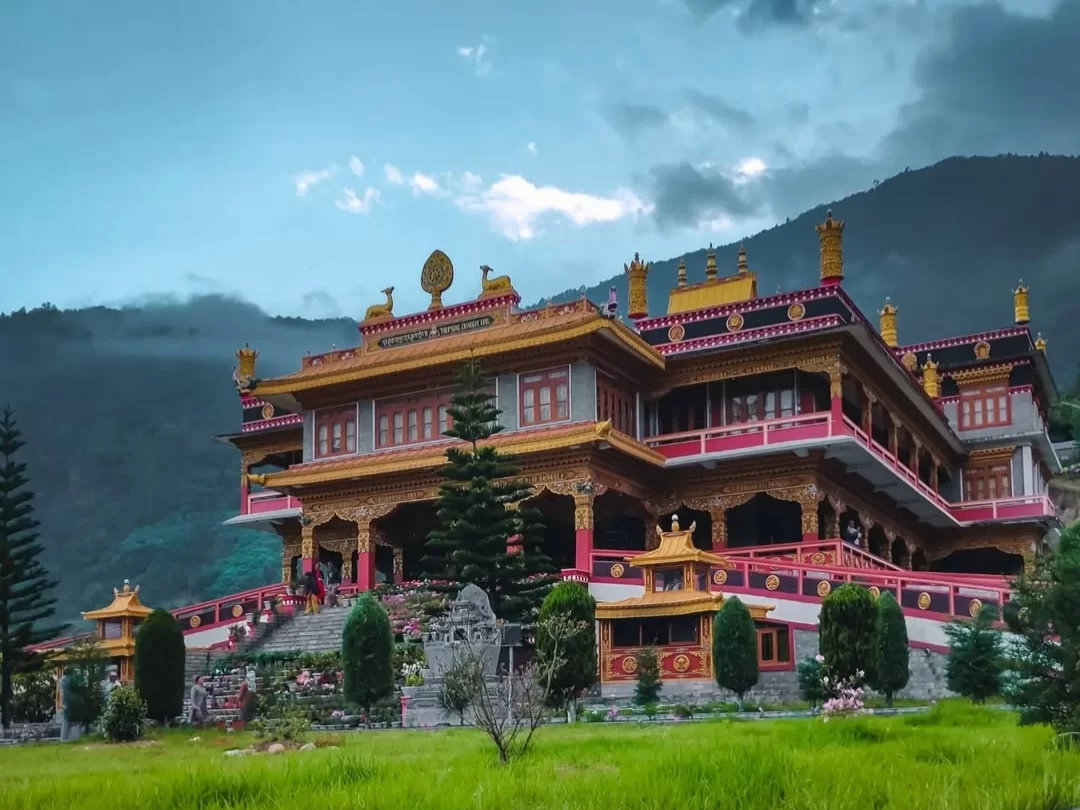
- A quiet monastery complex with a main prayer hall, residential quarters, and open courtyards set on a hill overlooking Dirang Valley.
- Monks engaged in daily routines such as prayer, study, and maintenance, especially during morning and late afternoon hours.
- A calm, respectful environment where visitors are expected to keep noise low and follow basic monastery etiquette.
- Simple architecture focused on function rather than decoration, with emphasis on prayer spaces rather than visitor facilities.
- Clear valley views on good weather days, with occasional mist or cloud cover rolling in quickly.
- No tourist-oriented services such as guided tours, cafes, or souvenir shops within the monastery premises.
Important Visitor Information
- Crowd & Weather Notes: The monastery generally remains quiet throughout the day. Weather can change quickly, with sudden fog, wind, or light rain, especially during monsoon and winter months.
- Peak / Quiet Hours: Quietest hours are early morning between 6:00 AM and 9:00 AM. Slightly more visitors arrive during late morning and early afternoon, mostly local travelers.
- Dress Code: Visitors should wear modest clothing that covers shoulders and knees. Avoid loud colors or revealing outfits inside prayer areas.
- Safety Notes: Paths within the monastery are safe but can be slippery during rain. Maintain silence inside prayer halls and follow instructions from resident monks.
Photography and Viewpoint
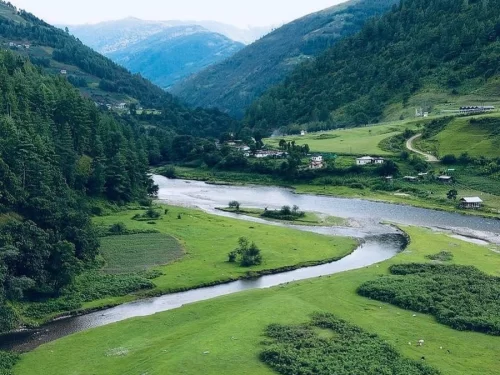
- The monastery offers wide, unobstructed views of Dirang Valley, surrounding hills, and scattered village settlements below.
- Best photography conditions are during early morning when the valley is clear, or late afternoon when soft light highlights the landscape.
- Prayer flags, monastery rooftops, and the backdrop of forested slopes provide strong composition elements for landscape and cultural photography.
- Fog and low clouds are common, especially after midday, which can limit long-distance views but add a moody atmosphere.
- Photography is allowed in outdoor areas; indoor photography inside prayer halls should only be done after seeking permission.
- Tripods are rarely used here but can be set up outdoors without disturbance due to low crowd levels.