Quick Facts About Mandala Top Dirang
Mandala Top Dirang Quick Facts
| Entry Fee | No entry fee |
| Timings | Accessible throughout the day; sunrise to sunset is recommended due to mountain weather and visibility conditions. |
| Altitude (m) | Approximately 3,000 m (9,840–10,000 ft) above sea level |
| Ideal Visit Duration | 1–2 hours |
| Best Time of Day | Early morning for clear Himalayan views and fewer clouds |
| Crowd Level | Low to moderate; busiest during peak Arunachal tourism season and weekends |
| Distance from City Centre (km) | Approximately 28–30 km from Dirang town centre |
| Walking Difficulty | Easy; the main 108 Stupa complex is accessible with minimal walking from the parking area |
| Parking Available | Yes, limited parking is available near the viewpoint and stupa complex |
| Last Mile Access | Direct road access via a mountain road from Dirang followed by a short walk around the 108 Buddhist stupas |
| Suitable for Kids | Yes, with supervision due to the high altitude and exposed viewpoints |
| Suitable for Seniors | Yes, though high altitude may affect visitors with respiratory or cardiac conditions |
| Wheelchair Friendly | Partially; some viewing areas are accessible, but uneven mountain terrain may limit movement |
Why Visit Mandala Top Dirang
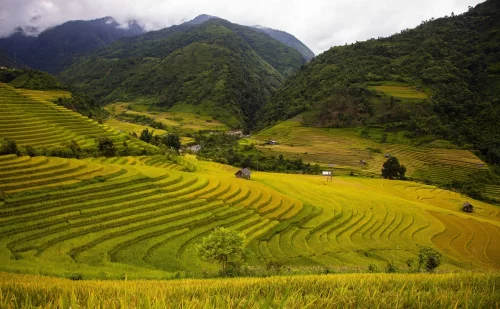
Visitors come to Mandala Top to enjoy panoramic views of the Eastern Himalayas, explore the hilltop Buddhist site, and experience one of the most scenic viewpoints near Dirang.
The atmosphere is peaceful and uplifting, with mountain breezes, colorful prayer flags, and a quiet setting that encourages visitors to spend time appreciating the surrounding landscape.
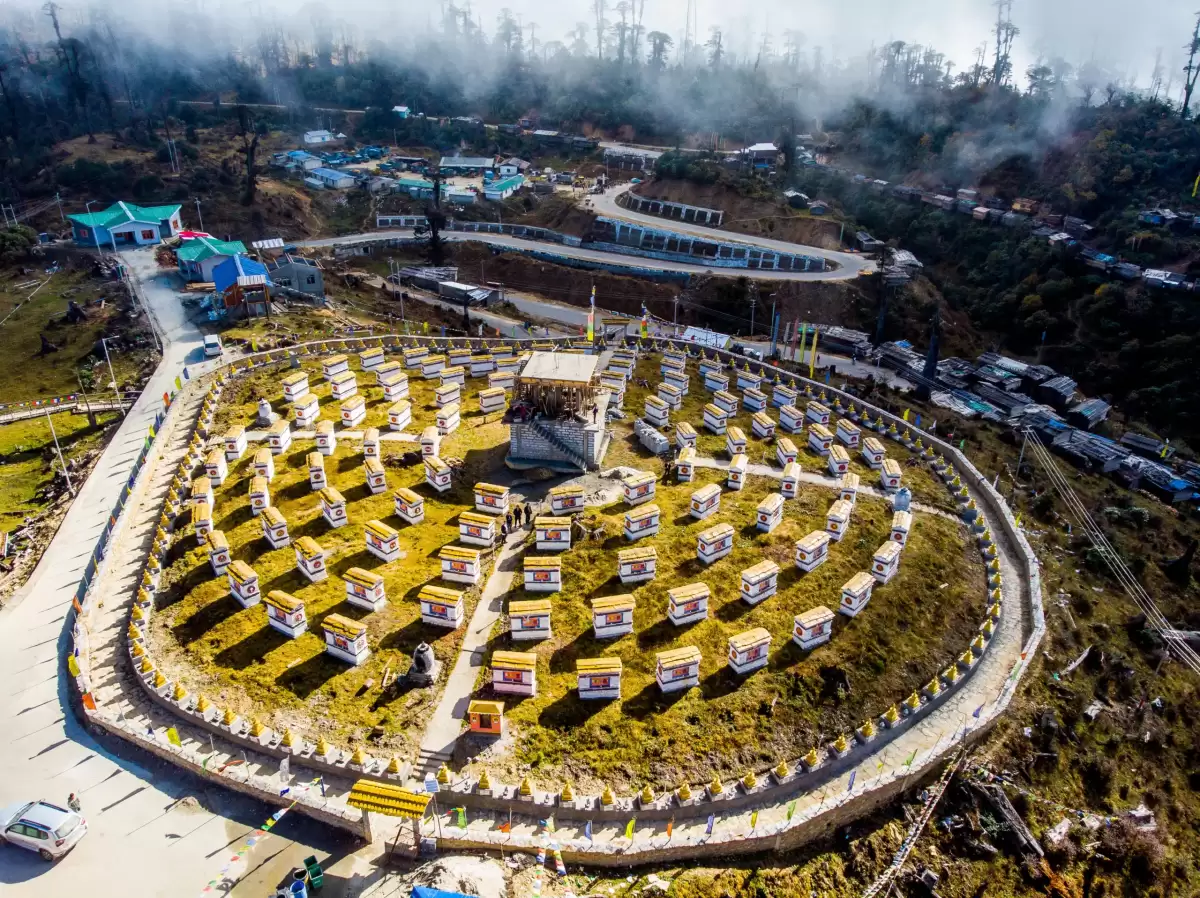
What makes Mandala Top distinct is its collection of 108 Buddhist stupas arranged across the hillside, combined with sweeping views of the Dirang Valley and the higher Himalayan ranges of Arunachal Pradesh.
History of Mandala Top Dirang
Mandala Top is a high-altitude viewpoint located near Dirang in Arunachal Pradesh and is primarily known for its cultural and spiritual significance rather than a documented historical legacy. The site gained prominence through the installation of 108 Buddhist stupas, which reflect the strong influence of Tibetan Buddhist traditions in the region.
Developed as a place for prayer, reflection, and scenic appreciation, Mandala Top symbolizes the Buddhist heritage of the Monpa community, which has shaped the culture and religious practices of western Arunachal Pradesh for centuries. The stupas and prayer structures at the site represent important elements of local spiritual traditions.
Today, Mandala Top serves as both a cultural landmark and a popular destination for visitors seeking panoramic views of the eastern Himalayas while experiencing the religious heritage of the Dirang region.
Best Time to Visit Mandala Top Dirang
Mandala Top is best visited from March to June and September to November when the weather is pleasant, roads are generally accessible, and visitors can enjoy clear views of the Eastern Himalayas along with the famous 108 Buddhist stupas.
- Ideal months: March to June and September to November are the most favorable months to visit Mandala Top, offering comfortable temperatures and excellent visibility.
- Weather conditions during the best season: Spring and autumn bring cool, crisp weather, clear mountain vistas, and ideal conditions for sightseeing, photography, and exploring the hilltop Buddhist complex.
- Periods to avoid: July and August can experience heavy monsoon rainfall, leading to fog, slippery roads, and reduced visibility. During peak winter from December to February, occasional snowfall, icy conditions, and dense fog may affect road access and sightseeing opportunities.
How to Reach Mandala Top Dirang
- Nearest Airport: Tezpur Airport, located approximately 190 km from Mandala Top, is the nearest airport. Many travelers also use Lokpriya Gopinath Bordoloi International Airport in Guwahati, about 340 km away, due to its wider flight connectivity.
- Nearest Railway Station: Rangapara North Railway Station, approximately 170 km away, is the nearest railway station. Tezpur and Guwahati serve as common transit points for onward road travel into Arunachal Pradesh.
- Road Access and Last-Mile Connectivity: Mandala Top is situated near Dirang in West Kameng district of Arunachal Pradesh and is accessible via a scenic mountain road branching off the Dirang–Sangti route. Private vehicles and local taxis can reach the viewpoint directly. The final approach is fully motorable, though the road includes steep gradients and winding mountain sections. Weather conditions, especially fog, rain, or occasional snowfall during winter, may affect visibility and travel times. An Inner Line Permit (ILP) is required for non-residents entering Arunachal Pradesh.
What to Expect When You Visit Mandala Top Dirang
- Environment and Surroundings: Mandala Top is a high-altitude viewpoint near Dirang, surrounded by pine forests, mountain ridges, and expansive Himalayan landscapes. The site is known for its 108 Buddhist stupas set against panoramic views of the Eastern Himalayas.
- Facilities and Amenities: Visitor facilities at the summit are limited. Basic parking and viewing areas are available, but food outlets, restrooms, and other amenities may not always be present, so carrying essentials is recommended.
- Accessibility and Movement: The site is accessible by a steep mountain road from Dirang. Visitors can reach the main stupa complex with minimal walking, although the high-altitude location and uneven terrain may require extra care during exploration.
- Visitor Conditions: Weather conditions can change rapidly, with fog, strong winds, rain, or low temperatures affecting visibility and comfort. Most visitors come for photography, sightseeing, and the peaceful atmosphere, with mornings generally offering clearer mountain views than later in the day.
Important Visitor Information for Mandala Top Dirang
- Mandala Top experiences the highest visitor numbers during weekends, public holidays, and the peak travel seasons of March to May and October to November.
- Early morning hours generally offer the clearest mountain views and the best opportunities to enjoy the 108 Buddhist stupas before larger visitor groups arrive.
- Weather conditions can change rapidly due to the high-altitude location. Fog, strong winds, and low temperatures are common, especially during winter and early morning hours.
- No specific dress code applies, but warm layered clothing, a windproof jacket, and comfortable footwear are strongly recommended throughout the year.
- Visitors should exercise caution on steep mountain roads leading to the viewpoint, remain within designated pathways around the stupas, and check weather conditions before travelling during winter or periods of heavy fog.
Photography and Viewpoints at Mandala Top Dirang
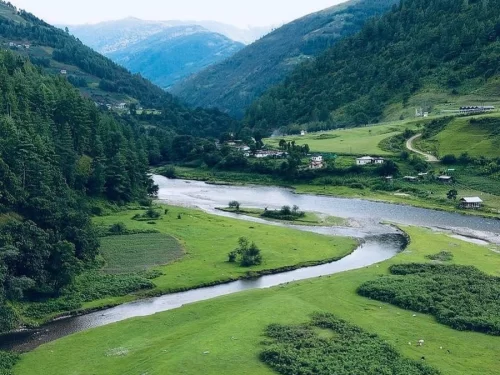
- Mandala Top is one of the finest panoramic viewpoints in the Dirang region, offering sweeping views of the Eastern Himalayas, forested valleys, and rolling mountain ridges from its high-altitude location.
- Early morning provides the clearest visibility and the best chance of photographing distant snow-clad peaks before clouds begin to gather over the mountains.
- The 108 Buddhist stupas spread across the hilltop create the most iconic photography compositions, especially when framed against the surrounding Himalayan landscape.
- Sunrise and late afternoon are particularly rewarding, as golden light enhances the colors of the stupas, prayer flags, and mountain scenery while creating dramatic shadows across the ridgelines.
- Several viewpoints around the hilltop allow photographers to capture wide-angle panoramas of Dirang Valley, dense conifer forests, and the winding mountain roads below.
- Photography is generally permitted throughout the public areas of the site, but visitors should remain respectful around religious structures and avoid climbing on stupas for photographs.
- Fog, clouds, and changing mountain weather can rapidly alter visibility, often creating atmospheric photography opportunities with drifting mist moving through the valleys.