Quick Facts About Dirang Hot Water Spring
| Entry Fee | Free |
| Timings | 06:00 - 18:00 |
| Altitude (m) | 1350 |
| Ideal Visit Duration (hrs) | 1 |
| Best Time of Day | Morning |
| Crowd Level | Low |
| Distance from City Centre (km) | 3 |
| Walking Difficulty | Easy |
| Parking Available | Yes |
| Last Mile Access | Walk |
| Suitable for Kids | Yes |
| Suitable for Seniors | Yes |
| Wheelchair Friendly | No |
Why Visit Dirang Hot Water Spring
Dirang Hot Water Spring is worth visiting for travelers interested in natural phenomena and local traditions. The warm, mineral-rich water provides a unique experience that combines relaxation with a glimpse into how locals use these springs for daily rituals and believed therapeutic benefits.
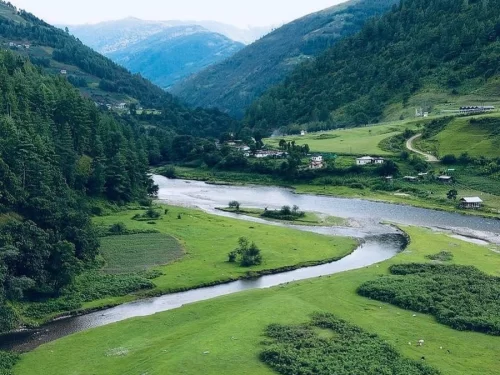
The atmosphere at the spring is calm and rustic, with minimal infrastructure and mostly natural surroundings. Visitors can enjoy the gentle steam rising from the water, the sound of nearby streams, and unobstructed views of the surrounding Himalayan foothills.
What makes this spring special is its accessibility and cultural significance. Unlike larger, commercialized hot springs, Dirang’s site remains largely unaltered, offering an authentic experience. The combination of natural warmth, mineral content, and connection to local beliefs makes it a subtle but memorable stop for those exploring the Dirang Valley.
History
Dirang Hot Water Spring has been a natural landmark for local communities for generations. Traditionally, locals have believed the spring’s mineral-rich waters possess therapeutic properties that help with joint pain and skin ailments.
The site also holds cultural significance, as villagers sometimes perform small rituals or offer prayers near the spring to honor nature and seek well-being. While it does not have a formal religious structure, the spring’s role in local customs highlights its importance in the daily life of the Dirang community.
Best Time to Visit Dirang Hot Water Spring
The best time to visit Dirang Hot Water Spring is during the cooler months from October to April, when weather conditions are stable and the surrounding valley offers clear views. During this period, the water temperature is comfortable, and walking paths are dry and safe.
Monsoon months (June to September) are less ideal, as heavy rains can make the path to the spring slippery and the site muddy. Early mornings or late afternoons are recommended for a quieter experience and better lighting for photography.
- October to November: Clear skies and mild weather, ideal for walking and photography
- December to February: Cooler temperatures, fewer visitors, calm surroundings
- March to April: Pleasant weather with early spring greenery in the surrounding valley
- Early morning or late afternoon visits offer the most peaceful experience
How to Reach Dirang Hot Water Spring
- By Road: The spring is located about 3 km from Dirang town and is easily accessible via a short motorable road followed by a brief walk. Private vehicles or taxis from Dirang town can reach the site directly.
- From Bomdila: Approximately 42 km via NH13, which takes around 2 hours by car depending on road conditions.
- By Rail: The nearest railway station is Rangapara North in Assam. From there, travelers must continue by road to Dirang.
- By Air: The closest airport is Lokpriya Gopinath Bordoloi International Airport in Guwahati, around 320 km away. The remaining journey is by road via Tezpur to Dirang.
- Walking Access: A short, easy walk from the parking area leads to the spring; the path is mostly flat but can be uneven in places.
What to Expect When You Visit Dirang Hot Water Spring
- Warm, naturally heated water emerging from the Himalayan foothills, forming small pools suitable for soaking feet or hands.
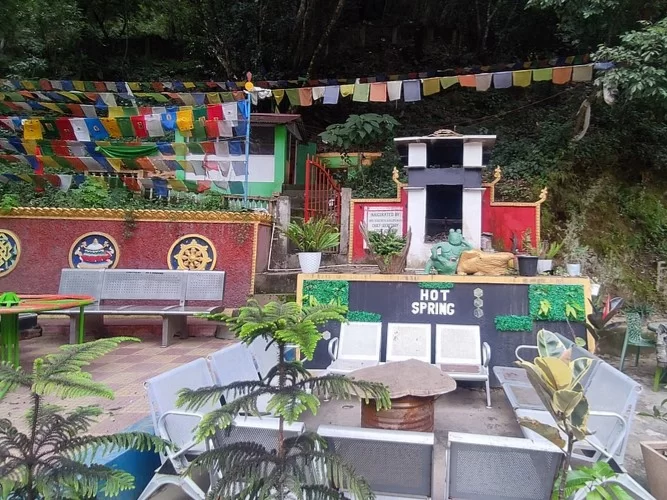
- Minimal facilities; mostly natural surroundings with a few basic structures for safety and convenience.
- Calm environment with low visitor numbers, offering a peaceful stop amid Dirang Valley exploration.
- Locals occasionally performing small rituals or bathing in the spring, reflecting its cultural significance.
- Uneven and wet terrain near the pools; visitors should wear sturdy footwear and exercise caution.
- Opportunities for photography of the steam rising from the water, natural pools, and surrounding Himalayan backdrop.
Important Visitor Information
- Crowd & Weather Notes: The spring is generally uncrowded, even during peak tourist season. Weather can change quickly, with occasional rain or fog reducing visibility and making the ground slippery.
- Peak / Quiet Hours: Early mornings and late afternoons are the quietest times to visit, while mid-day may see local visitors coming to bathe or perform rituals.
- Dress Code: Casual, modest clothing is appropriate. Avoid slippery sandals or flip-flops due to wet rocks near the pools.
- Safety Notes: Watch your footing on wet and uneven surfaces. Children should be supervised at all times, and visitors should avoid entering deeper pools where water temperature may be higher.
Photography and Viewpoint
- The spring offers natural photographic opportunities with steam rising from mineral-rich waters against the backdrop of Dirang Valley and surrounding Himalayan foothills.
- Early morning is the best time for photography, as mist and soft sunlight create a dramatic and serene effect.
- Close-up shots of the natural pools and bubbling water highlight the geothermal activity and mineral deposits.
- Wide-angle shots can capture the spring in context with surrounding greenery, hills, and small local pathways leading to the site.
- Photography indoors is not applicable as the site is entirely outdoors, allowing unobstructed natural compositions.
- Tripods are optional but useful for low-light morning or late afternoon shots, given uneven surfaces for stable placement.