Dirang Dzong Arunachal Pradesh

Dirang Dzong , Dirang
Dirang Dzong is located near Dirang town in West Kameng district and dates back to the 17th century. Built with thick stone walls, narrow passages, and elevated watch points, the fort reflects the defensive architecture used in the eastern Himalayan region. Although parts of the structure are now weathered, the main walls and layout remain clearly visible. The dzong overlooks the Dirang Chu river and surrounding valley, making it both strategically placed and visually striking. The site is not heavily maintained for tourism, so visitors should expect uneven surfaces and minimal facilities.

Quick Facts About Dirang Dzong

Entry Fee Free
Timings 08:00 - 17:00
Altitude (m) 1550
Ideal Visit Duration (hrs) 1
Best Time of Day Morning
Crowd Level Low
Distance from City Centre (km) 1
Walking Difficulty Moderate
Parking Available No
Last Mile Access Walk
Suitable for Kids Yes
Suitable for Seniors No
Wheelchair Friendly No

Why Visit Dirang Dzong

Dirang Dzong is worth visiting if you are interested in history that is still embedded in the landscape rather than presented in a museum setting. The fort offers a tangible sense of how communities in the eastern Himalayas organized defense and administration centuries ago. It is a short visit but adds depth to any stop in Dirang Valley.

The atmosphere inside the dzong is quiet and slightly rugged. There are no crowds, ticket counters, or guided tours. Wind moves through the stone corridors, and the sounds from the valley below carry up faintly. The lack of heavy restoration gives the place an authentic feel, but it also means visitors need to move carefully.

What makes Dirang Dzong special is its location and construction. Built with locally sourced stone and positioned above the Dirang Chu river, it shows how natural terrain was used for defense. The elevated views over the valley help explain why this site mattered strategically. For travelers who appreciate raw historical sites rather than polished attractions, the dzong stands out.

History

Dirang Dzong dates back to the 17th century and was constructed as a fortified administrative center for the region. It served as a defensive structure to protect local communities and control movement along the Dirang Chu valley, which was an important route connecting different parts of the eastern Himalayas. The thick stone walls, narrow entry points, and elevated position reflect the security needs of that period.

The dzong was traditionally managed by local Monpa authorities and functioned as both a governance hub and a refuge during conflicts. Its layout allowed residents to store supplies and take shelter when needed. Unlike later colonial-era forts, Dirang Dzong was built entirely using local materials and techniques suited to the terrain and climate.

While it does not hold active religious significance today, the dzong remains culturally important to the local Monpa community as a symbol of self-governance and regional identity. Its continued presence, despite limited restoration, offers insight into how political control and daily life were organized in Arunachal Pradesh before modern administrative systems were introduced.

Best Time to Visit Dirang Dzong

The best time to visit Dirang Dzong is from October to April, when weather conditions are stable and access paths are dry. During this period, the valley remains largely clear, and the stone surfaces inside the dzong are safer to walk on. Daytime temperatures are comfortable for exploring the site without rushing.

Winter months from December to February are colder but still suitable for visiting. Mornings and late afternoons can be chilly, but the lack of rain makes movement inside the fort easier. From June to September, heavy monsoon rainfall can make stone steps slippery and reduce visibility, which affects both safety and the overall experience.
  • October to November offers clear skies and good valley views
  • March to April provides mild temperatures and easier walking conditions
  • Midday visits are safer in winter due to warmer temperatures
  • Monsoon season is not recommended due to slippery surfaces

How to Reach Dirang Dzong

  • By Road: Dirang is located on the Balipara Charduar Tawang Road, which connects Assam to western Arunachal Pradesh. The drive from Tezpur in Assam to Dirang is about 140 km and usually takes 5 to 6 hours depending on road and weather conditions.
  • Local Access: Dirang Dzong is situated roughly 1 km from Dirang town. Vehicles can be parked along the roadside near the approach path, after which a short walk leads to the fort entrance.
  • By Rail: The nearest practical railway station is Rangapara North Railway Station in Assam. From the station, travelers must continue by road to Dirang via shared taxis or private vehicles.
  • By Air: The nearest airport with reliable connectivity is Lokpriya Gopinath Bordoloi International Airport in Guwahati, around 320 km away. Travel from Guwahati to Dirang is entirely by road.
  • Travel Permits: Indian citizens require an Inner Line Permit to enter Arunachal Pradesh. Foreign nationals need a Protected Area Permit, which must be arranged in advance.

What to Expect When You Visit Dirang Dzong

  • A partially preserved stone fort with visible outer walls, inner courtyards, and narrow passages that reflect its defensive purpose.
  • Uneven stone steps, broken sections, and open edges, requiring careful movement throughout the site.
  • Quiet surroundings with little to no crowd, as the dzong is not a heavily promoted tourist attraction.
  • Clear views of the Dirang Chu river and surrounding valley from elevated sections of the fort.
  • No on-site facilities such as restrooms, information boards, or guided services.
  • An unregulated visit experience, allowing visitors to explore freely but with personal responsibility for safety.

Important Visitor Information

  • Crowd and Weather Notes: Dirang Dzong remains lightly visited throughout the year, with most visitors arriving during the late morning. Weather can shift quickly, especially outside winter, with occasional fog or light rain affecting visibility and stone surfaces.
  • Peak and Quiet Hours: Peak hours are between 10:00 AM and 12:00 PM when tour vehicles passing through Dirang make brief stops. Early morning and late afternoon are usually quiet, though late afternoons can be colder.
  • Dress Code: No formal dress code applies, but sturdy footwear with good grip is important due to uneven stone paths. Light jackets are recommended even in warmer months, and heavier layers are necessary in winter.
  • Safety Notes: The dzong has no protective railings in many sections. Visitors should avoid standing near broken edges and should not climb unstable walls. During or after rain, stone steps can become slippery and should be navigated slowly.

Photography and Viewpoint

  • Dirang Dzong offers strong photography opportunities due to its elevated position above the Dirang Chu river and the surrounding valley.
  • Morning light is best for photography, as it illuminates the stone walls and reduces shadow inside the fort structures.
  • Wide-angle shots work well to capture the scale of the dzong and its relationship with the landscape below.
  • There are no marked viewpoints or safety barriers, so photographers need to be cautious near edges and broken sections.
  • Cloud movement and mist can add atmosphere, but visibility can change quickly, requiring patience and timing.
  • Tripods can be used, but uneven ground makes stable placement difficult in some areas.

Near By Attraction

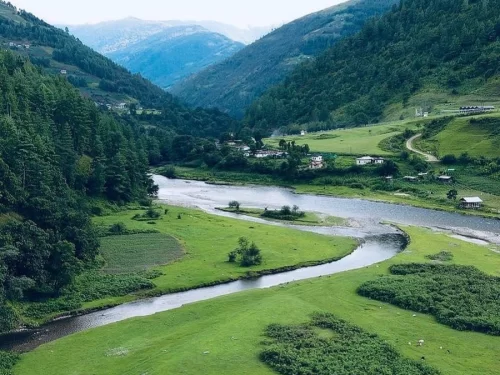
Sangati Valley scenic green valley with winding river and lush hills creating a picturesque landscape in Arunachal Pradesh Tour Package. Valley

Sangti Valley

Sangti Valley Dirnah is a tranquil Himalayan valley near Dirang, known for its scenic beauty, river views, and seasonal birdwatching opportunities.

Dirang Chu River pristine mountain river flowing through scenic valleys and pine forests in Arunachal Pradesh Package. River

Dirang Chu River

Dirang Chu River is a mountain river flowing through the town of Dirang in West Kameng district of Arunachal Pradesh, India.

Dirang Hot Water Spring in Arunachal Pradesh natural thermal bath surrounded by prayer flags and hills Hot Spring

Dirang Hot Water Spring

Dirang Hot Water Spring is a natural geothermal spring in Dirang known for its warm mineral-rich waters and local ritual significance.

Frequently Asked Questions About Dirang Dzong

Dirang Dzong is located in Dirang in West Kameng district of Arunachal Pradesh on a hill overlooking the Dirang valley. It is a traditional fortified settlement built with stone and wood.
Dirang Dzong can be reached within 10 to 15 minutes by road or short walk from Dirang town center. The final stretch involves walking through narrow village lanes.
The best time to visit Dirang Dzong is between October and April when the weather remains clear and pleasant for exploring. Winter offers scenic mountain views though temperatures can be low.
Dirang Dzong is popular for its traditional architecture narrow pathways and elevated views of the valley. Travelers visit to experience the historic style of Monpa settlement.
Dirang Dzong is suitable for family visits during daytime though it involves walking on uneven stone paths. Comfortable footwear is recommended for easier movement.
There are several homestays and hotels available in Dirang near Dirang Dzong. Many travelers stay in Dirang town and include the dzong in their sightseeing plan.
Dirang Dzong has limited facilities as it is a traditional settlement rather than a developed tourist site. Restaurants and other amenities are available in Dirang town.
Most travelers spend 45 minutes to one hour exploring Dirang Dzong and enjoying valley views. It is usually included as part of a half day Dirang itinerary.
Dirang Dzong remains accessible during winter but cold weather and occasional frost may affect walking comfort. Checking local weather updates before visiting is advisable.
Travelers visiting Dirang Dzong should carry warm layered clothing comfortable footwear and drinking water. Respecting local homes and maintaining cleanliness is important.

Loved this place ? Let’s Plan Your Arunachal Pradesh Trip

Get customized Arunachal Pradesh tour planning designed around mountain road distances, permit requirements, seasonal weather windows, and realistic travel pacing. Whether you are visiting for monasteries, high-altitude passes, river valleys, tribal cultu

⚑ Quick Response | πŸ’° Free consultation | πŸ•’ 24Γ—7 expert support

×

Plan Your Trip