+91 9910402252
admin@chalbanjare.com


| Entry Fee | Free |
| Timings | 06:00 - 17:30 |
| Altitude (m) | 300 |
| Ideal Visit Duration (hrs) | 1 |
| Best Time of Day | Morning |
| Crowd Level | Low |
| Distance from City Centre (km) | 5 |
| Walking Difficulty | Moderate |
| Parking Available | Yes |
| Last Mile Access | Road |
| Suitable for Kids | Yes |
| Suitable for Seniors | No |
| Wheelchair Friendly | No |
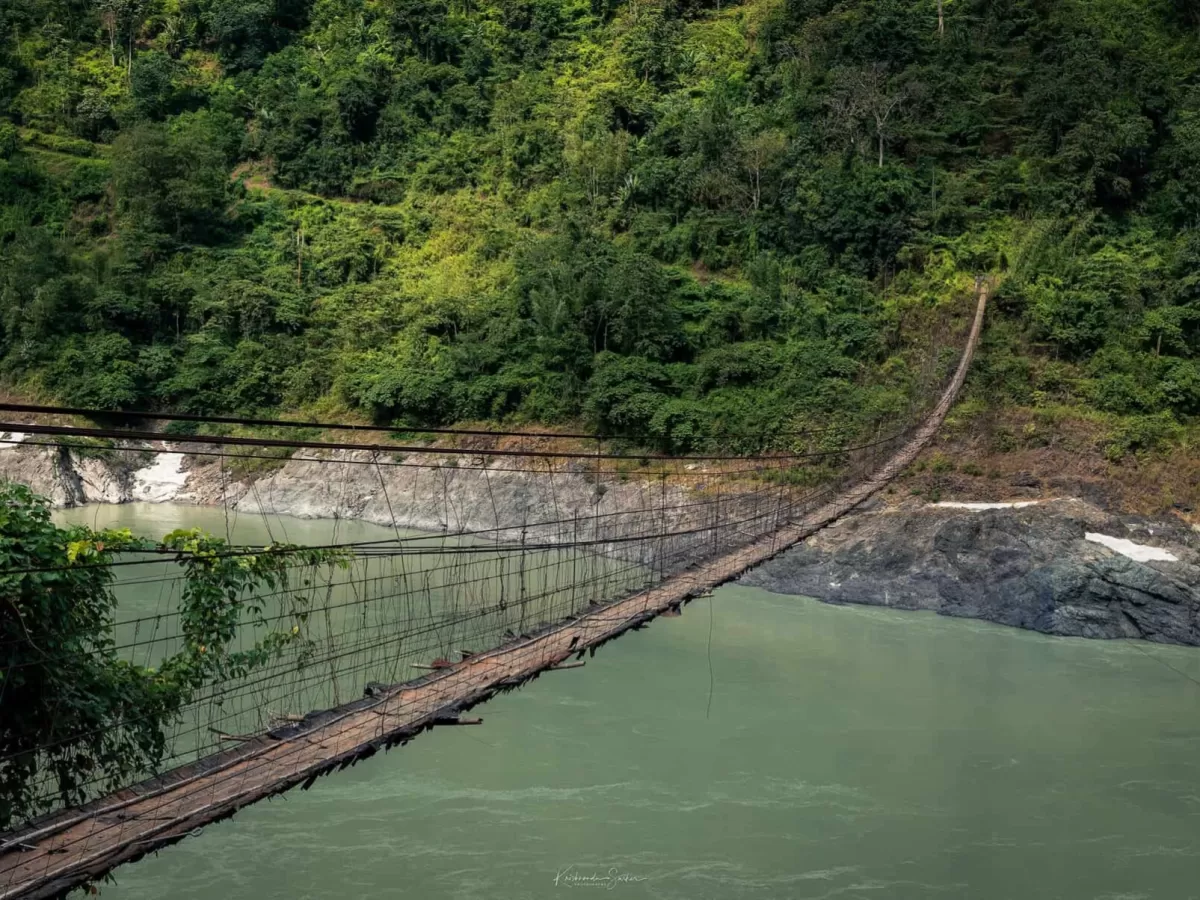
Visitors are drawn to the Along Hanging Bridge to experience the architectural ingenuity of the Adi and Galo tribes, who have perfected the art of building long-span suspension bridges using only organic materials. Spanning the powerful Yomgo River, this bridge is a primary destination for those looking to test their nerves on a structure that sways with every step, offering an unfiltered connection to indigenous Himalayan engineering.
The on-ground atmosphere is defined by a sense of precarious adventure balanced by local nonchalance. While travelers often grip the wire-reinforced bamboo railings tightly, they will share the narrow path with local villagers effortlessly carrying heavy baskets of produce; the experience is heightened by the rushing sound of the river 60 feet below and the intricate, interlaced patterns of the cane floor through which the water is clearly visible.
What makes this bridge distinct is its authentic functional status; it is not a tourist attraction, but a vital lifeline connecting remote agricultural settlements to the town. Unlike modern steel bridges, it requires constant community maintenance and reflects a seasonal relationship with the environment, providing travelers with a rare, tactile example of how traditional mountain societies navigate a landscape of deep gorges and high-volume rivers.
The Along Hanging Bridge is a definitive example of indigenous Galo engineering, constructed entirely from traditional materials including cane, bamboo, and wire. Spanning the Siang River, this suspension structure serves as a vital pedestrian artery connecting Aalo town with the surrounding agrarian villages. Unlike modern steel counterparts, this bridge requires periodic communal maintenance, reflecting a living tradition of tribal cooperation where local residents gather to reinforce the woven footpaths and support structures using ancient binding techniques.
The bridge is culturally significant as it facilitates the daily transit of local farmers transporting harvest and livestock, maintaining the socio-economic link between the urban center and rural homesteads. For visitors, the structure offers a sensory experience of the region's topography, characterized by the rhythmic swaying of the bamboo deck and a direct view of the powerful Siang currents below. It stands as a testament to the sustainable use of forest resources, showcasing how the Adi and Galo communities have historically navigated the challenging Himalayan river systems without disrupting the ecological balance.
The Along Hanging Bridge, spanning the turbulent Siyom River, is a masterpiece of indigenous cane and bamboo engineering that is best experienced when the river is low and the structure is most stable. Because this is a traditional suspension bridge, the tactile experience of crossing is highly dependent on dry conditions to ensure the organic materials provide secure footing.
The Along Hanging Bridge (Aalo Hanging Bridge) is a traditional cane and bamboo suspension structure spanning the Siang River near Aalo in Arunachal Pradesh. Accessing this site requires traveling to the West Siang district, a journey involving mountain highways and river-valley roads.
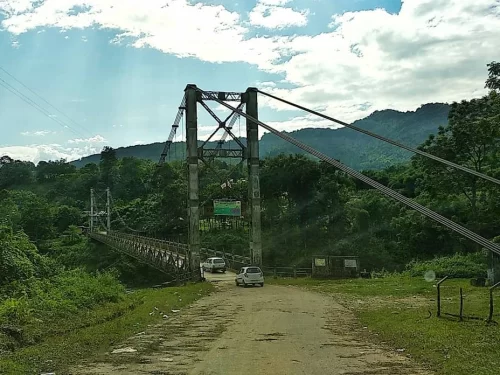 suspension bridge
Patum Bridge in Aalo, West Siang, Arunachal Pradesh, India Patum Bridge is a 146-meter-long cable-stayed suspension bridge that spans the Yomgo River (Siyom River) near the town of Aalo.
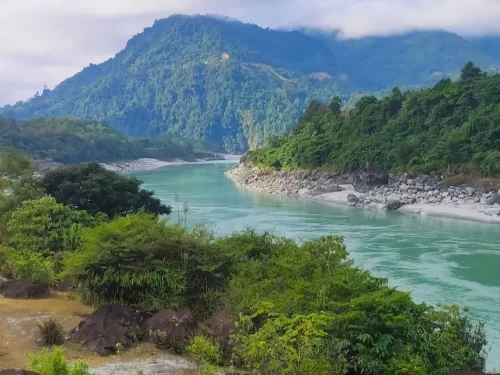 River
River
The Siang Riverfront is a natural riparian area along the banks of the Siang River, the primary tributary of the Brahmaputra, located at the eastern foothills of the Himalayas.
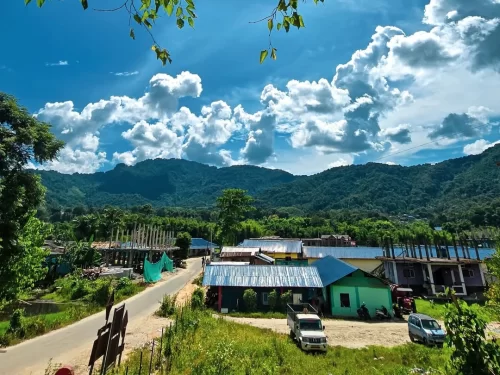 Hill Station
Aalo is a valley town and the administrative headquarters of the West Siang district, located at the junction of the Sipu and Siyom rivers.
Get customized Arunachal Pradesh tour planning designed around mountain road distances, permit requirements, seasonal weather windows, and realistic travel pacing. Whether you are visiting for monasteries, high-altitude passes, river valleys, tribal cultu
⚡ Quick Response | 💰 Free consultation | 🕒 24×7 expert support

