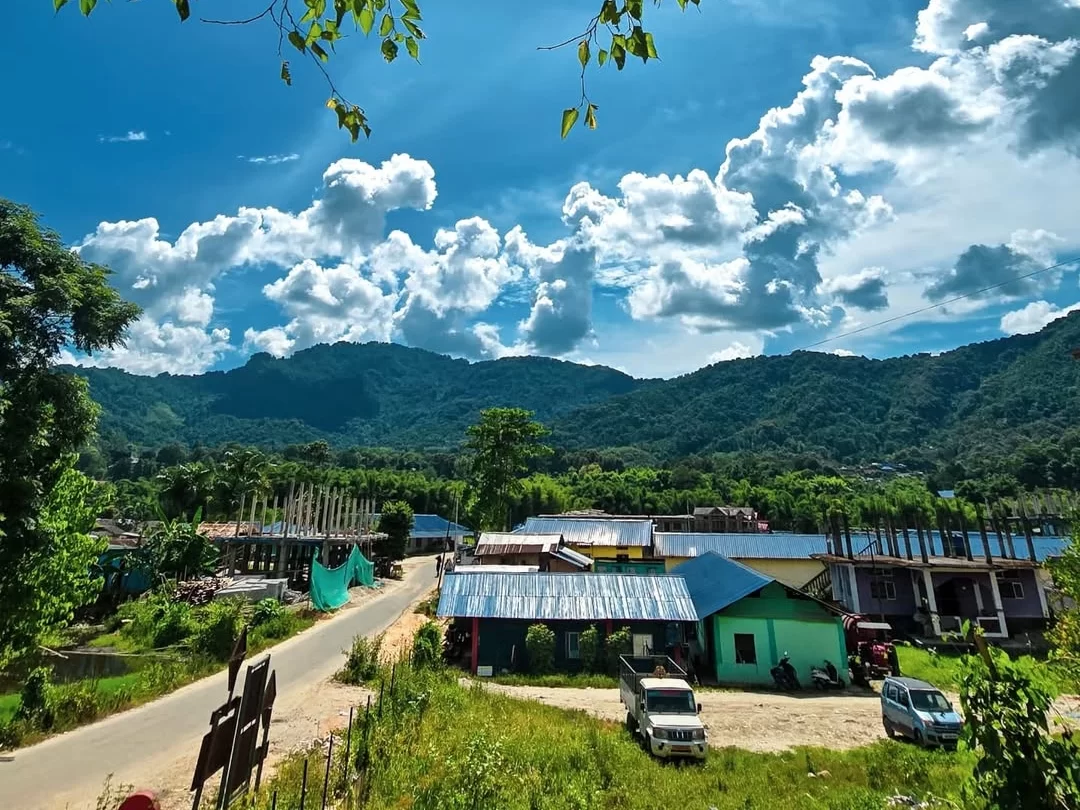
Aalo Town in West Siang, Arunachal Pradesh, India

Aalo Town , Aalo
Tourists visit the town to observe the traditional lifestyle of the Galo tribe, explore local orange orchards, and access outdoor activities like river rafting and trekking in the surrounding Himalayan foothills. It acts as a central transit point for travelers moving toward the higher-altitude Mechuka Valley.

Quick Facts About Aalo Town

Entry Fee Free
Timings 00:00 - 23:59
Altitude (m) 300
Ideal Visit Duration (hrs) 48
Best Time of Day Morning
Crowd Level Moderate
Distance from City Centre (km) 0
Walking Difficulty Easy
Parking Available Yes
Last Mile Access Road
Suitable for Kids Yes
Suitable for Seniors Yes
Wheelchair Friendly No

Why Visit Aalo: The Gateway to Galo Heritage

Aalo, formerly known as Along, serves as the primary gateway for travelers looking to immerse themselves in the authentic tribal lifestyle of the Galo people. Visitors are drawn to the town’s proximity to traditional bamboo-and-thatch villages like Darka and Kabu, where community-driven living and the indigenous Donyi-Polo faith remain central to daily life rather than being staged for tourism.

The on-ground atmosphere is defined by the rhythmic flow of the Sipu and Yomgo Rivers, offering a rugged, unhurried pace far removed from the commercial hubs of Northeast India. The environment is characterized by suspension bridges swaying over turquoise waters, verdant orange orchards, and the sound of local markets where weavers and farmers trade handmade cane goods and fermented bamboo shoots.

Aalo is distinct for its intersection of high-altitude river adventures and cultural preservation. It provides a rare opportunity to witness the Mopin festival’s rituals firsthand and explore the unique architecture of Galo longhouses, which are built without a single metal nail, offering a level of ethnographic depth that is increasingly difficult to find in the more accessible regions of Arunachal Pradesh.

History and Cultural Heritage of Aalo Town

Aalo, formerly known as Along, serves as the headquarters of the West Siang district in Arunachal Pradesh and is a primary center for the Galo people. The town's significance is deeply rooted in the Donyi-Polo tradition, an indigenous animistic belief system centered on the worship of the Sun (Donyi) and the Moon (Polo). This spiritual heritage is physically anchored by the Donyi-Polo Temple, which serves as a focal point for community gathering and the preservation of Galo rituals.

The cultural identity of the town is defined by its tribal architecture and the Mopin festival, celebrated annually in April to ensure a successful harvest and drive away evil spirits. Visitors experience a landscape shaped by the confluence of the Sipu and Siyam rivers, where traditional bamboo bridge construction and terraced agricultural practices reflect a historical adaptation to the Himalayan foothills. The social structure remains centered around the "Bane Kebang" (village council), maintaining a traditional governance system that has dictated communal life for generations.

Best Time to Visit Aalo: A Seasonal Guide for West Siang

Located in the river-carved valleys of Arunachal Pradesh, Aalo (formerly Along) is best experienced when the Siyom River is calm and the tribal festivals are in full swing. Because the town sits at a lower elevation than the high-altitude passes, it remains accessible most of the year, though monsoon intensity can severely compromise the rugged road networks leading into the West Siang district.

  • Ideal Months: October to April is the prime window, with January specifically recommended for those wishing to witness the Mopin Festival of the Galo tribe.
  • Weather Conditions: During the post-monsoon and winter months, you will encounter clear blue skies, minimal haze for photography, and daytime temperatures ranging from 15°C to 25°C, though nights require heavy woolens as temperatures drop sharply.
  • Periods to Avoid: June to September should be avoided due to the South Asian monsoon, which frequently triggers landslides on the Likabali-Aalo road and causes the Siyom River to swell, rendering river-side activities and suspension bridge crossings unsafe.

How to Reach Aalo Town: Essential Access & Connectivity Guide

Aalo (formerly Along), the headquarters of the West Siang district in Arunachal Pradesh, serves as a vital cultural gateway and a primary stopover for travelers heading toward Mechuka. Due to its remote Himalayan location, reaching Aalo requires navigating a combination of Assam’s plains and Arunachal’s rugged mountain terrain.

  • Nearest Airport: Pasighat Airport (IXT) is the closest domestic airstrip, located approximately 105 km away, with regional flights from Guwahati and Kolkata. However, Dibrugarh Airport (DIB) in Assam (approx. 200 km) is the preferred choice for most tourists due to superior flight frequency and better reliability.
  • Nearest Railway Station: Silapathar Railway Station in Assam is the closest railhead, situated about 150 km from Aalo. For broader nationwide connectivity, travelers often use Dibrugarh Railway Station or Murkongselek Station (130 km), followed by a road journey.
  • Road Access & Last-Mile Connectivity: Aalo is well-connected via the Trans-Arunachal Highway. Regular Arunachal Pradesh State Transport (APSTS) buses and "Line Sumos" (shared taxis) operate daily from Itanagar (300 km), Pasighat (105 km), and Silapathar. Private vehicle hire is highly recommended for flexibility across the winding mountain roads.
  • Travel Permits: All non-residents must obtain an Inner Line Permit (ILP) for Indian citizens or a Protected Area Permit (PAP) for foreign nationals to enter Arunachal Pradesh; these are checked at entry gates like Likabali or Ruksin.
  • Realistic Travel Conditions: Road conditions vary significantly by season. While the main highway is generally paved, frequent landslides during the monsoon (June–September) can cause sudden blockages. Travel times are often longer than distances suggest due to steep gradients and narrow hairpin bends.

Traveler Tip: Aim to reach the entry gates before 4:00 PM, as daylight fades early in Northeast India and mountain driving after dark is discouraged due to limited visibility and lack of roadside amenities.
What to Expect When You Visit Aalo Town

  • Environment and Surroundings: Located in the West Siang district of Arunachal Pradesh, Aalo (formerly Along) is situated in a river valley at an elevation of approximately 300 meters. The town is surrounded by orange orchards and the Sipu and Yomgo rivers. Expect a humid subtropical climate where heavy monsoon rains from June to September frequently cause landslides on the access roads from Pasighat or Silapathar.
  • Facilities and Amenities: Tourism infrastructure is basic. Accommodations primarily consist of modest guesthouses and homestays rather than luxury hotels. Electricity supply can be inconsistent, and while 4G connectivity exists, data speeds are often slow or intermittent. ATMs are available in the main market area but frequently run out of cash; carrying physical currency is essential for local transactions.
  • Accessibility and Movement: Reaching Aalo involves long journeys—often 7 to 10 hours—over mountainous terrain via North Lakhimpur or Pasighat. Roads are frequently under repair and can be extremely dusty or muddy depending on the season. Within the town, shared sumos and auto-rickshaws are the primary modes of transport. Foreign nationals must possess a Protected Area Permit (PAP), and Indian tourists require an Inner Line Permit (ILP) to enter the region.
  • Typical Visitor Behavior and Conditions: The town serves as a cultural hub for the Galo tribe. Visitors should expect a conservative social environment where life slows down significantly after sunset. Local markets close early, and there is no nightlife. It is customary to seek permission before photographing tribal elders or traditional "Mopin" festival rituals. Expect a high degree of local curiosity, as international tourism volume remains relatively low.

Important Visitor Information for Aalo Town: An Expert Travel Guide

  • Crowd & Weather Realities: Aalo remains largely uncrowded and off the beaten path. The climate is most favorable from October to April; however, the monsoon season (June to September) brings heavy rainfall that frequently causes unpredictable landslides on the Basar-Aalo road, potentially disrupting travel plans.
  • Peak & Quiet Hours: To witness the vibrant local culture, visit the Patum Bridge area and the local markets between 07:00 and 09:00. The town follows "early to bed, early to rise" cycles, with most commercial activity winding down by 19:00.
  • Dress Code & Cultural Etiquette: There is no formal dress code, but sturdy, waterproof hiking boots are essential for exploring the surrounding Galo villages. When visiting the Donyi-Polo temples, maintain a quiet demeanor and always ask for permission before photographing village elders or traditional granaries.
  • Safety & Logistics: Foreign nationals must possess a valid Protected Area Permit (PAP), while Indian tourists require an Inner Line Permit (ILP) to enter. Road conditions can be grueling; utilizing a high-clearance 4x4 vehicle is strongly advised. Be cautious of "dimdam" (tiny biting flies) near the Sipu and Yomgo rivers—wear long sleeves and apply insect repellent.

Capturing the Sylvan Beauty of Aalo Town: A Photographer’s Guide

  • The Patum Bridge Panorama: This iron cable bridge over the Sipu River offers the best vantage point for long-exposure shots of the river's flow against the backdrop of the Eastern Himalayas. Visit during early morning (05:30 – 06:30) when the valley mist frequently settles over the water, creating a natural soft-box effect for landscape photography.
  • Darka Village Perspective: As one of the largest and most well-preserved Galo tribal villages, Darka provides exceptional opportunities for architectural and ethnographic photography. Focus on the bamboo and cane craftsmanship of the traditional houses. Mid-morning light is ideal here to capture the intricate textures of the thatch without the harsh shadows cast by the surrounding hills.
  • Sipu and Yomgo River Confluence: For wide-angle dramatic landscapes, the meeting point of these two rivers offers a stark contrast in water velocity and color. The elevation from the surrounding banks allows for "rule of thirds" compositions featuring the pebble-lined shores and the dense subtropical evergreen forests.
  • Cultural Photography Protocol: When photographing the Galo people, particularly elders in traditional attire or during the Mopin Festival, verbal consent is mandatory. It is considered respectful to engage in brief conversation before taking portraits. Avoid photography inside the Donyi-Polo Dere (community prayer halls) during active rituals unless explicitly permitted by the local priest (Nyibu).
  • Lighting and Seasonal Constraints: Due to the high humidity and valley geography, "Golden Hour" is significantly shorter in Aalo than in the plains. Plan for your primary shots at least 45 minutes before the official sunset, as the sun dips behind the high ridges early, casting the town into deep shadow.
  • Access and Crowd Factors: Unlike the heavy tourist hubs of Tawang, Aalo remains relatively quiet. However, photography near the Aalo Military Cantonment areas is strictly prohibited. Ensure your camera is pointed away from any security infrastructure or bridges marked with "No Photography" signs to avoid equipment inspection by local authorities.

Near By Attraction

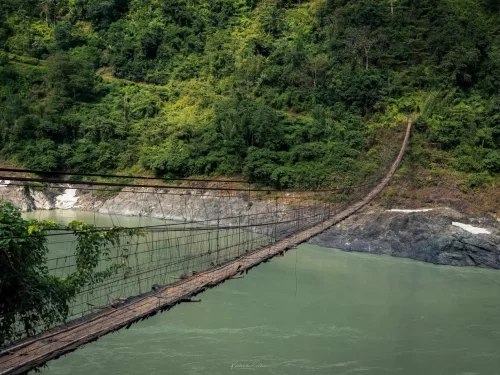
Along Hanging Bridge over Siang River in Aalo, Arunachal Pradesh surrounded by lush green hills suspension bridge

Along Hanging Bridge

The Along Hanging Bridge is a traditional suspension structure constructed of bamboo and cane that spans the Siyom River.
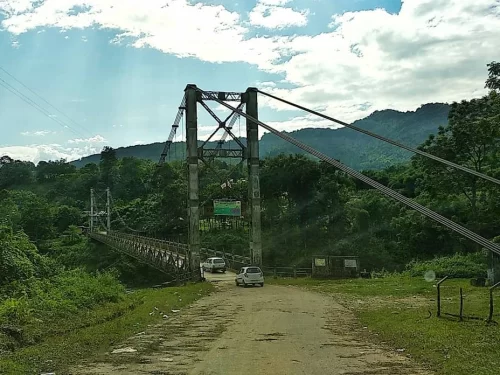
Patum Bridge historic suspension bridge connecting scenic green hills and river landscape in Arunachal Pradesh Tour Package. suspension bridge

Patum Bridge

Patum Bridge in Aalo, West Siang, Arunachal Pradesh, India Patum Bridge is a 146-meter-long cable-stayed suspension bridge that spans the Yomgo River (Siyom River) near the town of Aalo.
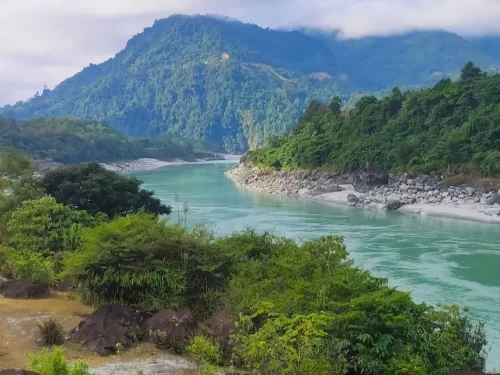
Siang Riverfront scenic turquoise river flowing through lush green hills and rocky banks in Arunachal Pradesh Tour Package. River

Siang Riverfront

The Siang Riverfront is a natural riparian area along the banks of the Siang River, the primary tributary of the Brahmaputra, located at the eastern foothills of the Himalayas.

Frequently Asked Questions About Aalo Town

Aalo Town is located in West Siang district of Arunachal Pradesh along the banks of the Siyom River. It serves as the administrative and commercial center of the district.
Aalo Town can be reached by road from Pasighat in about 5 to 6 hours depending on road and weather conditions. Private vehicles and shared taxis are the most common travel options.
The best time to visit Aalo Town is between October and April when the weather remains pleasant and suitable for sightseeing. Monsoon months bring heavy rainfall and possible road disruptions.
Aalo Town is popular for its river views hanging bridges and as a base for exploring nearby villages and natural attractions. Many travelers include it in a broader Arunachal road trip.
Aalo Town is suitable for family trips as it offers easy road access and short sightseeing options within and around the town. Most attractions require minimal physical effort.
There are hotels guesthouses and small lodges available in Aalo Town offering basic to mid range accommodation. Advance booking is recommended during peak travel seasons.
Aalo Town has essential facilities including local markets restaurants medical services and banks. It serves as a convenient stop with better amenities compared to smaller nearby villages.
Most travelers spend one to two nights in Aalo Town to explore nearby attractions and relax. It is commonly used as a transit point while traveling across West Siang district.
Aalo Town remains accessible during monsoon season but heavy rainfall may affect road conditions and travel time. Checking weather updates before departure is advisable.
Travelers visiting Aalo Town should carry comfortable clothing drinking water and light rain protection during wet months. Carrying necessary travel permits for Arunachal Pradesh is also important.

Loved this place ? Let’s Plan Your Arunachal Pradesh Trip

Get customized Arunachal Pradesh tour planning designed around mountain road distances, permit requirements, seasonal weather windows, and realistic travel pacing. Whether you are visiting for monasteries, high-altitude passes, river valleys, tribal cultu

⚑ Quick Response | πŸ’° Free consultation | πŸ•’ 24Γ—7 expert support

×

Plan Your Trip