Hanuman Chatti, Badrinath, Chamoli, Uttarakhand, India

Hanuman Chatti Badrinath , Badrinath
Tourists visit Hanuman Chatti to see the temple associated with Hindu mythology, take a short break before visiting Badrinath or Mana Village, and enjoy views of the surrounding Himalayan landscape. It is a popular stop for pilgrims and road travelers exploring the upper Alaknanda Valley.

Quick Facts About Hanuman Chatti Badrinath

Quick Facts About Hanuman Chatti Badrinath

Detail Information
Entry Fee No entry fee.
Timings Open throughout the day. Daylight hours are recommended for sightseeing and road travel.
Altitude (m) Approximately 2,400 m above sea level.
Ideal Visit Duration 20 to 45 minutes.
Best Time of Day Morning to early afternoon, when visibility is generally clear and traffic is lighter.
Crowd Level Moderate during the Char Dham pilgrimage season; otherwise generally low.
Distance from City Centre (km) Approximately 12 km from Badrinath.
Walking Difficulty Easy. The roadside temple and viewpoint require only a short walk from the parking area.
Parking Available Limited roadside parking is available.
Last Mile Access Directly accessible by road on the Badrinath–Joshimath highway, followed by a short walk.
Suitable for Kids Yes, with adult supervision near the river and roadside.
Suitable for Seniors Yes, provided they are comfortable with the high-altitude environment.
Wheelchair Friendly Partially. Road access is available, but uneven surfaces and steps may limit wheelchair movement.

Why Visit Hanuman Chatti Badrinath

Hanuman Chatti Badrinath is visited mainly as a short spiritual stop on the Joshimath Badrinath road, about 11 km before Badrinath Temple. Pilgrims stop here to offer prayers at the small Hanuman temple before continuing toward Badrinath Dham.

The atmosphere is quiet, roadside, and devotional, with mountain traffic, river sounds, and brief pilgrim halts shaping the experience. It is not a large sightseeing complex, so most visitors spend a short time here during the Badrinath journey.

What makes Hanuman Chatti distinct is its specific location on the Badrinath route and its association with Lord Hanuman for Char Dham pilgrims. For travelers, it works best as a meaningful halt rather than a standalone destination.

History and Religious Significance of Hanuman Chatti Badrinath

Hanuman Chatti near Badrinath is mainly known for its small Hanuman temple on the Joshimath to Badrinath route. Its significance comes from local belief linking the site with Lord Hanuman and Bhima, making it a short devotional stop for pilgrims travelling to Badrinath Dham.

According to the local legend, Bhima encountered Lord Hanuman here during his journey connected with the Mahabharata tradition. For visitors, the place is valued less as a large historical monument and more as a quiet roadside shrine with strong pilgrimage importance.

Best Time to Visit Hanuman Chatti Badrinath

The best time to visit Hanuman Chatti near Badrinath is during the Badrinath Yatra season, when road access is generally open and weather conditions are suitable for short stops, darshan, and onward travel toward Badrinath.

  • Ideal months: May to June and September to October are the most suitable months for visiting Hanuman Chatti Badrinath.
  • Best season weather: May and June usually offer cool mountain weather, clearer road access, and active pilgrim movement on the Badrinath route.
  • Post-monsoon conditions: September and October are colder but often clearer, with fewer crowds compared to the peak summer yatra period.
  • Periods to avoid: July and August should be avoided when possible because monsoon rain can cause landslides, roadblocks, and travel delays on the Badrinath route.
  • Winter limitation: From late October or November onward, access depends on Badrinath temple closure dates, snowfall, and road conditions.

How to Reach Hanuman Chatti Badrinath

  • Nearest Airport: Jolly Grant Airport in Dehradun is the nearest major airport, located roughly 300 km from Hanuman Chatti near Badrinath. From the airport, tourists need to continue by road via Rishikesh, Srinagar, Rudraprayag, Joshimath and Badrinath route.
  • Nearest Railway Station: Rishikesh Railway Station is the nearest practical railhead for most visitors. From Rishikesh, onward travel is by road through the Char Dham route toward Joshimath, Badrinath and Hanuman Chatti.
  • Road Access: Hanuman Chatti is accessed by road on the Badrinath route in Chamoli district. Shared jeeps, taxis and buses usually operate up to Badrinath or nearby settlements during the pilgrimage season, depending on weather and road conditions.
  • Last-Mile Connectivity: The final approach is road-based and depends on local taxi availability. Visitors should confirm vehicle access locally, especially during peak yatra season, monsoon disruptions or early winter closures.
  • Travel Limitation: Roads in this region are mountainous and can be affected by landslides, traffic controls, rainfall and snow. Night driving is not recommended, and travel plans should keep buffer time.

What to Expect When You Visit Hanuman Chatti Badrinath

  • Expect a small Himalayan stop located along the Badrinath route, surrounded by steep mountains, the Alaknanda River, and a peaceful natural setting.
  • The area has basic visitor facilities such as small eateries, tea stalls, and limited parking, while accommodation options are more extensive in nearby Badrinath.
  • Most visitors spend a short time here for sightseeing, photography, or as a stop before continuing toward Badrinath or nearby attractions.
  • The terrain is uneven in places, with short walks over paved and natural surfaces, so comfortable footwear is recommended.
  • Road access is available during the Char Dham pilgrimage season, but weather conditions, landslides, or maintenance work can occasionally affect travel times.
  • Mobile network coverage may be inconsistent depending on the service provider, and digital payment availability cannot always be relied upon.
  • The atmosphere is generally calm outside peak pilgrimage periods, while visitor numbers increase significantly during the Char Dham Yatra season.
  • Weather can change quickly because of the high-altitude Himalayan environment, with cooler temperatures even during summer mornings and evenings.

Important Visitor Information for Hanuman Chatti Badrinath

  • Crowd conditions: Hanuman Chatti usually sees light to moderate visitor movement, with higher traffic during the Badrinath pilgrimage season when vehicles stop briefly on the route.
  • Weather notes: The area remains cool for most of the travel season, and conditions can change quickly because of its mountain setting near Badrinath.
  • Peak visiting hours: Late morning to afternoon can be busier when most pilgrims and road travelers move between Joshimath and Badrinath.
  • Quiet visiting hours: Early morning is generally calmer, especially before regular pilgrimage traffic increases on the route.
  • Dress code: There is no formal tourist dress code, but modest clothing is suitable because the place is associated with a religious route and local shrines.
  • Safety notes: Walk carefully near roadside edges, uneven surfaces, and river-facing areas, especially during rain or poor visibility.
  • Practical caution: Facilities are limited compared with Badrinath town, so visitors should not depend on Hanuman Chatti for extended halts, medical help, or full tourist amenities.
  • Seasonal caution: Road access may be affected by landslides, rainfall, snowfall, or official route restrictions during bad weather and outside the main pilgrimage season.

Photography and Viewpoints at Hanuman Chatti Badrinath

  • Best photography angle: The most useful frames are from the roadside approach, where visitors can capture the small temple setting against the Alaknanda valley and surrounding Himalayan slopes.
  • Temple and mountain backdrop: Close-range photography around the Hanuman Chatti temple area works well for simple travel documentation, especially when the shrine, road, river valley, and mountain background are visible together.
  • Lighting conditions: Morning and late afternoon usually offer softer light, while midday light can be harsh because the open roadside location receives direct mountain sun during clear weather.
  • Weather impact: Cloud cover, mist, and rain can reduce long-distance valley visibility, especially during the monsoon months when the Badrinath route is more prone to wet conditions.
  • Crowd factors: Photography is easier during quieter hours before peak pilgrim movement increases on the Badrinath road, especially during the Char Dham travel season.
  • Access limitations: Hanuman Chatti is a roadside religious stop, so visitors should avoid standing on the road for photos and remain alert to buses, shared jeeps, taxis, and pilgrim traffic.
  • Photography restrictions: Casual exterior photography is generally possible, but visitors should avoid intrusive photography inside sacred areas and follow any local temple instructions displayed or given by caretakers.

Near By Attraction

Pandukeshwar Temple near Badrinath featuring traditional stone hill architecture, curved temple domes, and a majestic mountain backdrop, perfect Uttarakhand tour package experience. Temple

Pandukeshwar Temple Badrinath

Pandukeshwar Temple is a historic Hindu temple complex in Pandukeshwar village, located on the Badrinath route in Chamoli district, Uttarakhand.
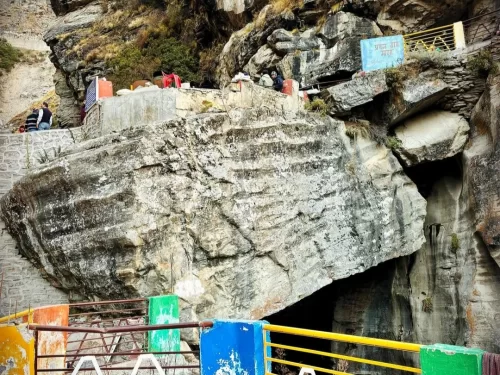
Bheem Pul near Badrinath, Uttarakhand with the massive natural rock bridge spanning a mountain stream, a mythological landmark included in Uttarakhand tour packages Bridge

Bheem Pul

Bheem Pul is a natural rock bridge located in Mana village near Badrinath in Chamoli district, Uttarakhand, India.
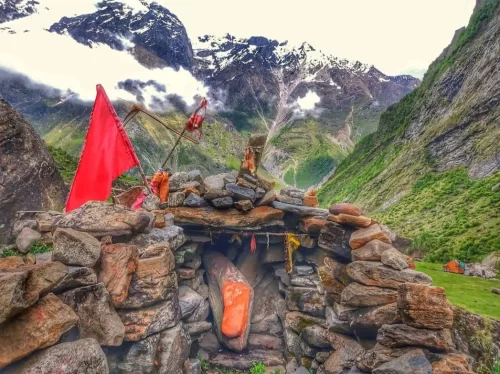
Vishnu Charan Paduka Badrinath stone shrine red flag offerings orange cloth cave snowy Himalayan peaks valley, Uttarakhand Char Dham tour packages.  Pilgrimage Site

Vishnu Charan Paaduka

Vishnu Charan Paaduka is a revered pilgrimage site near Badrinath, believed to preserve the divine footprints of Lord Vishnu.

Frequently Asked Questions About Hanuman Chatti Badrinath

This sacred place is closely associated with local religious traditions and is visited by devotees seeking blessings before continuing their pilgrimage. Visitors appreciate the peaceful surroundings, spiritual atmosphere, and beautiful mountain scenery that make it a memorable stop during the journey.
The best time to visit is during the annual pilgrimage season when mountain roads are open and weather conditions are generally favourable. Travelling early in the day also provides a more comfortable experience with lighter traffic and clearer views.
Most travellers spend around thirty minutes to one hour exploring the surroundings, offering prayers, taking permitted photographs, and enjoying the peaceful atmosphere before continuing towards their next destination.
Visitors can generally enter without paying an admission fee. Voluntary donations and offerings may be made according to personal beliefs, while carrying some cash is useful for refreshments or local purchases if available.
Parking is usually available near the approach road, although spaces may become limited during weekends and the peak pilgrimage season. Arriving early helps visitors find a convenient parking space and avoid unnecessary delays.
The destination is connected by road and can be reached using buses, taxis, shared vehicles, or private cars during the travel season. Visitors should always check current road and weather conditions before starting their journey.
Most families and senior citizens can visit comfortably because only limited walking is usually required. Visitors should still move carefully, remain hydrated, and allow extra time during busy pilgrimage periods.
Accessibility may be limited because some sections include uneven ground, steps, or mountain pathways. Visitors requiring mobility assistance are advised to travel with a companion whenever possible.
Photography is generally permitted in the surrounding open areas where visitors can capture the beautiful mountain landscape and religious setting. Restrictions may apply inside sacred spaces, so local instructions should always be respected.
Warm clothing, comfortable footwear, drinking water, personal medicines, rain protection, snacks, and some cash are recommended because weather conditions and visitor facilities can change throughout the pilgrimage season.
Avoid travelling without checking weather forecasts, carrying insufficient warm clothing, littering, ignoring local customs, or starting the journey too late in the day. Proper planning helps create a safer and more enjoyable experience.

Loved this place ? Let’s Plan Your Uttarakhand Trip

Get customized Uttarakhand tour planning designed around seasonal weather changes, hill road travel timing, pilgrimage flow, and comfort-based pacing. Whether you are visiting for spiritual journeys, Himalayan views, wildlife reserves, river valleys, or p

⚑ Quick Response | πŸ’° Free consultation | πŸ•’ 24Γ—7 expert support

×

Plan Your Trip

