Quick Facts About Vaishno Devi Temple Mata Lal Devi Ji
| Entry Fee | Free |
| Timings | 08:00 - 18:00 |
| Altitude (m) | 320 |
| Ideal Visit Duration (hrs) | 1 |
| Best Time of Day | Morning |
| Crowd Level | High |
| Distance from Haridwar (km) | 4 |
| Walking Difficulty | Moderate |
| Parking Available | No |
| Last Mile Access | Road |
| Suitable for Kids | Yes |
| Suitable for Seniors | No |
| Wheelchair Friendly | No |
Why Visit Vaishno Devi Temple (Mata Lal Devi Ji), Haridwar
Vaishno Devi Temple (Mata Lal Devi Ji) in Haridwar attracts devotees who wish to seek blessings of Goddess Vaishno Devi without undertaking the long trek to Katra. Located near the Ganga canal, the temple is a popular stop for pilgrims exploring Haridwar’s religious circuit.
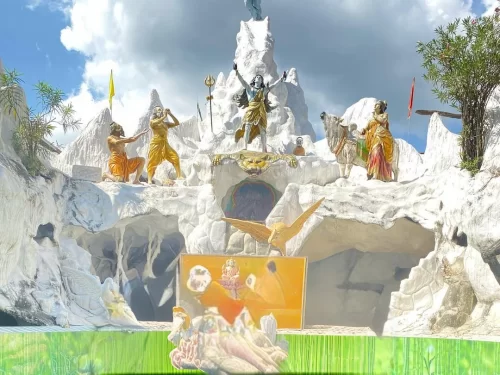
The atmosphere inside the temple is devotional and structured, with a multi-level layout that guides visitors through narrow cave-like passages designed to symbolically resemble the Vaishno Devi shrine in Jammu. The temple sees steady footfall throughout the day, particularly during Navratri.
What makes Vaishno Devi Temple (Mata Lal Devi Ji) distinct is its replica-style cave pathway experience within an urban setting. Unlike larger hill-based shrines, it offers an accessible, centrally located alternative for devotees seeking a similar ritual experience while visiting Haridwar.
History of Vaishno Devi Temple (Mata Lal Devi Ji), Haridwar
Vaishno Devi Temple (Mata Lal Devi Ji) in Haridwar, Uttarakhand, is a modern Hindu temple dedicated to Goddess Vaishno Devi. The temple was established in the late 20th century to provide devotees with a symbolic representation of the Vaishno Devi shrine of Jammu within the sacred city of Haridwar.
The structure was designed to replicate the cave-style pilgrimage experience associated with the original Vaishno Devi temple, incorporating narrow passageways and shrine chambers within a multi-level building. Unlike ancient temples of Haridwar, this shrine does not date to the medieval period but represents contemporary devotional architecture.
Vaishno Devi Temple (Mata Lal Devi Ji) functions as an active place of worship and attracts pilgrims visiting Haridwar who are unable to travel to Jammu. Its historical context lies in its role as a modern devotional center rather than in dynastic or archaeological heritage.
Best Time to Visit – Vaishno Devi Temple (Mata Lal Devi Ji) Haridwar
Vaishno Devi Temple (Mata Lal Devi Ji) in Haridwar can be visited throughout the year, but overall comfort depends on seasonal heat and festival crowds, as the temple involves climbing steps or using the ropeway to reach the hilltop shrine.
- Ideal months: October to March offers the most comfortable conditions for darshan and hill access.
- Weather during the best season: Winter and early spring bring mild daytime temperatures (approximately 8–25°C), clearer skies, and pleasant conditions for climbing the steps or enjoying ropeway views over Haridwar.
- Periods to avoid (and why): April to June afternoons can become very hot in Haridwar, often exceeding 38°C, making the uphill climb tiring. July to September sees monsoon rainfall, which may make steps slippery and reduce visibility. Navratri and major Hindu festivals draw heavy footfall, resulting in longer waiting times.
How to Reach Vaishno Devi Temple (Mata Lal Devi Ji) Haridwar
- Nearest Airport: Jolly Grant Airport, Dehradun (approximately 30–35 km from the temple). The airport has regular connectivity to Delhi and select Indian cities. Taxis from the airport typically take 50–70 minutes depending on highway traffic.
- Nearest Railway Station: Haridwar Junction Railway Station (approximately 3–4 km from the temple) is the nearest major railhead with strong connectivity to Delhi, Mumbai, Varanasi, and other cities. Auto-rickshaws, cycle rickshaws, and taxis are readily available outside the station.
- Road Access & Last-Mile Connectivity: Vaishno Devi Temple (Mata Lal Devi Ji) is located on the Haridwar–Rishikesh road near Bhupatwala. It is directly accessible by private vehicle, taxi, auto-rickshaw, and local buses operating along this route. Limited roadside parking is available near the entrance. The final access involves a short walk and a series of steps leading into the cave-style temple complex. Traffic congestion may increase during Navratri and peak pilgrimage seasons.
What to Expect When You Visit Vaishno Devi Temple (Mata Lal Devi Ji) Haridwar
- Environment and Surroundings: Vaishno Devi Temple (Mata Lal Devi Ji) is located on the Haridwar–Rishikesh road in Uttarakhand. The temple complex is designed as a replica-style shrine dedicated to Goddess Vaishno Devi and is set within a structured compound along the roadside. The surroundings are semi-urban with steady vehicle movement nearby. The temple interior includes narrow cave-like passages that simulate the Vaishno Devi yatra experience. Summers can be warm, while winters are comparatively pleasant.
- Facilities and Amenities: The complex has designated entry and exit routes, prasad shops near the entrance, and basic restroom facilities within the premises. Drinking water is generally available. Seating areas are limited, as most visitors move through the cave-style passage in a continuous flow. Waste bins are placed within the campus, though maintenance may vary during peak days.
- Accessibility and Movement: The temple is directly accessible by motorable road and is approximately 3–4 km from Har Ki Pauri. Parking space is available near the entrance but can become congested during weekends and Navratri. Movement inside involves walking through narrow, artificially constructed cave passages with low ceilings in some sections. Visitors may need to bend slightly in certain areas. Footwear must be removed before entering the inner temple area.
- Typical Visitor Behavior and Conditions: The temple attracts families, pilgrims, and tourists seeking a symbolic Vaishno Devi experience without undertaking the mountain pilgrimage. Footfall increases significantly during Navratri and major Hindu festivals. On regular days, visitors typically spend 20–40 minutes completing darshan. During peak hours, queues may form at the cave entrance, slowing movement inside the narrow passageways.
Important Visitor Information – Vaishno Devi Temple (Mata Lal Devi Ji) Haridwar
- Crowd & Weather Notes: The temple experiences steady footfall throughout the year, with significantly higher crowds during Navratri, weekends, and peak pilgrimage seasons. Summers (April to June) can be hot during midday climbs, while winters (December to February) are cooler and more comfortable. Monsoon (July to September) may make the stairways damp.
- Peak / Quiet Hours: Late mornings between 9:00 AM and 12:00 PM and early evenings are typically the busiest. Early mornings on weekdays are comparatively quieter for darshan.
- Dress Code: Modest attire is expected within the temple premises. Footwear must be removed before entering shrine areas. Conservative clothing covering shoulders and knees is advisable.
- Safety Notes: The temple involves a staircase ascent and narrow cave-like passages designed to resemble the Vaishno Devi shrine; visitors should move carefully, especially during crowded periods. Steps can become slippery during monsoon. Parking is available near the entrance area, but approach roads can be congested during peak hours.
Photography and Viewpoints – Vaishno Devi Temple (Mata Lal Devi Ji) Haridwar
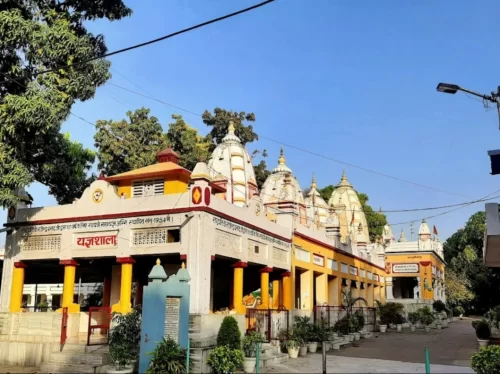
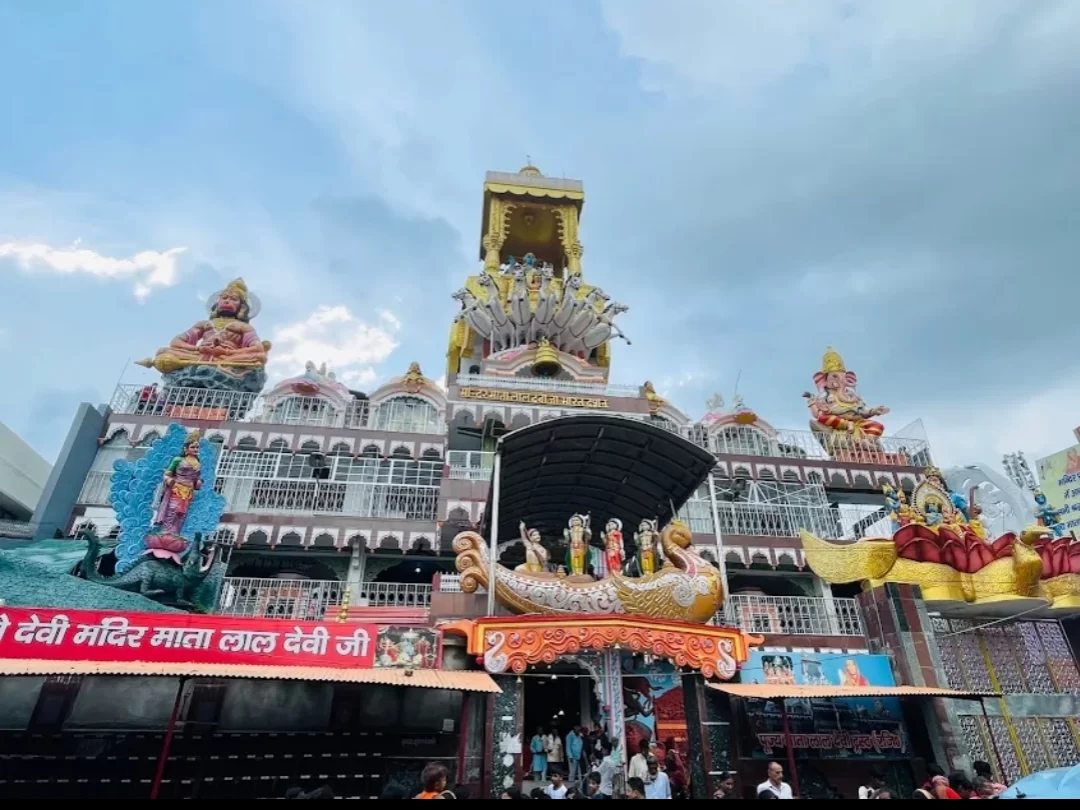
- Best viewpoints/angles: The multi-level temple complex on the hillside is best captured from the base entrance area, framing the colorful façade against the Shivalik slopes; mid-way stair landings offer angled compositions of the ascending structure; upper terrace sections provide partial views of the Haridwar townscape and surrounding hills.
- Lighting & time-of-day: Early morning provides softer light on the temple’s painted surfaces and fewer shadows along the stairways; late afternoon enhances color contrast and hillside textures; overcast monsoon conditions create even lighting but may reduce distant clarity.
- Rules/restrictions: Photography inside narrow cave-style passages and sanctum areas is generally restricted; always follow temple signage and instructions during active ???? (worship); flash photography is discouraged in enclosed spaces; drone use may require prior local permission.
- Crowd & access factors: The temple experiences higher footfall during Navratri and weekends, limiting uninterrupted stairway compositions; early weekday mornings provide quieter access; the stepped pathway can be narrow and steep in sections, affecting stable positioning during peak hours.