Dhwaj Temple Pithoragarh, Uttarakhand, India

Dhwaj Temple , Pithoragarh
Visitors undertake a trek to the temple for religious worship and panoramic views of the surrounding Himalayan ranges and valleys. The site is associated with local pilgrimage traditions and is visited especially during regional religious occasions.

Quick Facts About Dhwaj Temple

Entry Fee Free
Timings 06:00 - 18:00
Altitude (m) 2100
Ideal Visit Duration (hrs) 2
Best Time of Day Morning
Crowd Level Low
Distance from Pithoragarh (km) 10
Walking Difficulty Moderate
Parking Available No
Last Mile Access Trek
Suitable for Kids Yes
Suitable for Seniors No
Wheelchair Friendly No

Why Visit Dhwaj Temple, Pithoragarh

Dhwaj Temple in Pithoragarh attracts visitors for its hilltop setting and panoramic views of the surrounding Himalayan landscape. Devotees visit the temple for spiritual reasons, while trekkers and photographers come for the elevated vantage point overlooking valleys and distant snow-clad peaks on clear days.

The atmosphere at Dhwaj Temple is quiet and windswept, especially near the summit where prayer flags and the temple structure stand against open skies. Reaching the temple involves a motorable stretch followed by a short trek, giving the visit a more immersive, hilltop experience compared to roadside shrines.

What makes Dhwaj Temple distinct is its combination of religious importance and expansive mountain views from a relatively high elevation. Unlike temples located within town areas, this site offers both a devotional setting and a broad Himalayan backdrop, making it a dual-purpose stop for spiritual and scenic travelers.

History of Dhwaj Temple, Pithoragarh

Dhwaj Temple is a hilltop shrine located near Pithoragarh town in Uttarakhand, positioned at a high elevation along a forested ridge. The temple is traditionally dedicated to Lord Shiva and Goddess Jayanti, and it holds long-standing religious significance for local communities in the Kumaon region.

While the present structure reflects periodic renovations, the site itself is believed to have been a place of worship for centuries, with regional oral traditions linking it to ancient pilgrimage routes across the hills. Its elevated position made it both a spiritual destination and a vantage point overlooking the surrounding Himalayan landscape.

Dhwaj Temple continues to attract devotees, particularly during local religious observances and seasonal fairs. Its historical importance is rooted in continuous ritual practice rather than royal patronage or military history, making it a living religious landmark within Pithoragarh district.

Best Time to Visit – Dhwaj Temple Pithoragarh

Dhwaj Temple in Pithoragarh is best visited when mountain views are clear and the uphill approach trail is dry, as the temple sits at a high elevation and weather conditions directly affect both visibility and walking comfort.
  • Ideal months: March to June and October to November offer the most stable weather and clearer Himalayan views.
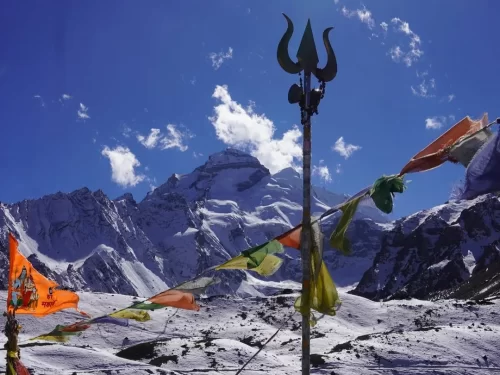
  • Weather during the best season: Spring and early summer bring moderate daytime temperatures (around 10–25°C) with clearer mornings ideal for viewing the Panchachuli and surrounding Himalayan peaks on bright days. Post-monsoon autumn provides crisp air, greener slopes, and improved long-range visibility.
  • Periods to avoid (and why): July to September sees heavy monsoon rainfall in the Pithoragarh region, making forest trails slippery and increasing chances of low clouds blocking mountain views. Late December to January can be very cold at this altitude, with fog and occasional frost reducing outdoor comfort.

How to Reach Dhwaj Temple Pithoragarh

  • Nearest Airport: Naini Saini Airport, Pithoragarh (approximately 15–20 km from Dhwaj Temple) has limited regional flight connectivity and does not operate daily. The nearest major airport is Pantnagar Airport (around 240–250 km away), from where the road journey to Pithoragarh typically takes 8–10 hours depending on hill road and weather conditions.
  • Nearest Railway Station: Tanakpur Railway Station (about 150–160 km from Pithoragarh) is the nearest practical railhead with regular connectivity to major North Indian cities. From Tanakpur, taxis and state-run buses to Pithoragarh are available, and the uphill drive usually takes 5–6 hours.
  • Road Access & Last-Mile Connectivity: Dhwaj Temple is located on a hilltop approximately 10–12 km from Pithoragarh town. Motorable roads lead up to a certain point near the base area, after which visitors must undertake a steep uphill trek of around 3 km to reach the temple. The trekking path is uneven and exposed in sections, requiring proper footwear. During monsoon and winter months, fog and slippery terrain can significantly affect accessibility.

What to Expect When You Visit Dhwaj Temple Pithoragarh

  • Environment and Surroundings: Dhwaj Temple is located on a hilltop approximately 10–12 km from Pithoragarh town in Uttarakhand, at an elevation of around 2,100 metres. The temple is dedicated to Lord Shiva and Goddess Jayanti and sits amid forested ridges with open views of the surrounding Kumaon Himalayas. On clear days, distant snow-clad peaks may be visible. The setting is quiet and natural, with exposed hilltop terrain. During monsoon (July to September), fog, strong winds, and slippery ground conditions are common.
  • Facilities and Amenities: Facilities at the temple are basic. There are no large commercial establishments at the summit. Small local stalls may occasionally operate near the approach during peak pilgrimage days, but food and water availability is not consistent. Public toilet facilities are generally not available at the top. Seating is limited, and most visitors spend time in the open courtyard area.
  • Accessibility and Movement: The temple is accessible by road from Pithoragarh up to a certain point, followed by a trek of approximately 3–4 km to reach the hilltop. The trekking route includes forest trails, gradual inclines, and uneven stone sections. The climb is moderate and requires basic fitness. During rainy weather, the trail can become muddy and slippery, requiring careful footing and suitable footwear.
  • Typical Visitor Behavior and Conditions: Dhwaj Temple attracts pilgrims and trekking enthusiasts. Footfall increases during religious occasions such as Shivratri and local fairs. On regular days, visitor numbers are moderate. Visitors typically spend 30–60 minutes at the summit for darshan and valley views. Weather conditions, especially cloud cover, can affect visibility of distant peaks.

Important Visitor Information – Dhwaj Temple Pithoragarh

  • Crowd & Weather Notes: Dhwaj Temple sees increased footfall during Navratri and other Hindu festivals, as well as on weekends in the summer months (April to June). Winters (December to February) are cold with strong winds at the hilltop. During monsoon (July to September), the trekking trail can become slippery and mist may reduce visibility.
  • Peak / Quiet Hours: Late morning to early afternoon (10:00 AM – 2:00 PM) is the busiest period, particularly on festival days. Early mornings are comparatively quieter and preferred by trekkers aiming for clear mountain views.
  • Dress Code: Modest attire is recommended as it is an active Hindu temple. Visitors should remove footwear before entering the temple premises and avoid wearing revealing clothing.
  • Safety Notes: The temple is situated on a hilltop reached by a trekking trail; sturdy footwear is essential. Some sections have steep drops and uneven stone steps. During monsoon, the path may be muddy and slippery. Basic facilities at the top are limited, so visitors should carry water and essentials.

Photography and Viewpoints – Dhwaj Temple Pithoragarh

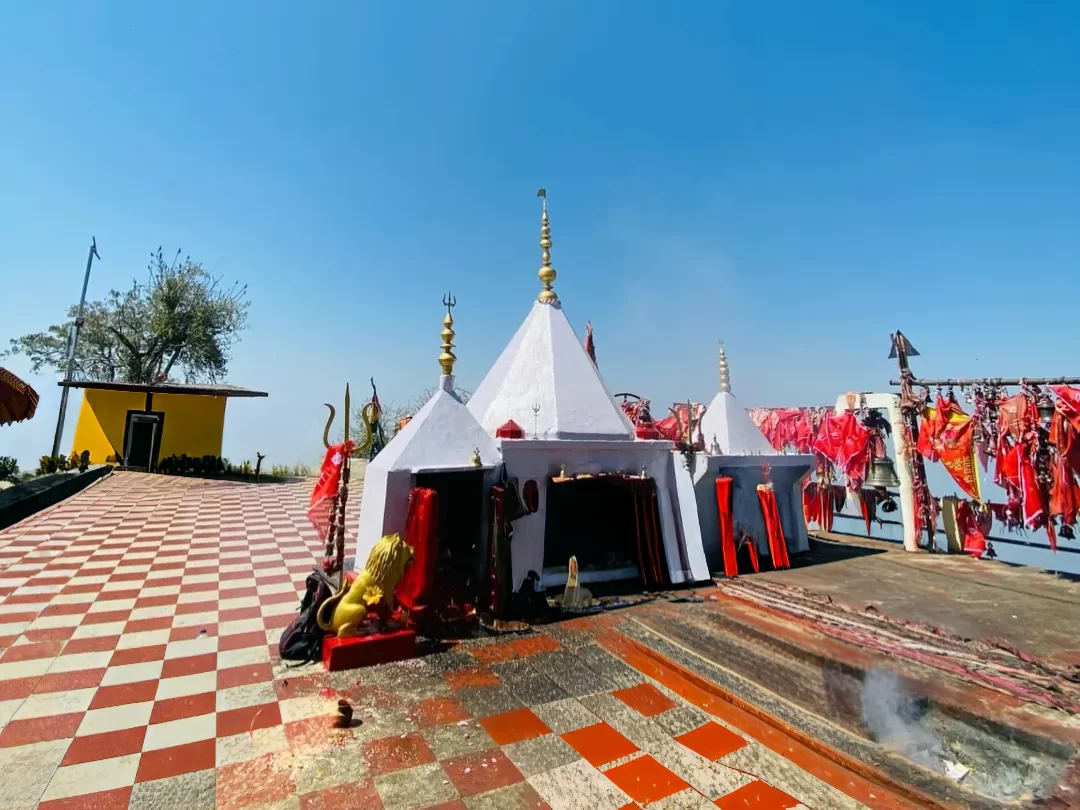
  • Best viewpoints/angles: The temple ridge offers wide Himalayan panoramas—position near the open clearing below the temple for layered views of the Panchachuli peaks on clear days; slight elevation shifts along the ridge allow framing prayer flags and temple structures against distant snow ranges; the forest approach trail provides natural pine-forest foreground compositions.
  • Lighting & time-of-day: Early morning is the most reliable window for clear Himalayan visibility before haze develops over the valleys; late afternoon creates warm highlights on the ridge and temple façade but may reduce long-distance mountain clarity; post-monsoon months typically offer sharper peak visibility compared to peak monsoon cloud cover.
  • Rules/restrictions: Photography is allowed in open temple surroundings, but photography inside the sanctum area may be restricted—confirm locally; avoid stepping onto exposed ridge edges; drone usage may require administrative permission and is subject to local regulations.
  • Crowd & access factors: The temple attracts more visitors during Navratri and local festivals, limiting uninterrupted frames; weekdays provide quieter conditions; access involves a steep trek from the motorable point, and rocky sections can be uneven or slippery during monsoon, affecting equipment stability.

Near By Attraction

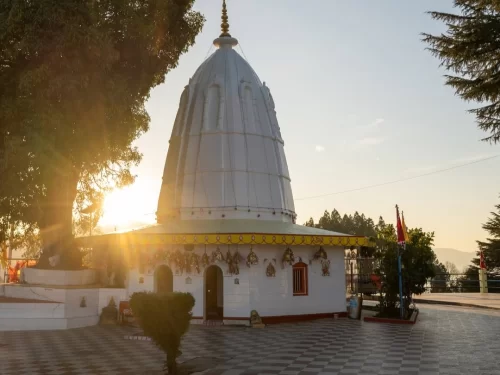
Mostamanu Temple in Pithoragarh, Uttarakhand with its white domed structure glowing at sunset, a scenic hilltop shrine included in Uttarakhand tour packages Temple

Mostamanu Temple

Mostamanu Temple is a regional Hindu temple dedicated to Lord Mosta, located near Pithoragarh town in Pithoragarh district, Uttarakhand, India.

Chandak Hill in Pithoragarh, Uttarakhand offering panoramic views of snow-clad Himalayan peaks above dense pine forests, a scenic viewpoint featured in Uttarakhand tour packages Tourist Attraction

Chandak Hill

Chandak Hill is an elevated viewpoint and recreational area located a few kilometers from Pithoragarh town in Pithoragarh district, Uttarakhand, India.

Historic Pithoragarh Fort in Pithoragarh, Uttarakhand showcasing traditional stone architecture and hilltop surroundings, a heritage site included in Uttarakhand tour packages Fort

Pithoragarh Fort

Pithoragarh Fort is a historic hilltop fort located in Pithoragarh town, Pithoragarh district, Uttarakhand, India.

Frequently Asked Questions About Dhwaj Temple

Dhwaj Temple is located about 10 kilometers from Pithoragarh town in Uttarakhand on a high ridge offering wide mountain views.
Visitors can reach Dhwaj Temple by road from Pithoragarh in Uttarakhand up to a certain point, followed by a short uphill trek to the temple.
There is no entry fee to visit Dhwaj Temple, though donations are accepted for temple upkeep.
Dhwaj Temple is generally open from early morning until evening, with most visitors arriving during daylight hours in Pithoragarh.
The best time to visit Dhwaj Temple is between March and June and September to November when the weather in Pithoragarh, Uttarakhand is clear and pleasant.
Most travelers spend about 1 to 2 hours at Dhwaj Temple including the short trek and time spent enjoying the panoramic views.
A short trek is required to reach Dhwaj Temple from the nearest motorable road, so comfortable footwear is recommended.
Facilities near Dhwaj Temple are limited, so visitors should carry drinking water and use restrooms in Pithoragarh town before starting the trek.
Parking is available near the base area where the road ends, though space may be limited during weekends and festivals in Pithoragarh.
Dhwaj Temple is suitable for family visits for those comfortable with a short uphill walk and looking for scenic Himalayan views near Pithoragarh, Uttarakhand.

Loved this place ? Let’s Plan Your Uttarakhand Trip

Get customized Uttarakhand tour planning designed around seasonal weather changes, hill road travel timing, pilgrimage flow, and comfort-based pacing. Whether you are visiting for spiritual journeys, Himalayan views, wildlife reserves, river valleys, or p

⚡ Quick Response | 💰 Free consultation | 🕒 24×7 expert support

×

Plan Your Trip