Quick Facts About Bara Bazaar
| Entry Fee | Free |
| Timings | 10:00 - 21:00 |
| Altitude (m) | 314 |
| Ideal Visit Duration (hrs) | 1 |
| Best Time of Day | Morning |
| Crowd Level | High |
| Distance from City Centre (km) | 1 |
| Walking Difficulty | Moderate |
| Parking Available | No |
| Last Mile Access | Walk |
| Suitable for Kids | Yes |
| Suitable for Seniors | No |
| Wheelchair Friendly | No |
Why Visit Bara Bazaar Haridwar
Bara Bazaar is worth visiting if you want to see how Haridwar functions beyond temples and ghats. This is a working local market where pilgrims, residents, and shopkeepers interact daily. It offers a grounded view of the city, useful for travelers interested in local buying habits, pricing, and everyday commerce rather than curated shopping streets.
Atmosphere
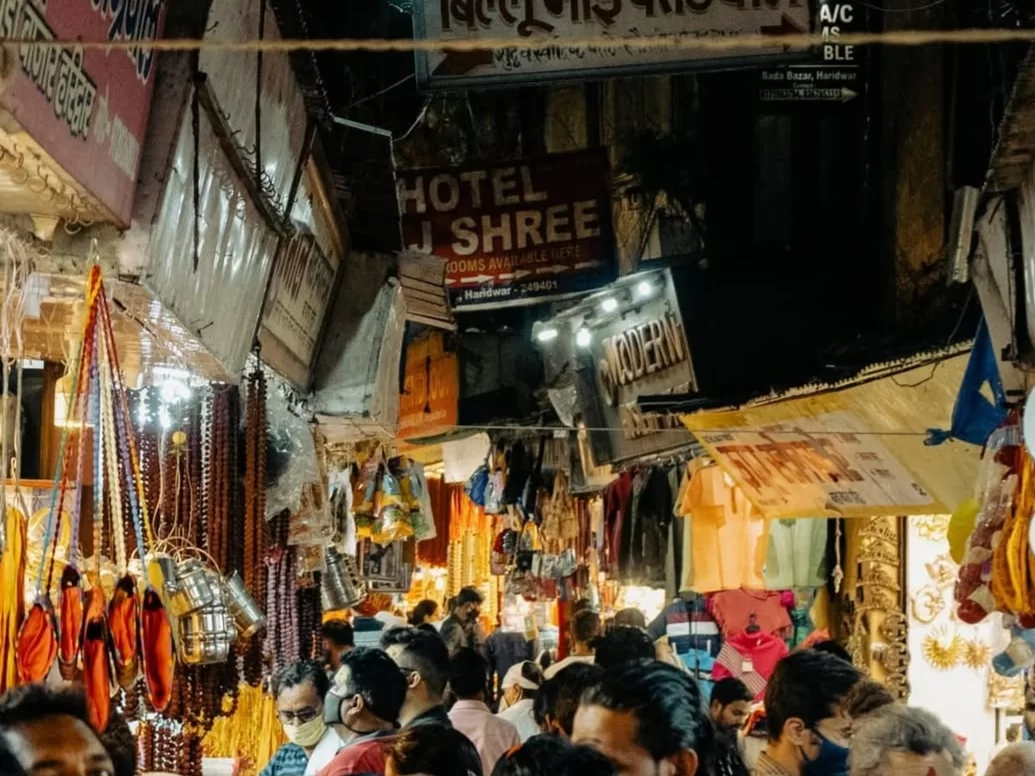
The atmosphere is busy, narrow, and energetic. Lanes are packed with small shops, handcarts, and steady foot traffic. Expect noise, bargaining voices, and occasional congestion, especially in the evening. During festivals and weekends, movement slows considerably, and patience is required to navigate the crowd.
What Makes it Special
What sets Bara Bazaar apart is its authenticity. Shops focus on practical needs such as puja items, sweets, bangles, cloth, and daily essentials rather than souvenirs designed for tourists. Prices are negotiable, and many stores are family run with long standing local presence. The market reflects real Haridwar life rather than a polished visitor experience.
History
Bara Bazaar developed organically as Haridwar expanded around Har Ki Pauri and the old pilgrimage routes. It emerged as a commercial spine serving pilgrims who needed daily essentials, religious items, food supplies, and travel necessities while visiting the ghats and temples.
Most shops in Bara Bazaar are small, family run establishments that have operated for decades, with ownership often passing through generations. This continuity has shaped the market into a dependable supply center rather than a planned retail zone.
Unlike modern shopping complexes, Bara Bazaar has not undergone structured redevelopment. Its narrow lanes, dense layout, and mixed goods reflect its long standing role as a functional marketplace tied closely to Haridwar’s pilgrimage economy and local residential needs.
Best Time to Visit
The experience at Bara Bazaar depends more on crowd flow and weather comfort than on seasons alone. Since the market involves continuous walking through narrow lanes, timing your visit well makes a noticeable difference.
- October to March is the most comfortable period, with cooler temperatures suitable for walking and browsing.
- April to June can be hot and tiring, especially in the afternoon when lanes feel congested and air circulation is limited.
- July to September brings monsoon conditions. The market remains open, but lanes may be slippery and more crowded.
- Late morning between 11:00 AM and 01:00 PM offers a balance of open shops and manageable crowds.
- Early evenings attract the highest footfall, particularly during weekends and festival periods.
Avoid peak pilgrimage days and major festivals if you prefer easier movement, as crowd density can make shopping slow and physically demanding.
How to Reach
- By Air: The nearest airport is Jolly Grant Airport, Dehradun, located approximately 38 km from Bara Bazaar. From the airport, taxis and prepaid cabs are easily available to reach Haridwar city centre.
- By Train: Haridwar Junction Railway Station is the closest railhead, around 2 km from Bara Bazaar. The station is well connected with major cities like Delhi, Dehradun, Rishikesh, Mumbai, and Kolkata.
- By Road: Haridwar is well connected by national and state highways. Regular buses and private taxis operate from Delhi, Dehradun, Rishikesh, and nearby towns. Bara Bazaar lies close to the main city market area.
- Local Transport: From Haridwar Railway Station or Bus Stand, visitors can reach Bara Bazaar by cycle-rickshaw, e-rickshaw, auto-rickshaw, or on foot.
- Walking Access: Bara Bazaar is within walking distance from Har Ki Pauri and other central city landmarks, making it easy to include during temple visits or Ganga Ghat walks.
What to Expect When You Visit
- Lively Local Market: Expect a bustling traditional bazaar filled with local shoppers, pilgrims, and tourists, especially during mornings and evenings.
- Wide Range of Products: Shops sell puja items, brass idols, rudraksha beads, bangles, sweets, Ayurvedic products, clothing, and daily essentials.
- Authentic Haridwar Vibe: The market reflects the cultural rhythm of the city, with temple bells, chanting, and the aroma of incense creating a spiritual atmosphere.
- Narrow, Walkable Lanes: Streets are compact and pedestrian-friendly, best explored on foot to fully experience the local charm.
- Traditional Street Food: Small food stalls and sweet shops offer local snacks, kachori, jalebi, lassi, and seasonal treats.
- Bargaining Culture: Light bargaining is common, especially for souvenirs and handicraft items.
- Peak Hour Crowds: Expect heavier crowds during weekends, festivals, and pilgrimage seasons, particularly near evening aarti timings.
- Easy Access to Landmarks: Many temples and ghats are located nearby, allowing visitors to combine shopping with spiritual sightseeing.
Important Visitor Information
- Crowd and Weather Notes: Bara Bazaar remains crowded throughout the year, with heavy footfall during weekends, festivals, and pilgrimage seasons. Summers can be hot and humid, while winters are cooler and comfortable for walking.
- Peak and Quiet Hours: Peak hours are from 6:00 PM to 9:00 PM and during Ganga Aarti timings. Quieter hours are between 10:00 AM and 12:00 PM, when shops are open but crowds are manageable.
- Dress Code: No strict dress code, but modest and comfortable clothing is recommended as the market is frequented by pilgrims and located close to temples and ghats.
- Safety Notes: The area is generally safe, but visitors should be cautious of pickpockets during peak crowd hours. Keep wallets and phones secure and avoid carrying large amounts of cash.
Photography and Viewpoint
- Street Photography: Bara Bazaar is ideal for capturing real-life street scenes, local traders, pilgrims shopping for ritual items, and the everyday rhythm of Haridwar. Early mornings offer cleaner frames with less congestion.
- Color and Texture: Shops selling bangles, flowers, puja items, sweets, and fabrics create naturally colorful compositions without artificial setups.
- Human Moments: Natural candid moments such as shopkeepers arranging goods, pilgrims selecting offerings, and locals bargaining reflect the authentic character of the market.
- Viewpoints: There are no elevated viewpoints or panoramic angles. Photography is ground-level and lane-focused due to narrow streets and dense shop lines.
- Lighting Conditions: Daylight photography works best. Evening lighting is mixed due to shop lights and crowd density, making handheld photography more practical than detailed shots.
- Photography Etiquette: Always ask permission before photographing shop interiors or people. Avoid photography near sensitive religious moments or during peak crowd pressure.
- Equipment Notes: A compact camera or mobile phone is more practical than large gear, as space is limited and movement is slow during busy hours.