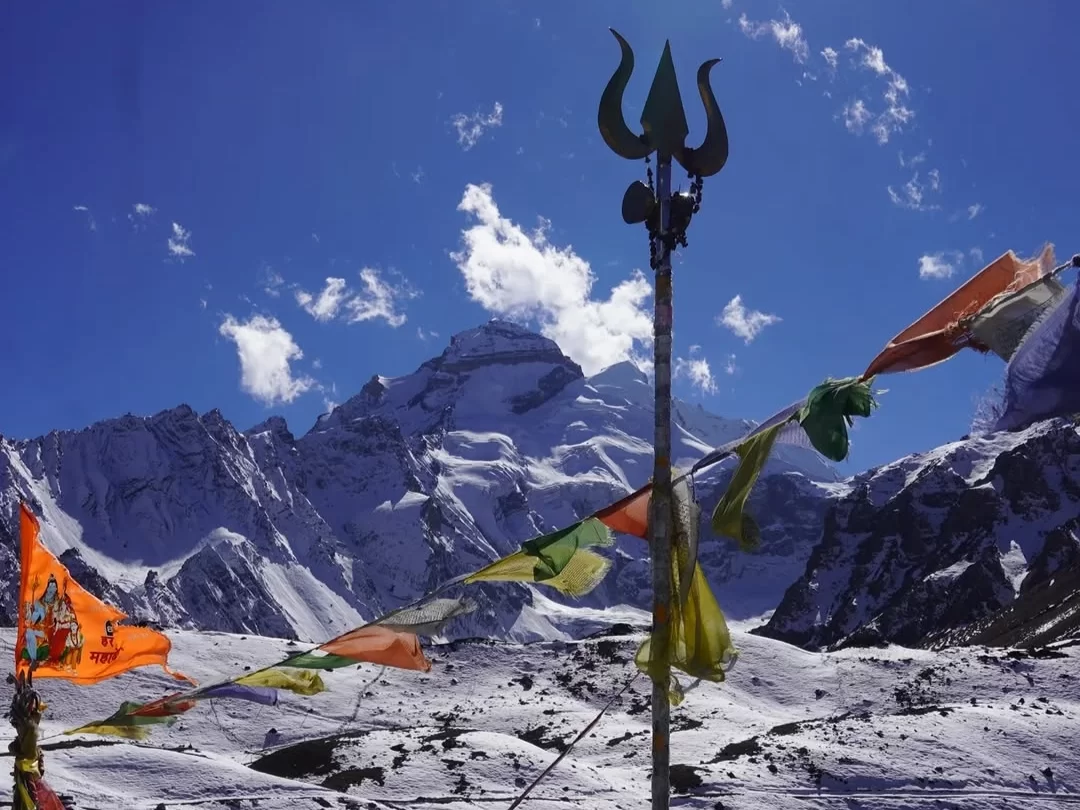
Adi Kailash, Pithoragarh District, Uttarakhand, India

Adi Kailash , Pithoragarh
The destination is revered in Hindu tradition as one of the sacred abodes of Lord Shiva and forms part of the Adi Kailash–Om Parvat pilgrimage circuit. Visitors travel here for its religious significance, high-altitude Himalayan scenery, and remote mountain landscapes.

Quick Facts About Adi Kailash

Adi Kailash, Uttarakhand Quick Facts

Entry Fee No entry fee; valid Inner Line Permit (ILP) is mandatory for Indian nationals, and access is subject to government regulations.
Timings Open during the pilgrimage season (generally May–October); travel timings depend on weather, road conditions, and local administration.
Altitude (m) Approximately 5,945 m (Adi Kailash Peak); the Jolingkong pilgrimage site is at approximately 4,572 m.
Ideal Visit Duration 5–7 days from Dharchula for the complete pilgrimage circuit.
Best Time of Day Early morning for clear mountain views and more stable weather conditions.
Crowd Level Low to moderate; visitor numbers increase during the annual pilgrimage season.
Distance from City Centre (km) Approximately 75 km from Dharchula to Jolingkong via the motorable pilgrimage route.
Walking Difficulty Moderate; most of the route is motorable, but short walks at high altitude may be required.
Parking Available Limited parking is available at designated stopping points along the route.
Last Mile Access Accessible by motorable road to Jolingkong, followed by a short walk to the viewpoint and Parvati Sarovar.
Suitable for Kids Not generally recommended due to the high altitude, long travel time, and remote conditions.
Suitable for Seniors Only if medically fit and acclimatized for high-altitude travel; medical consultation is advisable before the journey.
Wheelchair Friendly No; the high-altitude terrain and uneven ground are not wheelchair accessible.

Why Visit Adi Kailash, Uttarakhand

Visitors travel to Adi Kailash for its deep spiritual significance and spectacular Himalayan setting in the Kumaon region near the Indo-Tibetan border. Revered as a sacred abode of Lord Shiva, it offers pilgrims an alternative to the more challenging Mount Kailash pilgrimage while showcasing pristine mountain landscapes.

The atmosphere is serene and remote, with snow-clad peaks, high-altitude valleys, glacial streams, and traditional Himalayan villages along the route. The journey itself is a major part of the experience, combining scenic drives, short treks, and moments of quiet reflection in an unspoiled environment.

What makes Adi Kailash distinct is the combination of sacred pilgrimage, high-altitude adventure, and breathtaking natural scenery. Nearby attractions such as Parvati Sarovar, Gauri Kund, and the sacred Om Parvat further enrich the experience, making it one of Uttarakhand's most unique spiritual and mountain destinations.

History of Adi Kailash, Uttarakhand

Adi Kailash, also known as Chhota Kailash, is a revered Himalayan peak located in the Pithoragarh district of Uttarakhand near the India–Tibet border. It has been an important pilgrimage destination for centuries and is regarded in Hindu tradition as one of the sacred abodes of Lord Shiva and Goddess Parvati. While the mountain itself has no recorded construction history, its spiritual importance is deeply rooted in regional religious traditions.

The Adi Kailash pilgrimage has long formed part of the ancient trans-Himalayan routes used by pilgrims and traders traveling through the Kumaon Himalayas. The route passes several sacred sites, including Parvati Sarovar and the Om Parvat region, reinforcing the area's longstanding religious significance.

Today, Adi Kailash is one of Uttarakhand's most significant high-altitude pilgrimage destinations. Improved road connectivity has made the region more accessible in recent years, while preserving its importance as a place of spiritual devotion, Himalayan culture, and natural beauty.

Best Time to Visit Adi Kailash, Uttarakhand

The best time to visit Adi Kailash is from May to June and September to October, when the high-altitude route through the Kumaon Himalayas is generally accessible and weather conditions are most favorable for pilgrimage and sightseeing. The journey depends on road conditions and official permissions, which may vary each season.
  • Ideal months: May to June and September to October, when the roads are typically open and the region offers comfortable conditions for travel.
  • Best season conditions: Pleasant daytime temperatures, relatively clear skies, and excellent views of Adi Kailash, Parvati Sarovar, and the surrounding Himalayan landscape.
  • Periods to avoid: July to August due to the monsoon, when landslides and road closures are common, and November to April, when snowfall and harsh winter conditions can restrict access to the region.

How to Reach Adi Kailash, Uttarakhand

  • Nearest Airport: The nearest airport is Pantnagar Airport, approximately 320 km from Dharchula, the main gateway to Adi Kailash. From Pantnagar, visitors typically hire a taxi or travel by road to Dharchula before continuing the journey.
  • Nearest Railway Station: Tanakpur Railway Station is the closest convenient railhead, located about 290 km from Dharchula. Kathgodam Railway Station is another major option with better train connectivity. From either station, taxis and buses are available to Dharchula.
  • By Road: Adi Kailash is accessed via Dharchula through the route passing Tawaghat, Pangu, Sirkha, Gala, Gunji, Nabi, and Jyolingkong. The roads are motorable for most of the route but pass through high-altitude Himalayan terrain with narrow stretches, weather-related closures, and occasional landslides during the monsoon. Indian nationals must obtain the required Inner Line Permit before travelling beyond Dharchula. The final destination near Jyolingkong is accessible by road, with some viewpoints requiring short walks.

What to Expect When You Visit Adi Kailash, Uttarakhand

  • Adi Kailash is located in the remote Vyas Valley of Pithoragarh district near the Indo-Tibet border. The journey passes through high-altitude mountain roads, deep valleys, rivers, and small Himalayan villages before reaching the pilgrimage area.
  • The region is known for its sacred significance and Himalayan scenery. Visitors can expect a peaceful environment with views of Adi Kailash peak, Parvati Sarovar, and the surrounding snow-clad mountains, depending on weather conditions.
  • Travel involves long road journeys on winding mountain routes. Some stretches may be narrow or affected by landslides during the monsoon, so travel times can vary.
  • The destination lies at a high altitude, and the thinner air may affect some visitors. Moving at a comfortable pace, staying hydrated, and allowing time to acclimatize are recommended.
  • Facilities are basic compared to popular tourist destinations. Accommodation is generally available in guest houses, homestays, and government-approved camps along the route, while medical services, fuel stations, and ATMs are limited.
  • As Adi Kailash is located in a protected border region, Indian citizens require an Inner Line Permit, while entry rules for foreign nationals are subject to current government regulations. Visitors should verify permit requirements before planning their trip.
  • The pilgrimage area is an active religious site. Visitors are expected to dress modestly, respect local customs, avoid littering, and help preserve the fragile Himalayan environment.
  • Weather in the region can change rapidly, even during the travel season. Carrying warm clothing, rain protection, and essential medicines is advisable regardless of the forecast.

Important Visitor Information for Adi Kailash, Uttarakhand

  • Crowd and weather: Adi Kailash is accessible only during the warmer months, generally from late spring to autumn, subject to road and weather conditions. The monsoon season can bring landslides and road closures, while temperatures remain cold even in summer due to the high-altitude Himalayan terrain.
  • Peak and quiet visiting hours: Visitor numbers are highest during the pilgrimage season and on long weekends. Mornings are the best time for clear mountain views, as clouds often develop later in the day.
  • Dress code: There is no formal dress code, but modest clothing is recommended when visiting temples along the pilgrimage route. Warm layered clothing, a windproof jacket, and sturdy trekking shoes are essential because of the cold, high-altitude environment.
  • Safety and practical cautions: Adi Kailash lies at an altitude of over 4,500 metres, making altitude sickness a potential risk. Visitors should acclimatize properly, avoid strenuous activity immediately after arrival, and carry adequate water and essential medicines. Travel is permitted only with the required Inner Line Permit, and road conditions may change due to weather or landslides, so checking local updates before departure is important.

Photography and Viewpoints at Adi Kailash, Uttarakhand

  • The most iconic photographs are taken from the viewpoints near Parvati Sarovar and Jolingkong, where Adi Kailash peak is reflected in the sacred lake under clear weather conditions.
  • Early morning provides the best lighting and visibility, with the snow-covered mountain illuminated by soft sunlight. Clouds often build up later in the day, reducing long-distance views.
  • Photography is generally permitted along the pilgrimage route and at designated viewpoints. Visitors should respect local customs at temples and religious sites, and follow any restrictions imposed by security personnel, as the region lies close to the India–China border.
  • The high-altitude terrain, rapidly changing weather, and limited infrastructure can affect photography. Clear mountain views are not guaranteed, so travelers should allow sufficient time in their itinerary.
  • Popular viewpoints can become busy during the Adi Kailash Yatra season, but outside the peak pilgrimage months, the route and viewing areas remain relatively uncrowded, offering better opportunities for uninterrupted landscape photography.

Near By Attraction

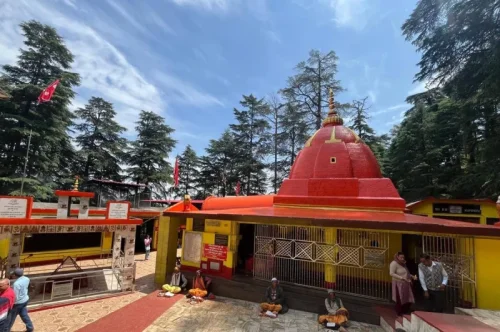
Kalinka Mata Temple featuring a vibrant red-domed shrine, yellow and red exterior walls, devotees sitting in the courtyard, and tall pine trees under a blue sky. Temple

Kalinka Mata Temple

Kalinka Mata Temple is a Hindu temple dedicated to Goddess Kali, located on a hilltop in the Pauri Garhwal region of Uttarakhand, India.
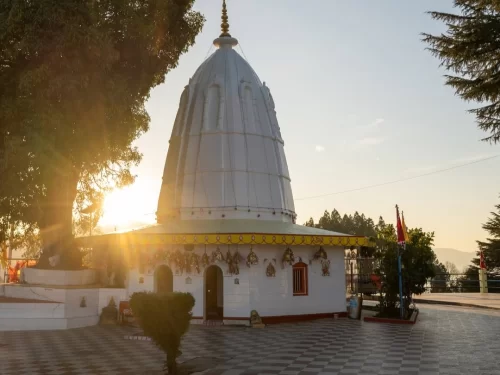
Mostamanu Temple in Pithoragarh, Uttarakhand with its white domed structure glowing at sunset, a scenic hilltop shrine included in Uttarakhand tour packages Temple

Mostamanu Temple

Mostamanu Temple is a regional Hindu temple dedicated to Lord Mosta, located near Pithoragarh town in Pithoragarh district, Uttarakhand, India.
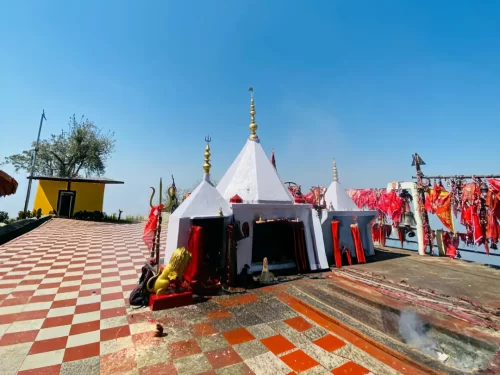
Dhwaj Temple in Pithoragarh, Uttarakhand featuring white shrines adorned with red flags on a scenic hilltop, a revered pilgrimage site included in Uttarakhand tour packages Temple

Dhwaj Temple

Dhwaj Temple is a Hindu temple dedicated to Lord Shiva and Goddess Jayanti, located on a hilltop near Pithoragarh town in Pithoragarh district, Uttarakhand, India.

Frequently Asked Questions About Adi Kailash

This sacred mountain is revered for its deep spiritual significance and spectacular Himalayan scenery. Visitors undertake the journey to seek blessings, experience the peaceful atmosphere, admire breathtaking landscapes, and complete one of the most memorable high altitude pilgrimages in the region.
The most suitable time is during the official pilgrimage season when roads and trekking routes are open. Pleasant weather, better visibility, and safer travel conditions make this the preferred period for most visitors.
Most travellers should plan several days for the complete journey because the pilgrimage involves mountain travel, altitude acclimatisation, sightseeing, and time for prayers. A flexible itinerary helps accommodate changing weather conditions.
There is generally no entry fee for visiting the sacred site itself. However permits, transport arrangements, accommodation, and other travel services may involve separate charges depending on the itinerary.
Parking is usually available at designated road access points before the main journey begins. During the pilgrimage season these areas can become busy, so arriving early helps secure a convenient parking space.
Visitors normally travel by road to the designated starting point using private vehicles, shared taxis, or organised tours before continuing along the approved pilgrimage route according to local regulations.
The journey is physically demanding because of the high altitude and long travel distances. Visitors should carefully assess their fitness, while senior citizens and young children should seek medical advice before planning the trip.
Wheelchair accessibility is not available because the route includes mountain roads, uneven terrain, and high altitude conditions. Travellers with mobility limitations should carefully consider the physical challenges before visiting.
Photography is generally permitted in open areas where visitors can capture magnificent mountain scenery and natural landscapes. Any restrictions at sensitive locations or security checkpoints should always be respected.
Warm layered clothing, sturdy trekking shoes, rain protection, drinking water, energy snacks, personal medicines, identity documents, sunscreen, and a basic first aid kit are recommended for a safe and comfortable pilgrimage.
Avoid travelling without acclimatisation, ignoring weather updates, carrying insufficient warm clothing, leaving litter behind, or underestimating the physical demands of high altitude travel. Careful preparation makes the journey safer and more enjoyable.

Loved this place ? Let’s Plan Your Uttarakhand Trip

Get customized Uttarakhand tour planning designed around seasonal weather changes, hill road travel timing, pilgrimage flow, and comfort-based pacing. Whether you are visiting for spiritual journeys, Himalayan views, wildlife reserves, river valleys, or p

⚡ Quick Response | 💰 Free consultation | 🕒 24×7 expert support

×

Plan Your Trip