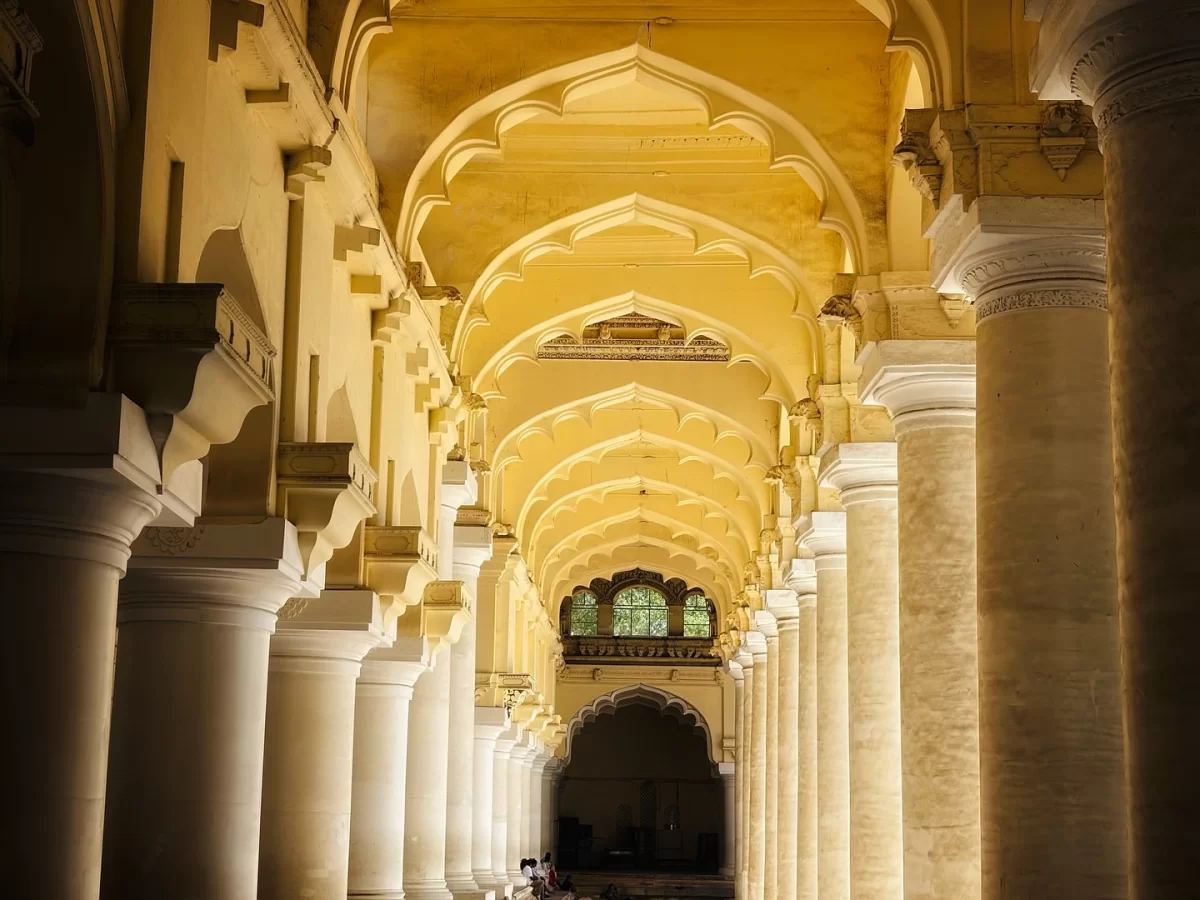
Thirumalai Nayakkar Mahal, Madurai, Tamil Nadu, India

Thirumalai Nayakkar Mahal , Madurai
Tourists visit this monument to see its massive stone arches, tall pillars, and Indo-Saracenic style courtyard architecture. The site is known for its grand open hall, detailed stucco work, and evening sound and light show. It is a popular heritage stop for visitors exploring Madurai beyond temple circuits.

Quick Facts About Thirumalai Nayakkar Mahal

Quick Facts About Thirumalai Nayakkar Mahal

Entry Fee ?10 (Indians), ?50 (Foreign nationals) (camera charges may apply separately)
Timings 9:00 AM – 5:00 PM (Sound & Light Show timings vary by season and language)
Altitude (m) Approx. 101 m
Ideal Visit Duration 45 minutes to 1.5 hours (longer if attending the sound & light show)
Best Time of Day Morning for photography and cooler weather; evening if attending the sound & light show
Crowd Level Moderate to High (higher on weekends, holidays, and during peak tourist season)
Distance from City Centre (km) Approx. 2 km from Madurai city centre (near Meenakshi Amman Temple area)
Walking Difficulty Easy (flat pathways inside the monument complex)
Parking Available Yes, limited parking available near the entrance
Last Mile Access Easily reachable by auto-rickshaw, taxi, and city buses from central Madurai
Suitable for Kids Yes
Suitable for Seniors Yes (seating areas available, minimal climbing involved)
Wheelchair Friendly Partially (some uneven flooring and steps may limit access to certain sections)

Why Visit Thirumalai Nayakkar Mahal

Thirumalai Nayakkar Mahal is visited for its monumental palace architecture, especially the massive stone pillars, tall arches, and open courtyard layout that reflect the grandeur of Madurai’s Nayak period. Tourists come here to explore one of the city’s most important heritage structures beyond the temple circuit.

The atmosphere inside the mahal is calm and spacious, with wide halls and shaded corridors that provide relief from Madurai’s outdoor heat. Visitors typically walk through the main courtyard and central hall, spending time observing the scale of the columns and the symmetry of the structure.

What makes this place distinct is the dramatic interior height and the unique combination of Dravidian and Islamic architectural influences visible in the arches and domed sections. Unlike many historic sites in Tamil Nadu, the mahal’s main hall feels like a single grand viewing space, making it especially appealing for photography and evening sound-and-light show visitors.

History of Thirumalai Nayakkar Mahal

Thirumalai Nayakkar Mahal was built in the 17th century by King Thirumalai Nayak, one of the prominent rulers of the Madurai Nayak dynasty. The palace was originally designed as a large royal residence and administrative complex, known for its grand scale and formal courtyards.

Only a portion of the original structure remains today, as large sections of the palace complex were dismantled or lost over time. The surviving main hall and courtyard are maintained as a protected heritage monument and are among the most recognizable examples of Nayak-era architecture in Madurai.

Best Time to Visit Thirumalai Nayakkar Mahal

Thirumalai Nayakkar Mahal can be visited year-round, but the experience is most comfortable during the cooler months when walking through the open courtyard and large stone halls is easier. Since the monument has open sections with limited ventilation in peak summer afternoons, timing your visit plays an important role in comfort.
  • Ideal months: November to February (cooler temperatures make sightseeing and photography more comfortable).
  • Best season conditions: Pleasant mornings and evenings with lower heat stress, allowing visitors to explore the courtyard and pillared hall without discomfort.
  • Good alternative season: July to September can be manageable, but occasional rain may affect walking comfort and outdoor photography.
  • Periods to avoid: April to June mid-day hours due to intense Madurai heat, which can make the open courtyard visit tiring.
  • Festival crowd note: Local holidays and tourist peak periods may increase crowd levels, especially during weekends and school vacation months.

How to Reach Thirumalai Nayakkar Mahal

  • Nearest Airport: Madurai International Airport (IXM), approximately 12–14 km from Thirumalai Nayakkar Mahal. Prepaid taxis and app-based cabs are commonly available from the airport.
  • Nearest Railway Station: Madurai Junction (MDU), around 3–4 km away. Auto-rickshaws and taxis provide quick access to the mahal from the station.
  • By Road: Madurai is well connected by highways to Chennai, Coimbatore, Tiruchirappalli, Theni, and Rameswaram. Visitors arriving by bus can reach the palace easily from Periyar Bus Stand and other central bus stops.
  • Last-Mile Connectivity: The mahal is located within Madurai city and is easily reachable by auto-rickshaw, taxi, and local buses. The surrounding roads can be busy during peak hours due to market traffic.
  • Travel Conditions to Note: Parking space near the entrance is limited, and traffic congestion is common in the central city area, so visiting in the morning is usually more convenient.

What to Expect When You Visit Thirumalai Nayakkar Mahal

  • Grand open courtyard setting: Expect a spacious palace complex with a large central courtyard and a massive pillared hall that highlights the monument’s scale and symmetry.
  • Monument-focused experience: The visit is mainly about architecture viewing, walking through the main hall, observing arches and columns, and spending time in the central open area.
  • Partially preserved structure: Only a section of the original palace survives, so visitors will explore a limited but impressive portion rather than a full palace complex.
  • Photography-friendly interiors: The tall pillars and high ceilings create strong visual frames, and most visitors spend time taking photos inside the main hall and courtyard.
  • Basic visitor facilities: Ticket counters, seating spots, and basic restrooms are generally available, but the site is not designed as a full-day facility with extensive amenities.
  • Easy walking access: The pathways are mostly flat and suitable for casual walking, though some areas may have uneven flooring typical of old stone structures.
  • Sound and light show option: Evening visitors often plan their trip around the sound and light show, which adds waiting time and increases crowd levels near show hours.
  • Typical crowd conditions: Crowds are usually moderate, with higher visitor flow on weekends, school holidays, and during peak tourism months in Madurai.

Important Visitor Information for Thirumalai Nayakkar Mahal

  • Crowd and weather notes: The mahal is an open monument with large uncovered areas, so afternoon heat can be uncomfortable in summer. Crowd levels rise during weekends, holidays, and evening show timings.
  • Peak visiting hours: 11:00 AM to 2:00 PM is often busy with tour groups, while evenings become crowded during sound and light show entry timings.
  • Quiet visiting hours: 9:00 AM to 10:30 AM is usually calmer and better for walking through the hall without heavy crowd movement.
  • Dress code: No dress code is enforced, but modest clothing is advisable as the site is frequently visited by families and school groups.
  • Sound and light show note: If planning to attend the show, confirm timing and ticket availability in advance, as schedules may vary by season and language.
  • Photography and equipment: Photography is generally allowed in the monument areas, but camera fees may apply at the ticket counter depending on current rules.
  • Safety and movement: Some flooring can be uneven or worn, especially in older sections, so visitors should watch their step while walking through shaded corridors.
  • Personal belongings: The monument can get crowded near entry points, so keeping valuables secure is important, especially during peak visiting hours.

Photography and Viewpoints at Thirumalai Nayakkar Mahal

  • Best wide-angle viewpoint: The main courtyard entrance provides the best full-frame view of the massive central hall, allowing visitors to capture the scale of the arches and pillars in one composition.
  • Signature interior shot: The most iconic photographs are taken from inside the central hall looking upward, where the tall pillars and high ceiling create dramatic symmetry and depth.
  • Arch and corridor framing: Side corridors and inner passageways offer strong perspective shots with repeating pillars, especially when the area is less crowded.
  • Best lighting conditions: Morning light (9:00 AM to 11:00 AM) is usually the best for clear interior photography, as sunlight enters the open sections without harsh glare.
  • Afternoon contrast issues: Mid-day sunlight can create strong shadows in the courtyard, making exposure uneven for photographs of pillars and arches.
  • Evening photography limits: Late evening photography depends on available lighting, and crowd movement increases if visitors are gathering for the sound and light show.
  • Photography rules: Photography is generally permitted, but camera charges may be applicable depending on current ticketing rules; visitors should confirm at the entrance counter.
  • Crowd and access factors: Weekends and holiday afternoons often bring school groups and tour buses, which can make clean architectural shots difficult inside the main hall.

Near By Attraction

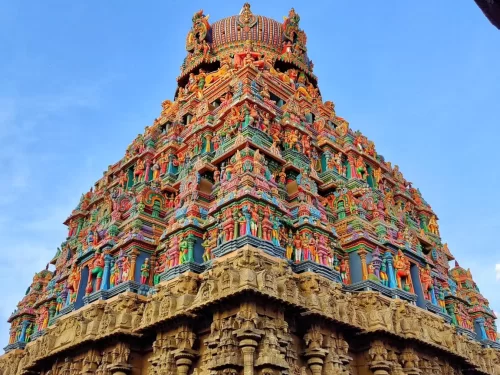
Upward perspective of vibrantly sculpted five-tiered Rajagopuram Arulmigu Koodal Azhagar Temple Madurai Tamil Nadu with intricate Dravidian stucco deities detailed stone base against clear blue sky, ideal for Madurai temple architecture photography Temple

Arulmigu Koodal Azhagar Temple

Arulmigu Koodal Azhagar Temple is a prominent Vishnu temple in central Madurai dedicated to Lord Koodal Azhagar.
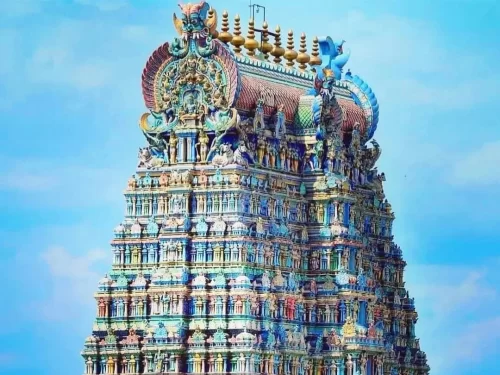
Meenakshi Amman Temple Madurai Tamil Nadu stunning vertical view of ornate multi-tiered gopuram with golden vimana intricate rainbow deity carvings mythical birds under clear blue sky, legendary Dravidian Hindu temple tower architectural splendor heritage Temple

Meenakshi Amman Temple

Meenakshi Amman Temple is a major Dravidian-style Hindu temple complex in Madurai dedicated to Goddess Meenakshi and Lord Sundareswarar.
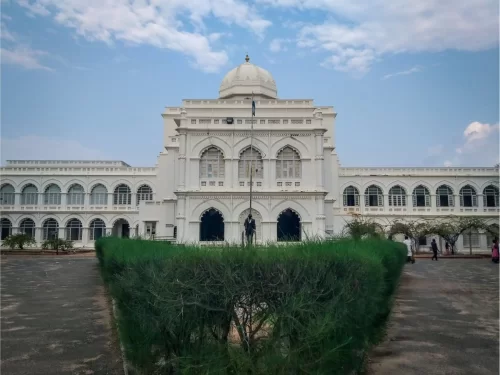
Symmetrical front view of Gandhi Memorial Museum Madurai Tamil Nadu in historic Tamukkam Palace showing white Indo-Saracenic facade central dome arched corridors manicured hedges wide courtyard under partly cloudy blue sky Museum

Gandhi Memorial Museum

Gandhi Memorial Museum in Madurai showcases the life, teachings, and legacy of Mahatma Gandhi through exhibits, photographs, and historical artifacts.

Frequently Asked Questions About Thirumalai Nayakkar Mahal

The best time to visit Thirumalai Nayakkar Mahal is from October to March when the weather is more comfortable for sightseeing. Evening hours are pleasant for exploring the open courtyard.
Thirumalai Nayakkar Mahal is generally open during standard daytime hours with a short afternoon break. Timings may vary slightly on public holidays.
Thirumalai Nayakkar Mahal charges a nominal entry fee for visitors. Separate charges may apply for cameras and special shows.
Thirumalai Nayakkar Mahal can be reached easily by taxi auto bus or private vehicle as it is centrally located. The entrance is accessible through well connected city roads.
Most travelers spend one to two hours at Thirumalai Nayakkar Mahal. The visit includes walking through the grand hall courtyard and viewing architectural details.
Thirumalai Nayakkar Mahal features large pillars ornate arches and an open central courtyard. Informational displays provide basic historical context for visitors.
Thirumalai Nayakkar Mahal is suitable for families due to its spacious layout and easy accessibility. Children should be supervised while exploring elevated sections.
Photography is generally allowed inside Thirumalai Nayakkar Mahal for personal use. Additional camera fees may apply depending on equipment.
Light and sound shows are conducted at Thirumalai Nayakkar Mahal during evening hours on selected days. Tickets for the show are usually sold separately.
Thirumalai Nayakkar Mahal can be combined with nearby temples museums and heritage markets. These attractions are usually accessible within short travel distance.

Loved this place ? Let’s Plan Your Tamil Nadu Trip

Get customized Tamil Nadu tour planning designed around temple visit timing, seasonal weather comfort, road travel distances, and realistic pacing across regions. Whether you are visiting for architectural heritage, spiritual journeys, coastal relaxation,

⚑ Quick Response | πŸ’° Free consultation | πŸ•’ 24Γ—7 expert support

×

Plan Your Trip