Quick Facts About Arulmigu Koodal Azhagar Temple
Quick Facts About Arulmigu Koodal Azhagar Temple
| Entry Fee | No entry fee for darshan (special pooja tickets may be available at temple counters) |
|---|---|
| Timings | Generally open 6:00 AM – 12:00 PM and 4:00 PM – 9:00 PM (timings may vary during festivals and special poojas) |
| Altitude (m) | Approx. 101 m |
| Ideal Visit Duration | 45 minutes to 1.5 hours |
| Best Time of Day | Early morning or evening during pooja hours for a smoother darshan experience |
| Crowd Level | Moderate to High (higher on Fridays, weekends, and Vaishnavite festival days) |
| Distance from City Centre (km) | Approx. 1–2 km from central Madurai (close to Periyar Bus Stand area) |
| Walking Difficulty | Easy (short walking inside the temple corridors and sanctum route) |
| Parking Available | Limited parking available in nearby streets and paid lots (congested during peak hours) |
| Last Mile Access | Easily reachable by auto-rickshaw, taxi, and city buses; approach roads are narrow and busy |
| Suitable for Kids | Yes |
| Suitable for Seniors | Yes (but standing in queues may take time during peak darshan hours) |
| Wheelchair Friendly | Partially (crowded corridors and steps in some areas may limit easy wheelchair access) |
Why Visit Arulmigu Koodal Azhagar Temple
Arulmigu Koodal Azhagar Temple is visited for its important Vishnu shrine in central Madurai and for experiencing traditional Vaishnavite worship in an active city temple. Tourists and pilgrims come here for darshan of Lord Koodal Azhagar and to see the temple’s detailed gopuram and inner sanctum arrangements.
The atmosphere is devotional and structured, with steady movement of worshippers through the corridors, chanting during pooja times, and temple priests performing rituals throughout the day. Despite being located in a busy market zone, the inner sections feel quieter once inside the main temple area.
What makes this temple distinct is the presence of Vishnu in different postures across separate levels of the shrine, which is not commonly seen in many city temples. Its central location near major Madurai landmarks also makes it a practical stop for travelers exploring the heritage and temple circuit in a single day.
History of Arulmigu Koodal Azhagar Temple
Arulmigu Koodal Azhagar Temple is one of the important Vishnu temples of Madurai and is traditionally associated with the Vaishnavite religious heritage of the city. The temple is considered significant in the Tamil Vaishnava tradition and is linked to the Alvar saints, whose hymns are connected with several major Vishnu shrines in Tamil Nadu.
The temple is known for worship of Lord Vishnu as Koodal Azhagar and is also recognised for its multi-level sanctum arrangement, where different forms of the deity are represented within the same complex. It continues to function as an active place of worship with regular rituals and festival celebrations in the heart of Madurai.
Best Time to Visit Arulmigu Koodal Azhagar Temple
Arulmigu Koodal Azhagar Temple can be visited throughout the year, but the overall experience is more comfortable during the cooler months when walking through the temple corridors and standing in darshan queues is easier. Since the temple is located in central Madurai, heat and crowd levels strongly influence visit comfort.
- Ideal months: November to February (cooler weather makes temple visits more comfortable and reduces fatigue from walking and waiting).
- Best season conditions: Pleasant mornings and evenings, better for exploring the gopuram, corridors, and nearby market streets without intense heat.
- Festival season peak: March to May may have higher crowds during Vaishnavite festival periods and local holidays, leading to longer darshan waiting times.
- Periods to avoid: April to June mid-day hours due to strong Madurai heat, especially if visiting with children or seniors.
- Monsoon note: October to early December may bring rain showers that increase congestion around temple entrances and nearby roads.
How to Reach Arulmigu Koodal Azhagar Temple
- Nearest Airport: Madurai International Airport (IXM), approximately 11–13 km from Arulmigu Koodal Azhagar Temple. Taxis and app-based cabs are available for direct travel to the temple area.
- Nearest Railway Station: Madurai Junction (MDU), around 2–3 km away. Auto-rickshaws and taxis provide quick access to the temple from the station.
- By Road: Madurai is well connected by highways to Chennai, Coimbatore, Tiruchirappalli, Theni, and Rameswaram. The temple is located in the central part of the city, close to major bus routes and commercial streets.
- Last-Mile Connectivity: The temple is easily reachable by auto-rickshaw, taxi, and city buses. The surrounding area is a busy market zone, so walking may be required from nearby parking points during peak hours.
- Travel Conditions to Note: Roads near the temple can be congested, especially during morning and evening pooja times, festival days, and weekends.
What to Expect When You Visit Arulmigu Koodal Azhagar Temple
- Busy city surroundings: Expect a crowded market-area setting outside the temple, with narrow streets, shops, and heavy pedestrian movement typical of central Madurai.
- Traditional temple layout: The temple includes a tall gopuram, inner corridors, sanctum pathways, and separate levels for viewing different forms of Lord Vishnu within the same complex.
- Darshan queue system: Visitors usually follow structured queue lines, and waiting time can increase significantly during peak pooja hours and festival days.
- Footwear removal: Footwear must be removed before entering the main temple areas, and visitors may need to walk barefoot on stone flooring.
- Modest atmosphere: The temple is an active worship site with regular chanting, priest rituals, and continuous local devotee presence throughout the day.
- Limited photography access: Photography may be restricted in inner sanctum and sensitive shrine areas, and visitors are often asked to avoid mobile phone use near main deity zones.
- Basic visitor facilities: Small water points and restrooms may be available nearby, but the crowded surroundings can make access slower during peak hours.
- Walking inside the complex: The visit involves moderate walking through corridors and stair access for upper-level darshan, which may take extra time for seniors.
Important Visitor Information for Arulmigu Koodal Azhagar Temple
- Crowd and weather notes: The temple remains busy due to regular local worshippers, and the surrounding market area can feel congested. Madurai heat is strong during summer, making mid-day temple visits uncomfortable.
- Peak visiting hours: 7:00 AM to 10:30 AM and 5:00 PM to 8:00 PM are usually the most crowded due to pooja timings, with heavier rush on Fridays and weekends.
- Quiet visiting hours: Early morning around opening time and late evening after 8:00 PM generally have shorter queues, depending on temple closing rituals.
- Dress code: Modest clothing is expected as this is an active Vishnu temple. Visitors are advised to avoid shorts and sleeveless outfits inside the temple premises.
- Footwear rule: Footwear must be removed before entering the temple corridors, and walking barefoot is required for darshan.
- Photography restrictions: Photography is commonly restricted near inner sanctum areas, and visitors may be asked to keep mobile phones away during darshan.
- Queue and crowd caution: Corridors can become tightly packed during festival days, so families with children and senior visitors should plan extra time and stay together.
- Street access note: Roads around the temple are narrow with frequent traffic and pedestrian movement, so reaching the entrance may involve short walking from drop-off points.
Photography and Viewpoints at Arulmigu Koodal Azhagar Temple
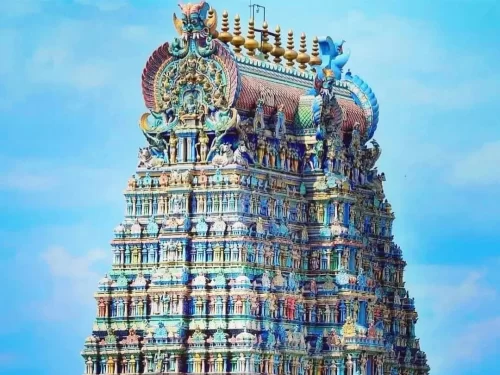
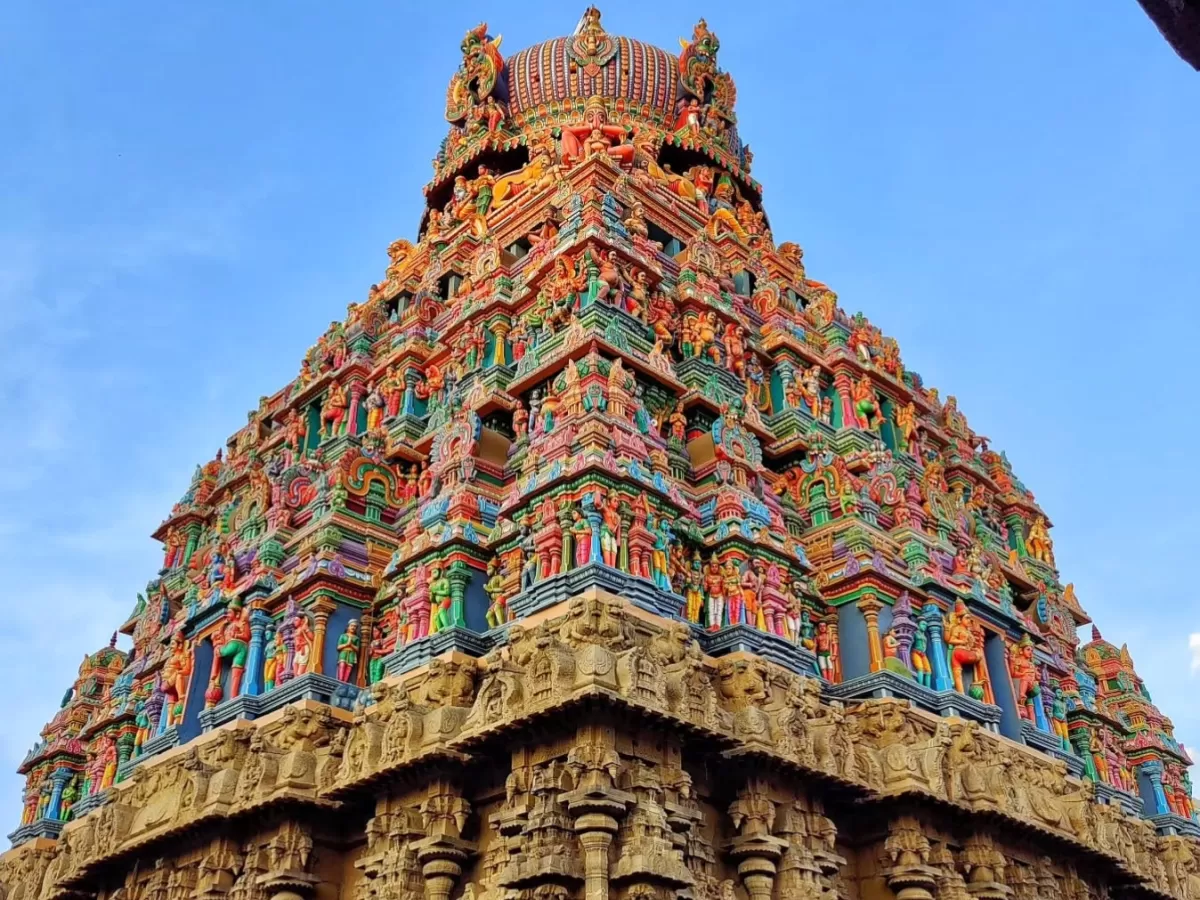
- Best exterior viewpoint: The best photographs are usually taken from the street-facing approach where the main gopuram can be captured in full height, especially from a slight distance in the open junction areas near the entrance.
- Gopuram sculpture details: Close-up shots of the colourful stucco figures and layered carvings on the tower are popular, best viewed during daylight hours for clearer colour visibility.
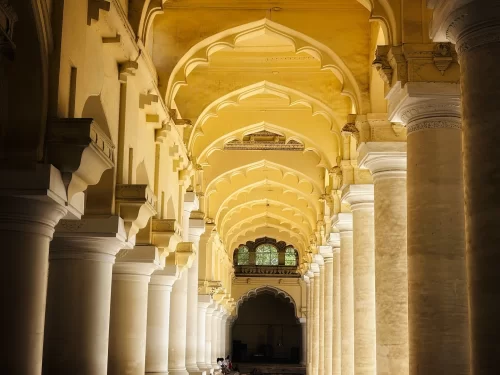
- Temple corridor perspectives: The inner corridors and pillared pathways provide symmetrical framing opportunities, but clear shots depend on crowd movement during darshan hours.
- Lighting conditions: Morning light (6:30 AM to 9:30 AM) gives softer shadows on the gopuram, while late afternoon light improves contrast and reduces harsh glare compared to mid-day sun.
- Photography restrictions: Photography is generally restricted in inner sanctum areas, and visitors may be asked not to use mobile phones near main deity zones.
- Crowd impact on photography: Fridays, weekends, and festival periods create heavy footfall, making it difficult to capture clean corridor shots or wide interior views.
- Best time for quieter frames: Early morning shortly after opening is usually better for capturing gopuram angles and temple entrance views with fewer people in the background.
- Access limitation: The temple is surrounded by narrow market streets, so getting wide-angle shots of the gopuram may require stepping back to nearby open points rather than shooting directly at the gate.