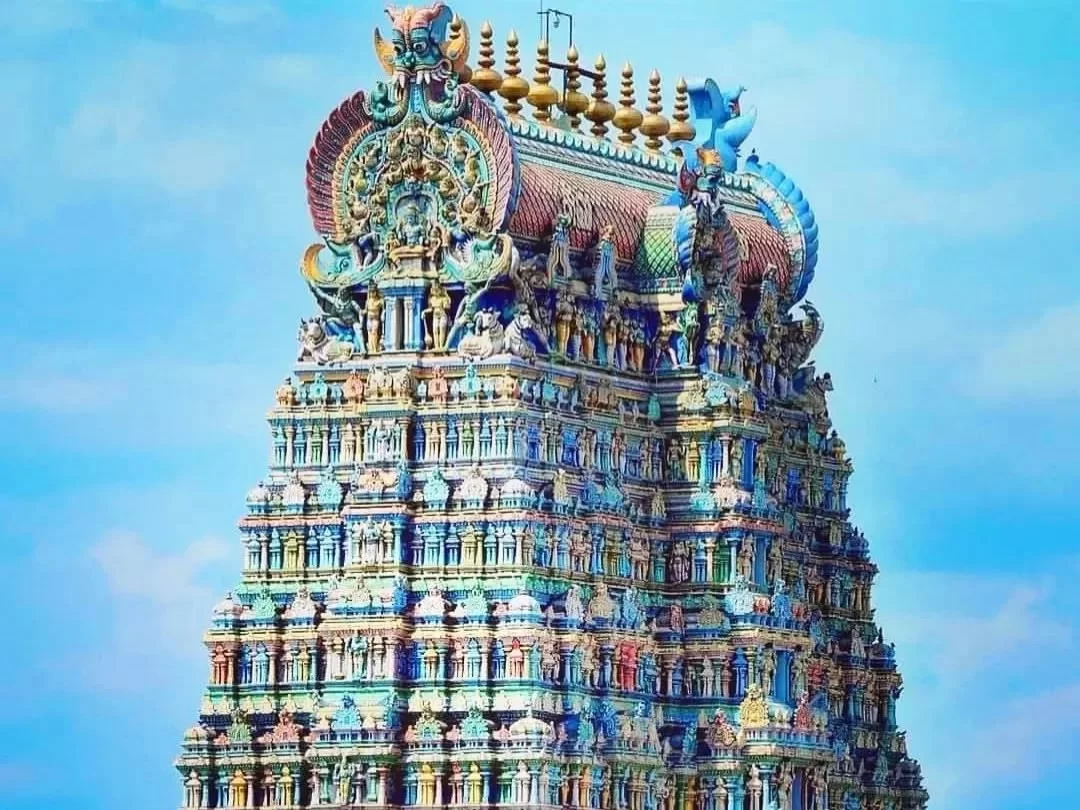
Meenakshi Amman Temple, Madurai, Tamil Nadu, India

Meenakshi Amman Temple , Madurai
Tourists visit this temple for its towering gopurams, detailed stone carvings, long pillared corridors, and active daily rituals. It is one of the most visited religious landmarks in South India and is also important for architecture, cultural traditions, and temple festivals. The complex includes multiple shrines, mandapams, and temple tanks within a large walled area.

Quick Facts About Meenakshi Amman Temple

Quick Facts About Meenakshi Amman Temple

Entry Fee No entry fee for temple darshan (special darshan tickets and paid services may be available at counters)
Timings Generally open 5:00 AM – 12:30 PM and 4:00 PM – 10:00 PM (timings may change during festivals and special poojas)
Altitude (m) Approx. 101 m
Ideal Visit Duration 1.5 to 3 hours
Best Time of Day Early morning for quieter darshan or evening for temple lighting and rituals
Crowd Level Very High (especially Fridays, weekends, public holidays, and during festivals like Chithirai Thiruvizha)
Distance from City Centre (km) Approx. 0–1 km (located in central Madurai near the main market area)
Walking Difficulty Easy to Moderate (large complex with long corridors and significant walking inside)
Parking Available Limited paid parking available nearby (congested during peak hours)
Last Mile Access Easily accessible by auto-rickshaw, taxi, and city buses; roads near the entrance can be crowded
Suitable for Kids Yes (crowded areas require close supervision)
Suitable for Seniors Yes (but long walking and standing in queues can be tiring during peak times)
Wheelchair Friendly Partially (some areas have uneven flooring and steps; crowd levels may limit easy wheelchair movement)

Why Visit Meenakshi Amman Temple

Meenakshi Amman Temple is visited for its active worship traditions, detailed Dravidian architecture, and the chance to experience one of Tamil Nadu’s most important temple complexes in the heart of Madurai. Visitors come for darshan, to see the famous gopurams, and to walk through the long sculpted corridors inside the main complex.

The atmosphere is busy and devotional, with constant movement of pilgrims, temple priests, and visitors across multiple shrines and mandapams. The surrounding streets are filled with flower sellers, religious shops, and traditional markets, making the visit feel closely connected to everyday life in old Madurai.

What makes this temple distinct is the scale of its carved towers, the variety of halls and inner shrines, and the visual richness of the painted sculptures covering the gopurams. Unlike many temples that are visited briefly, this complex is large enough to feel like a full walking route with separate sections, sacred tanks, and multiple entry points.

History of Meenakshi Amman Temple

Meenakshi Amman Temple has been a major religious centre of Madurai for centuries and is closely associated with the Pandya dynasty, who supported the temple’s development as an important Shaivite shrine. The temple complex seen today includes large expansions and architectural additions carried out over different periods, especially during the Nayak rulers of Madurai.

The temple is dedicated to Goddess Meenakshi (a form of Parvati) and Lord Sundareswarar (a form of Shiva), and remains one of the most significant living temples in South India. It is also strongly connected to Madurai’s cultural identity through major annual events such as the Chithirai festival, which draws large pilgrim gatherings and traditional processions within the temple city area.

Best Time to Visit Meenakshi Amman Temple

Meenakshi Amman Temple can be visited throughout the year, but the overall experience is more comfortable during the cooler months when walking through the large temple complex and standing in queues is easier. Since the temple is located in central Madurai, heat and crowd levels strongly affect visit timing more than rainfall.
  • Ideal months: November to February (cooler weather makes temple walking and darshan queues more manageable).
  • Best season conditions: Pleasant mornings and evenings with better comfort for exploring corridors, mandapams, and nearby market streets.
  • Festival season peak: March to May during Chithirai festival period (very high crowds and long waiting times, but culturally significant for visitors interested in temple processions).
  • Periods to avoid: April to June mid-day hours due to extreme heat in Madurai, making long queues and walking inside the complex tiring.
  • Monsoon consideration: October to early December may bring rain showers, which can cause congestion around entrances and slipperier walking areas near temple streets.

How to Reach Meenakshi Amman Temple

  • Nearest Airport: Madurai International Airport (IXM), approximately 12–14 km from Meenakshi Amman Temple. Taxis and app-based cabs are available for direct travel to the temple area.
  • Nearest Railway Station: Madurai Junction (MDU), around 2–3 km away. The temple can be reached quickly by auto-rickshaw or taxi from the station.
  • By Road: Madurai is well connected by highways to Chennai, Coimbatore, Tiruchirappalli, Rameswaram, and Theni. Long-distance buses and private taxis commonly drop passengers at central Madurai bus stands close to the temple zone.
  • Last-Mile Connectivity: The temple is located in the busy central market area, and the final approach is easiest by auto-rickshaw, taxi, or walking from nearby parking points. Some roads near the main entrances are narrow and often congested.
  • Travel Conditions to Note: Traffic is heavy around the temple during peak darshan hours and festival days, and parking is limited, so arriving early is recommended for smoother access.

What to Expect When You Visit Meenakshi Amman Temple

  • Large temple complex layout: Expect a vast walled complex with multiple entrances, long pillared corridors, inner shrines, and separate mandapams that require significant walking to explore fully.
  • Busy central surroundings: The temple sits in the old city market zone of Madurai, with crowded streets, flower stalls, religious shops, and constant local activity around the main gates.
  • Queue-based darshan system: Visitors should be prepared for long waiting lines during peak hours, weekends, and festival days, especially for main sanctum darshan.
  • Strict entry rules: Non-Hindus may have restricted access to certain inner sanctum areas, and security checks are common at entry points.
  • Footwear and dress expectations: Footwear must be removed before entering temple areas, and modest clothing is expected as the temple is an active place of worship.
  • Photography limitations: Photography is restricted in many inner sections, and visitors may be asked not to use cameras or phones in sensitive shrine areas.
  • Facilities available nearby: Basic amenities such as drinking water points, restrooms, and cloak/locker facilities may be available in or near the temple premises, but access can feel crowded during peak times.
  • Movement challenges: The flooring can be uneven in older corridors, and crowd flow can be dense, so seniors and families with small children may need extra time and patience during busy hours.

Important Visitor Information for Meenakshi Amman Temple

  • Crowd and weather notes: The temple remains crowded throughout the year due to continuous pilgrim flow. Madurai heat can be intense during summer, and long queues become uncomfortable in mid-day hours.
  • Peak visiting hours: 7:00 AM to 11:00 AM and 5:00 PM to 8:30 PM are usually the busiest due to morning and evening pooja timings, especially on Fridays and weekends.
  • Quiet visiting hours: Early morning (around 5:00 AM to 6:30 AM) and late evening after 9:00 PM generally have shorter queues, though closing rituals may affect access.
  • Dress code: Modest traditional clothing is expected. Men may be required to remove shirts in certain inner shrine areas, and sleeveless or short clothing is discouraged for all visitors.
  • Footwear rules: Footwear must be removed before entering the temple complex. Visitors should be prepared to walk barefoot on stone flooring, which can feel hot during afternoons.
  • Security and belongings: Entry checks are strict, and carrying large bags may not be allowed inside. Using cloak/locker facilities near entrances is advisable when available.
  • Photography restrictions: Photography is restricted in many inner sections, and mobile phone use may be controlled near sanctum areas, so visitors should follow on-site instructions.
  • Queue and crowd safety: During festivals and peak darshan hours, crowd density can be high in corridors and entry gates, so families with children and seniors should plan extra time and stay together.

Photography and Viewpoints at Meenakshi Amman Temple

  • Best exterior viewpoints: The most photographed angles are from the streets facing the main gopurams, especially the South Tower (South Gopuram), where the full height and detailed sculpture work can be captured from a distance.
  • Gopuram close-up details: Visitors often focus on the painted stucco figures and layered carvings on the outer towers, best viewed from the temple entrance courtyards where the structure fills the frame.
  • Golden hour lighting: Early morning and late afternoon provide softer light on the gopurams, reducing harsh shadows and giving clearer colour contrast on the painted sculptures.
  • Temple tank viewpoint: The area near the Porthamarai Kulam (Golden Lotus Tank) offers reflective water frames and a calmer setting compared to the crowded entrance corridors.
  • Mandapam interiors: The pillared halls and long corridors create strong symmetry shots, but crowd movement often limits clear frames, especially during peak darshan hours.
  • Photography restrictions: Photography is restricted or not allowed in several inner sanctum zones and sensitive shrine areas, and visitors may be asked to avoid camera use inside specific corridors.
  • Crowd impact: Weekends, festival days, and evening pooja timings create heavy footfall, making wide-angle temple interior photography difficult due to constant queue movement.
  • Best time for quieter shots: Early opening hours are usually better for capturing corridors, gopuram entry views, and temple tank surroundings with fewer people in the frame.

Near By Attraction

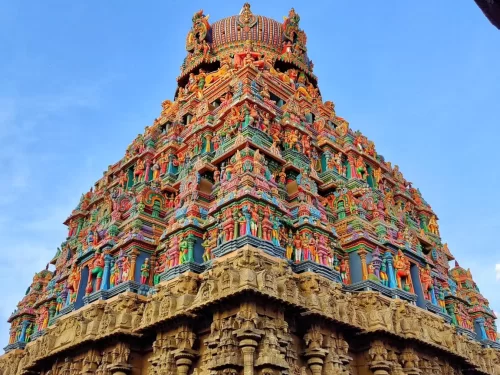
Upward perspective of vibrantly sculpted five-tiered Rajagopuram Arulmigu Koodal Azhagar Temple Madurai Tamil Nadu with intricate Dravidian stucco deities detailed stone base against clear blue sky, ideal for Madurai temple architecture photography Temple

Arulmigu Koodal Azhagar Temple

Arulmigu Koodal Azhagar Temple is a prominent Vishnu temple in central Madurai dedicated to Lord Koodal Azhagar.
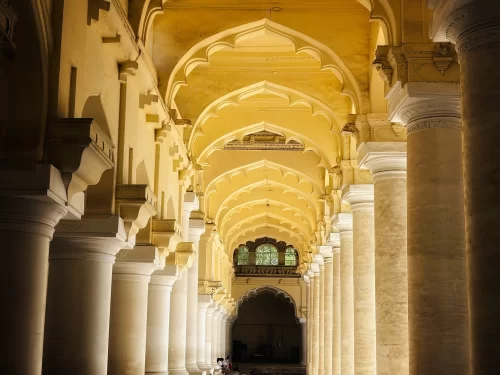
Thirumalai Nayakkar Mahal Palace

Thirumalai Nayakkar Mahal

Thirumalai Nayakkar Mahal is a 17th-century palace complex in Madurai built by Nayak ruler Thirumalai Nayak.
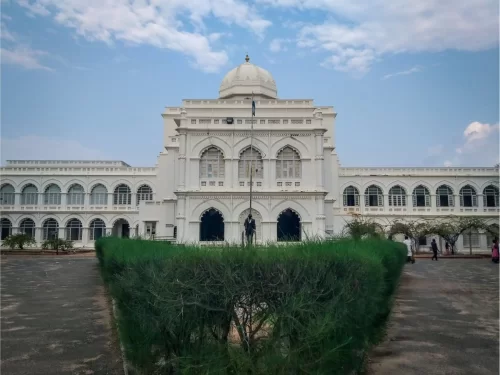
Symmetrical front view of Gandhi Memorial Museum Madurai Tamil Nadu in historic Tamukkam Palace showing white Indo-Saracenic facade central dome arched corridors manicured hedges wide courtyard under partly cloudy blue sky Museum

Gandhi Memorial Museum

Gandhi Memorial Museum in Madurai showcases the life, teachings, and legacy of Mahatma Gandhi through exhibits, photographs, and historical artifacts.

Frequently Asked Questions About Meenakshi Amman Temple

The best time to visit Meenakshi Amman Temple is from October to March when the weather is more comfortable for temple visits. Early morning and evening hours are usually less crowded.
Meenakshi Amman Temple is generally open from early morning until late evening with breaks between rituals. Timings may vary slightly on special religious days and festivals.
There is no major entry fee for general darshan at Meenakshi Amman Temple. Special entry tickets for quicker access may have separate charges.
Meenakshi Amman Temple can be reached easily by taxi auto bus train or private vehicle as it is located in the heart of the city. The temple is accessible from major transport hubs.
Most visitors spend one to two hours at Meenakshi Amman Temple depending on crowd levels. Additional time may be needed to explore the corridors and temple complex.
Meenakshi Amman Temple conducts daily poojas and special rituals dedicated to the deities. Devotees often participate in morning and evening worship sessions.
Visitors to Meenakshi Amman Temple should wear modest and respectful attire. Footwear must be removed before entering the temple premises.
Special darshan tickets are available at Meenakshi Amman Temple for those who prefer shorter waiting times. Availability may vary during peak pilgrimage periods.
Meenakshi Amman Temple can be visited during festival season for a more elaborate spiritual experience. Visitors should expect larger crowds during major celebrations.
Meenakshi Amman Temple can be combined with nearby palaces museums and heritage markets. These attractions are usually accessible within short travel distance.

Loved this place ? Let’s Plan Your Tamil Nadu Trip

Get customized Tamil Nadu tour planning designed around temple visit timing, seasonal weather comfort, road travel distances, and realistic pacing across regions. Whether you are visiting for architectural heritage, spiritual journeys, coastal relaxation,

⚑ Quick Response | πŸ’° Free consultation | πŸ•’ 24Γ—7 expert support

×

Plan Your Trip