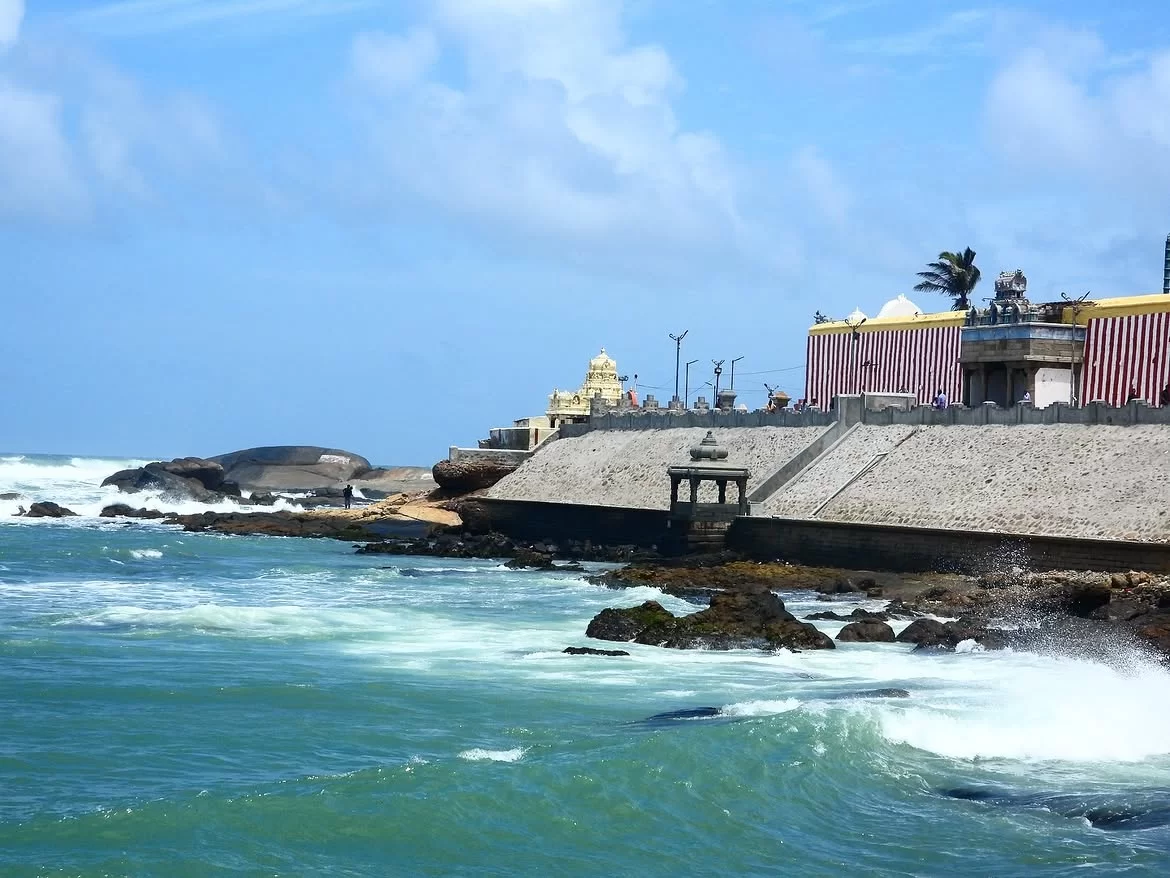
Kumari Amman Temple, Kanyakumari, Tamil Nadu, India

Kumari Amman Temple , Kanniyakumari
Visitors come to worship the presiding goddess, one of the Shakti Peethas in Hindu tradition, and experience the temple’s coastal setting where the Arabian Sea, Bay of Bengal, and Indian Ocean meet. The temple is a major pilgrimage site and an important spiritual landmark in South India.

Quick Facts About Kumari Amman Temple

Kumari Amman Temple (Kanyakumari) Quick Facts

Entry Fee No entry fee
Timings Generally open from 4:30 AM to 12:30 PM and 4:00 PM to 8:30 PM daily
Altitude (m) Approximately 0–10 m above sea level (coastal temple)
Ideal Visit Duration 1–2 hours
Best Time of Day Early morning for darshan and less crowd; evening for sea breeze and aarti
Crowd Level High during weekends, full moon days, Navaratri, and festival seasons
Distance from City Centre (km) Located in Kanyakumari town centre, near the seashore
Walking Difficulty Easy; flat temple surroundings with short walking paths
Parking Available Limited parking available in nearby town areas
Last Mile Access Direct road access within Kanyakumari town followed by a short walk
Suitable for Kids Yes
Suitable for Seniors Yes
Wheelchair Friendly Partially; main areas are accessible but some inner sections may have steps

Why Visit Kumari Amman Temple Kanyakumari

Visitors come to Kumari Amman Temple to worship Goddess Devi Kanya Kumari, one of the most sacred Shakti shrines in South India, located at the southernmost tip of the country.

The atmosphere is deeply devotional and coastal, with sea breezes, temple rituals, and pilgrims visiting throughout the day to seek blessings and spiritual fulfillment.

What makes Kumari Amman Temple distinct is its legendary association with Goddess Kanya Kumari, its strategic location overlooking the confluence of three seas, and its importance as a major pilgrimage site in Tamil Nadu.

History of Kumari Amman Temple

Kumari Amman Temple is a famous Hindu temple located in Kanyakumari, Tamil Nadu, dedicated to Goddess Kanya Kumari, a form of Goddess Parvati. The temple is considered one of the 51 Shakti Peethas in Hindu tradition and holds immense religious significance in southern India.

According to mythology, the temple is associated with the legend of Goddess Devi, who performed penance to obtain Lord Shiva as her consort. It is believed that the goddess remains in eternal devotion at this sacred coastal site, giving the town its name, Kanyakumari.

Today, Kumari Amman Temple is a major pilgrimage destination, attracting devotees from across India. Its location at the confluence of the Arabian Sea, Bay of Bengal, and Indian Ocean adds to its spiritual and geographical significance.

Best Time to Visit Kumari Amman Temple

Kumari Amman Temple in Kanyakumari is best visited from October to March when the weather is pleasant, making it comfortable for darshan and enjoying the coastal views where the Arabian Sea, Bay of Bengal, and Indian Ocean meet.

  • Ideal months: October to March is the most favorable period to visit Kumari Amman Temple, offering comfortable temperatures and ideal conditions for pilgrimage and sightseeing.
  • Weather conditions during the best season: Pleasant sea breeze, moderate temperatures, and lower humidity provide ideal conditions for temple visits, walking along the seashore, and enjoying sunrise and sunset views near the temple.
  • Periods to avoid: April to June can be hot and humid, making daytime visits less comfortable. The monsoon season from July to September brings strong winds, heavy rainfall, and rough sea conditions, which may affect coastal movement and outdoor activities around the temple.

How to Reach Kumari Amman Temple

  • Nearest Airport: Trivandrum International Airport, located approximately 95 km from Kumari Amman Temple, is the nearest airport. Taxis and private vehicles are readily available for the onward journey to Kanyakumari.
  • Nearest Railway Station: Kanyakumari Railway Station, about 2 km away, is the nearest railway station and offers direct connectivity to major cities across India.
  • Road Access and Last-Mile Connectivity: Kumari Amman Temple is situated at the southern tip of India in Kanyakumari, Tamil Nadu. It is easily accessible by private vehicle, taxi, auto-rickshaw, and local bus from Kanyakumari town. The final approach is fully motorable, with parking available near the temple entrance. A short walk leads to the temple located close to the seashore. The site remains open throughout the year and is especially visited during sunrise and festival occasions.

What to Expect When You Visit Kumari Amman Temple

  • Environment and Surroundings: Kumari Amman Temple is a revered Hindu temple located at the southern tip of India in Kanyakumari, dedicated to Goddess Kanya Kumari (a form of Parvati). Visitors can expect a powerful spiritual atmosphere with coastal views, ocean breeze, and a temple setting surrounded by the confluence of three seas.
  • Facilities and Amenities: Basic visitor facilities such as shoe storage, queue systems, prasadam counters, drinking water points, and nearby shops selling religious offerings are available. Additional restaurants, hotels, and transport services are easily accessible in Kanyakumari town.
  • Accessibility and Movement: The temple is easily accessible by road and is located close to major tourist points. Visitors can explore the temple on foot through organized queue corridors and sanctum pathways. Expect some waiting time during peak hours due to controlled darshan systems.
  • Visitor Conditions: Devotees visit throughout the year for darshan and special rituals. Crowd levels are significantly higher during festivals, weekends, and sunrise/sunset viewing times nearby. Visitors are expected to follow strict temple dress codes and maintain respectful conduct within the sacred premises.

Important Visitor Information for Kumari Amman Temple

  • Kumari Amman Temple experiences very high devotee footfall during Navratri, full moon days, Fridays, weekends, and major Hindu festivals, often resulting in longer darshan queues.
  • Early morning hours generally offer a peaceful atmosphere for darshan and worship, while evenings and festival periods tend to attract larger crowds.
  • The temple remains accessible throughout the year, though coastal weather in Kanyakumari may bring strong winds, humidity, and occasional rainfall.
  • Modest attire is recommended within the temple premises, and footwear must be removed before entering the shrine area.
  • Visitors should follow temple customs, maintain queue discipline during darshan, respect ongoing rituals and prayers, and observe any photography restrictions within the temple complex.

Photography and Viewpoints at Kumari Amman Temple (Kanyakumari)

  • The best photographs are captured from the temple entrance and nearby seashore viewpoints, where the vibrant gopuram, sacred shrine, and ocean backdrop can be framed together.
  • Early morning provides soft natural light, fewer devotees, and a peaceful coastal atmosphere, making it ideal for photographing the temple exterior.
  • The temple’s colorful Dravidian architecture, carved pillars, and sacred sanctum are best photographed during daylight hours when details are clearly visible.
  • The nearby shoreline and Vivekananda Rock Viewpoints offer wide-angle compositions that combine the temple with the Arabian Sea, Bay of Bengal, and Indian Ocean confluence region.
  • Sunrise is especially photogenic, with golden light reflecting on the sea and enhancing the coastal spiritual setting of the temple.
  • Photography is generally permitted in exterior public areas, but photography inside the sanctum sanctorum is restricted. Visitors should follow temple guidelines.
  • Navratri, Amman festivals, weekends, and peak tourist seasons attract large crowds, which can affect access to preferred photography viewpoints.

Near By Attraction

Sunset Point Kanniyakumari  Viewpoint

Sunset View Point Kanniyakumari

Sunset View Point is a coastal viewpoint located in Kanyakumari, Tamil Nadu, known for its views of the sun setting over the Arabian Sea.
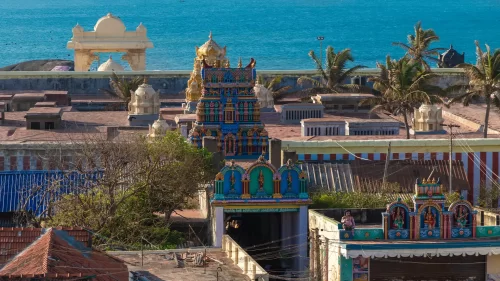
Arulmigu Devi Kanyakumari Bhagavati Amman Temple Temple

Arulmigu Devi Kanyakumari Bhagavati Amman Temple

Arulmigu Devi Kanyakumari Bhagavathi Amman Temple is a Hindu temple dedicated to Goddess Kanyakumari located at the southern tip of India.
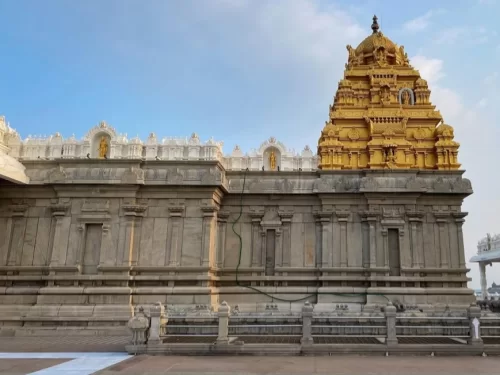
Kanniyakumari Shri Tirupathi Temple, grand Balaji temple in Kanyakumari with golden vimana and Dravidian-style architecture Temple

Kanniyakumari Shri Tirupathi Temple

Kanniyakumari Shri Tirupathi Temple is a revered Hindu temple dedicated to Lord Venkateswara, attracting devotees in southern Tamil Nadu.

Frequently Asked Questions About Kumari Amman Temple

Kumari Amman Temple is one of the most important pilgrimage sites in South India and is revered as a Shakti Peetha. Its unique location near the meeting point of the Arabian Sea, Bay of Bengal, and Indian Ocean makes it appealing for both devotees and travelers interested in spiritual and coastal experiences.
Most visitors spend around one to two hours at the temple. This is generally enough for darshan, walking around the temple surroundings, and enjoying the nearby coastal viewpoints. Extra time may be needed during festivals or weekends when waiting lines are longer.
Early morning is considered the most comfortable time because crowds are usually lighter and the weather is pleasant. Evening is another good option if you want to experience the sea breeze and temple aarti, although visitor numbers are generally higher.
Limited parking is available in nearby areas of Kanyakumari town. Visitors arriving by private vehicle may need to walk a short distance from the parking area to the temple entrance, especially during busy weekends and festival periods.
Yes, the temple is generally suitable for senior citizens because the surrounding pathways are mostly flat and walking difficulty is low. However, some inner sections may include steps, so visitors with mobility concerns should plan accordingly.
The temple offers partial wheelchair accessibility. Main areas are easier to access, but certain inner sections may have steps that limit movement. Visitors requiring assistance may find it helpful to travel with a companion.
Visitors should wear modest clothing that respects temple traditions. Footwear must be removed before entering the shrine area, and all visitors are expected to follow the temple dress code and maintain respectful behavior inside the premises.
Photography is generally allowed in exterior public areas around the temple. However, photography inside the sanctum and certain sacred sections is restricted. Always follow the instructions provided by temple authorities during your visit.
The temple is located in Kanyakumari town and is easily accessible by road, taxi, auto rickshaw, and local buses. Kanyakumari Railway Station is about two kilometers away, while Trivandrum International Airport is the nearest airport at approximately ninety five kilometers.
Popular nearby attractions include the Sunset View Point, Kanyakumari Beach, Vivekananda Rock viewpoints, and other important temples in Kanyakumari. These places can easily be combined with a temple visit for a more complete sightseeing experience.
Crowds are usually highest during weekends, Fridays, full moon days, Navratri, and other major Hindu festivals. Visiting early in the morning on regular weekdays usually offers a calmer experience with shorter waiting times for darshan.
Carry drinking water, comfortable footwear for walking outside the temple, and clothing suitable for warm coastal weather. Since footwear must be removed before entering, keeping a small bag for personal belongings can also make your visit more convenient.

Loved this place ? Let’s Plan Your Tamil Nadu Trip

Get customized Tamil Nadu tour planning designed around temple visit timing, seasonal weather comfort, road travel distances, and realistic pacing across regions. Whether you are visiting for architectural heritage, spiritual journeys, coastal relaxation,

⚡ Quick Response | 💰 Free consultation | 🕒 24×7 expert support

×

Plan Your Trip