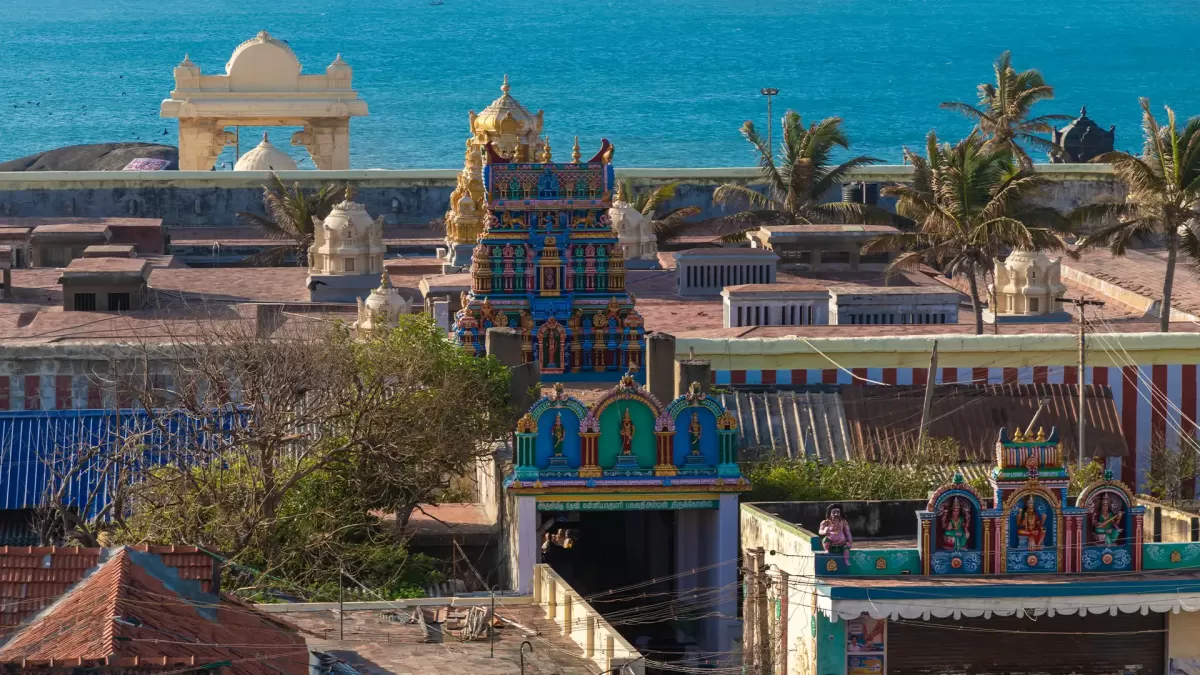
Arulmigu Devi Kanyakumari Bhagavathi Amman Temple, Kanyakumari, Tamil Nadu, India

Arulmigu Devi Kanyakumari Bhagavati Amman Temple , Kanniyakumari
The temple is visited for worship of Goddess Bhagavathi and its location near the meeting point of the Arabian Sea, Bay of Bengal, and Indian Ocean. It is an active pilgrimage site with regular rituals and draws visitors throughout the year.

Quick Facts About Arulmigu Devi Kanyakumari Bhagavati Amman Temple

Arulmigu Devi Kanyakumari Bhagavathi Amman Temple, Kanyakumari, Tamil Nadu Quick Facts

Entry Fee No entry fee
Timings Approx. 4:30 AM – 12:30 PM and 4:00 PM – 8:00 PM; timings may vary during festivals and special rituals
Altitude (m) Approximately 30 m above sea level
Ideal Visit Duration 1–2 hours
Best Time of Day Early morning for darshan and evening for sunset atmosphere nearby coastal area
Crowd Level High during weekends, Navratri, Chaitra Purnima, and peak tourist season; moderate on weekdays
Distance from City Centre (km) 0 km (located within Kanyakumari town near the seashore)
Walking Difficulty Easy; paved approach with short walking distance from parking areas
Parking Available Yes, paid and roadside parking available nearby depending on crowd conditions
Last Mile Access Direct road access with short walk to temple entrance
Suitable for Kids Yes
Suitable for Seniors Yes, with assistance during peak crowd hours
Wheelchair Friendly Partially accessible; main pathways are usable but crowd density and steps near entrance may limit movement

Why Visit Arulmigu Devi Kanyakumari Bhagavathi Amman Temple, Kanniyakumari, Tamil Nadu

Visitors come to Arulmigu Devi Kanyakumari Bhagavathi Amman Temple to worship the goddess Bhagavathi, an important deity in the coastal town of Kanniyakumari. The temple is closely linked to the town’s identity and is a key stop for pilgrims visiting the southernmost point of mainland India.

The atmosphere is active and devotional, with continuous rituals, pilgrim gatherings, and movement of visitors throughout the day. Located near the shoreline, the temple experiences sea breeze and changing light conditions that shape the visitor experience during different times of the day.

What makes this temple distinct is its coastal location near the meeting point of the Arabian Sea, Bay of Bengal, and Indian Ocean, combined with its strong religious significance. Its setting allows travelers to experience both a living place of worship and the unique geography of Kanniyakumari.

History of Arulmigu Devi Kanyakumari Bhagavathi Amman Temple, Kanniyakumari, Tamil Nadu

Arulmigu Devi Kanyakumari Bhagavathi Amman Temple is an ancient Hindu shrine located at the southern tip of India in Kanniyakumari, dedicated to Goddess Bhagavathi, also revered as Devi Kanyakumari. The temple holds a long-standing place in regional worship traditions along the Tamil coast.

The temple is closely associated with the legend of Goddess Devi Kanyakumari, believed to represent a form of Goddess Parvati who performed penance at this sacred coastal site. This association has made the temple an important center of Shakti worship in South India.

Today, the temple remains one of the most significant pilgrimage sites in Kanniyakumari, drawing devotees throughout the year and continuing its role as a key spiritual landmark at the meeting point of the Arabian Sea, Bay of Bengal, and Indian Ocean.

Best Time to Visit Arulmigu Devi Kanyakumari Bhagavathi Amman Temple, Kanniyakumari, Tamil Nadu

Arulmigu Devi Kanyakumari Bhagavathi Amman Temple is best visited when coastal weather is clear and ferry services to nearby viewpoints operate smoothly, allowing visitors to comfortably experience both the temple rituals and the confluence of three seas.
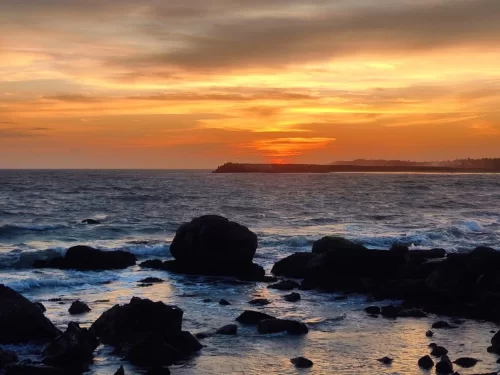
  • Ideal Months: October to March is the most suitable period for visiting, especially for temple darshan and exploring nearby seafront attractions.
  • Weather Conditions: These months generally offer pleasant coastal temperatures, calmer sea conditions, and clearer horizons that enhance sunrise and sunset views from the temple area.
  • Periods to Avoid: April to June can be hot and humid, reducing comfort during daytime visits. Peak monsoon months may also bring rough sea conditions, affecting ferry access to offshore viewpoints.

How to Reach Arulmigu Devi Kanyakumari Bhagavathi Amman Temple, Kanniyakumari, Tamil Nadu

  • By Air: Trivandrum International Airport is the nearest airport, located about 95 km from Kanniyakumari. It offers frequent domestic and international connectivity. From the airport, taxis and buses are available for direct travel to Kanniyakumari town.
  • By Train: Kanniyakumari Railway Station is the nearest railhead, situated approximately 1.5 km from the temple. It has direct train connectivity with major cities including Chennai, Bengaluru, Mumbai, and Delhi. Auto-rickshaws and taxis are easily available for short-distance travel to the temple.
  • By Road: The temple is located at the southern tip of India in Kanniyakumari town and is well connected via NH 44 and state highways. Regular buses operate from Trivandrum, Nagercoil, Madurai, and other major Tamil Nadu and Kerala cities. The temple is easily accessible by auto-rickshaw, taxi, and local transport, with heavy tourist flow during sunrise, sunset, and festival days.

What to Expect When You Visit Arulmigu Devi Kanyakumari Bhagavathi Amman Temple, Kanyakumari, Tamil Nadu

  • is located at the southernmost tip of mainland India, set close to the coastline where the Arabian Sea, Bay of Bengal, and Indian Ocean converge.
  • The temple environment is coastal and open, with strong sea winds, high humidity, and bright sunlight for most of the day. Surrounding areas include beach viewpoints, ferry points, and busy tourist streets.
  • Access involves walking through regulated entry points near the coastline. Visitors may need to queue for darshan, especially during peak pilgrimage periods and tourist seasons.
  • Basic facilities such as shoe stands, ticket counters, small shops selling offerings, and nearby food stalls are available outside the temple premises. Additional urban amenities are located within walking distance in Kanyakumari town.
  • Visitor activity is a mix of devotees and tourists, with higher crowd density during sunrise, sunset, weekends, and festival days, which can lead to longer waiting times for entry.
  • The temple follows traditional Hindu worship customs, requiring modest clothing, removal of footwear, and respectful behavior inside sanctum areas. Photography may be restricted in certain inner zones.
  • The overall experience is shaped by its coastal location, so visitors should expect variable conditions such as heat during midday, strong winds near the shore, and crowded viewing points during scenic hours.

Important Visitor Information for Arulmigu Devi Kanyakumari Bhagavathi Amman Temple, Kanniyakumari, Tamil Nadu

  • The temple experiences very high footfall during Chaitra Purnima, Navratri, and major Hindu festival days, while weekday mornings generally offer a comparatively calmer darshan experience.
  • Early morning hours are considered best for shorter queues and peaceful worship, whereas sunset periods and festival timings attract dense crowds due to the temple’s coastal pilgrimage significance.
  • Kanniyakumari’s coastal climate remains humid and windy throughout the year, with monsoon months (October–December) bringing heavy rain and rough sea conditions around the temple surroundings.
  • Modest traditional attire is expected inside the temple, with visitors advised to wear clothing that covers shoulders and knees in accordance with devotional customs.
  • The temple is located near the shoreline where strong sea winds, wet stone surfaces, and tidal splash zones can make walking areas slippery, especially during high tide or rain.
  • During peak pilgrimage days, queue movement can become slow and tightly packed near the sanctum, so visitors should remain patient and take care of personal belongings.

Photography and Viewpoints at Arulmigu Devi Kanyakumari Bhagavathi Amman Temple, Kanyakumari, Tamil Nadu

  • The temple entrance gopuram and stone corridors offer the most defined framing, capturing Dravidian architecture with direct context to the ocean-facing pilgrimage setting at the southern tip of India.
  • From the immediate temple courtyard, the sanctum approach and flagstaff alignment provide balanced compositions, especially when framed during steady darshan movement of devotees.
  • Early morning light is the most favorable for capturing the temple façade with minimal glare, while coastal humidity and strong midday sunlight can reduce clarity in exterior shots.
  • Photography inside the sanctum is strictly prohibited, and restrictions are also enforced in certain inner corridors where darshan movement is continuous and tightly regulated.
  • Viewpoints near the temple steps leading toward the seafront allow partial coastal framing, combining temple architecture with glimpses of the Arabian Sea–Bay of Bengal confluence zone.
  • Peak crowd conditions occur during Navaratri, Chaitra Purnima, and holiday weekends, often limiting access to stable framing points near the main entrance and flagstaff area.
  • Security and temple administration controls regulate movement during peak darshan hours, affecting how long visitors can hold positions at central courtyard viewpoints.

Near By Attraction

Sunset Point Kanniyakumari  Viewpoint

Sunset View Point Kanniyakumari

Sunset View Point is a coastal viewpoint located in Kanyakumari, Tamil Nadu, known for its views of the sun setting over the Arabian Sea.
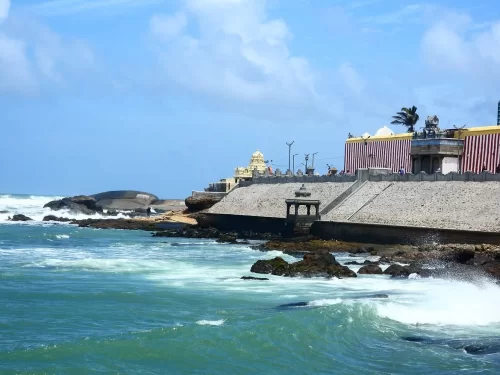
Kumari Amman Temple Temple

Kumari Amman Temple

Kumari Amman Temple is an ancient Hindu temple dedicated to Goddess Devi Kanya Kumari, located at the southern tip of India in Kanyakumari, Tamil Nadu.
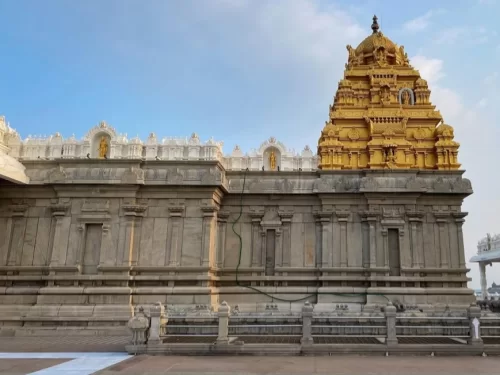
Kanniyakumari Shri Tirupathi Temple, grand Balaji temple in Kanyakumari with golden vimana and Dravidian-style architecture Temple

Kanniyakumari Shri Tirupathi Temple

Kanniyakumari Shri Tirupathi Temple is a revered Hindu temple dedicated to Lord Venkateswara, attracting devotees in southern Tamil Nadu.

Frequently Asked Questions About Arulmigu Devi Kanyakumari Bhagavati Amman Temple

Arulmigu Devi Kanyakumari Bhagavathi Amman Temple is an important religious attraction in Kanyakumari known for its spiritual significance, coastal setting, and traditional architecture. Visitors often combine the temple with nearby sightseeing and sunrise or sunset viewpoints during their trip.
The temple generally opens from around 4:30 AM to 12:30 PM and again from 4:00 PM to 8:00 PM. Timings may change during festivals and special religious occasions.
Entry to the temple is free for visitors. Donations are optional and can be offered according to individual preference.
Most travelers spend about one to two hours visiting the temple, attending darshan, and exploring the surrounding coastal area.
October to March offers pleasant weather for temple visits and nearby sightseeing. Early mornings are ideal for peaceful darshan and comfortable exploration.
Paid and roadside parking options are available near the temple depending on visitor numbers and the season.
Yes. The temple is suitable for senior citizens, although assistance may be helpful during crowded festival periods.
Yes. Families with children regularly visit the temple. Parents should ensure children follow temple rules and maintain respectful behavior.
The temple is partially wheelchair accessible. Main pathways are easier to use, though some entrances and crowded areas may present challenges.
Photography is generally restricted inside the sanctum and certain inner areas. Outdoor photography is usually permitted where allowed by temple authorities.
Visitors should wear modest clothing suitable for a place of worship and remove footwear before entering the temple premises.
Nearby attractions include Sunset View Point, Kumari Amman Temple, Vivekananda Rock Memorial ferry area, and other coastal landmarks around Kanyakumari.

Loved this place ? Let’s Plan Your Tamil Nadu Trip

Get customized Tamil Nadu tour planning designed around temple visit timing, seasonal weather comfort, road travel distances, and realistic pacing across regions. Whether you are visiting for architectural heritage, spiritual journeys, coastal relaxation,

⚑ Quick Response | πŸ’° Free consultation | πŸ•’ 24Γ—7 expert support

×

Plan Your Trip