Quick Facts About Arjuna's Penance
Quick Facts About Arjuna's Penance
| Entry Fee | INR 50 per person (ASI ticket) |
|---|---|
| Timings | 6:00 AM – 6:00 PM |
| Altitude (m) | 15 |
| Ideal Visit Duration | 30–45 minutes |
| Best Time of Day | Morning for soft light and fewer crowds |
| Crowd Level | Moderate, higher during weekends and holidays |
| Distance from City Centre (km) | 58 km from Chennai city center |
| Walking Difficulty | Low, flat pathways around the site |
| Parking Available | Yes, near the monument entrance |
| Last Mile Access | Auto-rickshaws, taxis, and guided tours from Mahabalipuram town |
| Suitable for Kids | Yes |
| Suitable for Seniors | Yes, easy walking paths with seating areas |
| Wheelchair Friendly | Partial accessibility; flat main pathways but uneven surfaces near carvings |
Why Visit Arjuna's Penance
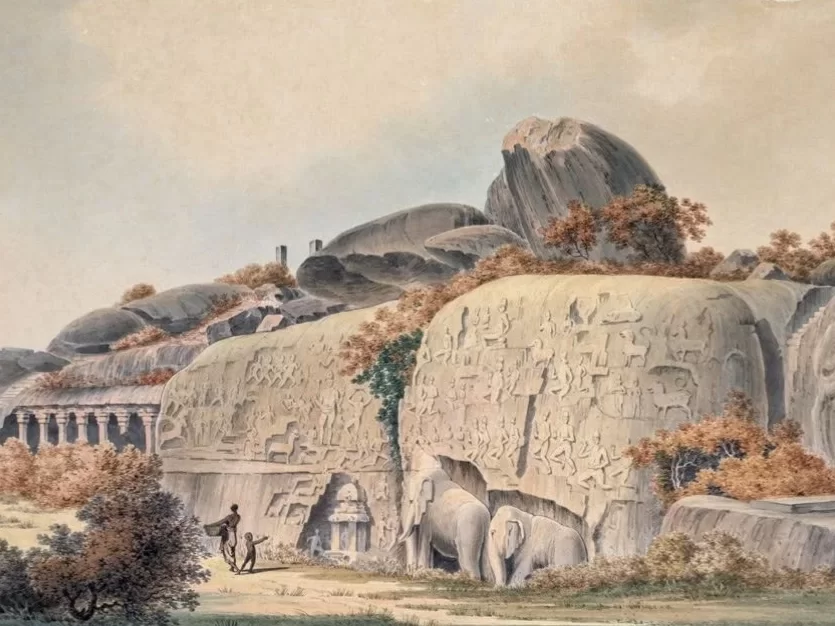
Visitors come to Arjuna's Penance to study one of the largest open-air rock reliefs in the world, featuring detailed carvings that depict scenes from the Mahabharata and Hindu mythology.
The atmosphere at the site is calm and contemplative, with the relief set against a backdrop of natural rock formations and coastal scenery, providing a peaceful environment for observation and photography.
What makes this site distinct is its monumental scale, intricate sculptural details, and the seamless integration of natural features with mythological storytelling, offering a unique experience for art, history, and culture enthusiasts.
History of Arjuna's Penance
Arjuna's Penance, also known as the Descent of the Ganges, is a 7th-century rock relief created during the Pallava dynasty, representing important scenes from Hindu epics and mythology.
The relief holds cultural and religious significance as it illustrates divine narratives and continues to be a reference for scholars of South Indian art and temple architecture.
Best Time to Visit Arjuna's Penance
The site is best visited during the cooler months when the weather is comfortable for walking around the relief and observing the intricate carvings.
- Ideal months: November to February
- Weather conditions: Mild temperatures, low humidity, and clear skies for photography and detailed viewing
- Periods to avoid: April to June due to high heat, and October during monsoon showers which can make pathways slippery
How to Reach Arjuna's Penance
- Nearest airport: Chennai International Airport, approximately 60 km from Mahabalipuram, with taxis and rental cars available for the onward journey.
- Nearest railway station: Chengalpattu Railway Station, about 25 km from Mahabalipuram, with taxis and local buses connecting to the site.
- Road access: Well-connected via East Coast Road (ECR); private vehicles, taxis, and buses from Chennai and nearby towns provide easy access to Mahabalipuram monuments.
What to Expect When You Visit Arjuna's Penance
- The site features a vast open-air rock relief set against natural rock formations, providing a visually striking and serene environment.
- Facilities include basic seating areas, interpretive signage, and nearby restrooms; food options are available in Mahabalipuram town.
- Movement is on mostly flat stone pathways; some areas have uneven surfaces, so caution is required while walking.
- Visitors generally move slowly to observe carvings and take photographs; weekends and holidays may be busier, while weekdays are quieter.
Important Visitor Information for Arjuna's Penance
- Crowd and weather notes: Moderate crowds on weekdays; higher visitor numbers during weekends and public holidays. Hot weather from April to June can be uncomfortable for long visits.
- Peak and quiet visiting hours: Peak hours are 10:00 AM – 4:00 PM; early morning is quieter and ideal for photography and detailed viewing of carvings.
- Dress code: Comfortable and modest attire recommended; wear suitable footwear for walking on uneven surfaces.
- Safety notes: Stay on marked pathways and avoid climbing on the rock surfaces; supervise children closely near edges.
Photography and Viewpoints at Arjuna's Penance
- Best viewpoints are from the front and side vantage points along the main pathway, capturing the full extent of the relief and surrounding rock formations.
- Early morning or late afternoon provides soft natural light that highlights the carvings and textures, ideal for detailed photography.
- Photography is allowed throughout the site, but climbing on the rock relief is prohibited to preserve the monument.
- Crowds during weekends and holidays can obstruct shots; visiting on weekdays offers clearer views and better access for photography.