Soni Ji Ki Nasiya Jain Temple: Ajmer, Rajasthan, India

Soni Ji Ki Nasiya Jain Temple , Ajmer
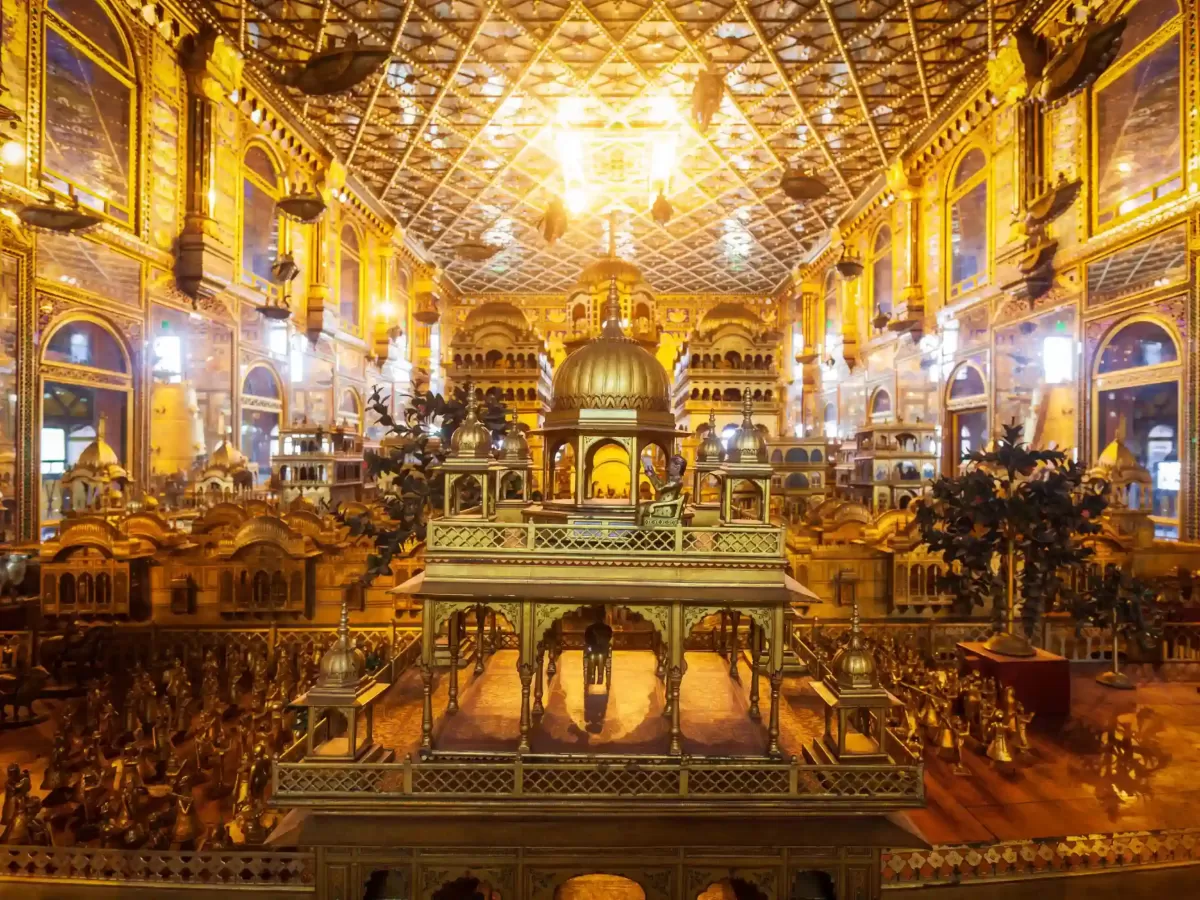
Visitors come primarily to see the Swarna Nagari, or City of Gold, a double-story hall containing gold-plated wooden replicas of Jain astronomical concepts and the city of Ayodhya. The temple is architecturally distinct for its use of red sandstone and its intricate interior carvings depicting Jain mythology.

Quick Facts About Soni Ji Ki Nasiya Jain Temple

Quick Facts: Soni Ji Ki Nasiya Jain Temple

Entry Fee Indians: 25; Foreigners: 50
Timings 09:00 to 16:00 (Daily)
Altitude (m) 485 m
Ideal Visit Duration 45 to 60 minutes
Best Time of Day Morning hours (09:00 to 11:00) for better natural lighting on the gold models
Crowd Level Low to Moderate
Distance from City Centre (km) 1 km from Ajmer city centre
Walking Difficulty Easy (Indoor museum area; limited stairs to the viewing gallery)
Parking Available No (Limited roadside space; public lots nearby recommended)
Last Mile Access Walking, auto-rickshaw, or e-rickshaw via Prithvi Raj Marg
Suitable for Kids Yes (The Swarna Nagari model is highly engaging for children)
Suitable for Seniors Yes
Wheelchair Friendly Partial (Main temple floor is accessible; upper viewing gallery for the gold model is not)

Why Visit Soni Ji Ki Nasiya Jain Temple: An Architectural Marvel of Gold

Visitors come to Soni Ji Ki Nasiya to witness the Swarna Nagari, or "City of Gold," a massive gilded wooden depiction of the Jain concept of the universe housed within a private hall. This 19th-century masterpiece is a primary draw for those seeking to see the intricate craftsmanship of three-dimensional models that use over 1,000 kilograms of gold to represent celestial palaces, chariots, and the five stages of a Tirthankara's life.

The on-ground atmosphere transitions from the understated red sandstone exterior of the Digambar temple into a vibrant, multi-sensory environment within the museum wing. Inside, the play of light against gold-leafed surfaces and belgian glasswork creates a luminous, ethereal quality, while the meticulous detail of the miniature cities provides a quiet, contemplative space for travelers to study the complex cosmology of Jainism away from the noise of Ajmer’s main thoroughfares.

What makes this temple distinct for travelers is the rare combination of high-Victorian era aesthetics and traditional Jain iconography, resulting in a display found nowhere else in India. Unlike typical stone-carved temples, this site functions as a vertical museum of precious metals and woodwork, offering a specific visual narrative of the "Great Renunciation" through thousands of individual figurines and detailed replicas of the mythological Ayodhya, making it a singular destination for those interested in religious art and engineering.

History and Architectural Heritage of Soni Ji Ki Nasiya Jain Temple

Soni Ji Ki Nasiya Jain Temple, also known as the Ajmer Jain Temple, is an architecturally profound structure built in the late 19th century. Commissioned by Seth Moolchand Soni and completed in 1865, the temple is dedicated to Lord Rishabhdev (Adinath), the first Tirthankara of Jainism. The exterior is constructed from red sandstone, while the interior Swarna Nagari (City of Gold) hall took twenty-five years to complete, showcasing a high degree of technical mastery from the Digambar Jain tradition.

The temple is globally unique for its "Swarna Nagari" gallery, which houses a massive, gold-plated wooden depiction of Ayodhya and the five stages (Panch Kalyanaka) of a Tirthankara's life. Utilizing over 1,000 kilograms of gold, the installation features intricate models of flying chariots, glass mosaics, and silver-coated structures. This site serves as a vital cultural repository for Jain cosmology and remains a primary destination for travelers seeking to understand the intersection of 19th-century Rajasthani craftsmanship and Jain religious philosophy.

The Best Time to Visit Soni Ji Ki Nasiya Jain Temple in Ajmer

Timing your visit to this architectural marvel is less about the weather and more about the sun’s position, as the "Swarna Nagari" (City of Gold) chamber inside depends on natural light to illuminate its intricate gold-leaf carvings. Because the primary attraction is housed within a massive double-story hall, the experience is best enjoyed during the bright, clear days of the post-monsoon and winter seasons.

  • Ideal Months: October to March, when the Rajasthan sky is most consistently clear, ensuring maximum natural light enters the hall to highlight the gold-plated wooden structures.
  • Weather Conditions: Expect crisp, dry weather with temperatures between 10°C and 25°C; this makes the walk through the narrow streets of Ajmer to reach the temple entrance significantly more comfortable than in the humid months.
  • Periods to Avoid: Late June to August should be approached with caution, as heavy monsoon clouds can dim the interior hall, making it difficult to see the finer details of the celestial models. Furthermore, avoid visiting during the midday break (typically 1:00 PM to 2:30 PM) as the gallery access to the gold city model may be temporarily restricted or closed.

How to Reach Soni Ji Ki Nasiya Jain Temple: Practical Access Guide

Soni Ji Ki Nasiya, also known as the Ajmer Jain Temple, is located on Prithvi Raj Marg in the heart of Ajmer, Rajasthan. Its central location near Akbar's Fort and the Daulat Bagh makes it highly accessible for tourists visiting the city's historical circuit.

  • By Air: The nearest airport is Kishangarh Airport (KQH), located approximately 27 km away, primarily serving domestic flights from major Indian cities. For international travelers, Jaipur International Airport (JAI) is the most viable hub at 135 km, followed by a 2.5-hour taxi or bus journey to Ajmer.
  • By Rail: Ajmer Junction (AII) is the nearest railway station, situated just 1.5 km from the temple. Major express trains, including the Shatabdi and Vande Bharat, connect Ajmer to Delhi, Jaipur, and Ahmedabad. Auto-rickshaws and cycle-rickshaws are available at the station for a short 5-10 minute commute.
  • Road Access: The temple is located on Prithvi Raj Marg, a prominent city artery. Ajmer is well-connected via NH48, with frequent RSRTC Volvo and express buses arriving at the Ajmer Central Bus Stand (approx. 2 km from the temple) from Jaipur, Delhi, and Jodhpur.
  • Last-Mile Connectivity: Due to its central location, the temple is best reached via auto-rickshaws or e-rickshaws. If you are staying near the Dargah Sharif area, the temple is within a manageable walking distance of approximately 1 km through the local bazaar.
  • Realistic Travel Conditions: The area surrounding the temple is a busy commercial zone; consequently, street parking for private four-wheelers is virtually non-existent. Travelers using private cars should park at designated city parking lots and use an auto-rickshaw for the final stretch to avoid heavy traffic congestion.

What to Expect When You Visit Soni Ji Ki Nasiya Jain Temple

  • Environment and Surroundings: This 19th-century Digambara Jain temple, also known as the Ajmer Jain Temple, features a deceptive exterior of red sandstone that opens into the spectacular "Swarna Nagari" (City of Gold) hall. The environment is divided into a traditional place of worship and a museum-like gallery. The highlight is a massive double-story hall containing a gold-plated wooden architectural model of Ayodhya, featuring intricate depictions of flying chariots, palaces, and glasswork protected behind large viewing windows.
  • Facilities and Amenities: The site is well-maintained but operates with basic facilities. There is a small ticketing window for entry to the Swarna Nagari gallery. Restrooms are limited and rudimentary. Information plaques provide some context in Hindi and English, but they are aged. Shops directly outside the entrance sell religious items and snacks, but there are no modern café facilities within the temple walls.
  • Accessibility and Movement: The main golden hall is viewed from an upper gallery reached by a flight of stairs, which may pose a challenge for visitors with mobility impairments. The temple is located in a busy part of Ajmer near Prithvi Raj Marg; the immediate entrance area is often crowded with local traffic and pedestrians. Inside, the movement is generally linear, guiding visitors around the perimeter of the central model.
  • Typical Visitor Behavior and Conditions: Unlike the high-pressure environment of nearby pilgrimage sites, this temple is relatively calm and serves more as a site of quiet contemplation and architectural appreciation. As it is a functional place of worship, visitors must remove shoes at the entrance and dress modestly (shoulders and knees covered). Photography is permitted in the golden hall gallery for a small fee, but it is essential to remain quiet to respect the practitioners in the adjoining prayer areas.

What to Expect When You Visit Soni Ji Ki Nasiya Jain Temple

  • Environment and Surroundings: This 19th-century Digambara Jain temple, also known as the Ajmer Jain Temple, features a deceptive exterior of red sandstone that opens into the spectacular "Swarna Nagari" (City of Gold) hall. The environment is divided into a traditional place of worship and a museum-like gallery. The highlight is a massive double-story hall containing a gold-plated wooden architectural model of Ayodhya, featuring intricate depictions of flying chariots, palaces, and glasswork protected behind large viewing windows.
  • Facilities and Amenities: The site is well-maintained but operates with basic facilities. There is a small ticketing window for entry to the Swarna Nagari gallery. Restrooms are limited and rudimentary. Information plaques provide some context in Hindi and English, but they are aged. Shops directly outside the entrance sell religious items and snacks, but there are no modern café facilities within the temple walls.
  • Accessibility and Movement: The main golden hall is viewed from an upper gallery reached by a flight of stairs, which may pose a challenge for visitors with mobility impairments. The temple is located in a busy part of Ajmer near Prithvi Raj Marg; the immediate entrance area is often crowded with local traffic and pedestrians. Inside, the movement is generally linear, guiding visitors around the perimeter of the central model.
  • Typical Visitor Behavior and Conditions: Unlike the high-pressure environment of nearby pilgrimage sites, this temple is relatively calm and serves more as a site of quiet contemplation and architectural appreciation. As it is a functional place of worship, visitors must remove shoes at the entrance and dress modestly (shoulders and knees covered). Photography is permitted in the golden hall gallery for a small fee, but it is essential to remain quiet to respect the practitioners in the adjoining prayer areas.

Gilded Vistas: Photography and Viewpoints at Soni Ji Ki Nasiya Jain Temple

  • The Swarna Nagari Gallery: The architectural highlight is the first-floor museum containing the "City of Gold." For the most comprehensive shot of the 1,000 kg gold-plated Ayodhya diorama, use a wide-angle lens from the elevated viewing balcony. This angle captures the scale of the golden elephants, chariots, and the symbolic Mount Sumeru.
  • Red Sandstone Exterior: To document the temple's "Lal Mandir" identity, photograph the facade from across the street. The red Karauli sandstone is most vibrant during the early morning (09:00–10:30) when the sunlight hits the intricate carvings directly, emphasizing the contrast with the 82-foot-high white marble Manastambha.
  • Handling Glass Reflections: The golden models are housed behind glass partitions. To minimize glare, avoid using a flash; instead, press your lens hood directly against the glass or use a polarizing filter. The natural light filtering through the upper windows creates a soft, authentic luster on the gold leaf that flash photography often flattens.
  • Strict Sanctum Restrictions: While photography is permitted in the Swarna Nagari (Golden City) hall upon payment of a camera fee, it is strictly forbidden in the main devotional area where the idol of Lord Adinath is seated. Always check for signage or consult the temple priest before pointing a camera toward any prayer space.
  • The Manastambha Pillar: The white marble pillar in the courtyard provides a perfect vertical focal point. Shoot from a low perspective to emphasize its height against the red temple backdrop. The late afternoon "Golden Hour" (16:30–17:30) provides the best warm lighting for this marble structure.
  • Footfall and Space Constraints: The viewing gallery for the golden city is narrow. Using a tripod is practically impossible and often prohibited during peak tourist hours. For steady shots, visit on a weekday morning and utilize the gallery railings as a makeshift stabilizer.

Near By Attraction

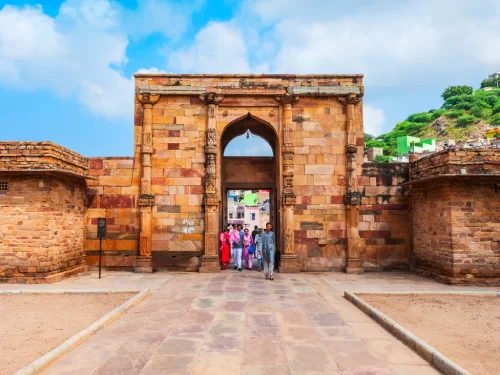
Taragarh Fort Ajmer grand yellow sandstone gateway with massive arched entrance flanked by bastions against Aravalli hill backdrop tourists walking pathway historic fortress in Rajasthan tour packages Fort

Taragarh Fort

A historic hill fort overlooking Ajmer, built in the 14th century.

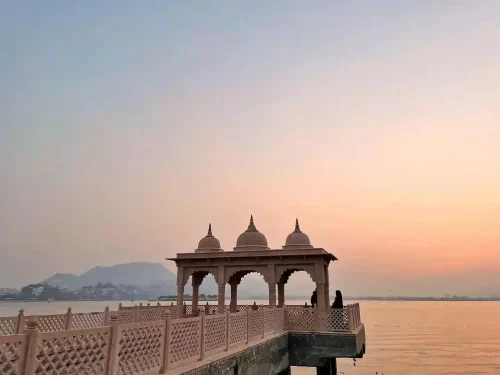
Ana Sagar Lake Sunset view of a marble chhatri pavilion and stone walkway at the historic artificial lake in Ajmer. Lake

Ana Sagar Lake

Ana Sagar Lake is an artificial lake constructed by Arnoraja, the grandfather of Prithviraj Chauhan, between 1135 and 1150 CE.

Nareli Gyanodaya Digambar Jain Temple Ajmer Striking modern architectural complex featuring twenty-four miniature temples on a hillside Rajasthan. Temple

Nareli Gyanodaya Digambar Jain Temple

Nareli Gyanodaya Digambar Jain Temple is a modern architectural complex and pilgrimage site located on the outskirts of Ajmer.

Frequently Asked Questions About Soni Ji Ki Nasiya Jain Temple

Soni Ji Ki Nasiya Jain Temple is located in Ajmer and is easily accessible by road from the main city area.
Soni Ji Ki Nasiya Jain Temple is generally open from morning to evening, and visitors should confirm updated timings before planning their visit.
The entry fee for Soni Ji Ki Nasiya Jain Temple is nominal, with separate charges applicable for camera use if permitted.
The best time to visit Soni Ji Ki Nasiya Jain Temple is between October and March when the weather is pleasant for sightseeing.
Travelers can reach Soni Ji Ki Nasiya Jain Temple by taxi, auto rickshaw, or private vehicle from nearby railway station or bus stand.
Most visitors spend around 1 to 2 hours exploring Soni Ji Ki Nasiya Jain Temple and its detailed exhibits.
Photography policies at Soni Ji Ki Nasiya Jain Temple may vary, and visitors should follow guidelines displayed at the entrance.
Visitors can see intricate gold plated wooden displays, Jain cosmology exhibits, and detailed craftsmanship at Soni Ji Ki Nasiya Jain Temple.
Soni Ji Ki Nasiya Jain Temple is suitable for family visits, offering educational and cultural insights in an indoor setting.
Soni Ji Ki Nasiya Jain Temple can easily be included in a one day sightseeing itinerary along with other nearby attractions.

Loved this place ? Let’s Plan Your Rajasthan Trip

Get customized Rajasthan tour planning designed around desert climate comfort, long-distance road travel flow, heritage exploration time, and realistic pacing between regions. Whether you are visiting for fort architecture, palace heritage, cultural exper

⚑ Quick Response | πŸ’° Free consultation | πŸ•’ 24Γ—7 expert support

×

Plan Your Trip