Nareli Gyanodaya Digambar Jain Temple: Ajmer, Rajasthan, India

Nareli Gyanodaya Digambar Jain Temple , Ajmer
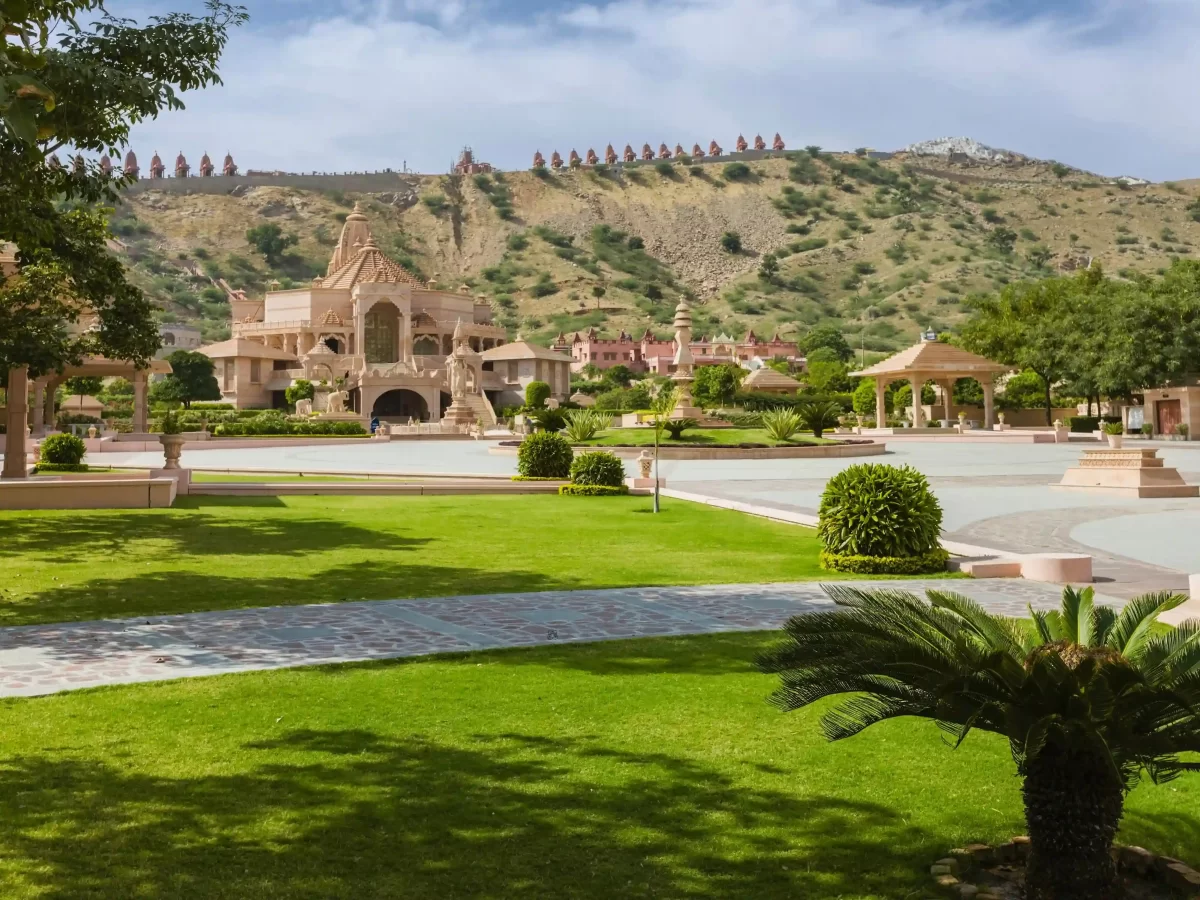
Tourists visit to view the main temple’s contemporary stone carvings and the series of 24 smaller temples dedicated to the Jain Tirthankaras situated on the adjacent hillside. The site is recognized for its blend of traditional Jain architectural principles with modern construction and its extensive landscaped grounds.

Quick Facts About Nareli Gyanodaya Digambar Jain Temple

Quick Facts: Nareli Gyanodaya Digambar Jain Temple

Entry Fee Free
Timings 06:30 to 20:00 (Daily)
Altitude (m) 495 m
Ideal Visit Duration 1.5 to 2 hours
Best Time of Day Early morning or late afternoon (16:30 to 18:30) for sunset views
Crowd Level Moderate; higher on Sundays and Jain festivals
Distance from City Centre (km) 9 km from Ajmer city centre
Walking Difficulty Moderate (The complex is spread across a hill with several steps to reach the smaller shrines)
Parking Available Yes (Large designated parking area at the base)
Last Mile Access Private taxi or auto-rickshaw via NH 48
Suitable for Kids Yes
Suitable for Seniors Moderate (Main temple is accessible; upper shrines require climbing stairs)
Wheelchair Friendly Partial (Lower main temple area is accessible; hill shrines are not)

Why Visit Nareli Gyanodaya Digambar Jain Temple: A Modern Marvel of Lunar Stone

Visitors are drawn to Nareli Gyanodaya to witness a significant contemporary landmark of Digambar Jainism that combines traditional sacred geometry with modern engineering. The complex is a primary destination for those wishing to see the twenty-four miniature temples, known as Chauvisi, which are strategically perched on the hillside and dedicated to each of the Jain Tirthankaras, offering a rare opportunity to explore a vast collection of religious icons in a single, unified site.

The on-ground atmosphere is defined by an expansive sense of openness and purity, as the temple is constructed primarily from gleaming white marble and sits against the rugged, arid backdrop of the Aravalli Range. Travelers experience a deliberate transition from the vibrant activity of the lower gardens to the meditative silence of the hilltop shrines, where the elevated position provides a constant, cooling breeze and a quiet sanctuary far removed from the urban density of Ajmer.

What makes this temple distinct for travelers is its unique architectural layout, which functions as a three-dimensional pilgrimage route through Jain cosmology. Unlike older, compact urban temples, Nareli utilizes the natural elevation of the terrain to create a series of visual landmarks that can be seen for miles, providing a specific aesthetic experience where the stark white stone contrasts sharply with the desert landscape, offering a singular perspective on the evolution of Indian temple design in the 21st century.

History and Architectural Splendor of Nareli Gyanodaya Digambar Jain Temple

Nareli Gyanodaya Digambar Jain Temple, situated on the outskirts of Ajmer, is a modern architectural marvel constructed primarily of white marble. Completed in the late 20th century, the complex is an important pilgrimage site for the Digambar sect of Jainism. The temple is renowned for its grand scale and elevated location on the Aravalli hills, featuring a main shrine dedicated to Guru Adinath, alongside 24 smaller miniature temples (Chauvisi) representing the Tirthankaras.

The site holds immense cultural and religious significance as a center for Jain philosophy and meditation. Its architecture is characterized by intricate stone carvings, sprawling courtyards, and traditional shikharas that reflect ancient Jain design principles in a contemporary setting. For visitors, the temple offers a combination of spiritual sanctity and panoramic views of the Rajasthan landscape, serving as a testament to the enduring craftsmanship and philanthropic traditions of the Jain community.

The Best Time to Visit Nareli Gyanodaya Digambar Jain Temple

For a visit that captures the architectural grandeur of this modern marble complex, the winter season is the only practical window for exploration. As the temple is situated on the outskirts of Ajmer and features multiple hilltop shrines (Vedi) connected by steep, open-air stone staircases, your ability to complete the full circuit is entirely dependent on avoiding the intense heat radiation of the Rajasthan landscape.

  • Ideal Months: November to February provide the most temperate conditions for climbing the hillside to reach all 24 miniature temples representing the Tirthankaras.
  • Weather Conditions: Expect crisp, clear days with temperatures ranging from 10°C to 24°C; these conditions are essential for walking barefoot on the marble floors and stone paths, which remain cool enough for comfortable movement.
  • Periods to Avoid: April to June must be avoided, as the reflective white marble and unshaded uphill treks become dangerously hot, with ambient temperatures often reaching 45°C. Additionally, midday visits during any season are discouraged because the temple typically closes its main doors between 1:00 PM and 4:00 PM.

How to Reach Nareli Gyanodaya Digambar Jain Temple: Access Guide

The Nareli Gyanodaya Digambar Jain Temple is a modern architectural marvel located on the outskirts of Ajmer. Unlike the congested monuments in the old city, this temple is situated directly on the highway, making it exceptionally easy to access for long-distance travelers and local tourists alike.

  • By Air: The nearest airport is Kishangarh Airport (KQH), located approximately 20 km away. For a wider range of flight options, Jaipur International Airport (JAI) is about 125 km away. From either airport, hiring a private taxi is the most convenient way to reach the temple via the national highway.
  • By Rail: Ajmer Junction (AII) is the primary railway station, situated roughly 9 km from the temple. Since the temple is located on the city periphery, you can easily hire an auto-rickshaw or a taxi from the station. The drive typically takes 20–25 minutes.
  • Road Access: The temple is conveniently located right on NH48 (the Jaipur-Ajmer Highway). This makes it a popular stop for travelers driving between Delhi, Jaipur, and Udaipur. It is well-connected by RSRTC buses and private operators; you can request a drop-off at the Nareli Tiraha (crossroads).
  • Last-Mile Connectivity: Because the temple sits directly off the main highway, last-mile connectivity is seamless. Private cars and tourist buses can drive right up to the spacious on-site parking area. For those using public transport, local city buses and shared auto-rickshaws operate frequently between the Ajmer city center and Nareli.
  • Travel Conditions: The roads leading to the temple are broad and well-maintained. However, since the temple complex is spread over a hilly incline, significant walking and climbing of stairs are required to visit all the various shrines (mini-temples). It is recommended to visit during the early morning or late afternoon to avoid the midday heat on the open stone pathways.

What to Expect When You Visit Nareli Gyanodaya Digambar Jain Temple

  • Environment and Surroundings: This modern architectural marvel is located on the outskirts of Ajmer along the NH-8 highway. The temple complex is set against a backdrop of the Aravali hills and is characterized by its sprawling, clean, and well-maintained landscape. Unlike the congested urban temples in the city center, the atmosphere here is expansive and peaceful, featuring 24 miniature temples (Jinalayas) representing the Tirthankaras scattered across the hillside.
  • Facilities and Amenities: The complex is well-equipped for pilgrims and tourists, featuring a large "Bhojnalaya" (dining hall) that serves traditional Jain meals at fixed timings. There are also "Dharamshalas" (guest houses) for overnight stays. Basic facilities include clean public restrooms, a dedicated shoe-stand, and a small complex of shops selling religious books, artifacts, and snacks. Drinking water stations are available, though they are basic.
  • Accessibility and Movement: The site is built on a gradient. While the main temple at the base is easily accessible, reaching the 24 smaller shrines requires a significant uphill climb along paved but steep stone pathways and stairs. There are no elevators or ramps for the hillside section, which can be physically taxing in the heat. The open-air nature of the complex means there is little shade between the different shrines, making hats and hydration essential.
  • Typical Visitor Behavior and Conditions: The temple is a site of active worship; visitors must strictly adhere to Jain etiquette, which includes removing all footwear and avoiding the carry of leather items (belts, wallets, bags) into the sanctums. Modest clothing that covers shoulders and knees is mandatory. While the site is popular for its panoramic views and intricate marble carvings, it remains a quiet place for meditation, and loud behavior is discouraged.

Essential Visitor Information for Nareli Gyanodaya Digambar Jain Temple

  • Crowd Dynamics & Atmosphere: Located on the outskirts of Ajmer, this sprawling temple complex offers a much quieter and more meditative environment than urban sites. While it attracts large numbers of pilgrims during Jain festivals and weekends, visiting on a weekday morning ensures a peaceful experience to admire the complex architecture and hilltop views.
  • Visiting Hours & Lighting: The temple is open daily, typically from 6:00 AM to 8:30 PM (with slightly adjusted hours on Sundays). The best time for photography and viewing the 24 miniature temples on the hillside is just after sunrise or during the "Golden Hour" before sunset when the marble and stone glow against the Aravalli landscape.
  • Dress Code & Temple Etiquette: As a significant Digambar Jain pilgrimage site, strict modest dress is required; shoulders and knees must be covered. You must remove all footwear and leather items (belts, wallets) before entering the main temple areas. Maintaining silence is expected, especially near the main sanctum and during meditation hours.
  • Safety & Physical Effort: The complex is built on a hill and involves navigating a significant number of stone steps to reach the higher shrines and viewpoints. Wear comfortable socks as the stone can be hot or slippery, and pace yourself if visiting during the heat of the day. Handrails are available in many sections, but accessibility for those with severe mobility issues is limited to the lower levels.
  • Weather & Sun Exposure: The site is very open with limited shade between the various temple structures. During the summer months (April–June), the stone floors become extremely hot; early morning visits are strongly advised. Carry a water bottle, though filtered drinking water is usually available within the complex.
  • Wildlife & Belongings: The surrounding hills are home to local monkey populations. Keep food items, plastic bags, and loose accessories inside your bag to avoid attracting them. Be sure to keep your belongings secure while climbing the stairs or taking photos from the viewpoints.

Architectural Grandeur: Photography and Viewpoints at Nareli Gyanodaya Digambar Jain Temple

  • The Hillside Ascent Perspective: To capture the unique cluster of 24 miniature temples (Vimanas) representing the Tirthankaras, position yourself halfway up the stone walkway. This elevated angle provides the necessary compression to show the repetitive symmetry of the shrines against the backdrop of the Aravalli mountain range.
  • The Main Temple Facade: The primary temple, constructed of white marble, is best photographed from the base of the entrance stairs. Use a wide-angle lens to include the towering peaks of the architecture and the meticulously landscaped gardens in the foreground, which provide a natural green frame for the white stone.
  • Golden Hour and Shadow Play: Visit between 16:30 and 18:00. As the sun sets behind the hills, the marble reflects a soft golden hue, and the shadows define the deep carvings of the pillars. The lack of harsh overhead light at this time prevents "blown-out" highlights on the reflective white surfaces.
  • Sanctum Restrictions: Photography of the main idol of Lord Adinath and the interior of the primary prayer hall is strictly prohibited. Security is present to enforce this rule; focus your photography on the external marble fretwork, the ceiling of the external porches, and the landscape views from the terrace.
  • Symmetry and Leading Lines: The central stone pathway leading from the main gate to the temple complex serves as a perfect leading line. Use a tripod (permitted in the outdoor areas) during the early morning (07:00–08:30) to capture the perfect symmetry of the complex before the arrival of large tour groups.
  • Reflective Water Features: The small water bodies and fountains within the garden area offer excellent opportunities for reflection shots of the smaller hillside shrines. For the clearest reflections, ensure you shoot on a windless day, typically early in the morning.

Near By Attraction

Taragarh Fort Ajmer grand yellow sandstone gateway with massive arched entrance flanked by bastions against Aravalli hill backdrop tourists walking pathway historic fortress in Rajasthan tour packages Fort

Taragarh Fort

A historic hill fort overlooking Ajmer, built in the 14th century.

Ana Sagar Lake Sunset view of a marble chhatri pavilion and stone walkway at the historic artificial lake in Ajmer. Lake

Ana Sagar Lake

Ana Sagar Lake is an artificial lake constructed by Arnoraja, the grandfather of Prithviraj Chauhan, between 1135 and 1150 CE.

Adhai Din Ka Jhopra, historic mosque in Ajmer Rajasthan, Indo-Islamic architecture and famous heritage monument. Mosque

Adhai Din Ka Jhopra

Adhai Din Ka Jhopra is a 12th-century mosque built from the ruins of a Sanskrit college and Hindu-Jain temples by Qutb-ud-din Aibak.

Frequently Asked Questions About Nareli Gyanodaya Digambar Jain Temple

Nareli Gyanodaya Digambar Jain Temple is located near Ajmer and is easily accessible by road from the main city area.
Nareli Gyanodaya Digambar Jain Temple is generally open from morning to evening, and visitors should confirm updated timings before planning their visit.
There is no major entry fee to visit Nareli Gyanodaya Digambar Jain Temple, though donations are welcomed inside the premises.
The best time to visit Nareli Gyanodaya Digambar Jain Temple is between October and March when the weather is pleasant for sightseeing.
Travelers can reach Nareli Gyanodaya Digambar Jain Temple by taxi, auto rickshaw, or private vehicle from nearby transport hubs.
Most visitors spend around 1 to 2 hours exploring Nareli Gyanodaya Digambar Jain Temple and its hilltop surroundings.
Photography is allowed in outdoor areas of Nareli Gyanodaya Digambar Jain Temple, though restrictions may apply inside sanctum areas.
Visitors can see large marble structures, Jain idols, and hilltop viewpoints at Nareli Gyanodaya Digambar Jain Temple.
Nareli Gyanodaya Digambar Jain Temple is suitable for family visits, though some sections require climbing steps.
Nareli Gyanodaya Digambar Jain Temple can easily be included in a one day sightseeing itinerary along with other nearby attractions.

Loved this place ? Let’s Plan Your Rajasthan Trip

Get customized Rajasthan tour planning designed around desert climate comfort, long-distance road travel flow, heritage exploration time, and realistic pacing between regions. Whether you are visiting for fort architecture, palace heritage, cultural exper

⚡ Quick Response | 💰 Free consultation | 🕒 24×7 expert support

×

Plan Your Trip