+91 9910402252
admin@chalbanjare.com


| Entry Fee | Free |
| Timings | 06:00 to 19:00 (Daily) |
| Altitude (m) | 486 m |
| Ideal Visit Duration | 30 to 45 minutes |
| Best Time of Day | Morning (07:00 to 09:00) for photography and fewer crowds |
| Crowd Level | Moderate; increases during the afternoon and evening |
| Distance from City Centre (km) | 0.5 km from the Dargah Sharif; 2.5 km from Ajmer Junction |
| Walking Difficulty | Easy to Moderate (Slight uphill walk and some uneven stone flooring) |
| Parking Available | No (Located in narrow congested lanes; park at public lots near Dargah Bazaar) |
| Last Mile Access | Walking or cycle-rickshaw from the main Dargah entrance area |
| Suitable for Kids | Yes |
| Suitable for Seniors | Moderate (Requires walking through narrow lanes and a slight incline) |
| Wheelchair Friendly | No (Approach roads are extremely narrow and the site has steps/uneven surfaces) |
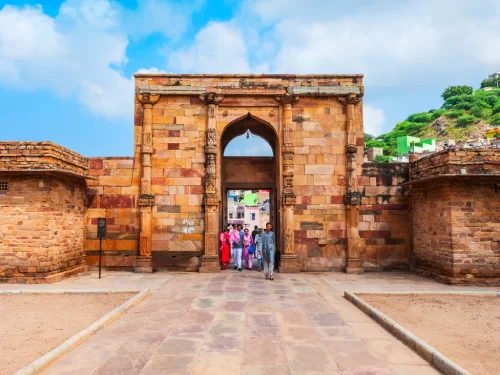
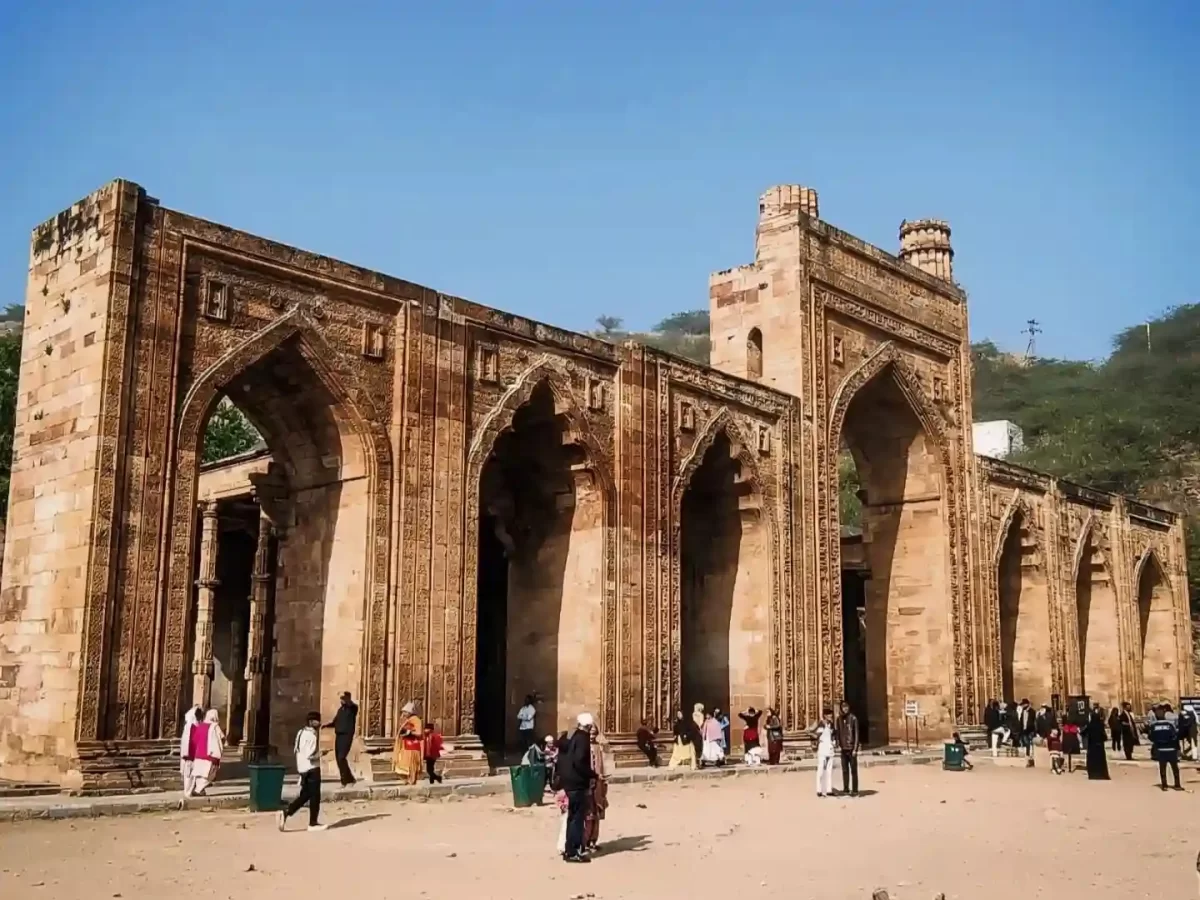
Visitors come to Adhai Din Ka Jhopra to witness one of the oldest surviving mosques in India, renowned for its extraordinary fusion of Hindu, Jain, and Islamic architectural elements. Travelers specifically seek out the massive seven-arched screen wall and the interior prayer hall, where recycled ornate stone pillars from ancient temples were stacked and repurposed to create a unique forest of intricately carved columns that defy traditional structural norms.
The on-ground atmosphere is one of stark, historical gravitas, characterized by the interplay of deep shadows and light filtering through the high vaulted ceilings. Situated on the lower slopes of Taragarh Hill, the site offers a quieter, more academic contrast to the bustling energy of the nearby Dargah Sharif, allowing travelers to walk through a skeletal stone monument where the sound of the wind through the open arches emphasizes the site's age and its transition through different cultural eras.
What makes this place distinct is the sheer density of its stone calligraphy; the yellow sandstone facades are covered in Kufic and Naskh scripts so detailed they resemble fine lace. Unlike the polished marble of later Mughal structures, this site provides a raw, experience-based look at the very beginning of the Delhi Sultanate's architectural influence in Rajasthan, where local craftsmanship was adapted to meet new stylistic demands in just two and a half days, resulting in a singular, hybrid aesthetic.
Adhai Din Ka Jhopra is one of the oldest surviving mosques in India, commissioned by Qutb-ud-din-Aibak in 1192 CE and completed in 1199 CE. The structure was originally a Sanskrit college and temple complex before being converted into a mosque, resulting in a distinct architectural hybrid. The site retains a spectacular seven-arched screen wall adorned with intricate Kufic and Naksh inscriptions, representing early Indo-Islamic engineering and stone-cutting mastery.
The monument is culturally significant for its structural composition, which utilizes over 200 carved pillars salvaged from earlier Hindu and Jain buildings. These pillars, featuring diverse geometric and floral patterns, support a grand prayer hall that showcases the transition of craftsmanship during the Ghurid period. Its name, which translates to "Shed of Two-and-a-Half Days," is tied to historical accounts of its rapid initial conversion or the duration of an annual medieval fair, making it a critical site for understanding the layered heritage of Ajmer.
To appreciate the intricate calligraphic carvings and Indo-Islamic architecture of this 12th-century monument, visiting during the dry, cooler months is essential. As the structure is partially roofless and built from heat-absorbing yellow sandstone, your comfort level depends entirely on avoiding the direct desert sun and the intense heat radiation common in the Ajmer valley.
Adhai Din Ka Jhopra is located on the lower slopes of Taragarh Hill in Ajmer, Rajasthan. It sits approximately 500 meters beyond the Khwaja Gharib Nawaz Dargah Sharif, requiring visitors to navigate the historical heart of the old city.
 Fort
Fort
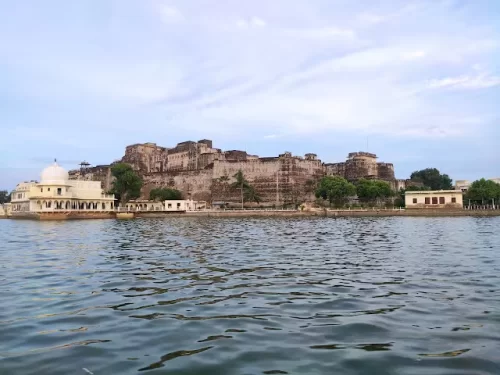
Kishangarh Fort is a historic fort located in Kishangarh town of Rajasthan, India.
 Lake
Lake
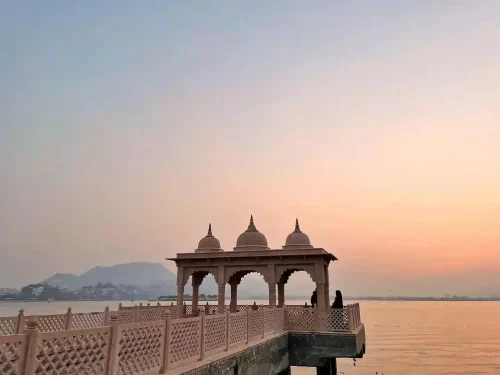
Ana Sagar Lake is an artificial lake constructed by Arnoraja, the grandfather of Prithviraj Chauhan, between 1135 and 1150 CE.
Get customized Rajasthan tour planning designed around desert climate comfort, long-distance road travel flow, heritage exploration time, and realistic pacing between regions. Whether you are visiting for fort architecture, palace heritage, cultural exper
⚡ Quick Response | 💰 Free consultation | 🕒 24×7 expert support