Khwaja Gharib Nawaz Dargah Sharif: Ajmer, Rajasthan, India

Khwaja Gharib Nawaz Dargah Sharif , Ajmer
Tourists and pilgrims visit to observe the site\'s Mughal-style architecture and the daily ritual ceremonies including the lighting of lamps and Qawwali devotional music. It is one of the most significant Islamic pilgrimage destinations in South Asia, drawing millions of visitors of all faiths annually.

Quick Facts About Khwaja Gharib Nawaz Dargah Sharif

Quick Facts: Khwaja Gharib Nawaz Dargah Sharif

Entry Fee Free
Timings 05:00 to 21:00 (Winter); 04:00 to 22:00 (Summer); closed for brief intervals during afternoon prayers
Altitude (m) 480 m
Ideal Visit Duration 1.5 to 3 hours
Best Time of Day Early morning or late evening for Qawwali; avoid Friday afternoons due to prayer rush
Crowd Level Extremely High (Daily); surges significantly during Urs and on Thursdays/Fridays
Distance from City Centre (km) 2 km from Ajmer Junction railway station
Walking Difficulty Moderate (Narrow, congested lanes and large courtyards; must walk barefoot inside)
Parking Available No (Vehicles are not allowed in the Dargah Bazaar area; use city parking lots)
Last Mile Access Walking or cycle-rickshaw from Dargah Bazaar entrance
Suitable for Kids Yes (Constant supervision required due to heavy crowds)
Suitable for Seniors Moderate (Long periods of standing and walking in crowds; limited seating)
Wheelchair Friendly No (Narrow passages, steps, and heavy pedestrian traffic make it inaccessible)

Why Visit Khwaja Gharib Nawaz Dargah Sharif: The Pinnacle of Sufi Devotion

Travelers and pilgrims from across the globe journey to the Khwaja Gharib Nawaz Dargah Sharif to pay homage at the tomb of the 13th-century Sufi saint, Moinuddin Chishti. As one of the most significant spiritual centers in the Indian subcontinent, the site attracts millions who come to participate in the act of offering 'chadars' (ceremonial ghilaafs) and rose petals, seeking the fulfillment of 'mannat' (vows) within a space that has historically welcomed emperors and commoners alike regardless of their faith.

The on-ground atmosphere is an intense sensory immersion, defined by the heavy fragrance of frankincense and the rhythmic cadences of live Qawwali performances in the marble courtyards. Despite the bustling commercial energy of the surrounding narrow Ajmer alleyways, the inner sanctum maintains a profound, focused energy where the collective devotion of thousands creates a palpable sense of spiritual weight, further heightened during the evening 'Roshni' (lighting) ceremony when the shrine is illuminated by traditional lamps.

What makes this destination distinct is its role as a living monument to Indo-Islamic architectural evolution and communal harmony, featuring massive silver doors, a white marble dome, and two legendary 'degs' (cauldrons) donated by Mughal emperors for communal langar. Unlike many exclusive religious sites, the Dargah is defined by its 'Sarva Dharma Sambhava' philosophy, offering a rare cultural intersection where Persian Sufi traditions and Indian ritual practices have merged over eight centuries into a singular, enduring experience of pluralism.

History and Cultural Significance of Khwaja Gharib Nawaz Dargah Sharif

Khwaja Gharib Nawaz Dargah Sharif is the venerated tomb of the Sufi saint Moinuddin Chishti, who settled in Ajmer in the 13th century. The complex features a series of historical expansions commissioned by various Mughal emperors, including the massive white marble dome added by Humayun and the silver railings gifted by Jahangir. The architecture stands as a definitive example of Indo-Islamic design, centered around the Akbari Mosque and the Buland Darwaza.

The Dargah is a global center for Sufism, embodying the "Ganga-Jamuni Tehzeeb" (syncretic culture) of India by welcoming devotees of all faiths. It is world-renowned for its daily "Qawwali" sessions—devotional Sufi music performed in the courtyard—and the annual Urs festival, which commemorates the saint's union with God. The practice of "Langar" (community kitchen), where food is prepared in massive historical cauldrons known as Degs, continues a centuries-old tradition of humanitarian service and spiritual equality.

The Best Time to Visit Khwaja Gharib Nawaz Dargah Sharif in Ajmer

A visit to the Dargah of Moinuddin Chishti is most comfortable during the cooler winter months, as the marble floors and narrow approach lanes of the Diggi Bazaar can become physically taxing in the heat. For many travelers, the timing is dictated by the Islamic lunar calendar rather than the weather, specifically for those seeking the profound spiritual energy of the annual Urs festival.

  • Ideal Months: October to March for pleasant temperatures, or during the 6-day Urs festival (dates vary annually) for those wishing to experience Sufi Qawwali and rituals at their most intense.
  • Weather Conditions: Winter temperatures range from 8°C to 22°C, providing a cool environment for the long wait times in the courtyard and making the barefoot walk across the expansive marble surfaces comfortable throughout the day.
  • Periods to Avoid: April to June is exceptionally harsh, with desert heat often reaching 45°C; during this time, the marble flooring becomes hot enough to burn feet, and the lack of ventilation in the crowded inner sanctum can be overwhelming. Additionally, Fridays should be avoided by those uncomfortable with high-density crowds, as the "Jummah" prayers bring a significant surge in local and pilgrim attendance.

How to Reach Khwaja Gharib Nawaz Dargah Sharif: A Complete Access Guide

The Dargah Sharif of Khwaja Moinuddin Chishti is located in the heart of the old city of Ajmer, Rajasthan. As one of the most visited Sufi shrines in the world, it is highly accessible via a robust network of rail, road, and air links, though the final approach requires navigating dense, historical alleyways.
  • By Air: The nearest domestic airport is Kishangarh Airport (KQH), approximately 30 km away. However, Jaipur International Airport (JAI), located about 135 km away, offers significantly better flight frequency and connectivity. From Jaipur, you can hire a private taxi (2.5–3 hours) or take a high-frequency RSRTC Volvo bus to Ajmer.
  • By Rail: Ajmer Junction (AII) is the most convenient point of entry, located just 2 km from the Dargah. It is a major stop for superfast trains like the New Delhi-Ajmer Shatabdi Express and Vande Bharat Express. From the station, the Dargah is a quick 10-minute ride by auto-rickshaw or cycle-rickshaw.
  • Road Access: Ajmer is situated on NH48 (Delhi-Mumbai Highway). It is well-connected by luxury and state-run buses from Delhi (400 km), Jaipur (135 km), and Jodhpur (200 km). Private vehicles can reach the city easily, but driving directly to the Dargah is not possible due to pedestrian-only zones.
  • Last-Mile Connectivity: The Dargah is located in a highly congested area with narrow lanes. Motorized vehicles (cars/taxis) are restricted beyond a certain point. You must drop off at the designated taxi stand or near the railway station and take an auto-rickshaw or walk through the vibrant Dargah Bazaar to reach the Nizam Gate (the main entrance).
  • Realistic Travel Conditions: Expect extreme crowds on Thursdays, Fridays, and during the annual Urs festival. Security checks are mandatory at the entrance; avoid carrying large bags. Head coverings are compulsory for all visitors, and footwear must be deposited at the stalls outside the shrine gates.

What to Expect When You Visit Khwaja Gharib Nawaz Dargah Sharif

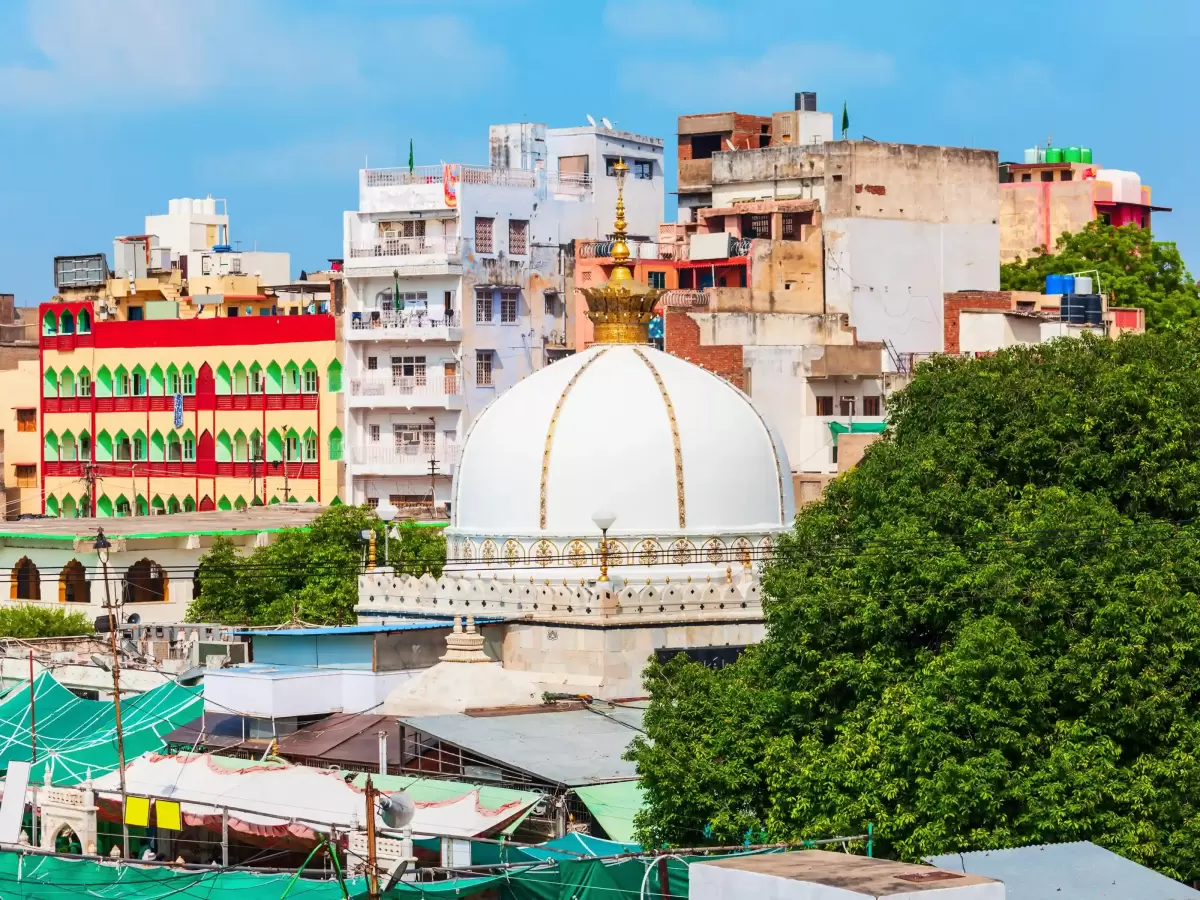
  • Environment and Surroundings: The shrine is located in the heart of Ajmer's old city, accessible only through narrow, extremely congested lanes (Dargah Bazaar). The atmosphere is a high-sensory environment characterized by the scent of incense and rose petals, the sound of Qawwali music, and significant noise from the surrounding markets. The complex consists of several white marble courtyards, including the Akbari Mosque and the main sanctum with its iconic gold-plated dome.
  • Facilities and Amenities: Infrastructure is geared toward massive daily pilgrimages. Two large cauldrons (Deghs) are prominent features where communal food is prepared. Public wudu (ablution) areas are available for ritual washing. While there are administrative offices and information desks, the facility lacks modern tourist lounges. Professional guides (Khadims) facilitate the process for visitors, though their services are based on traditional lineage rather than official tourism certification.
  • Accessibility and Movement: Navigating the Dargah is challenging for those with limited mobility. The approach involves walking through dense crowds in narrow alleys where motorized transport is restricted. Inside, the floors are marble and can be slippery. To enter the inner sanctum, visitors must navigate tight, high-pressure queues and narrow doorways. Wheelchair access is technically possible in the outer courtyards but practically difficult due to the sheer volume of people.
  • Visitor Behavior and Conditions: Expect intense physical proximity and pushing within the inner shrine area due to the volume of devotees. Visitors must cover their heads (scarves are available for purchase nearby) and remove footwear before entering the complex. Photography is strictly prohibited inside the main sanctum. Be prepared for persistent requests for donations or "Nazrana" from various practitioners; it is advisable to decide on your contribution limit beforehand to manage these interactions.

Essential Visitor Information for Khwaja Gharib Nawaz Dargah Sharif

  • Crowd Dynamics & Peak Times: Khwaja Gharib Nawaz Dargah Sharif is one of India's most visited spiritual sites, drawing thousands daily. Crowds peak significantly on Thursdays and Fridays due to special prayers and Qawwali sessions. The annual Urs festival sees a massive surge in pilgrims, making the complex extremely congested; if you prefer a quieter experience, visit during early morning hours (4:00 AM – 6:00 AM) on weekdays.
  • Visiting Hours & Rituals: The Dargah gates typically open at 4:00 AM and close around 10:00 PM. A unique experience is the Khidmat ritual performed twice daily (dawn and afternoon) when the tomb is cleaned. The evening Qawwali (Sufi devotional music) performed in the courtyard after the Maghrib prayer is a defining cultural experience of the site.
  • Dress Code & Etiquette: Modest attire is mandatory for all visitors; shoulders and knees must be covered. Both men and women are required to cover their heads with a scarf, handkerchief, or cap before entering the inner sanctum. Footwear is strictly prohibited inside the complex and must be left at the designated shoe-storage counters at the entrance gates.
  • Security & Prohibited Items: Security screenings are thorough. Large bags, umbrellas, and heavy electronic equipment are generally not allowed inside. While mobile phones are permitted, photography and videography inside the main tomb (Sanctum Sanctorum) are strictly forbidden to maintain the sanctity of the shrine.
  • Safety & Practical Cautions: The narrow lanes of the Dargah Bazaar leading to the shrine are prone to heavy congestion and pickpocketing; keep your valuables secure and close to your body. Be wary of unauthorized "guides" or individuals who may aggressively solicit donations or offer "special access" to the tomb.
  • Weather Considerations: Ajmer experiences intense heat from April to June, with temperatures often exceeding 40°C. As you must walk barefoot on stone floors within the complex, the surfaces can become extremely hot; visiting during the early morning or late evening is highly recommended during summer.

Sacred Geometry and Devotion: Photography Guide for Khwaja Gharib Nawaz Dargah Sharif

  • Nizam Gate and Buland Darwaza Scale: To capture the immense height of the Buland Darwaza, position yourself at a low angle near the Nizam Gate entrance. The early morning light (07:00–08:30) provides the best clarity for the intricate calligraphy and stone carvings before the narrow lanes become heavily congested with pilgrims.
  • Strict Interior Restrictions: Photography and videography are strictly prohibited inside the main sanctum (Astayana Sharif) where the tomb of Khwaja Moinuddin Chishti is located. Security is vigilant; all cameras and mobile phones must be kept inside bags or pockets when entering the inner courtyard to respect the sanctity of the shrine.
  • The Akbari Mosque Courtyard: This open white marble courtyard offers the best opportunity for architectural photography. The symmetry of the arches and the reflection of the sun on the polished floors provide a serene composition, especially during the "Golden Hour" before the Maghrib prayer when the light softens across the marble.
  • Crowd and Movement Dynamics: During the Urs festival or on Thursdays and Fridays, the density of the crowd makes static photography impossible. For capturing the essence of the "Qawwali" sessions in the evening, aim for candid, handheld shots from the periphery of the courtyard to avoid obstructing the flow of devotees.
  • Dég (Large Cauldrons) Perspectives: The two massive iron cauldrons used for cooking "Tabarruk" are significant cultural subjects. Capture these from the elevated platforms nearby to show their scale relative to the surrounding architecture, though be mindful of the steam and heat if the kitchens are active.
  • Architectural Textures in the Begami Daalan: The marble portico offered by Princess Jahanara Begum features exquisite floral carvings. Use a macro or portrait lens to capture the fine details of the marble inlay work, ensuring you utilize the natural diffused light that filters through the arched entrances.

Near By Attraction

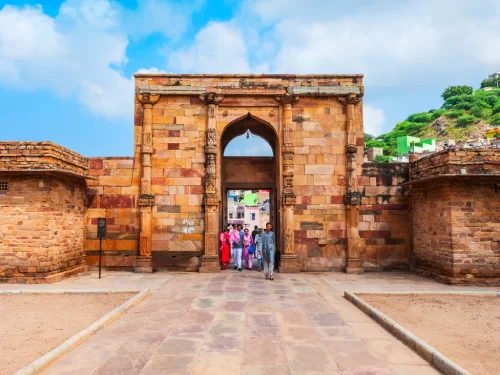
Taragarh Fort Ajmer grand yellow sandstone gateway with massive arched entrance flanked by bastions against Aravalli hill backdrop tourists walking pathway historic fortress in Rajasthan tour packages Fort

Taragarh Fort

A historic hill fort overlooking Ajmer, built in the 14th century.

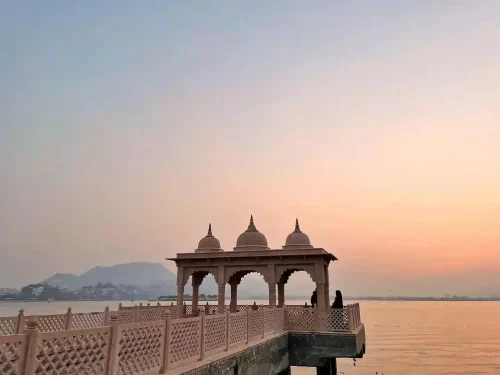
Ana Sagar Lake Sunset view of a marble chhatri pavilion and stone walkway at the historic artificial lake in Ajmer. Lake

Ana Sagar Lake

Ana Sagar Lake is an artificial lake constructed by Arnoraja, the grandfather of Prithviraj Chauhan, between 1135 and 1150 CE.

Nareli Gyanodaya Digambar Jain Temple Ajmer Striking modern architectural complex featuring twenty-four miniature temples on a hillside Rajasthan. Temple

Nareli Gyanodaya Digambar Jain Temple

Nareli Gyanodaya Digambar Jain Temple is a modern architectural complex and pilgrimage site located on the outskirts of Ajmer.

Frequently Asked Questions About Khwaja Gharib Nawaz Dargah Sharif

Khwaja Gharib Nawaz Dargah Sharif is located in Ajmer and is easily accessible by road from the main city area.
Khwaja Gharib Nawaz Dargah Sharif is generally open from early morning until late night, with peak visits during prayer times.
There is no entry fee to visit Khwaja Gharib Nawaz Dargah Sharif, though offerings and donations are voluntary.
The best time to visit Khwaja Gharib Nawaz Dargah Sharif is between October and March when the weather is pleasant for travel.
Travelers can reach Khwaja Gharib Nawaz Dargah Sharif by taxi, auto rickshaw, or by walking from Ajmer railway station through the main market lanes.
Most visitors spend around 1 to 2 hours at Khwaja Gharib Nawaz Dargah Sharif depending on crowd levels and prayer participation.
Visitors are expected to dress modestly at Khwaja Gharib Nawaz Dargah Sharif and cover their heads before entering the shrine area.
Photography inside Khwaja Gharib Nawaz Dargah Sharif is generally restricted near the main sanctum, and visitors should follow on site guidelines.
Khwaja Gharib Nawaz Dargah Sharif is suitable for family visits, though visitors should be prepared for crowds during festivals and weekends.
Khwaja Gharib Nawaz Dargah Sharif can easily be included in a one day sightseeing itinerary along with other nearby attractions.

Loved this place ? Let’s Plan Your Rajasthan Trip

Get customized Rajasthan tour planning designed around desert climate comfort, long-distance road travel flow, heritage exploration time, and realistic pacing between regions. Whether you are visiting for fort architecture, palace heritage, cultural exper

⚑ Quick Response | πŸ’° Free consultation | πŸ•’ 24Γ—7 expert support

×

Plan Your Trip