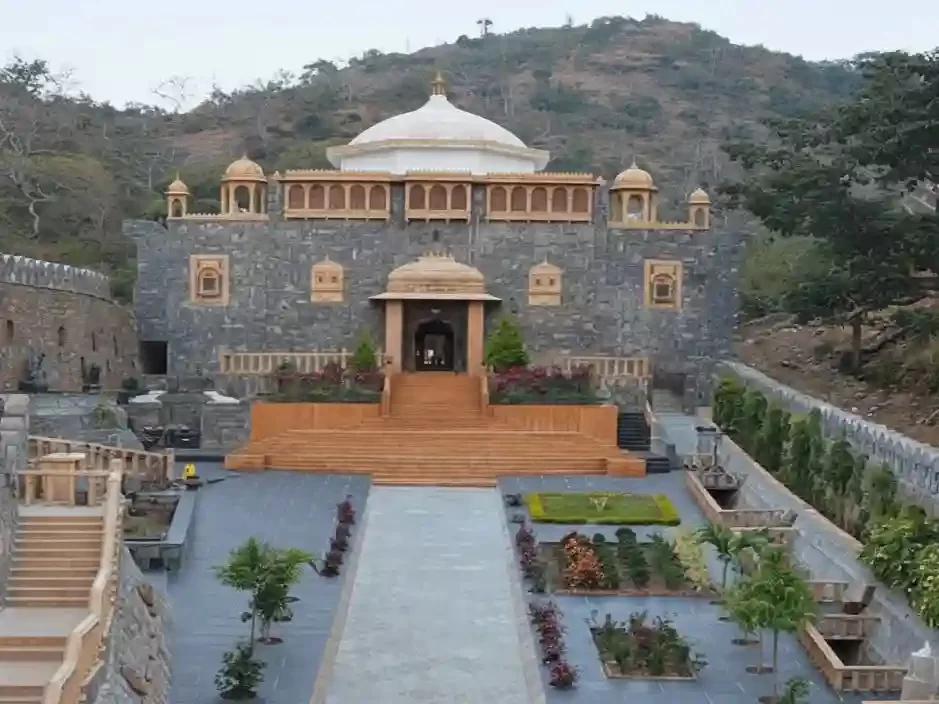
Visiting Ganga Govardhan Museum in Kumbhalgarh, Rajasthan, India

Ganga Govardhan Museum , Kumbhalgarh
Tourists visit to view one of the region\'s largest numismatic displays, featuring currency from the Mauryan, Gupta, Mughal, and British eras. The museum also exhibits a diverse range of Rajput weaponry, traditional puppets, stone sculptures, and rural Rajasthani household items, providing cultural context to the neighboring medieval fortress.

Quick Facts About Ganga Govardhan Museum

Quick Facts for Ganga Govardhan Museum, Kumbhalgarh

Entry Fee ?100 per person
Timings 09:00 AM – 06:00 PM
Altitude (m) Approx. 1,100 m
Ideal Visit Duration 45 to 60 minutes
Best Time of Day 11:00 AM – 03:00 PM (Ideal for indoor viewing during peak outside heat)
Crowd Level Low to Moderate
Distance from City Centre (km) 3 km from Kumbhalgarh Fort; 100 km from Udaipur City Centre
Walking Difficulty Easy (Well-maintained indoor galleries and paved outdoor areas)
Parking Available Yes (Dedicated parking space available on-site)
Last Mile Access Private vehicles, taxis, or local jeeps via the main Kelwara-Kumbhalgarh road
Suitable for Kids Yes (Extensive collection of vintage items and weapons of interest)
Suitable for Seniors Yes (Flat surfaces with minimal steps)
Wheelchair Friendly Yes (Ground floor galleries are accessible)

Why Visit Ganga Govardhan Museum Kumbhalgarh: A Window into Rural Mewar

Visitors come to the Ganga Govardhan Museum to explore an extensive private collection that documents the daily life, military equipment, and artistic heritage of the Mewar region. Located near the base of the Kumbhalgarh Fort, it serves as an essential stop for travelers who want to see authentic regional artifacts, including vintage weaponry, traditional turbans, and a vast array of historical household utensils that are rarely showcased in larger state museums.

The on-ground atmosphere is intimate and informative, offering a quiet, temperature-controlled environment that provides a welcome break from the sun-drenched climb of the nearby fortress. The museum is organized into themed galleries where the smell of aged wood and metal meets a curated silence, allowing visitors to inspect the fine details of local craftsmanship and agricultural tools at a close, accessible range without the typical crowds found at major landmarks.

What makes this museum distinct is its focus on the "everyday" history of Rajasthan, bridging the gap between royal legends and the lived reality of the local community. For travelers, it stands out for its unique display of traditional costumes and rare musical instruments, providing a specific cultural context that enriches the understanding of the surrounding landscape and the people who have inhabited the Aravalli hills for generations.

History and Cultural Heritage of Ganga Govardhan Museum Kumbhalgarh

The Ganga Govardhan Museum, located at the foot of the Kumbhalgarh Fort, serves as a vital repository for the history of the Mewar region. The museum was established to preserve and showcase the private collection of artifacts belonging to the royal lineage, offering a focused look at the military and domestic life of the Rajputs. It functions as a cultural gateway for visitors, documenting the evolution of regional craftsmanship and the strategic importance of the Kumbhalgarh defensive complex over the centuries.

The museum's collection is rich in historical significance, featuring a diverse array of medieval weaponry, including swords, shields, and armor used by the Mewari warriors. Beyond martial history, the galleries display a rare selection of antique musical instruments, traditional Rajasthani attire, and household items that illustrate the socio-cultural fabric of past eras. The heritage of local artistry is further represented through a series of stone sculptures and intricate wood carvings, providing context to the architectural and artistic mastery found within the nearby fort walls.

Best Time to Visit Ganga Govardhan Museum, Kumbhalgarh

Located just 2 km from the historic Kumbhalgarh Fort, the Ganga Govardhan Museum is a private repository of over 5,000 ancient coins and Mewar artifacts that is best visited during the dry, temperate winter months. Because the museum is often paired with a trek to the fort's ramparts, seasonal timing is essential to manage the physical demands of the hilly Aravalli terrain and the lack of climate control in traditional exhibition spaces.

  • Ideal Months: October to March is the peak window; visiting in November or February offers the clearest skies and most comfortable air quality for a full day of heritage exploration.
  • Weather Conditions: Expect crisp, pleasant days with temperatures ranging from 12°C to 28°C. These cooler conditions are necessary for comfortably navigating the museum's stone-heavy interior and the walking-intensive fort road.
  • Periods to Avoid: April to June should be avoided due to the intense Mewar heat, which often surges past 42°C and makes the unshaded approach to the museum grueling. Additionally, be aware that the museum traditionally remains closed on Sundays and public holidays, and visitors should plan for steep separate fees for photography (often higher than the entry ticket itself).

How to Reach Ganga Govardhan Museum Kumbhalgarh: Essential Travel Guide

The Ganga Govardhan Museum (also known as the Ganga Govrdhan Museum) is a specialized cultural site located on the main Kumbhalgarh Fort Road, approximately 2 km before the main fort entrance. It is renowned for housing one of the largest private coin collections in Asia.

  • Nearest Airport: Maharana Pratap Airport (UDR) in Udaipur is the closest airport, located about 85 km away. The drive to the museum takes approximately 2 to 2.5 hours via the NH27 and the Haldi Ghati route, which features winding mountainous terrain.
  • Nearest Railway Station: Falna Junction (FA) is the most convenient railhead, situated roughly 50 km from the museum. Falna is well-connected to Delhi, Mumbai, and Ahmedabad. From the station, private taxis are available for the 1.5-hour uphill journey to Kumbhalgarh.
  • Road Access: The museum is situated on the Kumbhalgarh-Ranakpur route. While the roads are generally well-maintained and paved, the final 30 km involve steep climbs and sharp "S-curves" through the Aravalli Range. It is easily accessible by private car, taxi, or motorcycle, but large tourist buses may navigate more slowly due to the narrow ghat sections.
  • Last-Mile Connectivity: The museum is a standalone structure on the Fort Road with a dedicated parking area in front. It is perfectly positioned for a quick stopover (roughly 30–45 minutes) for travelers heading toward or returning from the Kumbhalgarh Fort. Local auto-rickshaws from the nearby Kelwara town also ply this route.
  • Travel Conditions and Limitations: The museum is typically open from 9:00 AM to 6:00 PM. Visitors should be aware that while the entry fee is modest (approx. ?40–?130), there is often a high additional surcharge for photography or carrying mobile phones inside. The museum is not fully climate-controlled, so visits during the winter months (October to March) are significantly more comfortable than the peak summer season.

Traveler's Tip: Coordinate your visit with the Kumbhalgarh Fort Light and Sound Show, as the museum is located directly on the path back to most major resorts in the area.
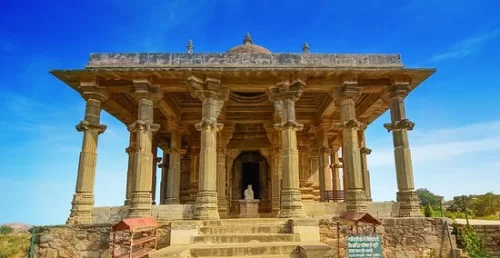
What to Expect When You Visit Ganga Govardhan Museum, Kumbhalgarh

  • Curation and Collection: This private museum houses an extensive personal collection of historical artifacts. Expect to see a significant display of traditional Rajasthani weaponry, including daggers, swords, and shields, alongside antique household items, rare coins, and a diverse range of 19th-century musical instruments.
  • Spatial Layout: The museum is housed in a compact, multi-level building. The galleries are densely packed with exhibits, and the corridors can feel narrow. It offers a more intimate and cluttered "collector's" experience compared to the sprawling, state-run museums found in major Rajasthani cities.
  • On-Ground Guidance: Visitors are typically accompanied by a staff member or the curator themselves, who provides verbal explanations of the artifacts. Expect a narrative-driven tour rather than relying on printed placards, as many items lack detailed English or Hindi signage.
  • Climate and Comfort: The building is not centrally air-conditioned. While the stone structure provides some insulation, the interior can become warm and stuffy during the summer. There are limited seating areas within the galleries, so visitors should be prepared to remain standing for the duration of the tour.
  • Photography Policy: Unlike many government-run heritage sites, photography is often strictly prohibited or subject to a high additional fee within the indoor galleries to protect the private collection. It is essential to clarify the current rules at the entrance before bringing out a camera.
  • Location and Approach: Situated near the base of the Kumbhalgarh Fort, the museum is easily accessible by car or auto-rickshaw. The approach involves a short walk over paved but slightly sloped ground; however, the internal staircases are steep and may pose a challenge for those with significant mobility issues.

Safety and Essential Visitor Information for Ganga Govardhan Museum Kumbhalgarh

  • Peak vs. Quiet Hours: The museum is best visited immediately upon opening at 9:00 AM to avoid the large tour groups that arrive from Udaipur by midday. Late afternoon (4:00 PM – 5:00 PM) is also quiet, but ensure you leave enough time to exit the fort area before dusk when visibility on the winding roads decreases.
  • Lighting and Visibility Safety: Many of the interior gallery spaces utilize localized spot lighting to protect the artifacts (including rare arms and armor). Be cautious of sudden transitions from bright outdoor sunlight to dimly lit rooms, as floor levels may have slight, unmarked elevations.
  • Structural Cautions: Located within a historic structure near the fort entrance, the museum features narrow doorways and high stone thresholds. Visitors should watch their step and head clearance when moving between galleries, as the architectural layout follows traditional 15th-century defensive patterns.
  • Crowd Dynamics: During peak season (October–March), the entrance foyer and specific display cases containing the royal weaponry can become congested. Maintain awareness of your personal belongings and avoid leaning against the glass display cases, as they are not designed to support weight.
  • Climate and Comfort: The museum lacks modern climate control. During the summer months, the interior can become quite humid. It is advised to visit in the morning to avoid the peak afternoon heat that radiates through the thick stone walls of the fort complex.

Capturing History: Photography Guide for Ganga Govardhan Museum, Kumbhalgarh

  • The Coin Collection’s "Royal Look": This museum houses one of India’s largest private numismatic collections with over 5,000 coins. For sharp shots of the Mauryan, Indo-Greek, and Kushan era coins, use a dedicated macro lens or the "Macro" mode on your smartphone to capture the intricate mint marks and inscriptions through the well-maintained glass display cases.
  • Lighting for Armor and Weaponry: The galleries featuring Rajput weaponry, including massive cannons and swords, are lit with controlled artificial spotlights. To avoid glare from the polished metal surfaces, angle your camera at a 45-degree diagonal rather than shooting head-on, which helps emphasize the etchings on the hilts and blades.
  • Strict Per-Device Photography Fees: Photography is permitted only after paying a significant additional fee, which currently stands at approximately ?250 per device (including mobile phones). This fee is independent of the entry ticket; ensure you keep your photography receipt visible as staff frequently check for authorization inside the galleries.
  • Interior Design and Layout Shots: The museum is known for its clean, 3D-designed royal-themed interiors. The wide hallways provide ample space to capture the thematic arrangement of tribal crafts and ancient statues, but the use of bulky professional tripods is discouraged to prevent obstructing the narrow flow of visitors between exhibit rooms.
  • Timing for Glare-Free Shots: The museum operates from 9:00 AM to 6:00 PM. Visiting during the mid-morning hours (10:00 AM – 11:30 AM) is ideal for interior photography, as the natural light filtering through the entrance area is softest, reducing reflections on the porcelain and glass-fronted displays.
  • Crowd and Access Factors: Located just 2 km before the Kumbhalgarh Fort, this museum is a popular stop for tour groups. To avoid the midday rush of fort-bound visitors (12:00 PM – 3:00 PM), plan your photography session early in the day or just before the evening closing to ensure clear sightlines of the large-scale wood and metal sculptures.

Near By Attraction

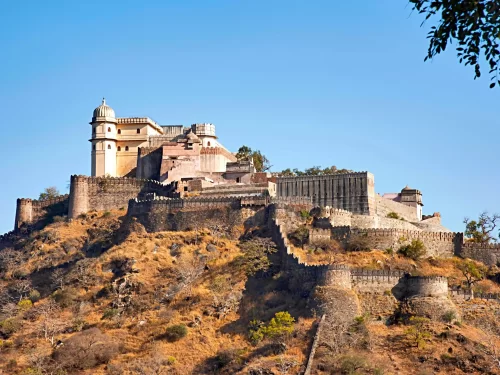
Badal Mahal at Kumbhalgarh Fort, a historic hilltop palace with expansive fortified walls in Rajsamand, Rajasthan. Palace

Badal Mahal

Badal Mahal, or the Palace of Clouds, is the highest point of the Kumbhalgarh Fort complex and was built by Maharana Fateh Singh in the 19th century.
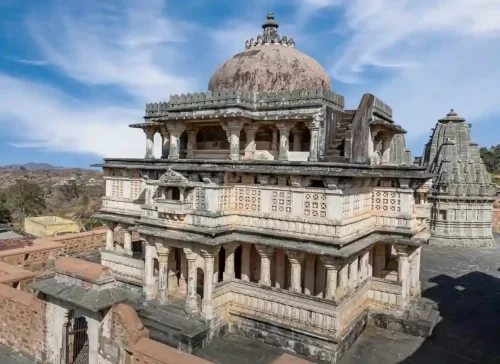
Vedi Temple Kumbhalgarh Three-story 15th-century sacrificial shrine featuring thirty-six intricately carved pillars and a massive dome, built by Rana Kumbha inside Kumbhalgarh Fort Rajasthan. Temple

Vedi Temple

Vedi Temple is a three-story sacrificial ritual structure built by Rana Kumbha in 1458 to commemorate the completion of the Kumbhalgarh Fort.

Muchhala Mahavir Jain Temple Pali Unique Jain shrine featuring a statue of Lord Mahavira with a mustache Rajasthan. Temple

Muchhala Mahavir Jain Temple

Muchhala Mahavir Jain Temple is a 10th-century religious site located in the Ghanerao forest area of the Aravalli Hills, dedicated to the 24th Tirthankara, Lord Mahavira.

Frequently Asked Questions About Ganga Govardhan Museum

Ganga Govardhan Museum is located in Jaipur, Rajasthan. It is situated within the City Palace complex area, making it easily accessible from major parts of Jaipur city.
Ganga Govardhan Museum is generally open from morning to evening following City Palace visiting hours. Timings may vary on public holidays, so checking locally before planning is advisable.
An entry ticket is required to visit Ganga Govardhan Museum as it falls under the City Palace complex in Jaipur, Rajasthan. Ticket prices vary for Indian and foreign visitors.
Ganga Govardhan Museum displays royal artifacts, traditional art collections, textiles and historical objects related to Rajasthan heritage. The exhibits provide insight into the cultural legacy of Jaipur.
The best time to visit Ganga Govardhan Museum is between October and March when Jaipur weather remains pleasant for sightseeing. Summers in Rajasthan can be quite hot during daytime visits.
Ganga Govardhan Museum can be reached easily by road within Jaipur city. Jaipur International Airport and Jaipur Junction railway station provide convenient connectivity from other parts of Rajasthan and India.
Paid parking facilities are available near the City Palace area close to Ganga Govardhan Museum. Visitors can use designated parking zones within central Jaipur.
Around one to two hours are sufficient to explore Ganga Govardhan Museum comfortably. Visitors who are interested in art and history may spend additional time inside the galleries.
Ganga Govardhan Museum is suitable for families, students and cultural travelers. The structured indoor setting in Jaipur makes it convenient for visitors of all age groups.
Hawa Mahal, Jantar Mantar and City Palace can be combined with a visit to Ganga Govardhan Museum. These attractions are located close to each other in Jaipur, Rajasthan.

Loved this place ? Let’s Plan Your Rajasthan Trip

Get customized Rajasthan tour planning designed around desert climate comfort, long-distance road travel flow, heritage exploration time, and realistic pacing between regions. Whether you are visiting for fort architecture, palace heritage, cultural exper

⚑ Quick Response | πŸ’° Free consultation | πŸ•’ 24Γ—7 expert support

×

Plan Your Trip